DD
MM
YYYY

PAGES

DD
MM
YYYY

spot_img

PAGES

Home Blog Page 809

Wall Street Mounts Pressure on Apple To Get in the AI Race

0

Apple’s long-standing image as a tech trailblazer is now facing one of its most serious credibility tests in years. As generative artificial intelligence reshapes the future of computing, the Cupertino giant is under pressure to make a defining move—or risk being permanently left behind.

Analysts say Apple has failed to match the pace of its peers in building or acquiring advanced AI capabilities. While rivals like Microsoft and Google have poured tens of billions into AI research, cloud infrastructure, and landmark acquisitions, Apple has remained tight-lipped, offering only incremental updates to Siri and vague promises through its “Apple Intelligence” initiative.

“The incomplete AI strategy is still the biggest overhang, but we think Apple still has approximately 1.5 years to effect a compelling solution,” TD Cowen analyst Krish Sankar wrote in a note on Monday. He recommends buying the shares.

This silence has unnerved investors. The company’s stock has dropped more than 15% in 2025, making it the second-worst performer among the tech-heavy “Magnificent Seven,” outpaced only by Tesla. The anxiety has prompted growing calls from Wall Street for Apple to make a bold play, starting with a strategic acquisition of Perplexity AI, one of the fastest-rising competitors to OpenAI’s ChatGPT.

Perplexity, a startup known for its speed, accuracy, and a radically simple user interface, has emerged as a breakout player in the AI assistant space. Its ability to offer real-time answers backed by verifiable sources has attracted millions of users, some of whom have turned away from more established tools like ChatGPT, Gemini, and Claude.

Dan Ives, managing director at Wedbush Securities and one of Apple’s most vocal supporters, believes a Perplexity acquisition would be a transformative move. He has repeatedly called on Apple to make the leap.

“We believe Apple needs to acquire Perplexity for AI capabilities,” Ives said earlier this month. “A likely $30 billion range would be a no-brainer deal given the treadmill AI approach in Cupertino. Perplexity would be a game changer on the AI front and rival ChatGPT given the scale and scope of Apple’s ecosystem.”

Ives doubled down on Wednesday, just ahead of Apple’s quarterly earnings report, calling the company’s AI direction “invisible” and warning that its current posture is unsustainable:

“Heading into Apple’s earnings tomorrow, the elephant in the room continues to be Apple’s AI growth strategy, which right now is invisible, while the rest of the tech world is laser-focused on monetizing the biggest tech theme in 40 years—the AI Revolution,” he said.

“It’s becoming crystal clear that any innovation around AI at Apple is not coming from inside the walls of Apple Park. Importantly for the Street, we estimate the AI monetization strategy at Apple could be worth up to $75 per share—and time is ticking for Cook to figure this out.”

Apple’s AI Moves So Far: Too Little, Too Late?

Earlier this year, Apple unveiled its “Apple Intelligence” framework, promising smarter Siri capabilities, writing suggestions, and integration with apps like Mail and Notes. But the reaction was tepid, and perhaps more damaging was Apple’s own admission that the upgraded Siri won’t be fully ready until 2026. That means its most ambitious AI features will not appear in this year’s iPhone 16 lineup, leaving it with no blockbuster selling point.

This comes as Alphabet’s Gemini assistant is already embedded into Android 16, giving users an AI-powered experience with deep integrations across Google’s services—from Maps and Gmail to YouTube and Calendar. Microsoft’s Copilot and Meta’s Llama-based assistants have also found homes across devices and apps, from PCs to smart glasses.

Apple, in contrast, has remained stuck in its product cycle rhythm, focused on polishing hardware while failing to establish a compelling AI strategy. Even its most notable moves in the space, such as investing in AI startups and training foundation models behind closed doors, have yet to yield any widely adopted breakthrough.

The Threat from Outside—and Inside

The urgency isn’t just about catching up with Big Tech. Former Apple design chief Jony Ive, in partnership with OpenAI, is developing an entirely new AI-native consumer hardware product under a company called “IO,” acquired by Sam Altman’s team for $6.5 billion. That move is being viewed by many as the clearest threat to the smartphone’s dominance since its inception.

OpenAI’s rumored plans to disrupt Apple from the outside add fuel to investor anxiety. There’s speculation that Altman and Ive are aiming to build an AI-first device that renders traditional smartphones—like the iPhone—less relevant.

Meanwhile, some voices inside Apple have already acknowledged that the clock is ticking. Apple’s senior vice president of Services, Eddy Cue, told a court earlier this year that a world without iPhones in 10 years “may not be as crazy as it sounds.”

Melissa Otto, an analyst with Visible Alpha Research, notes that Apple’s AI additions to the iPhone last year failed to trigger the anticipated “supercycle” of upgrades. Many users only replaced older devices due to hardware issues, not new software features. According to data from Consumer Intelligence Research Partners, the majority of iPhone users in 2024 made purchases due to broken screens or battery problems, not because of excitement over AI.

All eyes now turn to Apple’s Q3 earnings call on Thursday, where the company is expected to post over $40 billion in iPhone revenue and about $26.8 billion in Services revenue. But analysts say financial performance won’t be enough. Investors are looking for a forward-looking AI narrative, a credible path that shows Apple can lead, not just follow.

Dan Ives and others believe Perplexity is the most obvious bet. Whether Tim Cook agrees—or continues to play the long game—could determine if Apple stays a leader or becomes a follower in the next era of computing.

Artificial Intelligence Integration Into Crypto Wallets Is An Emerging Web3 Trend

0

The concept of AI agents integrated with crypto wallets is an emerging trend in the Web3 and blockchain ecosystem. AI agents are autonomous software programs that use machine learning and natural language processing to perform tasks like trading, wallet management, or data analysis without constant human intervention. Several projects are exploring this intersection.

Crypto.com AI Agent SDK enables developers to integrate AI capabilities into Web3 projects, allowing AI agents to manage wallets, execute transactions, and interact with blockchains like Cronos using natural language commands.

Trust Wallet highlights AI agents that autonomously analyze data, execute trades, and manage wallets, enhancing efficiency in the crypto space. Armor Wallet uses a ChatGPT-style interface to simplify crypto trading with AI agents, allowing users to execute complex trades via plain English commands.

Coinbase’s Based Agent tool enables the creation of AI agents with crypto wallet functionality in minutes, supporting tasks like token swaps and staking. These examples suggest that integrating AI agents with crypto wallets is a growing area of innovation, focusing on automation, user accessibility, and decentralized finance (DeFi) applications.

Foobar announcing a project called CircuitAI, aligns with these trends, enabling AI agents to operate on top of any crypto wallet. Here’s how such a system might work, based on current industry patterns: CircuitAI could be designed to integrate with multiple wallet types (e.g., hot wallets, cold wallets, or hardware wallets) across various blockchains (Ethereum, Solana, Binance Smart Chain, etc.).

This would involve APIs or SDKs that allow AI agents to interact with wallet protocols, similar to Crypto.com’s SDK or Coinbase’s Based Agent. The AI agents could perform tasks like: Analyzing market trends and executing trades based on predefined criteria or real-time data, as seen with Laika AI’s trading bot.

Handling transactions, managing recurring payments, or rebalancing portfolios, as described in Trust Wallet’s AI agent capabilities. Monitoring wallet activity for suspicious behavior, similar to AnChain.AI’s fraud detection tools. Executing or auditing smart contracts autonomously, as supported by ChainGPT’s AI tools.

“AI turning wallets into smart assistants isn’t just a cool feature: it’s a big shift. We’re moving from apps that just hold your assets to tools that think ahead, spot risks, and save you time. That’s how the next wave of crypto adoption will happen,” explains Alex Lielacher, Founder & CEO of Web3 SEO agency, Rise Up Media.

Allowing AI agents to operate across multiple blockchains, as seen with platforms like MorpheusAI or Virtuals Protocol. Enabling users to interact with AI agents via simple text prompts, akin to Armor Wallet’s approach. Leveraging blockchain for secure, transparent agent operations, possibly using tokens to incentivize agent activity, as with Fetch.ai’s Agentic Economy.

AI-integrated wallets, especially hot wallets, are vulnerable to cyberattacks unless robust safeguards like spending limits or biometric authentication are implemented. AI agents analyzing user behavior or social media data could raise privacy concerns if not properly managed. AI agents may make incorrect decisions due to model limitations, requiring ongoing improvements in multi-step reasoning.

If Foobar’s CircuitAI enables AI agents to run on any crypto wallet, it could democratize access to advanced crypto tools, making DeFi and Web3 more user-friendly. By abstracting complex blockchain interactions, such a platform could onboard non-technical users, similar to Armor Wallet’s mission to “onboard the next billion users.” It could also foster innovation by allowing developers to build custom AI agents for specific use cases, from gaming to financial analytics, as seen with Injective’s Smart Agent Hub.

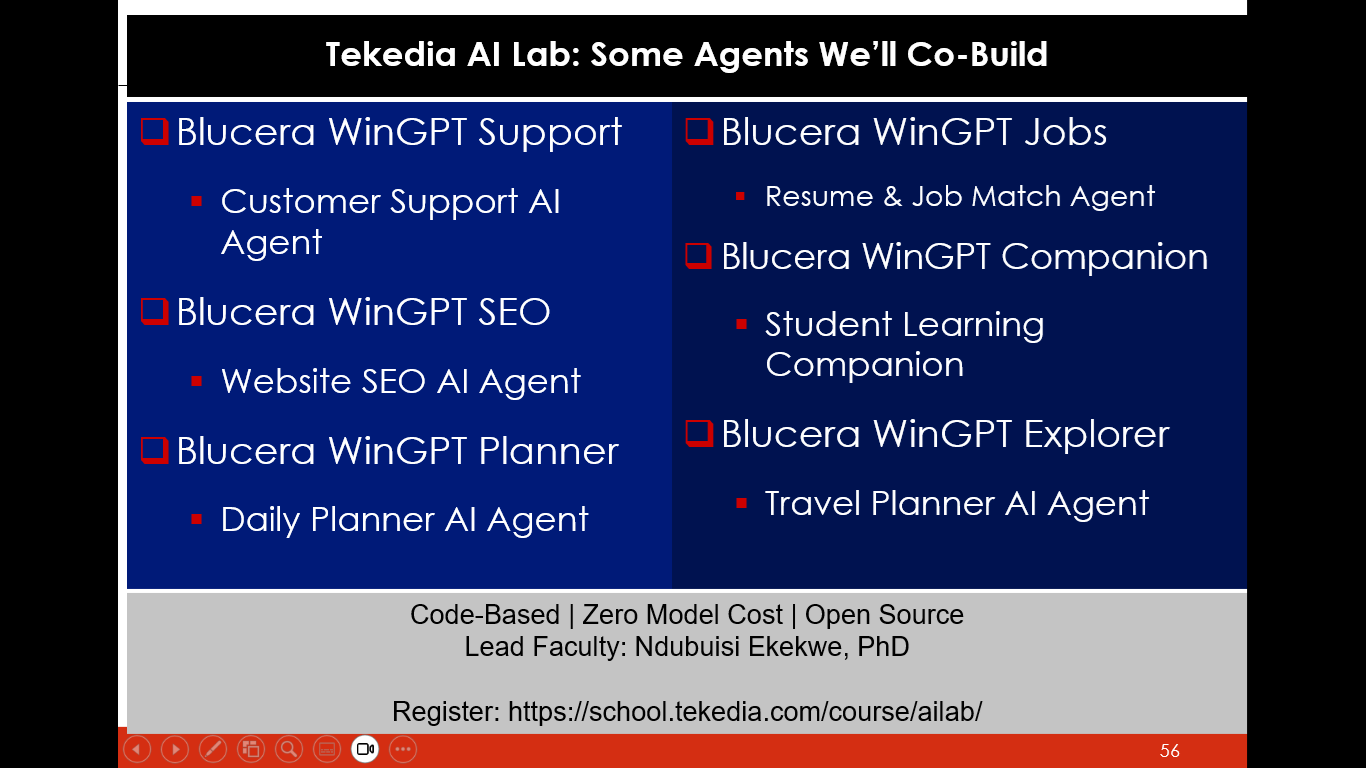
Register for Tekedia AI Lab – A Technical Program for Creating AI Agents [video]

0

In Oct 2025, I will lead a practical and technical training program on developing AI agents at Tekedia Institute AI Lab. This is not a traditional coding bootcamp and no prior coding skills are required. My core goal is to provide participants with pre-prepared “ingredients” – in the form of codes, models and components – which they then learn to assemble and deploy.

The curriculum is structured around building four AI agents out of six: a customer support agent, an SEO optimization agent, a daily planner, a resume and job matching agent, an AI companion, and an explorer agent. Each of these agents is designed to be a practical, deployable solution, allowing participants to see the tangible results of their learning.

The program’s motivation is to foster a deep understanding of the AI (application) development process, enabling participants to grasp how different AI components are integrated to create a complete system.

Destination: empower learners with capabilities to drive personal and business objectives in the rapidly evolving landscape of artificial intelligence.

If you have not registered, go here and pick your seat. (Bonus: for registering for Tekedia AI Lab, you get Tekedia AI in Business Masterclass free)

4 Best Long-Term Cryptos to Buy Now: BlockDAG, AAVE, Pi Network & Chainlink!

0

The crypto space is shifting focus. People are no longer chasing hype; they’re looking for coins that solve real problems, have usable apps, and keep users engaged. While plenty of tokens make promises, only a few deliver results. That’s why practical use, active engagement, and reliable technology matter more than ever.

When it comes to picking the best long-term cryptos, it’s no longer just about price surges. It’s about understanding who’s actually delivering something people use. BlockDAG, AAVE, Pi Network, and Chainlink are leading the way. These names are gaining attention for offering something substantial and are already making progress. Here’s a closer look at why they’ve made the list.

1. BlockDAG: Demo Event Proved X1 App and X10 Miner in Real Action

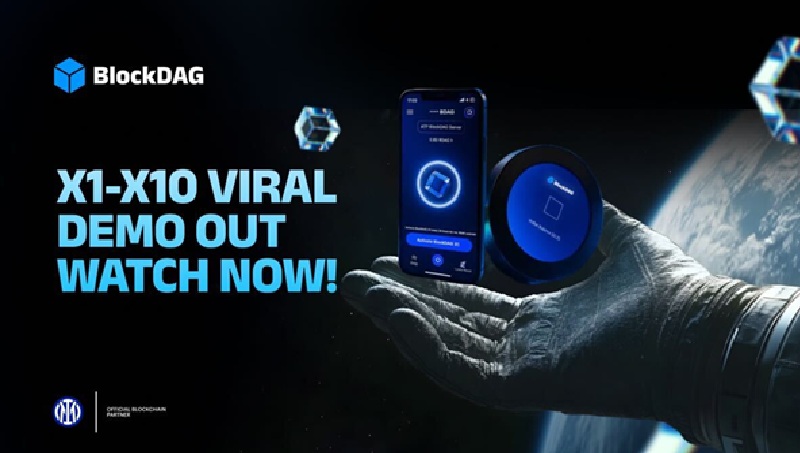
No theories, BlockDAG (BDAG) showed real mining in action. The live demonstration featuring the X1 mobile app synced with the X10 hardware miner highlighted a functioning setup that was simple and efficient. Without any flashy effects, viewers saw BDAG rewards land in the app live, offering a straightforward look at how the system runs.

Connecting through Bluetooth, the X1 app syncs with the X10 miner to push reward output up to 10 times more than the app alone. Compact, practical, and without messy installations, this setup removes the common hurdles seen in crypto mining. Instead of hinting at what’s coming, BlockDAG showcased exactly what works, and it’s already here.

That kind of hands-on proof sparked a surge in demand for the devices, and the BDAG presale reflects that momentum. BlockDAG has now raised $357 million and sold 24.5 billion coins across 29 batches. Batch 29 is currently priced at $0.0016 and will be available until August 11. With a launch goal of $0.05, early users have already seen a 2,660% growth in their funds since batch 1.

Real earnings, working tech, and solid adoption give BlockDAG a place among the best long-term cryptos. This isn’t about hype, it’s about showing results. With tools already in use and strong presale support, BlockDAG keeps gaining ground.

2. Aave (AAVE): Redefining Lending Through Code-Based Systems

Aave has reshaped lending by removing the need for banks. Running on Ethereum, Aave lets users lend and borrow crypto assets directly through smart contracts. It supports 17 different coins and offers unique tools like flash loans, which need to be paid back in the same transaction without collateral.

The AAVE token powers the system, allowing users to access fee discounts, governance roles, and rewards through staking. Its limited supply and deflation-focused design make it appealing for long-term holders. With DeFi steadily expanding, Aave remains one of the best long-term cryptos, giving users access to income tools and decentralised finance services.

3. Pi Network (PI): Low-Effort Crypto Mining via Mobile

Pi Network brings crypto mining to your smartphone. Built by Stanford alumni, it lets users mine Pi coins through a simple tap on their mobile app. Unlike Bitcoin, there’s no expensive hardware or energy waste involved. The project uses the Stellar Consensus Protocol and trust groups to stay secure.

Users who check in regularly and refer others increase their mining rate. As the app nears full launch and begins removing usage restrictions, Pi’s user base keeps growing. With its simple approach and people-focused model, Pi Network keeps appearing on best long-term crypto lists for offering easy access and a broad reach.

4. Chainlink (LINK): Trusted Data for Smart Contract Use

Chainlink plays a key role in linking smart contracts to off-chain info like stock rates, weather data, and more. It does this using oracles, tools that collect, verify, and deliver external data to blockchain-based apps. To keep data reliable, Chainlink checks multiple sources and uses a trust system.

The LINK token is at the heart of this ecosystem. It pays data providers and supports staking. Since more developers are creating apps that need verified off-chain data, Chainlink is growing in demand. With practical use already in motion, Chainlink keeps its spot among the best long-term cryptos.

Final Say!

Crypto is maturing, and the best long-term cryptos aren’t just about promises anymore. Chainlink shows how real-time data powers smart contracts. Pi Network offers easy mining for everyone. Aave continues to shift financial control from institutions to users through smart contracts.

Then there’s BlockDAG, which takes it further by already running its tools. The demo showed the system in full gear, mining coins live and sending them to user wallets. With $357 million raised and 24.5 billion coins sold, BlockDAG stands out among the best long-term cryptos by proving that working products speak louder than future talk. This kind of delivery is what makes people pay attention and act.

Early Bonk (BONK) and Pepe Coin (PEPE) Buyers Made Millions, This Meme Coin Below $0.002 Could Be the Next Millionaire-Maker

0

Investors often turn to the crypto market to flip a little initial investment into wealth. In 2023, a few lucky (and brave) wallets scooped up Bonk (BONK) and Pepe (PEPE) while they were still market jokes. Those “jokes” became multi-million dollar punchlines, minting overnight millionaires and breaking crypto Twitter.

Now, in 2025, that cycle is stirring again. However, the next millionaire-maker isn’t coming from the usual suspects. It’s emerging from the deep, meme-soaked corners of the blockchain. One name stands out: Little Pepe (LILPEPE). This low-priced, high-upside token trading under $0.002 has more traction and tech than any meme coin before it. Let’s unpack what’s different this time, and why early BONK and PEPE buyers may soon have company.

The Blueprint of a Meme Coin Millionaire

What made BONK and PEPE explode? It wasn’t utilities. It wasn’t big-name backing. It was perfect timing, early entry, viral community buzz, and a narrative people could meme into reality.

BONK rode the Solana revival and became a proxy bet on the chain. PEPE emerged out of nowhere and built a cult faster than gas fees could catch up. The results?

  • BONK returned up to 300,000% to some holders.

  • PEPE delivered over 9,000% gains in mere weeks.

But the key wasn’t just the project; it was the entry point. Early buyers didn’t wait for listings or news. They entered before the storm, when others were distracted. Right now, that same energy is swirling around Little Pepe. But this time, the meme comes with real infrastructure.

Little Pepe Isn’t Just a Meme. It’s a Movement With Muscle

Unlike many meme tokens that hope to “go viral,” Little Pepe has designed virality into its architecture. The project is launching its own EVM-compatible Layer-2 chain, optimized for meme coins. This makes it more of a home for other coins than just a token. At the heart of its vision is the Pepe Launchpad, a meme-centric incubator allowing holders to stake, launch, and promote new meme tokens, all while integrating directly into Little Pepe’s Layer-2, EVM-compatible ecosystem.

Even more compelling?

  • Sniper-bot resistant code to keep presale dumps out

  • 0% buy/sell tax for frictionless trading

  • Micro-cap advantage, which means it takes less liquidity to moon

  • Smart contract audit already completed for investor trust

The presale momentum highlights its strength. With over $11.3 million raised in its ongoing presale, LILPEPE has already outperformed most post-launch tokens and hasn’t even been listed. More than 8.3 billion tokens sold, with a price rise from $0.001 to $0.0017, showing constant demand.  With a growing community and a detailed roadmap that includes top CEX listings, Little Pepe is a potential millionaire-making opportunity this cycle. 

Why This Sub-$0.002 Entry Is a Rare Window to Millions

Timing matters. By the time PEPE hit exchanges, the 1,000x opportunity was already gone for most. Same for BONK. Little Pepe is still in presale, available at $0.0017, a price rising with each stage. Already up 70% from its Stage 1 price, the token has amassed 8.3 billion in sales and is generating serious buzz as the top meme presale of 2025.

What’s critical here is the vesting schedule. LILPEPE has a zero-token unlock at launch, a 3-month cliff, and 5% vesting every 30 days, meaning there’s no massive dump risk on day one. That alone sets it apart from many quick-pump meme launches that crash under their weight. The upside? Early buyers can ride momentum without worrying about instant dilution. And if it follows even a fraction of BONK or PEPE’s trajectory, a small bag could become a generational wealth-making portfolio.

If You Missed PEPE and BONK, You’re Right on Time for LILPEPE

Regret is one of the most expensive things in crypto. But here’s the truth: it’s never too late if you catch the next one. BONK and PEPE taught the space that meme coins could outpace fundamentals and turn low-cap projects into portfolio legends. But they also lacked something Little Pepe now delivers: tech, structure, and pre-launch clarity.

Getting involved in Little Pepe’s presale is fast, secure, and wallet-friendly.

Here’s How to Buy:

  1. Visit https://littlepepe.com

  2. Connect your crypto wallet (MetaMask or Trust Wallet)

  3. Swap using ETH, BNB, or USDT

  4. Sit tight. Your tokens will be claimable once the presale ends.

Don’t wait. The price rises with each new stage, and new buyers flood in every hour.


For more information about Little Pepe (LILPEPE) visit the links below:

Website: https://littlepepe.com

Whitepaper: https://littlepepe.com/whitepaper.pdf

Telegram: https://t.me/littlepepetoken

Twitter/X: https://x.com/littlepepetoken