DD
MM
YYYY

PAGES

DD
MM
YYYY

spot_img

PAGES

Home Blog Page 819

The $1.9 Billion Ethereum Unstaking Queue Reflects A Mix of Profit-Taking and Strategic Reasons

0

The $1.9 billion worth of Ethereum (ETH) in the unstaking queue, totaling around 519,000 to 644,330 ETH according to various sources, is indeed the highest since January 2024, when a similar spike occurred. This surge follows a 160% ETH price rally since April 2024, with prices peaking at $4,040 before pulling back to around $3,545-$3,651.

Analysts, like Andy Cronk from Figment, attribute this to profit-taking by retail and institutional investors who staked at lower prices, as well as institutional maneuvers like custodial transitions or wallet tech upgrades.

Notably, Tron founder Justin Sun’s withdrawal of $600 million in ETH from Aave contributed to the congestion, causing a brief depeg of Lido’s stETH. Despite the unstaking wave, selling pressure may be limited. Over 343,000-390,000 ETH ($1.2-$1.3 billion) is queued for staking, reflecting strong demand, partly driven by the SEC’s May 2024 clarification that staking doesn’t violate securities laws. This has boosted institutional interest, with firms like SharpLink Gaming accumulating $1.3 billion in ETH.

The validator exit queue, now stretching 9-11 days, is a built-in mechanism to maintain Ethereum’s proof-of-stake stability, limiting validator exits per epoch. The net unstaked amount is roughly 255,000-316,000 ETH, suggesting a balanced market with strategic repositioning rather than panic selling. The surge in unstaking follows a 160% ETH price rally since April 2024, with ETH peaking at $4,040 before settling around $3,545-$3,651. Many investors, particularly those who staked at lower prices (e.g., $1,500-$2,000), are likely unstaking to lock in profits.

However, the net unstaked amount (255,000-316,000 ETH after accounting for 343,000-390,000 ETH in the staking queue) suggests limited immediate selling pressure. The market appears to be absorbing this through strong staking demand and institutional accumulation. The unstaking wave, combined with high-profile moves like Justin Sun’s $600 million ETH withdrawal from Aave, could introduce short-term volatility.

The 9-11 day validator exit queue, a built-in feature of Ethereum’s PoS system, ensures network stability by limiting the rate of validator exits per epoch. This prevents sudden disruptions to the network’s security or consensus mechanism. The current queue length indicates high unstaking demand but also underscores the robustness of Ethereum’s design in managing such events.

The significant staking queue ($1.2-$1.3 billion in ETH) reflects ongoing confidence in Ethereum’s long-term value proposition, particularly after the SEC’s May 2024 clarification that staking does not violate securities laws. This has reduced regulatory overhang, encouraging institutional participation.

Institutional activity, such as custodial transitions or wallet tech upgrades, is a key driver of the unstaking queue. For instance, large players like SharpLink Gaming, with $1.3 billion in ETH holdings, are likely optimizing their staking strategies or repositioning assets for new opportunities (e.g., spot ETH ETFs or DeFi protocols).

The unstaking surge has strained some DeFi protocols, as seen with Lido’s stETH depeg. This could prompt adjustments in liquid staking platforms to better manage redemption pressures during high-demand periods. The high unstaking volume could be misinterpreted as bearish sentiment, but the simultaneous staking inflow suggests a more nuanced picture: investors are rebalancing portfolios rather than exiting Ethereum entirely.

Retail investors are primarily driven by profit-taking after ETH’s 160% rally. Many staked ETH during the 2022-2023 bear market at prices as low as $1,000-$1,500. With ETH now trading at $3,545-$3,651, these investors are unstaking to realize gains, especially as staking yields (around 3-5% APR) may seem less attractive compared to locking in profits.

Retail unstaking tends to be more fragmented and opportunistic, contributing to the queue but in smaller amounts per validator (typically 32 ETH per validator). Some retail investors may also be rotating into other assets, such as altcoins or newly launched spot ETH ETFs. Retail unstaking adds to queue congestion but is less likely to cause systemic market shifts due to smaller individual positions. However, coordinated retail selling could amplify short-term price dips if sentiment turns bearish.

Institutions are unstaking for strategic reasons beyond profit-taking. Examples include: Moving staked ETH between custodians or upgrading wallet infrastructure for better security or efficiency. Adjusting exposure to ETH in response to market conditions or new investment vehicles like spot ETH ETFs. Redeploying ETH into higher-yield DeFi protocols or liquid staking solutions. Justin Sun’s $600 million withdrawal from Aave, for instance, reflects large-scale repositioning.

Institutions contribute larger chunks to the unstaking queue, often involving thousands of ETH per transaction. Their actions are more calculated, often timed with market events or regulatory clarity (e.g., the SEC’s staking ruling). Institutional unstaking can create temporary liquidity strains, as seen with the stETH depeg, but their long-term confidence is evident in continued staking inflows. Firms like SharpLink Gaming are accumulating ETH, signaling bullish sentiment despite unstaking activity.

343,000-390,000 ETH in the staking queue shows a cohort of investors doubling down on Ethereum’s PoS model, likely driven by yields and long-term belief in network growth. Non-stakers, including speculators or DeFi users, may be contributing to unstaking to pursue higher-risk opportunities elsewhere. The strain on liquid staking protocols like Lido highlights a divide between traditional validators (running their own nodes) and DeFi users relying on liquid staking for flexibility. The latter group’s unstaking can create cascading effects in DeFi markets.

The SEC’s May 2024 ruling has emboldened institutional staking, but lingering global regulatory uncertainties (e.g., in Europe or Asia) may prompt some investors to unstake and hold ETH in cold storage until clearer frameworks emerge. The $1.9 billion ETH unstaking queue reflects a mix of profit-taking, strategic repositioning, and infrastructure adjustments, with limited immediate selling pressure due to strong staking demand.

Is Early Exercise a Smart Move or a Tax Trap for Startup Employees?

0

Early exercise sounds empowering. You buy your options now, start the tax clock, and (hopefully) lock in a low strike price. It seems simple on paper, but it can be messy in real life. Cash goes out, taxes may come due, and liquidity is still a big question. Here’s how to decide if exercising before vesting or before a liquidity event actually helps you, or just hands the IRS a tip.

1.   Know what “early” really means

Early exercise means you are exercising before the company’s value jumps or before your options vest. This lets the long-term capital gains clock start sooner. It can also cut or eliminate the spread between strike price and fair market value, which lowers immediate tax. However, once you exercise, you own restricted stock. If you leave, unvested shares are repurchased.

2.   Get the basics down before you move

It’s vital to learn how options, vesting, and taxation work. Online resources like this stock option basics for startups guide can keep you from guessing. Once you grasp ISOs vs NSOs, 409A valuations, and the Alternative Minimum Tax (AMT), you can model real numbers. Blindly exercising because “everyone in growth mode does it” is risky.

3.   File the 83(b) election on time, or don’t bother

If you exercise unvested shares early and want favorable tax treatment, you must file an 83(b) election within 30 days of exercise. If you miss this window, the IRS treats each vesting tranche as new income. This means ordinary income rates, not capital gains. Be sure to calendar the deadline the moment you sign the exercise paperwork. You should send it via certified mail and keep the receipt.

4.   Model best, base, and worst cases

Run three scenarios: company skyrockets, company grows slowly, company flatlines or dies. In the big win case, early exercise plus an on-time 83(b) means most upside is taxed at long-term capital gains, AMT stays manageable, and you keep more of the win. In a steady but slow climb, your cash is locked up for years while tax savings stay modest. In a flop, you lose exercised cash and can’t always claim a full capital loss. Be sure to put real numbers on strike cost, FMV, tax, and timelines.

5.   Consider your cash flow and tax budget

Exercising takes cash, and paying AMT or state tax might take more. Will that money hurt your emergency fund? Will you need to borrow? Early exercise should not torpedo your financial stability. Build a simple spreadsheet. Add strike price cost, estimated AMT, and filing fees. Compare that to savings, debt, and big life expenses ahead.

6.   Ask about company policies and future plans

Some startups do not allow early exercise. Others do but have complex repurchase rights. Ask HR or legal departments about secondary windows, tender offers, or planned liquidity programs. A promised tender in 12 months can change the math, and so does a down round that could reset valuations. Corporate policies matter as much as the tax code here.

Endnote

Early exercise is not a default move; it is a lever you pull with intent. Pause, price the risk, and see if the tax benefit is worth the cash you lock away. Confirm the 83(b) clock, company policies, and your own runway. Be sure to also talk to a startup-savvy CPA, not a generic tax preparer. When you mix clear basics, disciplined math, and honest risk tolerance, you can choose confidently, not fearfully.

Tekedia AI Lab for Colleges Comes with Programmable Microprocessor Capabilities

0

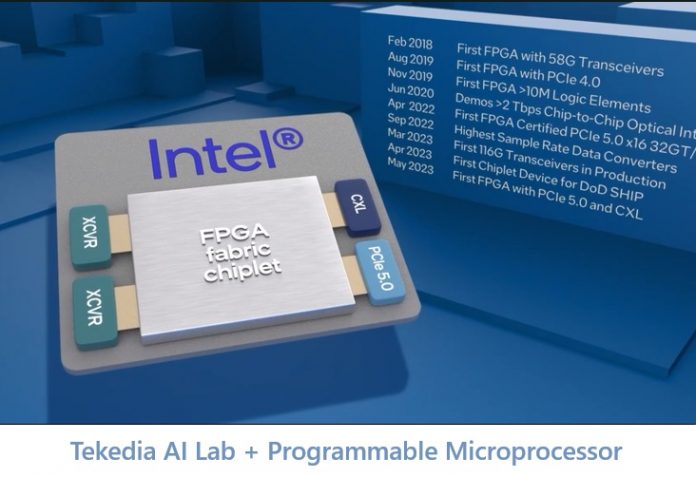
To Universities in Africa: Tekedia AI Lab for Colleges will come with programmable microprocessor capabilities. Yes, as we educate your students on how to build AI agents, using code-based open-model systems, we will introduce programmable microprocessors. With the support of Intel Corporation, we’re here to ensure that your students are ready for the 21st century.

The Tekedia AI Lab for Colleges is a customized version of Tekedia AI Lab: From Technical Design to Deployment. We welcome universities which want to expose their students to practical AI design and programmable microprocessor development. Learn more here.


About Us:

Tekedia Institute is a leading business school; more people study business management in the Institute than any university in Africa.

Fasmicro is Africa’s only Intel programmable microprocessor knowledge partner with access to Intel designkits, models, codebase, etc to design, develop and deploy intelligent systems. Besides training, we support design companies helping them with designs, design reviews, firmware development, and more.

Cardano Slows Down While BlockDAG Eyes 30x Gains: Why It’s the Top Altcoin to Buy This Cycle

0

Crypto markets are heating up again, and everyone’s racing to find the next breakout altcoin. It’s tempting to stick with big names like Cardano, but that move could cost you. With new players showing up fast, holding onto older picks might mean missing the next wave of real growth.

Right now, BlockDAG (BDAG) is showing up strong as the top project on the radar. Built with a different approach using DAG tech, it’s pushing beyond what older chains can do. And with more than $351 million raised in the current presale, demand is already picking up speed.

So what’s pushing BlockDAG to be the top altcoin to buy right now? And how does it compare when stacked up against a name like Cardano? Here’s a closer look.

Tech Breakdown: How BlockDAG’s Speed Leaves Cardano Behind

Cardano uses a Proof-of-Stake system called Ouroboros, where slot leaders are picked in time-based cycles to create blocks one at a time. It saves energy, but that setup slows things down because blocks must follow a set order.

BlockDAG’s model flips this process. Instead of one block at a time, its DAG-based Proof-of-Work structure lets multiple blocks form at once. This speeds up the network and removes the delays, pushing BlockDAG’s speed to over 15,000 transactions per second. That’s a big jump from Cardano’s average of 250 to 500 TPS.

Cardano also faces issues when demand rises. BlockDAG avoids this with no “orphaned blocks,” meaning every valid block is counted and rewarded. That keeps the network moving, avoids backlogs, and lets anyone who adds blocks earn their share. BlockDAG’s system isn’t just faster, it’s fairer and more open to those who power the network.

Easy-to-Use Tools That Anyone Can Start With

Cardano has built a strong setup with smart contracts and staking, but using it isn’t the easiest for beginners. You usually need outside wallets, tools for delegation, and a basic idea of how staking works. The system is solid, but it’s not simple for someone new to crypto.

BlockDAG takes a different path. It’s built for everyone, keeping things simple while still running at scale. The best example? The X1 Miner app. It already has more than 2 million users around the world. Anyone with a phone and Wi-Fi can start earning BDAG through the app, with no special mining tools or tech know-how needed.

For those who want to earn more, there’s the X10 hardware rig. It connects with the app using Bluetooth and boosts daily earnings by 10 times. That means users can move from 20 BDAG a day to up to 200 BDAG, all without needing a complex mining machine. Cardano wants users to learn the system first, but BlockDAG gives them everything ready to use on day one.

BlockDAG’s Security Setup Has Been Tested and Proven

Cardano is known for being peer-reviewed and backed by academic research. Its Ouroboros Proof-of-Stake system is based on math models and formal methods. But in real-world use, safety depends on how strong the network is when it’s actually tested, and this is where BlockDAG stands out.

BlockDAG uses a special Proof-of-Work setup designed for its DAG structure. In normal blockchains, blocks that don’t win are dropped. BlockDAG does it differently. It lets more than one miner add valid blocks at once. This makes the network run smoothly and spreads out the work, which makes it harder to attack or take over.

And this setup isn’t just talk. BlockDAG has passed full audits from both CertiK and Halborn, two of the most respected security teams in crypto. This strong mix of working power and real audits shows the network is ready to handle big traffic and any threats that come its way.

Why BlockDAG Is Drawing All the Attention Right Now

Cardano has been around for years and built a loyal base, but its energy has faded. Fewer holders are staying active, and network activity often falls short, even when the market is moving up.

Meanwhile, BlockDAG is picking up fast. The project has already pulled in over $351 million during its presale and sold 24.3 billion coins. Those numbers show how much attention BlockDAG is getting from the crypto crowd.

Now in Batch 29, the price has dropped from $0.0276 to $0.0016 for a short time. This deal runs until the GLOBAL LAUNCH release on August 11. With a confirmed listing price of $0.05, anyone joining now could see a 3,025% gain once BDAG hits the market.

Looking forward, experts are still positive. Many think BDAG could hit $1 after launch and possibly climb to $20 by 2027. This view is backed by its DAG-based tech, growing network, and rising demand.

Why This Could Be the Year’s Big Altcoin Breakout

When you put BlockDAG next to Cardano, the difference stands out. Cardano has history, but BlockDAG is showing speed, real tools, and a setup built for the future. From its fast, scalable design to easy-to-use mining apps and strong presale numbers, BlockDAG has what today’s market wants.

With the listing locked in at $0.05 and price targets reaching $1 and more, the current $0.0016 rate looks like a rare chance to get in early. For those who want both fast returns and future potential, BlockDAG is setting itself up as the top altcoin to buy without a doubt.

Presale: https://purchase.blockdag.network

Website: https://blockdag.network

Telegram: https://t.me/blockDAGnetworkOfficial

Discord: https://discord.gg/Q7BxghMVyu

These 4 Cryptos Under $0.40 Could be Top Gainers of 2025, Forget the Ripple (XRP) Noise

0

As crypto investors scan the horizon for the next big breakout stars, the chatter surrounding Ripple (XRP) continues to dominate headlines. But beyond the XRP noise lies a group of lesser-priced tokens with far more upside potential in 2025. Trading below $0.40, these four cryptocurrencies combine meme culture, utility, and technical innovation to offer serious 30x–50x potential before the year ends. Here’s a closer look at Little Pepe (LILPEPE), Bonk (BONK), SPX6900 (SPX), and Sui (SUI)—four contenders you shouldn’t ignore.

Little Pepe (LILPEPE) – The Meme Coin That’s Also a Layer-2 Powerhouse

  • Current Price: $0.0015 
  • Presale Progress: $8.49M raised (96.74% of Stage 6 target)

Little Pepe isn’t your average meme coin. While it taps into the irresistible branding of meme culture, it goes several steps further by introducing the first-ever Layer-2 blockchain built solely for meme coins. To offer zero gas fees, sniper-bot-proof launches, and a meme token launchpad, LILPEPE is a one-of-a-kind hybrid of narrative-driven hype and real technical infrastructure.

LILPEPE’s tokenomics are designed for long-term sustainability and fairness:

  • Total Supply: 100 billion tokens 
  • Fair Launch Model: No team tokens, zero taxes 
  • Listings: Confirmed for two top-tier CEXs at launch 
  • Goal: $1 price target driven by ecosystem adoption and viral growth

The team, composed of anonymous devs with past success in top meme coin projects, is committed to launching a decentralized meme coin incubator. This launchpad democratizes token creation for viral communities while filtering out predatory practices. As meme coin hype cycles continue to dominate retail narratives, LILPEPE’s unique architecture could turn its current micro-price into a major success story. Smart money is already entering the market before the token is released.

Bonk (BONK) – Solana’s Sharpest Memecoin is Gaining Institutional Backing

  • Current Price: $0.000039 
  • Weekly Surge: +78% 
  • Volume: $2.41B daily (60% increase)

Bonk is no longer just a meme—it’s rapidly becoming the flagship of Solana’s memecoin ecosystem. Recent bullish catalysts have sent BONK flying, including its addition to Grayscale’s Q3 2025 institutional watchlist and a 100 billion token burn that removed $3.4 million worth of supply.

The real ace up BONK’s sleeve is LetsBonk.fun, its native launchpad. The platform now dominates Solana’s memecoin creation market, capturing 51.9% of market share and surpassing the previously unbeatable Pump. Fun. Even more importantly, 50% of LetsBonk fees are routed directly to BONK buybacks, creating deflationary pressure on the token.

Key Metrics Underscore BONK’s Momentum:

  • RSI: 85.92 – overbought but still gaining
  • MACD: Bullish divergence confirms upward strength
  • Open Interest: $62.86M in derivatives, up 25% in 24 hours

While BONK’s short-term rally may experience some pullbacks due to overbought indicators, its ecosystem growth and tokenomics loop provide compelling support for a mid-to-long-term surge. A run to $0.0001–$0.0002 in Q4 2025 is not out of the question.

SPX6900 (SPX) – The Meme Coin That’s Breaking Charts with Real Volume

  • Current Price: $1.84 
  • 24-Hour Price Pump: +5% 
  • Trading Volume: $176M 
  • Market Cap: Approaching $2B

Although SPX is currently above the $0.40 threshold, it had been trading below it for months and has just broken out of a long-term cup-and-handle pattern, indicating a possible new bullish phase. The 50-day and 200-day SMAs have flipped bullish, and the ADX at 32 shows that momentum is real and strengthening. What’s remarkable is that SPX6900 consistently topped Dextools trending charts, driven by organic FOMO and meme community virality. Its RSI remains in the high 60s, just shy of being overbought—meaning the coin still has headroom for further gains.

SPX’s Price Structure Suggests:

  • Resistance at $2.32 could trigger the next leg up
  • Support around $1.39–$1.44 from 50 SMA
  • MACD and RSI trends confirm bullish outlook

Should SPX maintain its trading volume and meme-driven hype, a climb toward $2.60 or even $3.00 is well within reach by Q4.

Sui (SUI) – The Most Underrated Smart Contract Platform Under $0.40

  • Current Price: ~$0.38 
  • YTD Performance: +240% 
  • Technical Target: $0.55 to $0.62

Unlike the other tokens on this list, SUI is not a meme coin—it’s a Layer-1 blockchain with developer-first tooling, scalability, and speed. But that hasn’t stopped retail investors from recognizing the value. SUI recently broke out of a bullish inverse head-and-shoulders pattern, with strong support above $0.35 and upside targets of $0.55 and $0.62. The project’s focus on Move-based smart contracts, ecosystem incentives, and NFT adoption has driven its recent rally.

Technical strength:

  • RSI: 71.3 – suggesting strength, not yet overbought
  • Fibonacci Extensions: Confirm further upside at $0.62
  • MACD: Positive histogram and strong crossovers since July 16

SUI isn’t flashy, but it’s effective. With the next wave of developer projects and DeFi integrations launching soon, SUI could quietly become a top 20 coin by market cap while still trading below $0.40.

Final Take: Don’t Let XRP Noise Distract You

Ongoing legal and regulatory hurdles likely limit Ripple (XRP). Meanwhile, Little Pepe, Bonk, SPX6900, and Sui are creating entirely new narratives—from Layer-2 meme chains to institutional-grade Solana memes to technical breakouts and smart contract utility. All four tokens combine low entry prices with compelling ecosystems. In a market defined by sentiment, timing, and utility, these assets often deliver the 30x to 50x gains that XRP holders can only dream of.


For more information about Little Pepe (LILPEPE) visit the links below:

Website: https://littlepepe.com

Whitepaper: https://littlepepe.com/whitepaper.pdf

Telegram: https://t.me/littlepepetoken

Twitter/X: https://x.com/littlepepetoken