DD
MM
YYYY

PAGES

DD
MM
YYYY

spot_img

PAGES

Home Blog Page 82

Improve This To Win The Year 2026

1

As we close 2025 and look ahead to the promises of 2026, here is a playbook to win. In our places of work, there is a truth we must first understand: the Human Resources department is not primarily established to help you; it is established to help the company and advance its mission. That is not criticism; it is simply how organizations are designed. HR will always interpret policies in favor of the firm before the individual. If no one has told you this before, read it here, as you prepare for a productive and profitable 2026.

This also means we must discard the illusion that the workplace is a family reunion square where everyone gathers daily and goes home happy. Companies are not built as family unions. They are platforms where people assemble to pursue a mission, to fix identified frictions in the market by mobilizing ideas, capital, and execution, to create products and services.

In that translation from mission to market, everyone must deliver. You must get your job done. Even in the most supportive organizations, if the mission no longer sees a path into the future with you, it will act accordingly, regardless of how anyone feels. The core objective is not to make individuals happy; it is to accomplish the strategic mission. In the tri-pillars of people, processes, and tools, if you are perceived as weak in the people pillar, you will be asked to move on.

What does this teach us about work, careers, and job titles? A lot. And it leads to one of the greatest forms of career liberation: do not allow your job title or workplace to define your identity. Titles and organizations are ephemeral. If you anchor your self-worth solely on them, the day they change or disappear, you will be miserable. You must matter to people because of who you are, not just where you work or what you are called.

So, pursue a positive professional personality. Personality does not expire in the minds of people, even when titles and workplaces do. In truth, the only permanent professional “title” any of us carries is our personality.

Indeed, when the moment comes, will a colleague recommend you for an opportunity? Will a classmate invest in a venture you are starting? In those moments, no one remembers titles. They remember how you treated people, how you showed up, and how you made them feel. And that is my challenge to you for 2026: getting people to recommend you in your absence because the best time to audition for a GREAT job is when none is advertised!

Build relationships anchored on respect, trust, and positive energy. That is a fountain from which you can draw living waters of abundance after job titles, companies, and workplace brands have faded.

People like to work, and do business, with people who bring positive vibes. If you become that person, your professional options will widen. May 2026 work for all of us. Have a truly great one ahead.


Best Crypto to Buy and Turn $100 into $10,000: Little Pepe (LILPEPE), Cardano (ADA), and Solana (SOL) Price Prediction Compared

0

Investors with small budgets are still seeking cryptocurrencies that can potentially generate significant returns, particularly those that can multiply $100 into as much as $10,000 during the next major market cycle. Established altcoins like Cardano (ADA) and Solana (SOL) still hold the top spots in the blockchain sector, but a new player, Little Pepe ($LILPEPE), is swiftly becoming the best choice for aggressive upside. Little Pepe (LILPEPE) is gaining the kind of momentum that early-stage investors seek when they aim to generate substantial returns quickly. Its presale has already raised more than $27.6 million and sold over 16.7 billion tokens.

ADA and SOL Solid Foundations but Slower Growth Potential

Solana???????????????? is great for decentralized finance, NFTs, and high-throughput applications. With the speed and low fees at which transactions are carried out, and more people joining, it is not surprising that Solana is going very well. Solana???????????????? is still a major player and is very popular, but it still has the potential to expand and develop further if more institutions take notice of it. However, the probability of it going back to its original value is not more than ????????????????50%.  There’s a lot of upside potential with smaller and newer tokens. Cardano is highly stable and predictable with its design. It will not change due to its scientific development. It has a steady shift toward smart contracts. ADA has strong growth and numerous opportunities in the design. Its large market is due to its strong base. It is still a good choice for continuous performance, but as the ecosystem has grown, it has become less capable of delivering a substantial 50x or 100x return. The ADA may be too slow for investors who want to quickly turn a small amount of money into a significant amount.

Little Pepe ($LILPEPE): Fastest-Selling Presale and the Best High-Upside Buy

Little???????????????? Pepe (LILPEPE) is a source of great fascination both for retail investors and crypto analysts, as it is seen as a project that can go up drastically in the early stages. That is why the presale has been a great success, attracting over $27.6 million in investments from patrons worldwide and selling more than 16.7 billion tokens. Little Pepe (LILPEPE) has raised a substantial amount of money in a very short time, placing it far ahead of most other early-stage projects and demonstrating that people have a great deal of confidence in its long-term vision. The fact that 97.2% of the stage 13 presale is already completed is an indication of how fast new buyers are entering the market. Early supporters are already receiving some tokens as the prices increase with each stage.

One of the strongest arguments for Little Pepe (LILPEPE)  as the best buy right now is the pace at which its presale is progressing. Early stages sold out quickly, giving investors who joined at lower price points clear profits as subsequent rounds increased in value.  The enthusiasm behind each step has continued to grow. As the project approaches its final stages and funding constraints tighten, demand has also increased. This means that new investors are rushing to get in on the action before prices rise significantly.  This generates a cycle of interest and upward pressure on valuation. On the other hand, Cardano and Solana have already gone through their early explosive phases; thus, it’s unlikely that they will experience such swift profit cycles.

Conclusion

Cardano and Solana remain strong blockchain giants, but neither offers the early-stage explosiveness that small-budget investors seek. Little Pepe (LILPEPE), with its $27.6 million raised, 16.7 billion tokens sold, 96.5% presale progress, and rapid stage-to-stage price growth, stands out as the most promising high-upside choice. For anyone aiming to turn a small investment into a potentially significant return, Little Pepe ($LILPEPE) is currently the strongest buy among the three.

For more information about Little Pepe (LILPEPE) visit the links below:

Website: https://littlepepe.com

Whitepaper: https://littlepepe.com/whitepaper.pdf

Telegram: https://t.me/littlepepetoken

 Twitter/X: https://x.com/littlepepetoken

 $777k Giveaway: https://littlepepe.com/777k-giveaway/

Germany’s Reduction in Air Travel Tax Will not Automatically lead to Cheaper Flights Tickets

0

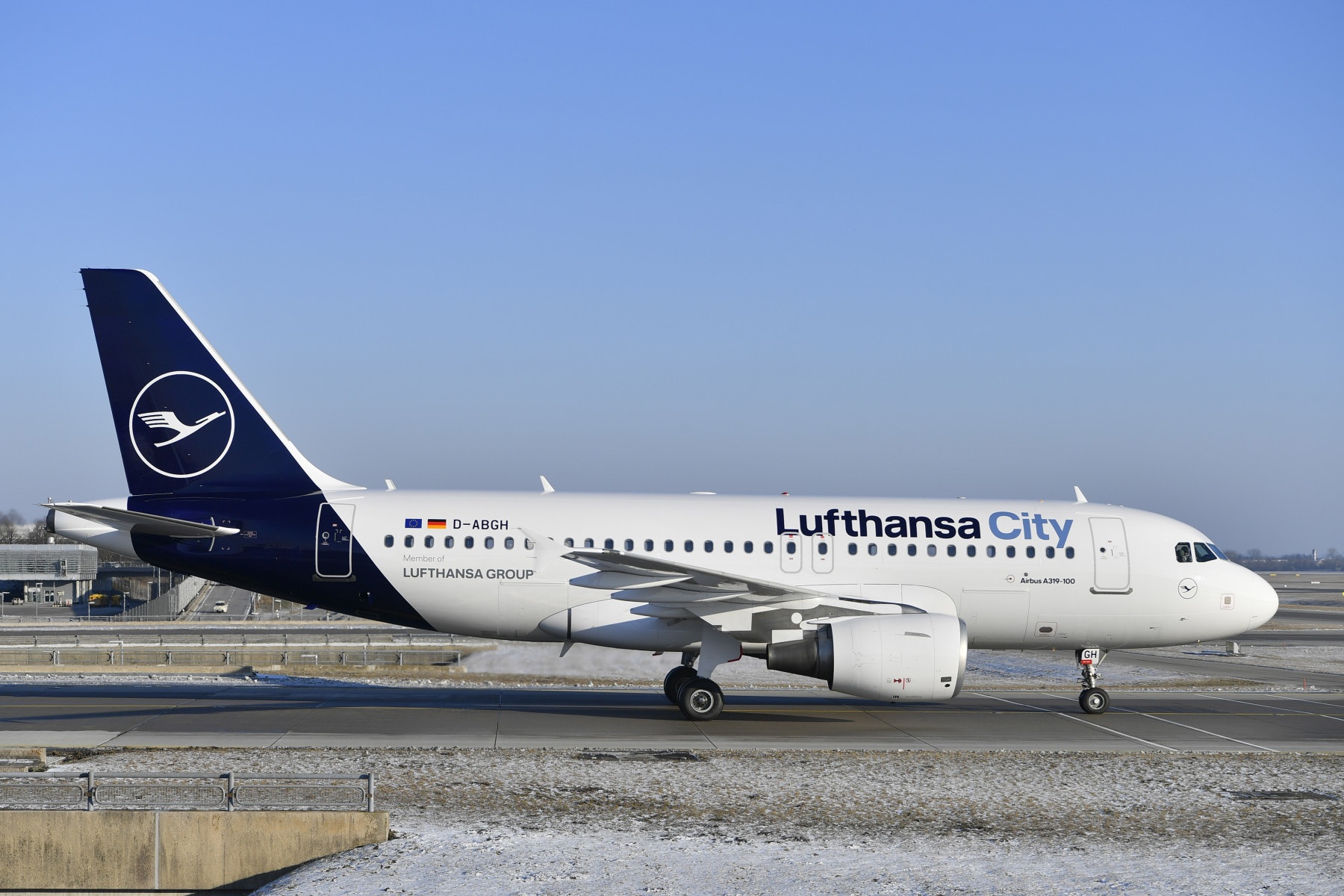
Germany’s Transport Minister Patrick Schnieder (CDU) has cautioned that the planned reduction in Germany’s air travel tax (Luftverkehrssteuer), set to take effect on July 1, 2026, will not automatically lead to cheaper flight tickets.

The primary goal of the tax cut is to boost the competitiveness of Germany as an aviation hub. German airports are currently handling passenger volumes at only about 90% of pre-pandemic levels, while many other European countries have exceeded those figures around 110%.

Schnieder emphasized that airlines decide their own pricing and routes, and the tax relief is meant to encourage them to maintain or expand operations in Germany rather than shifting flights elsewhere.

He told the Funke Media Group: “There is no automatic mechanism for lower ticket prices.” The head of the German Airport Association (ADV), Ralph Beisel, agreed, stating that the measure aims to strengthen Germany’s position in air travel competition, not directly lower fares.

This tax reduction reverses part of a 2024 increase introduced under the previous government. Earlier reports in 2025 suggested potential cheaper flights due to the cut, but airlines are not obligated to pass on the savings to consumers—they may use it to improve profitability or invest in routes.

This news broke amid ongoing discussions about Germany’s aviation sector lagging behind European peers. Taxation of aviation remains largely a national competence, with significant exemptions at the EU level driven by historical international agreements like the 1944 Chicago Convention and the Energy Taxation Directive (ETD, 2003/96/EC).

No EU-wide tax on kerosene— aviation fuel: Commercial aviation fuel is exempt from excise duties for intra-EU and international flights. This exemption applies across all member states, though domestic flights could theoretically be taxed none are as of late 2025.

No mandatory EU-wide ticket tax: Air passenger duties or “ticket taxes” are implemented nationally by some countries, varying widely in rates and structure. VAT on tickets: International flights are generally VAT-exempt; domestic flights may be subject to national VAT rates in some states.

Other mechanisms: Aviation emissions are addressed through the EU Emissions Trading System (ETS), which covers intra-EU flights and is expanding, rather than direct taxes. Proposals to introduce EU-wide kerosene taxation as part of the “Fit for 55” package (2021) have stalled due to lack of unanimous agreement in the Council.

Negotiations on revising the ETD remain blocked as of December 2025, with discussions around potential delays or exemptions for aviation fuel lasting until 2033–2045 or longer. ETD prohibits taxation except via bilateral agreements, none exist. Criticized as a subsidy worth €13–35 billion annually across the EU.

Ticket Taxes

No EU-wide harmonization; national only. Some calls (e.g., 2019 joint statement by 9 finance ministers) for uniform passenger taxes, but not implemented. VAT on international tickets exempted which aligns with international norms; domestic tickets may incur VAT in ~17 states.

EU ETS for Aviation; Applies to intra-EU flights; expanding to all departing flights. Market-based carbon pricing alternative to fuel taxes.

Several member states levy departure-based passenger taxes often distance-tiered. Rates are approximate and subject to change; Many countries e.g., Spain, Netherlands, Belgium have no or minimal passenger taxes. This patchwork creates competitive distortions, with airlines and hubs in low-tax countries benefiting.

Exemptions are seen as subsidies distorting competition with greener transport. Groups like Transport & Environment estimate a €35–47 billion annual “tax gap” if aviation were taxed like road fuels. Industry opposition: Airlines argue taxes reduce competitiveness, increase ticket prices without guaranteeing emission reductions, and duplicate ETS.

Stalled reforms: The 2021 ETD revision proposed phasing in kerosene taxes (2023–2033) with zero rates for sustainable fuels, but lacks consensus. Recent drafts suggest prolonged exemptions due to limited sustainable aviation fuel availability.

In summary, EU air travel taxation prioritizes exemptions to support connectivity and competitiveness, relying on ETS for emissions control. National variations persist, with no immediate shift toward EU-wide fuel or ticket taxes expected.

Uniswap Long-awaited Fee Switch Has Passed Overwhelmingly

0

The Uniswap governance vote to activate the long-awaited “fee switch” has passed overwhelmingly. The UNIfication proposal, jointly submitted by Uniswap Labs and the Uniswap Foundation, concluded voting on December 25, 2025 (Christmas Day), with near-unanimous approval.

Approximately 125 million UNI tokens voted in favor and only 742 against, 99.9% support. A portion of trading fees on Uniswap v2 and select v3 pools covering 80-95% of LP fees on Ethereum mainnet will now go to the protocol instead of entirely to liquidity providers (LPs). For v2 pools: Protocol fee of 0.05% (LPs receive 0.25% instead of 0.3%.

For v3 pools: Initially 1/4 for low-fee tiers (0.01%/0.05%) and 1/6 for higher tiers (0.30%/1%). Protocol fees will programmatically burn UNI tokens, creating deflationary pressure tied to trading volume. Additionally, a one-time retroactive burn of 100 million UNI from the treasury is scheduled.

Changes take effect after a ~2-day timelock, meaning activation around December 27, 2025. Uniswap Labs will remove fees from its interface/wallet/API, consolidate operations transitioning Foundation responsibilities, and establish a growth budget for protocol development.

This marks a major shift, linking UNI’s value more directly to protocol revenue after years of debate previously delayed due to regulatory concerns. Uniswap founder Hayden Adams called it a “turning point” for the protocol’s next decade.

The market reacted positively initially, with UNI surging during voting, though longer-term price impact depends on execution and volume. This aligns Uniswap with other DeFi protocols that capture value at the token level.

The UNIfication governance proposal has been executed following its passage and the ~2-day timelock. This introduces two distinct burn mechanisms for the UNI token, fundamentally shifting it from a pure governance token to one with deflationary economics tied to protocol usage.

100 million UNI tokens. Transferred from the Uniswap treasury and sent directly to a burn address permanently removed from circulation. This is a “retroactive” adjustment, approximating the amount of UNI that could have been burned if the protocol fee switch had been active since UNI’s launch in September 2020.

Its reduces total and circulating supply by ~16% from roughly 630 million to ~530 million UNI, depending on exact figures at execution. Protocol fees from trading activity are collected in an immutable on-chain contract called TokenJar one per chain, acting as a unified collector.

Fees can only be released from TokenJar by burning UNI in a separate contract called Firepit. This ensures that any withdrawal or use of accumulated fees requires permanent destruction of UNI tokens, creating direct deflationary pressure proportional to protocol volume.

Uniswap v2 pools on Ethereum mainnet: Protocol takes 0.05% LPs get 0.25% instead of 0.30%. Select Uniswap v3 pools high-volume ones covering 80-95% of LP fees on Ethereum mainnet: Protocol takes ~1/6 to 1/4 of LP fees e.g., 25% on 0.01%/0.05% tiers, ~16.7% on higher tiers.

Unichain sequencer fees: Net fees after L1 costs and 15% to Optimism are routed directly into the same burn mechanism. Future expansions via additional governance votes could include v4 pools, UniswapX, L2s/other chains, aggregator hooks, etc.

Burns occur when fees are “released” via governance-approved actions or automated mechanisms. Higher trading volume ? more fees accumulated ? more UNI burned over time. Estimated Scale: Based on recent volumes ~$2B daily, $600M+ annualized fees, the protocol portion could generate $100-130M+ annually for burns estimates vary by source and volume.

UNI supply decreases as Uniswap and Unichain usage grows, potentially increasing scarcity and value accrual for holders. No direct buybacks: Fees go to TokenJar first; burns are required to access them not automatic market buys. Future adjustments like expanding fee pools or new releasers require UNI holder votes.

This mechanism aligns UNI’s economics with protocol performance for the first time, addressing years of community debate. Long-term burn rate will depend on trading volume and future fee expansions.

Biblical Film David Topping Shows Independent Creators Could Strive Amid Heavy Funded Films

0

The animated biblical musical David from Angel Studios opened to an estimated $22 million domestically over its debut weekend of December 19–21, 2025, outperforming The SpongeBob Movie: which opened to about $16 million in the same frame.

This made David the top-grossing family-oriented animated movie of that weekend, beating SpongeBob by exactly $6 million as reported by multiple sources, including Angel Studios’ official announcement, Box Office Mojo, and outlets like Variety, Deadline, and Animation Magazine.

David finished #2 overall behind Avatar: Fire and Ash’s massive $88–89 million debut, while SpongeBob landed at #4. It also set records as the highest-opening faith-based animated film ever. Great win for an underdog story—literally.

The success of Angel Studios’ animated biblical musical David—opening to $22 million domestically and topping The SpongeBob Movie: Search for SquarePants ($16 million) as the #1 family/animated film of its debut weekend—carries several notable implications for the film industry, audiences, and cultural trends as of late December 2025.

Strong Demand for Faith-Based and Values-Driven Family Entertainment

David set records as the highest-opening faith-based animated film ever, surpassing Angel’s own The King of Kings, $19.4 million earlier in 2025 and classics like The Prince of Egypt.

This builds on Angel Studios’ track record like the Sound of Freedom, The Chosen, showing a reliable audience for uplifting, family-safe content—especially timed around holidays pre-Christmas here, pre-Easter for King of Kings.

Outlets note families seek alternatives to mainstream Hollywood fare perceived as increasingly explicit or morally ambiguous, with David’s themes of faith, courage, and traditional values resonating strongly.

With David and The King of Kings which grossed ~$61–80 million worldwide, Angel now claims two of the top 10 highest-grossing animated domestic releases of 2025. This marks their best theatrical opening ever around $22M > Sound of Freedom’s $19.6M and validates their crowd-funded, guild-driven model, 1.6M+ members greenlight projects.

It opens doors for more animated projects like the upcoming Animal Farm adaptation and positions Angel as a niche powerhouse challenging major studios in the family space. Search for SquarePants underperformed expectations despite strong reviews highest in franchise history and brand recognition, possibly due to franchise fatigue after 25+ years, oversaturation on streaming platforms like Paramount+, Netflix spin-offs, and direct competition from David for family audiences.

Many families opted for the wholesome biblical story over the absurdist comedy, highlighting a split in the family market: some prefer “safe” values-driven options during holidays.

Even against blockbuster competition, Avatar: Fire and Ash dominated with ~$88–89M, David secured #2 overall and proved grassroots marketing + targeted demographics can drive surprises. Potential for strong “legs” with extended run into the holiday season, similar to past faith hits, with staggered international releases starting soon.

It underscores polarization in entertainment: demand for “light-amplifying” stories is growing, potentially pressuring Hollywood to diversify beyond sequels and IP-heavy tentpoles, many film enthusiasts having to see light in faith based and family films which tends to have more run in the new year due to the current administration focusing on safety entertainment space for minors.

Overall, this is a clear win for independent, audience-funded faith content—proving there’s a substantial, underserved market hungry for family films that align with traditional/religious values, even in a crowded holiday corridor. If David holds well through Christmas and New Year’s, it could further accelerate this trend into 2026.