DD
MM
YYYY

PAGES

DD
MM
YYYY

spot_img

PAGES

Home Blog Page 833

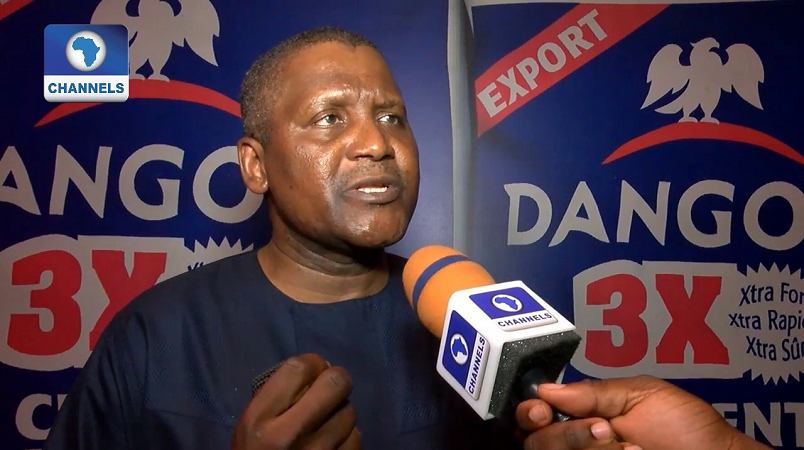
Dangote 3.0 Begins As Aliko Dangote Resigns as Chairman of Dangote Cement

0

Aliko Dangote 3.0 begins: “Aliko Dangote has officially stepped down as Chairman and Director of Dangote Cement Plc, marking a significant shift in the leadership structure of the company he built into Africa’s largest cement producer. The decision, announced in a statement released Friday, takes immediate effect and signals what analysts describe as another bold move by the billionaire to sustain his legacy while sharpening the conglomerate’s focus on its most critical frontier — oil and gas. Mr Emmanuel Ikazoboh, an Independent Non-Executive Director, has been named the new Chairman of the Board, succeeding Dangote.”

That 3.0 will focus on expanding his diversified conglomerate with oil & gas at the heart of it. With a potential deep seaport loading, the Dangote seaport will disintermediate not just other ports in Nigeria but also the Port of Lome in Togo. Yes, he will run his seaport end-to-end that no other port will have a chance.

Why? You load in Germany or China, and want the items delivered to a warehouse in Onitsha or Kano or Ibadan, Dangote deep seaport will link to Dangote trucks to make that happen. In other words, they will deliver to your doorsteps! That is an asymmetric advantage in Nigeria.

From my point of view, Aliko Dangote has undergone three phases as a businessman.

  • Dangote 1.0: The 1970s mercantilist trader who was buying and selling cotton and other commodities.
  • Dangote 2.0: The 1990s cement magnate and industrialized conglomerate builder
  • Dangote 3.0: The 2020s oil and gas generation-shaping businessman building the most advanced oil and gas empire in continental Africa.

Dangote Steps Down as Chairman of Dangote Cement to Focus on Refinery and Strategic Expansion

0

Nigerian businessman and philanthropist Aliko Dangote has officially stepped down as Chairman and Director of Dangote Cement Plc, marking a significant shift in the leadership structure of the company he built into Africa’s largest cement producer.

The decision, announced in a statement released Friday, takes immediate effect and signals what analysts describe as another bold move by the billionaire to sustain his legacy while sharpening the conglomerate’s focus on its most critical frontier — oil and gas.

Mr Emmanuel Ikazoboh, an Independent Non-Executive Director, has been named the new Chairman of the Board, succeeding Dangote. The company also announced board changes, including the retirement of Professor Dorothy Ufot and the appointment of Hajiya Mariya Aliko Dangote.

According to the statement, Dangote’s exit from the cement board is intended to enable him to focus more deeply on the Dangote Group’s core strategic areas, particularly the multibillion-dollar Dangote Refinery, along with the group’s Petrochemicals, Fertiliser, and Government Relations operations. These segments are considered vital to the group’s five-year growth strategy.

Industry analysts believe that Dangote’s exit from the cement board is not a retreat but a calculated pivot toward the segment of his business that could redefine Nigeria’s industrial landscape — the oil sector. With the recently commissioned 650,000 barrels-per-day Dangote Refinery expected to dramatically reduce Nigeria’s dependence on imported fuel and transform the country’s downstream oil industry, Dangote’s move signals where he believes the future of his empire — and Nigeria’s economy — now lies.

Dangote has touted the refinery as having the potential to change the narrative on energy self-sufficiency for Nigeria and West Africa.

Legacy Cemented in Cement

Aliko Dangote exits Dangote Cement on a high note. Under his chairmanship, the company evolved from a local cement manufacturer into Africa’s largest cement producer, with an installed production capacity of 52.0 million metric tons per annum (Mta), including 35.25Mta in Nigeria alone. Expansion projects in Côte d’Ivoire and Itori, Ogun State, are expected to raise total capacity to 61.0Mta by year-end.

This transformation has not only reshaped construction and infrastructure across sub-Saharan Africa but also turned Dangote Cement into one of the most profitable corporations on the continent.

In the first half of 2025, the company posted its highest-ever financial results, with group revenue rising by 17.7% to N2.07 trillion and EBITDA growing 41.8% to N944.9 billion. Profit before tax surged 149% to N730 billion, while profit after tax climbed 174% to N520.5 billion. The company also reported an 18.2% rise in export volumes, with multiple clinker shipments to Ghana and Cameroon.

New Leadership, Continued Vision

Emmanuel Ikazoboh, the new board chairman, described his appointment as “an honor,” pledging to maintain “the highest standards of leadership and dedication.” He hailed Dangote Cement as “a beacon of African enterprise” and committed to upholding its reputation through operational efficiency, sustainability, and strategic expansion.

“We will continue to invest in innovation and alternative energy to reduce reliance on fossil fuels, while boosting employee capacity and community engagement,” Ikazoboh said.

His leadership is expected to usher in a new phase for the company as it targets regional market consolidation and explores decarbonization strategies amid rising ESG (Environmental, Social, and Governance) pressures globally.

For Dangote, who remains President/CEO of the Dangote Group, the move suggests an even deeper personal involvement in steering the refinery through its early years. The project, which has faced several delays, finally commenced production and is gradually beginning to ship products to Nigerian marketers, though price and distribution remain points of speculation.

Analysts believe his full attention on the refinery may help overcome lingering regulatory, logistical, and pricing hurdles that could affect its national and continental impact. With growing anticipation that refined products from the Dangote Refinery could dominate West African markets and significantly impact fuel pricing in Nigeria, the stakes are high — and so is the promise.

U.S. Vice President Sees AI as an Opportunity, Not a Job Killer – Says U.S. Is ‘Under-Indexed in Technology’

0

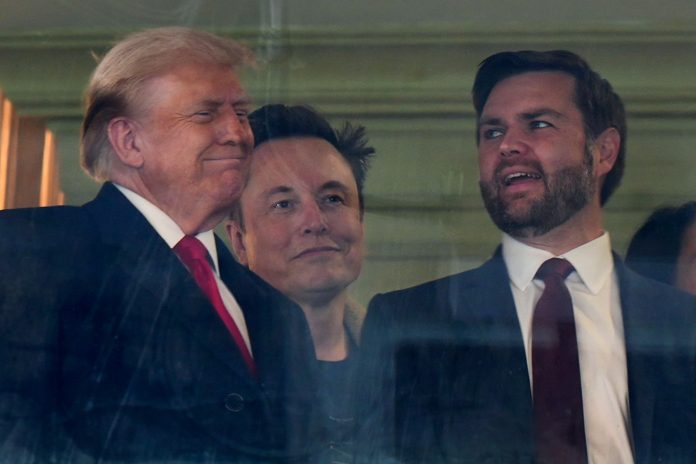
At the Winning the AI Race summit in Washington, D.C., Vice President JD Vance pushed back against rising fears that AI and robotics will wipe out jobs across the U.S. economy, particularly in transportation and manufacturing.

Speaking directly to concerns raised by entrepreneur Jason Calacanis, who warned that AI-powered systems like self-driving cars and Elon Musk’s Optimus robot could decimate jobs in driving and factories, Vance offered a different assessment.

“If the robots were coming to take all of our jobs, you would see labor productivity skyrocketing in this country. But actually, you see labor productivity flatlining,” Vance said. “What that means, from my perspective, is that our country is under-indexed in technology, not over-indexed.”

His argument was simple but striking: if AI were truly replacing workers en masse, productivity would surge. Instead, he pointed to years of stagnating productivity as evidence that the real problem is the underuse of technology, not its overreach.

Real-World Proof: Hadrian’s AI-Powered Factory to Add 350 Jobs

Backing Vance’s position, AI-focused defense tech startup Hadrian announced it had raised $260 million in Series C funding to build a new 270,000-square-foot facility in Mesa, Arizona. Despite its heavy use of automation and robotics, Hadrian’s “Factory 3” is expected to create 350 new manufacturing jobs.

Hadrian, which builds precision parts for aerospace and defense industries, already operates advanced automated factories in California. According to CEO Chris Power, their first factory runs 10 robots for every human employee and manufactures roughly 10,000 components per month for rockets, satellites, and defense equipment.

This model illustrates that AI and robotics are not just reducing labor—they are also creating new, highly-skilled jobs, supporting Vance’s thesis that the U.S. can grow both technologically and economically if policy encourages innovation.

Silicon Valley’s Overreliance on Foreign Talent

Vance also took aim at tech companies for claiming a STEM talent shortage while sidelining American graduates.

“If you’re not hiring American workers from out of college for these jobs, then how can you say that you have a massive shortage?” he asked.

He called for more opportunities for U.S. graduates, noting that Big Tech’s hiring patterns have leaned heavily toward foreign labor under the H-1B visa program, while many American STEM students remain underemployed.

Vance’s speech is also part of a broader push by the Trump administration to keep regulation of AI minimal. At a separate event in Paris earlier this year, Vance declined to endorse the European Union’s AI safety pledges, criticizing the bloc’s “excessive regulation” and reaffirming the U.S. position in favor of innovation-first policies.

“We’re not going to slow down American innovation because Europe has chosen to shackle theirs,” he reportedly said.

This puts Washington and Brussels at opposite ends of the regulatory spectrum, with China also rising as a competitive force, having recently launched its own GPT-4 competitor, DeepSeek R1—an event that has rattled U.S. investors and heightened urgency around maintaining technological leadership.

Vance’s remarks support a shift from fear-based narratives to opportunity-driven discussions around AI. Rather than viewing automation as a job killer, he painted a picture of technology as a growth engine—one that, with the right policies, could rebuild American manufacturing and strengthen the labor force.

Hadrian’s robotic factory suggests that this vision is already being realized on the ground. And with the Trump administration firmly behind AI innovation, Washington is betting big that the next wave of technological advancement won’t erase jobs—it will build them.

Access Bank Expands Global Reach with 76% Acquisition of AfrAsia Bank in Mauritius—Its Second Major International Deal in a Month

0

Access Bank Plc, through its wholly owned subsidiary Access Bank UK Limited, has acquired a 76% majority stake in AfrAsia Bank Limited, a commercial bank based in Mauritius.

The deal marks a significant milestone in Access Bank’s ongoing global expansion drive, which now appears to be unfolding at a rapid pace.

The acquisition received full regulatory clearance from the Bank of Mauritius and the Financial Services Commission, sealing Access Bank’s entrance into one of Africa’s top-rated international financial centers.

AfrAsia Bank, headquartered in Mauritius’ International Financial Centre, is known for its role in bridging African, Asian, and global markets. Its client base includes high-net-worth individuals, family offices, corporations, and international investors operating in fast-growing economies. The bank also maintains a representative office in South Africa, reinforcing its continental relevance.

“The Board of Directors of AfrAsia Bank Limited wishes to inform stakeholders that The Access Bank UK Limited has completed the acquisition of a 76% majority stake in the bank’s share capital,” AfrAsia said in a statement confirming the transaction.

IBL Ltd, AfrAsia’s founding shareholder, will retain a 7.89% minority stake, signaling sustained investor confidence even as majority ownership changes hands.

The deal extends Access Bank UK’s operational reach beyond its current international locations—London, Dubai, Paris, Hong Kong, Malta, and Lagos—and folds AfrAsia into its growing global network.

Access Bank UK is noted for its strong balance sheet, prudent financial governance, and high capital adequacy levels. AfrAsia is expected to benefit from these institutional strengths while preserving its client-focused banking model.

“The Access Bank UK Limited will be supported by the Bank’s strong and dedicated team, whose proven track record and extensive ability in banking and investment have contributed to making it one of the leading banking institutions in the region,” the joint statement added.

Second Deal in One Month: A Pattern of Aggressive Expansion

This acquisition comes just weeks after Access Bank finalized its takeover of Standard Chartered’s Consumer, Private, and Business Banking division in Tanzania, signaling a deliberate expansion into East Africa. The Tanzanian acquisition was part of Standard Chartered’s broader exit strategy from smaller African markets, including Angola, Cameroon, The Gambia, and Sierra Leone, as it pivots toward high-value global wealth clients.

Access Bank’s back-to-back acquisitions suggest a deliberate strategy to strengthen its pan-African footprint while simultaneously extending its global banking capabilities, particularly in offshore banking and wealth management, two areas in which AfrAsia already has operational expertise.

These moves also reflect Access Bank’s bid to capture a growing investment-savvy and mobile client base that demands cross-border financial solutions, modern digital platforms, and access to international markets.

Access Bank is Nigeria’s largest bank by assets. As of Q1 2025, it had total assets of N39.08 trillion, approximately $25.43 billion.

What The Deal Means for Access Bank

Access Bank gains not just a gateway into Mauritius’ sophisticated financial services sector by integrating AfrAsia into its ecosystem, but also a strategic springboard to Asia and offshore investment flows. Mauritius, long seen as a conduit for capital into Africa, offers tax treaties, robust financial regulations, and a stable economic environment, making it a valuable base for banking operations.

Access Bank’s bold international acquisitions reinforce its ambition to become Africa’s gateway to the world—a financial powerhouse that competes not just within Africa but globally. The swift execution of these deals within a month suggests that more regional and international transactions could be on the horizon.

While global financial institutions continue to recalibrate and exit smaller African markets, Access Bank appears poised to fill the vacuum, building a continent-wide and globally connected banking institution with the scale and vision to serve both emerging and mature economies.

Intel Slashes 24,000 Workforce and Retreats From Global Projects Amid $2.9bn Loss

0

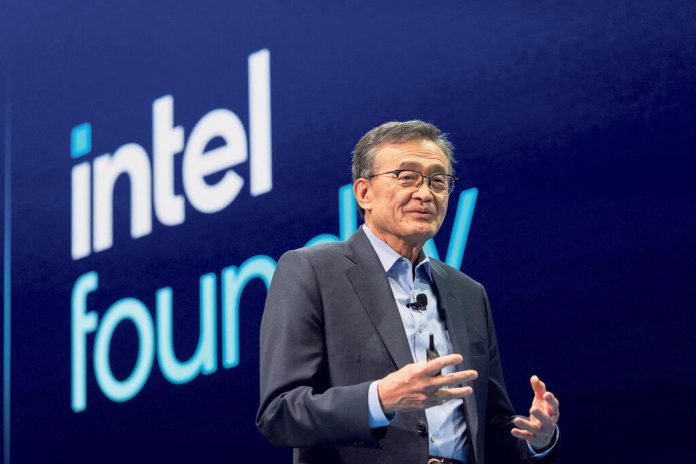
Intel is making the deepest cuts in its history, shedding nearly a quarter of its workforce, retreating from multi-billion-dollar projects in Europe and Latin America, and warning it may abandon its foundry ambitions altogether if it cannot secure anchor clients — all part of an aggressive strategy under new CEO Lip-Bu Tan to reverse the company’s prolonged decline.

The chipmaker on Thursday revealed in its Q2 2025 earnings that it would end the year with approximately 75,000 core employees, down from 99,500 at the end of 2024. That’s a cut of roughly 24,000 workers, or about 15% of the company’s total workforce, when factoring in other organizational trimming. The layoffs are not just numbers on a spreadsheet — they reflect Intel’s decision to shut down or scale back major operations in Costa Rica, Poland, Germany, and even Ohio.

This massive restructuring underscores just how far Intel has fallen from its former glory. Earlier this month, Tan delivered a sobering admission that stunned the tech world: “We are not in the top 10 semiconductor companies anymore.”

Abandoning Global Projects, Consolidating Plants

Intel is abandoning its much-publicized plans to build chip “mega-fabs” in Germany and an assembly and test facility in Poland. Both projects were once seen as symbols of Intel’s global resurgence — €30 billion was earmarked for the German facility alone — but Tan’s new leadership has opted to axe them entirely, saying they no longer fit the company’s demand-aligned model.

In Costa Rica, where Intel employs over 3,400 people, the company will shutter its assembly and test operations, shifting those functions to Vietnam. A spokesperson told The Verge that around 2,000 employees will remain in engineering and corporate roles.

Even domestic expansion is taking a hit. Intel will slow construction at its Ohio plant, citing the need to match spending with real market demand. It’s a direct rebuke of the old strategy of “build it and they will come” — a model Tan flatly rejects.

“We will build what customers need when they need it, and earn their trust,” he said during the earnings call.

The turnaround plan is not just about layoffs. It’s a reckoning with Intel’s strategic missteps in recent years — overbuilding fabs without firm orders, fragmented operations, and chronic underperformance in the fast-growing AI sector, where Nvidia has raced far ahead.

Intel’s problems have lingered for a long time. The company’s stock lost 60% of its value in 2024, its worst year ever. It has hemorrhaged market share in CPUs, fallen behind in AI chip development, and seen key business units underperform. Even as competitors like AMD and Nvidia surged, Intel’s attempt to regain momentum with its foundry business stalled.

This quarter, Intel posted a $2.9 billion net loss on $12.9 billion in revenue, flat from a year earlier. The loss widened from $1.6 billion in the same period last year. The hit included an $800 million impairment charge tied to “excess tools with no identified re-use.”

Despite the loss, Intel slightly beat analyst expectations, delivering adjusted earnings of 10 cents per share, compared to estimates of just a penny. Revenue guidance for Q3 also topped Wall Street estimates.

Still, the small upside was overshadowed by Intel’s warning that it may pause or discontinue its foundry business if it cannot land a major external customer for its next-gen 14A process node. The company disclosed in an SEC filing that it has yet to secure significant external customers for any of its advanced nodes — a devastating blow for its foundry ambitions.

The AI Boom Left Intel Behind

While the broader semiconductor industry is booming, driven by artificial intelligence workloads and hyperscaler demand, Intel’s slice of that pie remains small. In Q2:

  • Data center business rose just 4% to $3.9 billion
  • PC chip sales declined 3% to $7.9 billion.
  • Foundry revenue increased only 3% to $4.4 billion.

Tan acknowledged Intel had missed the AI wave but insisted that course correction is underway. He’s promised to personally oversee every major chip design — a rare move at his level — saying that “every major chip design needs to be personally reviewed and approved by me before tape out.”

Reshaping Intel’s Future

Tan has already taken bold action in his first few months. In addition to the layoffs and project cancellations, Intel:

  • Shut down its automotive chip unit in June
  • Spun off the RealSense computer vision division in July
  • Plans to cut $17 billion in expenses this year alone
  • Will launch the Panther Lake laptop chips later in 2025, with Nova Lake to follow by the end of 2026
  • Is ramping up production of Lunar Lake chips in the next quarter

He also plans to name new leadership for the data center business next quarter and will unveil a “full-stack AI strategy” in the coming months.

“No More Blank Checks”

Tan’s internal memo to employees revealed a tough-love assessment of Intel’s past mistakes. “Over the past several years, the company invested too much, too soon – without adequate demand,” he wrote. “Our factory footprint became needlessly fragmented and underutilized.”

Intel will no longer approve projects without customer demand in hand. The upcoming 14A node — a critical part of Intel’s foundry roadmap — will be developed only if customer commitments are secured. “There will be no more blank checks,” Tan said.

Intel’s stock dropped 9% following the earnings release, erasing much of the modest gains it had posted earlier in the year. Analysts at Barclays warned that the company’s warning about its foundry future creates “more uncertainty to product roadmaps”, which in turn “makes customer adoption more unlikely.”

Still, JPMorgan analysts said the foundry pullback was a “positive step”, acknowledging that Intel’s recent spending spree was unsustainable.

A Path to Recovery?

The transformation underway at Intel may offer the most credible shot at recovery in years. While painful, the layoffs and strategic retreats are designed to stem the bleeding, consolidate the company’s core competencies, and focus on real market demand, not hopes or hype.

There’s no guarantee it will work. But Tan’s leadership marks a sharp break from Intel’s recent past — and for the first time in years, investors and employees alike have a clear, although difficult, roadmap for what comes next.