DD
MM
YYYY

PAGES

DD
MM
YYYY

spot_img

PAGES

Home Blog Page 84

Bitcoin Slides Below $90K as December Opens With Renewed Selling Pressure

0

Bitcoin began December on a downward slide, dropping below $90,000 on Monday and extending losses after suffering its steepest monthly decline since the 2021 crypto crash. Renewed risk aversion pushed investors out of both stocks and digital assets, fueling a selloff that shows few signs of easing.

The world’s largest cryptocurrency fell as much as 6.1% during the session and was trading near $86,384 at the time of reporting, down nearly 5% and headed for its largest single-day fall in a month. The downturn leaves Bitcoin hovering near last month’s eight-month low of $80,553.

Market analysts observed that Bitcoin’s sharp fall below $86,000 coincided with a notable shift in wallet behavior. Large holders have slowed their accumulation, while smaller retail buyers have increased their purchases, an imbalance that often signals a late-cycle phase marked by fragility. Bitcoin has fallen considerably since setting an all-time high of $126,223 in early October.

Further declines could send the price back toward the November 21 low of $80,553, a drop previously accelerated by concerns surrounding an emerging artificial-intelligence bubble. According to commentary from The Kobeissi Letter, the latest slide stemmed from thin weekend liquidity combined with record-high leverage, rather than fundamental weakness. The publication noted that Bitcoin plunged $4,000 within minutes despite the absence of market-moving news, triggering mass liquidations and a cascading selloff.

Victoria Scholar, head of investment at Interactive Investor, said BTC selling pressure appears persistent, “It feels like investors, big and small, are feeling very cautious toward cryptos in the short term at least”, she said.

Analysts widely agree that the $80,000–$85,000 range now represents critical support. A sustained hold above that zone could prompt stabilization or even a rebound in the coming weeks. However, a decisive breakdown could signal the start of a deeper retreat. Investors who bought near the October peak may have to wait significantly longer before returning to profit.

The broader crypto market mirrored Bitcoin’s decline. Ethereum slumped over 7% to around $2,800, while XRP, BNB, Solana, Cardano, and Tron also posted sharp losses. More than $564.3 million in long positions were liquidated, including $188.5 million tied to Bitcoin and $139.6 million linked to Ether. In total, both long and short liquidations erased approximately $641 million from the market.

The selloff is widely viewed as a “risk-off start to December,” as investors divest from riskier assets amid rising macroeconomic uncertainty. Expectations for swift interest-rate cuts from the Federal Reserve have diminished, while inflation remains stubborn in major economies. Consequently, risk assets including cryptocurrencies have come under renewed pressure.

Heatmap data viewed by Tekedia presents additional concerns. Bitcoin’s price has been consuming liquidity around $86,000, but substantial bid orders remain stacked between the current spot price and $79,600. This suggests a possible move lower to sweep remaining liquidity before any meaningful rebound.

Technically, Bitcoin confirmed a bear-flag pattern on the daily chart by dropping below the lower boundary at $90,300. Veteran trader Peter Brandt shared a macro-outlook indicating that Bitcoin could find long-term support within the $45,000–$70,000 zone.

Outlook

The crypto market now turns its attention to the first key economic events of December. The Fed’s preferred inflation gauge, due December 5, may sway expectations for rate cuts. A softer reading could lift sentiment, while a stronger print may apply additional downward pressure on crypto. Also, the U.S. CPI report follows on December 10 and is expected to further influence market outlooks ahead of the upcoming Federal Reserve decision.

With both inflation readings scheduled before the Fed meeting, markets may undergo multiple sentiment resets within days. As highlighted by Cointelegraph, Bitcoin’s current trajectory is closely mirroring the 2022 bear market, with a near-perfect correlation so far in 2025. If the pattern holds, a sustained rebound may not materialize until well into the first quarter of next year.
FBN HoldCo Exits Merchant Banking as EverQuest Completes Takeover FBNQuest

0

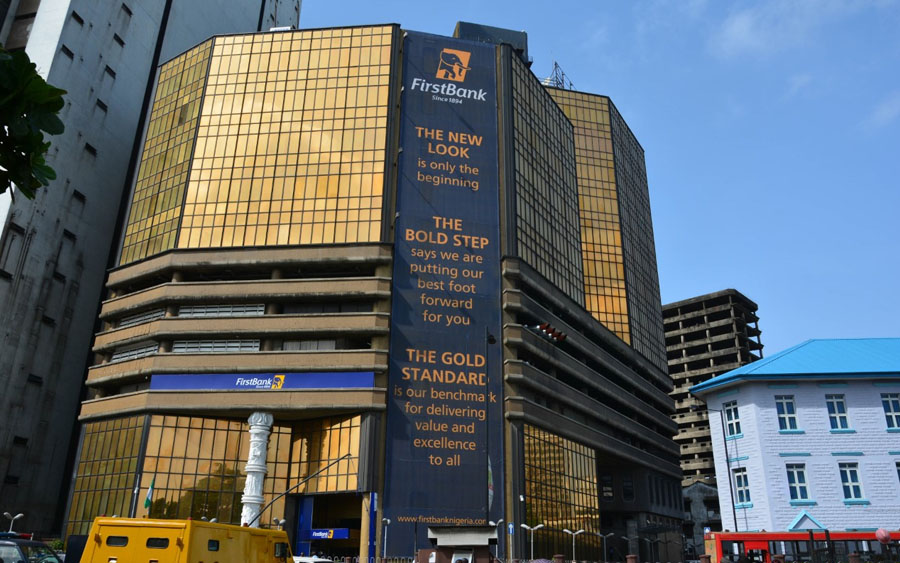
First HoldCo Plc has confirmed to the Nigerian Exchange Limited (NGX) that it has completed the sale of its 100 percent equity stake in FBNQuest Merchant Bank Limited to EverQuest Acquisition LLP, bringing a long-running restructuring of its investment banking and asset management subsidiaries to a definitive close.

The announcement, contained in a regulatory filing dated November 27, 2025, states that all approvals from the Central Bank of Nigeria have now been secured, making the transaction final and formally ending FBN Holdings’ ownership of the merchant banking franchise.

EverQuest Acquisition LLP is said to be a consortium comprising Custodian Investments Plc, Aion Investments, and Evercorp Industries.

The road to divestment

The journey toward this exit began in September 2024 when FBN HoldCo revealed its intention to sell FBNQuest Merchant Bank as part of a wider portfolio rebalancing effort. At the time, the Group pointed to the need to reinforce its core commercial banking operations, which account for the bulk of its revenue, market share, and long-term growth prospects.

According to a report by Nairametrics:

• EverQuest emerged as the preferred buyer after a competitive bidding process.
• The sale was framed as a “strategic separation” that would streamline the Group’s HoldCo structure.
• The transaction was aimed at sharpening FBN HoldCo’s focus on commercial banking and accelerating its digital banking push.

Analysts were broadly aligned in their view that the divestment was both tactical and overdue. Under the HoldCo model, banks often face higher regulatory capital requirements tied to small subsidiaries. FBNQuest Merchant Bank, contributing less than 5 percent of Group revenue and assets, had long been seen as a business with limited scale relative to the Group’s larger ambitions.

Some analysts have argued that trimming non-core operations would eliminate regulatory drag, support a cleaner capital structure, and help unlock shareholder value. The move also aligned with a wider pattern in the Nigerian banking sector where HoldCos have been pruning subsidiaries to focus on segments with stronger margins and faster digital adoption.

What the completion signals for the market

With the completion of the sale, FBNQuest Merchant Bank is now fully out of the FBN Holdings umbrella. EverQuest Acquisition LLP assumes complete operational and strategic responsibility for the franchise.

The new owners bring a mix of institutional investment backgrounds, and the market will be watching for whether EverQuest adopts a more aggressive expansion stance in corporate finance, structured credit, and capital markets. It is notable that EverQuest is stepping into a merchant banking sector that has grown more competitive, driven by rising demand for advisory services, debt capital structuring, and private-market deals.

The divestment brings immediate clarity to FBN Holdco’s business model. The Group can now redirect capital, talent, and managerial attention toward higher-growth areas, which include commercial banking, consumer lending, agency banking, and payments. This shift fits neatly into a broader strategy of pushing digital financial services more forcefully across Nigeria, where electronic transactions and mobile banking continue to expand.

In addition, the sale reshapes competitive dynamics in merchant banking. EverQuest’s entry adds a new layer of competition to a space heavily influenced by institutions that blend investment banking, capital markets, and structured finance.

Meanwhile, FBN HoldCo’s focus on strengthening its main banking franchise   reinforces a broader trend among Nigeria’s tier-one banks. Several have scaled back non-core subsidiaries in response to higher regulatory scrutiny, rising capital thresholds, and the need to maintain leaner operating models.

Legacy and background of FBNQuest Merchant Bank

FBNQuest Merchant Bank began life as Kakawa Discount House before being acquired by FBN Holdings in 2014. It secured regulatory approval to operate as a merchant bank in 2015. Over the years, it has built capabilities in corporate banking, treasury operations, structured finance, and investment banking advisory.

Yet despite its reputation and niche strengths, the bank remained a relatively small piece of the FBN Holdings empire, contributing under 5 percent of Group revenue and assets. The decision to sell it fits within a deliberate, multiyear internal evaluation of how the Group allocates capital under the HoldCo structure.

Looking ahead, with all regulatory and transactional processes concluded, the focus will now shift to two critical issues:

• How EverQuest plans to reposition FBNQuest Merchant Bank in a market where competition is intensifying.
• How FBN HoldCo leverages the released capital and operational clarity to accelerate growth in commercial and digital banking.

The transaction is widely seen as one of the most consequential corporate realignments in Nigeria’s financial services industry this year, setting the stage for both institutions to pursue sharply different growth paths.

BlockDAG’s Launch Stability: Mandatory Vesting Aligns with Cardano Upgrades and Ethereum Accumulation

0

The current market for foundational distributed ledger platforms presents a paradox. The much-anticipated Cardano (ADA) price rally is continuously suppressed by sudden, large-scale crypto sales from major holders, while the latest Ethereum (ETH) forecast analysis reveals that its robust underlying principles are in constant conflict with unpredictable price volatility.

This ongoing struggle among established cryptos underscores a critical vulnerability: how can projects effectively safeguard against the immediate, value-destroying sales by short-term speculators upon public launch? BlockDAG addresses this with a structured solution: the Vesting Alignment.

By implementing a mandatory 40% immediate unlock and distributing the remaining 60% monthly over three subsequent periods, the project actively discourages quick financial exits. This anti-speculative framework is specifically designed to reward those committed to the crypto’s long-term success, positioning BlockDAG as the genuine best new crypto to buy for sustainable growth.

1. BlockDAG’s 40/60 Vesting Shield: Protecting Launch Integrity

The exceptional success of BlockDAG’s over $435 million funding campaign is now secured by a stringent economic safeguard: the mandatory crypto release schedule. This structure functions as an important protection measure, ensuring the project primarily benefits patient capital rather than speculative participants seeking rapid returns. The policy dictates that all purchased cryptos follow a fixed distribution schedule: 40% is made available immediately upon public listing, and the remaining 60% is released monthly over the subsequent three months.

This 40/60 structure is a deliberate defense against sudden market downturns. By strictly limiting the quantity of available cryptos that can be sold immediately, BlockDAG effectively discourages “pump-and-dump” trading schemes and prevents the kind of immediate price collapse that has plagued many previous pre-launch initiatives.

The recent termination of all promotional incentives and perks further reinforces this anti-speculative posture, firmly positioning the project as a structurally sound best new crypto to buy. Currently in Batch 32, the price is set at $0.005, contrasting sharply with the confirmed public listing price of $0.05 per crypto, which signals a clear runway for potential high returns for early participants.

The structured release schedule effectively bridges the period between the funding phase and the full operational launch, ensuring the crypto distribution is gradual and healthy. This methodical approach aligns the financial commitment of all ecosystem participants: the core team, the major institutional backers provided an $86 million commitment, and the extensive community of over 312,000 holders.

This disciplined, non-speculative foundation, combined with the project’s 15,000 TPS hybrid technology, is why BlockDAG is viewed as a strong candidate for the best new crypto to buy. Furthermore, with only 4.2 billion coins remaining for sale, the supply is rapidly tightening.

2. Cardano Eyes Breakout Amidst Technical and Regulatory Catalysts

Cardano (ADA) has recently faced considerable downward pressure, trading near $0.61 USD following a noticeable decline in late October. This price weakness, where the crypto struggled to hold the crucial $0.60 price floor, was partly exacerbated by large-scale sales from major holders, amounting to 100 million ADA between October 28 and 31.

Despite this immediate bearish activity, the underlying technical analysis shows the price consolidating within a recognizable multi-month symmetrical triangle pattern, which market observers often suggest precedes a significant directional movement.

The pathway for a Cardano (ADA) price rally is being paved by key fundamental and regulatory developments. The Midnight network, a quantum-resistant system upgrade, is scheduled for full deployment by November 2025. This major enhancement is seen as a vital factor that could attract substantial corporate adoption.

Moreover, regulatory clarity in the U.S., where the GENIUS Act classified ADA as a commodity, strongly supports growing institutional interest. Analysts project a 75% probability of an ADA ETF by 2026, which, if approved, could trigger a substantial market rally past the $1.00 resistance level and potentially towards $2.05 by the close of 2025.

3. Ethereum Rebounds as Institutional and Whale Accumulation Solidifies Support

Ethereum’s price action since late October has been defined by pronounced volatility and difficulty in maintaining the critical $4,000 price point, with the crypto falling to approximately $3,868 on October 30 amidst negative market sentiment.

Despite this short-term pressure, the fundamental health of the underlying network points toward sustained strength. On-chain metrics have indicated that Ethereum’s altcoin activity reached a historic all-time high on its network. This provides a clear, solid foundation that stands in stark contrast to the recent price decline.

The Ethereum (ETH) forecast analysis for the immediate future remains focused on a potential market recovery in November. Analysts predict ETH could appreciate by 11.66% to reach $4,272.40 by the month’s end. Supporting this positive outlook, whales engaged in a substantial $135 million buying frenzy. Furthermore, institutional confidence remains strong, with Ethereum ETFs recording $246.02 million in inflows on October 28. This consistent accumulation by large market participants suggests a firm conviction that the crypto is being positioned for a larger, sustained upward trend.

Final Assessment: Structure vs. Volatility

Established cryptos continue to struggle against market volatility: the potential Cardano (ADA) price rally is being suppressed by large-holder sales despite the promise of its quantum-resistant upgrade. Similarly, the Ethereum (ETH) forecast analysis points to a separation between strong accumulation by large entities and record network usage, which clash with uncertain prices. This continuous conflict demonstrates the need for structured systems that reward genuine, long-term commitment.

BlockDAG provides this necessary structure through its Vesting Alignment. By mandating a 40% immediate unlock with the remaining 60% released over three months, the project ensures sustained supply distribution and effectively guards against the sharp market dumps that frequently damage post-launch periods. This anti-speculative design, combined with its massive funding success, firmly establishes BlockDAG as the superior best new crypto to buy for those prioritizing long-term project viability.

Tekedia Capital Welcomes GrinaPay, Debt-Based Remittance Startup

0

Tekedia Capital is delighted to announce our investment in GrinaPay, an innovative remittance startup pioneering a debt-powered cross-border payment model. With GrinaPay, you no longer need funds sitting in your U.S., Canada, U.K., or other international bank accounts before supporting loved ones or funding projects in Africa. The platform extends a credit facility, enabling you to remit now and pay later.

With GrinaPay, you can send money to dependents, finance obligations, or execute cross-border projects and simply repay in small, convenient installments. The company also issues guarantor notes for real estate transactions even without an upfront down payment.

Founded in Dubai, David Olumati Nwanguma. (MBA) validated this model and is now scaling globally. GrinaPay has secured support from the Estonian government and is operating from Estonia as it expands across continents.

David is opening a new fundraising round, both debt and equity. If you are interested in participating, please contact David directly or reach out through Tekedia Capital. The credit space remains a massive, under-tapped opportunity, and David and his team are unlocking it through GrinaPay.

Because with GrinaPay, you don’t need money in the bank before you can dream, GrinaPay.com walks with you.

Mono Protocol’s Stage 19 Presale Grows as Web3 Users Confront an Invisible Complexity Cost

0

As Stage 19 progresses, the Mono Protocol presale continues to attract attention even though the 100 percent bonus period has ended. Instead of losing traction, the project has sparked a broader discussion within the Web3 community about an invisible complexity cost that quietly accumulates across chains. Participants entering the presale crypto phase have highlighted that Web3’s biggest obstacle is not performance or liquidity but the compounded friction created by constant network switching, fragmented interfaces, unpredictable fees, and bridge-based uncertainty.

Most cryptocurrency presales attempt to solve surface-level challenges such as speed, token incentives, or throughput. Mono Protocol stands out because it attempts to remove the deeper structural issue that has shaped the user experience since the earliest days of Web3. This shift in perspective has helped sustain activity across the web3 crypto presale landscape even after the bonuses officially ended.

Mono Protocol Positions Itself Against Fragmentation Rather Than Individual Competitors

The project’s recent upgrade enabling full cross-chain execution without bridges, RPC changes, or manual gas management has changed how observers assess the Mono Protocol presale. Instead of viewing it as a standard presale coin offering, users now see it as an attempt to collapse unnecessary operational layers into a unified interaction model.

Its abstraction system routes swaps, transfers, and contract calls seamlessly across chains, reducing friction that typically discourages adoption. This places Mono in a different category from many new crypto presale launches that often introduce new features while overlooking the underlying fragmentation that makes Web3 difficult to navigate.

Builders analyzing Stage 19 note that the platform is not positioning itself as a competitor to existing networks but as an infrastructure layer designed to absorb the discomfort of multichain workflows. This shift in framing has kept the Mono Protocol presale active within an otherwise volatile presale crypto environment.

The Rewards Hub Adds Stability in a Market That Often Lacks Order

Engagement within the Rewards Hub continues to rise even after the bonus period closed. Participants earn points through activity, purchases, and referrals, with rankings updated through a transparent leaderboard. The structure reinforces predictability in an ecosystem known for inconsistency.

Investors comparing multiple pre sale cryptocurrency opportunities often prefer projects offering clarity and measurable progression. The Rewards Hub gives users a way to monitor advancement without relying solely on financial incentives. This approach sets Mono apart from the typical crypto pre sales pattern, where interest fades quickly after bonuses end.

The sustained activity around the Rewards Hub indicates that the community sees long-term value in the broader ecosystem rather than the short-term benefits common in many cryptocurrency presales.

Stage 19 Becomes a Moment of Reflection for the Web3 Community

As activity continues through Stage 19, Mono Protocol’s presence in the new crypto presale landscape encourages a larger conversation about how much friction users accept in Web3. The idea that the average user pays an invisible complexity cost resonates across developer groups and communities, especially as more applications attempt to operate across multiple chains.

Mono Protocol’s abstraction model provides an alternative vision in which unnecessary operational steps fade away. This has become a defining theme of the Mono Protocol presale, positioning it as a practical response to long-standing issues rather than a speculative entrant in the presale crypto cycle.

As the project advances, interest in the presale coin continues to reflect the desire for systems that reduce cognitive overhead and simplify multichain participation without sacrificing functionality.


Learn More about Mono Protocol

Website: https://www.monoprotocol.com/

X: https://x.com/mono_protocol

Telegram: https://t.me/monoprotocol_official

LinkedIn: https://www.linkedin.com/company/monoprotocol/