DD
MM
YYYY

PAGES

DD
MM
YYYY

spot_img

PAGES

Home Blog Page 84

Gold Slips as Oil-Driven Inflation Risks Lift Fed Rate-Hike Bets Ahead of U.S. Data

0

Gold prices edged lower on Tuesday as a jump in oil prices revived concerns about inflation, while stronger-than-expected U.S. labor-market data continued to push investors toward a more cautious view of Federal Reserve policy.

A weaker dollar and heightened geopolitical tensions helped limit bullion’s decline ahead of key U.S. inflation reports later this week.

Spot gold was down 0.1% at $4,399.99 an ounce by 1024 GMT, after rising as high as $4,442.70 earlier in the session. U.S. gold futures for December delivery fell 0.7% to $4,444.50.

“Gold trades cautiously today, caught between Fed rate hike bets and dollar softness. Higher oil prices stoke inflation risks and expectations for Fed rate hikes, putting the precious metal under pressure,” said Nikos Tzabouras, a senior market analyst at Jefferies-owned Tradu.com.

The market is being pulled in opposite directions. A weaker dollar supports gold by making the metal less expensive for buyers using other currencies, while geopolitical uncertainty encourages demand for traditional safe-haven assets. But those supports are being offset by rising oil prices and shifting expectations for U.S. interest rates.

Oil prices climbed to multi-week highs after Yemen’s Tehran-backed Houthis attacked energy facilities and cities in U.S. ally Saudi Arabia, adding a fresh geopolitical premium to crude. Higher energy prices can feed directly into headline inflation and raise costs for transportation, manufacturing and other businesses, increasing the risk that price pressures remain elevated for longer.

That prospect could make the Federal Reserve more reluctant to cut rates or could even revive expectations for tighter policy. Gold does not pay interest, so its appeal typically weakens when bond yields and policy rates rise, increasing the opportunity cost of holding bullion.

The pressure on gold has intensified since Friday, when the metal fell as much as 2.4% in its sharpest one-day decline in recent weeks. The sell-off followed U.S. employment data showing that job growth accelerated sharply in August, while the unemployment rate held at 4.1%. The figures suggested that the economy may be strong enough to withstand higher borrowing costs and reduced expectations for near-term monetary easing.

Markets are now pricing in about a 60% chance of a Federal Reserve interest-rate hike at its next policy meeting, according to the CME FedWatch Tool, up from roughly 50% before the employment report. The repricing has also increased the sensitivity of gold to Treasury yields and incoming economic data.

Investors will receive the U.S. producer price index on Thursday and the consumer price index on Friday. The reports will be scrutinized for signs that higher energy costs are spreading into broader inflation measures. Core inflation readings, which exclude volatile food and energy prices, may be required because they could show whether price pressures are becoming entrenched rather than remaining limited to fuel markets.

A hotter-than-expected report could push Treasury yields higher, strengthen the dollar and further reduce expectations for monetary easing, creating additional headwinds for gold. Softer inflation data could have the opposite effect by reviving expectations for a more accommodative Fed and supporting bullion.

“The precious metal may struggle for firm direction from any inconclusive prints, given fluid market pricing and a Fed that lacks conviction,” Tzabouras said.

The dollar index weakened on Tuesday, providing some support to gold and helping cushion the impact of higher rate expectations. Geopolitical tensions may also continue to underpin demand for bullion, especially if the conflict involving energy infrastructure raises concerns about supply disruptions or broader regional escalation.

Still, the market’s focus has shifted from gold’s safe-haven appeal to the interaction between oil, inflation and monetary policy. Analysts note that if crude prices continue rising while U.S. economic data remains resilient, investors may demand higher yields to compensate for inflation risk, weighing on gold. Conversely, evidence that inflation is cooling despite higher energy costs could allow bullion to regain momentum.

The broader precious-metals complex was mixed. Spot silver slipped 0.1% to $66.08 an ounce, while platinum rose 0.6% to $1,836.72. Palladium fell 0.4% to $1,387.43.

Currently, gold remains caught between a weaker dollar and geopolitical demand on one side, and higher oil prices, firmer rate expectations and resilient U.S. growth on the other. This week’s inflation data is expected to determine which force dominates and whether bullion resumes its advance or faces renewed pressure from rising yields and a less accommodative Federal Reserve.

Enjoy the Graduation Ceremony of Tekedia Institute Mini-MBA

0

If you are travelling to attend the graduation ceremony of Tekedia Institute Mini-MBA, I wish you a safe and pleasant journey.

For the 20th time, Tekedia Institute has advanced the understanding and mastery of entrepreneurial capitalism and the broad mechanics of markets. Nations rise when great entrepreneurs and visionary leaders emerge.

Congratulations to all our graduands, and happy graduation! I hope you enjoy the wonderful souvenirs thoughtfully prepared by our Programme Manager, Eyitayo Adeleke.

The 21st edition of Tekedia Institute Mini-MBA begins on Monday. Join us to experience the physics of business and master how category-defining companies are built by understanding the foundational constructs shaping local and global economies.

This is the temple where builders are prepared. Register for Tekedia Mini-MBA here: https://school.tekedia.com/course/mmba21/

(no audio)

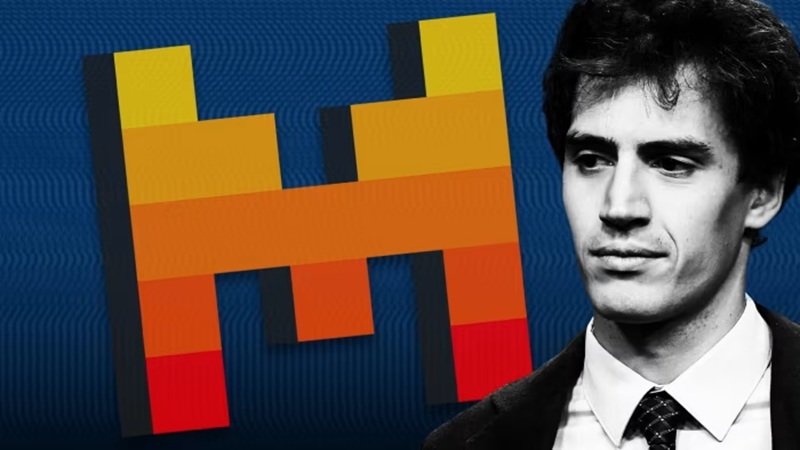
Mistral Raises €3 billion at €21 billion Valuation as Samsung Backs European AI Rival

0

French AI startup’s valuation tops €21 billion as it expands computing infrastructure, develops larger models and positions itself as a European alternative to OpenAI and Anthropic.

French artificial intelligence startup Mistral said Tuesday it has raised €3 billion ($3.5 billion) in fresh funding led by South Korean memory-chip giant Samsung, giving the company a post-money valuation of more than €21 billion as it seeks to establish itself as a leading European alternative to U.S. AI giants OpenAI and Anthropic.

The funding round also includes the Scaleup Europe Fund, a European Union-backed investment vehicle managed by EQT, and existing investor PSG Equity.

The new valuation represents a sharp increase from the €11.7 billion valuation Mistral secured about a year ago in a funding round led by Dutch semiconductor equipment maker ASML. The capital will allow Mistral to accelerate investments in computing infrastructure, including its own data centers, while continuing to rent computing capacity as it scales its model training operations.

Arthur Mensch, Mistral’s chief executive, said the company ultimately wants to rely increasingly on computing infrastructure that it owns.

“Long term, the plan is to fully rely on capacity that we are building ourselves,” Mensch told CNBC. “The amount of compute that we own is going to grow … around 100% in the next five years.”

Mensch said the company would use the additional capacity to train “bigger and faster models,” underscoring the enormous infrastructure requirements facing AI companies as they compete to develop capable systems.

Founded and headquartered in Paris, Mistral has pursued a strategy that differs from the closed, proprietary model approach associated with OpenAI and Anthropic. The company has emphasized open-weight AI models while working directly with businesses to develop customized AI applications that can be integrated into their operations.

That enterprise strategy has already produced a partnership with ASML, where Mistral’s technology is being integrated into manufacturing processes. Mensch said the company intends to pursue a similar relationship with Samsung, potentially extending its AI technology deeper into industrial and semiconductor operations.

The fresh capital also comes as Mistral attempts to convert its growing technological footprint into substantial recurring revenue. Mensch said earlier this year that he expected the company’s annual recurring revenue to exceed $1 billion in 2026.

Asked whether the latest fundraising and partnerships would alter that outlook, Mensch said Mistral expected “to be beating” the $1 billion target if current trends continue, although he declined to provide a revised figure.

“We’re very confident that the fundraising we are doing today is also accelerating and enabling further growth down the line in 2027,” Mensch said.

Mistral’s Sovereign AI Pitch

The fundraising strengthens Mistral’s position at the center of Europe’s push to develop its own AI capabilities rather than relying predominantly on U.S. or Chinese technology companies.

Mistral has increasingly marketed itself as a non-U.S. and non-Chinese option for companies seeking greater control over their AI infrastructure, data and technology supply chains. The approach taps into growing interest in “sovereign AI” across Europe, where governments and businesses are seeking alternatives to dependence on foreign technology providers.

The Scaleup Europe Fund’s investors include the European Commission as well as major corporations including Novo Holdings and Santander, giving the latest investment a broader institutional dimension beyond conventional venture-capital backing.

Mistral’s open-weight approach is also intended to differentiate it from closed systems operated by OpenAI and Anthropic. But the company faces intense competition from Chinese AI developers, whose models have rapidly narrowed the performance gap with leading Western systems.

Mensch said Mistral’s models expected to be released “very soon” would be “very competitive.”

He argued that Chinese AI companies have so far had a more limited presence with enterprise customers outside China, giving Mistral an opportunity to position itself as a more dependable long-term partner for European businesses.

Mistral can also allow some Chinese AI models to run on its infrastructure, the company said, while keeping customer data within Mistral’s environment. The company says that this arrangement limits direct dependence on Chinese AI laboratories.

For European businesses, however, the issue extends beyond model performance. Mensch said companies need confidence that the AI systems they adopt today will continue to receive support and upgrades in the future, while geopolitical tensions could potentially introduce export restrictions or other disruptions affecting access to foreign models.

“At this point in time, we are seeing that the volatility in this space is actually quite extreme,” Mensch said.

That volatility is strengthening Mistral’s case for developing and controlling its own models, he added.

“Now we also need to be a trusted partner for our customers,” Mensch said. Customers want assurance that “in one year from now they will get access to better models than they have access to today.”

“The only way we can provide that guarantee is by continuing to train our models ourselves,” he said.

The strategy, however, comes with high costs. Building data centers and securing large amounts of computing capacity requires billions of dollars of capital at a time when AI companies are engaged in an infrastructure race involving advanced chips, energy, and data-center capacity.

IPOs Will Move On-Chain – Binance Founder CZ Makes Bold Statement

0

Changpeng Zhao (CZ), founder of Binance, has made a bold prediction about the future of capital markets, arguing that initial public offerings (IPOs) will eventually move on-chain as blockchain technology reshapes how financial assets are issued, traded, and settled.

In a statement on X, he wrote,

“IPOs will move on-chain.”

His comments highlight a broader shift toward tokenized securities, where blockchain could make traditional fundraising and public-market participation faster, more transparent, and accessible to a global pool of investors.

While short on details or timelines, the prediction captures a broader shift already underway in finance the gradual migration of public capital raising and equity trading onto blockchain networks.

An initial public offering has long been a highly intermediated process involving investment banks, underwriters, lawyers, auditors, and traditional exchanges.

Moving IPOs on-chain would mean issuing shares as digital tokens from the start, enabling direct distribution, ownership tracking, and trading on blockchain infrastructure.

Potential advantages include 24/7 markets without opening or closing bells, native fractional ownership that lowers barriers for retail investors, faster settlement, greater transparency through immutable records, and reduced costs by cutting out some middlemen.

Global retail participation could begin on day one rather than being limited largely to institutions in the early stages of a traditional listing.

The infrastructure supporting this vision is no longer purely theoretical. Tokenized stocks currently represent roughly $2.9 billion in on-chain value according to data from RWA.xyz, a figure that has risen about 14% in the past month.

Platforms such as Binance’s bStocks have seen substantial trading activity, with cumulative volumes reported in the tens of billions in recent months.

In Europe, France’s ST Group completed a fully tokenized IPO in April 2026 through the Lightning Stock Exchange (Lise), raising €2.07 million under the EU’s Distributed Ledger Technology Pilot Regime.

The offering involved 113,525 newly issued ordinary shares, with the shares represented as tokenized securities recorded on distributed-ledger infrastructure. Investors subscribed for approximately €2.0718 million worth of shares, equivalent to 79.42% of the initially targeted capital increase.

This is widely cited as one of the first real-world examples of an on-chain public offering. Regulatory developments are also advancing. The U.S. Securities and Exchange Commission has indicated that tokenizing securities does not remove core requirements around registration, disclosure, and investor protection.

Recent proposals address transfer-agent rules to better accommodate blockchain-based ownership records and share transfers. Major exchanges including Nasdaq and the New York Stock Exchange have established frameworks or pilots allowing eligible tokenized securities to trade alongside conventional ones.

Firms such as Securitize (which partners with institutions like BlackRock) and others are building the operational plumbing for on-chain issuance and custody while remaining within existing securities laws.

Investor demand for earlier and broader access is another driving force. Pre-IPO and tokenized equity products have attracted notable volume, particularly from emerging markets, reflecting frustration with traditional processes that often limit retail participation until after the opening bell.

On-chain structures could address this by offering continuous liquidity and easier fractional entry. However, challenges remain significant. Not every tokenized stock product grants true legal ownership or the same rights as traditional shares—structures vary widely and some are more synthetic.

Liquidity for newer on-chain listings may lag behind established exchanges, at least initially. Regulatory clarity continues to evolve across jurisdictions, and questions around custody, compliance, voting rights, and investor protections must be resolved at scale.

Tokenized equities still represent a tiny fraction of the overall stock market, which is measured in the tens of trillions of dollars. CZ’s comment is best read as a directional forecast rather than a product announcement or specific timeline.

It arrives at a moment when the building blocks tokenized equity markets, regulatory pilots, institutional partnerships, and real issuance examples are already in place and expanding.

Whether full-scale on-chain IPOs become the dominant model or simply an important alternative will depend on how effectively the industry and regulators address the remaining legal, operational, and liquidity hurdles.

For now, the trajectory is clear, public markets are increasingly experimenting with blockchain rails, and CZ’s prediction reflects that momentum.

Top 10 Coins in Experts’ Spotlight: Apeing Leads as the Best Meme Coin to Buy in 2026 at $0.0001

0

What if the next major meme coin opportunity is already taking shape before mainstream attention fully arrives? For traders searching for the best meme coin to buy, the challenge is not simply identifying the biggest names. It is finding projects with distinctive communities, recognizable narratives, active ecosystems, or early-stage structures that could attract greater attention as market sentiment changes. Meme coins continue to combine internet culture with speculative interest, creating a market where established leaders and newer projects can compete for attention.

That search becomes particularly interesting with Apeing. The project is currently in Stage 1, Banana Drop, at a stated price of $0.0001, with 150,000,000 $APEING allocated to the stage. Its planned listing price is $0.01, while later stages are structured at progressively higher prices. For investors researching the best meme coin to buy, Apeing offers an early-stage narrative that differs from tokens already trading across established markets.

1.  Apeing ($APEING): Best Meme Coin to Buy for an Early-Stage Narrative

Apeing is designed around meme culture, community participation, and a structured token economy rather than relying solely on social hype. The Ethereum-based project has a fixed supply of 16.75 billion $APEING, with mechanisms covering staking, referrals, community incentives, liquidity, and supply burns. Its current Banana Drop stage provides 150 million tokens at $0.0001, while the project has outlined 33 stages with increasing prices. This gives Apeing a distinct position among the top 10 coins being considered by market participants looking beyond already-established meme assets.

The project also introduces participation mechanics intended to keep its community active. Buyers using a referral code receive 10% additional tokens, while the referrer receives a 10% reward. Ape Wars recognizes leading monthly purchasers, and the Ape Referral League ranks participants based on referral activity. If a stage closes with tokens remaining, the stated mechanism automatically burns those unsold tokens. These features give $APEING a community-focused structure while the project remains in its early launch phase.

Apeing’s Ethereum Foundation: Built for the Wider Ecosystem

Apeing is an ERC-20 token built on Ethereum, one of the most established blockchain ecosystems in crypto. The ERC-20 standard supports broad wallet compatibility, while Ethereum’s transparent on-chain infrastructure allows transactions, token movements, and smart-contract activity to be independently verified. Apeing’s smart contract is stated to be audited and verified on Ethereum, while liquidity is planned to remain locked for 18 months.

A Hypothetical $5,000 Investment Scenario

A purely mathematical example shows why early pricing attracts attention. A hypothetical $5,000 allocation at $0.0001 would represent 50,000,000 $APEING tokens. If those tokens later reached the stated $0.01 listing price, their theoretical value would be $500,000. That would represent a 9,900% increase before fees, taxes, slippage, liquidity limitations, or market-price changes. This is only a mathematical scenario and should not be interpreted as a forecast or guarantee of future performance.

How to Participate in Apeing’s LIVE $APEING Presale

  • Visit the official Apeing website and review the current Stage 1 details.
  • Connect a compatible crypto wallet through the official platform.
  • Review the current $APEING price and available allocation before participating.
  • Enter the desired purchase amount and follow the platform’s transaction instructions.
  • Confirm the transaction through the connected wallet.
  • Keep the transaction and wallet details secure after completion.
  • Check official Apeing channels for updates regarding stages, rewards, staking, and future developments.

2.  Shiba Inu ($SHIB): A Meme Brand With a Larger Ecosystem

Shiba Inu began as a Dogecoin-inspired meme token but has developed into a broader crypto ecosystem. Its identity now extends beyond the original meme concept through Shibarium, decentralized applications, community initiatives, and other ecosystem developments.

The scale of the Shiba Inu community remains one of its biggest strengths. Its established recognition, extensive exchange presence, and ongoing ecosystem development give SHIB multiple sources of market attention. While its future performance remains dependent on market conditions and adoption, the combination of brand recognition and continued development makes Shiba Inu a notable candidate among the top 10 coins in the meme sector.

3.  Pepe ($PEPE): The Internet Meme Powerhouse

Pepe has established itself as one of crypto’s most recognizable culture-first tokens. Built around the famous Pepe internet character, $PEPE gained significant attention by keeping its identity focused on meme culture, online communities, and viral visibility. Its straightforward narrative has helped it remain relevant even as the meme coin market has become increasingly crowded.

The token’s Ethereum foundation also places it within one of the industry’s largest blockchain ecosystems. PEPE does not depend on a complex utility framework to maintain its identity, instead drawing much of its appeal from community activity and cultural recognition.

4.  Dogwifhat ($WIF): Solana’s Viral Meme Contender

Dogwifhat emerged from the highly active Solana meme coin culture and quickly developed a distinctive identity around its simple dog-with-a-hat concept. Its appeal demonstrates how quickly a recognizable meme can gain traction when combined with an active blockchain community and strong social engagement. WIF has therefore become one of the more prominent Solana-based meme assets.

Its narrative is largely driven by community participation, market momentum, and cultural visibility rather than an extensive utility roadmap. That makes WIF particularly sensitive to shifts in meme coin sentiment, but it also gives the token a clear and easily recognizable brand.

5.  Pudgy Penguins ($PENGU): Meme Culture Meets Brand Building

Pudgy Penguins has grown from an NFT-focused brand into a broader intellectual property ecosystem with recognizable characters and consumer-facing initiatives. The project’s transition into a larger brand gives PENGU a different narrative from meme tokens that depend almost entirely on online speculation. Its community and character-driven identity have helped it maintain visibility across crypto and mainstream digital culture.

The broader Pudgy Penguins ecosystem also provides a potential source of continued attention as the brand expands its reach. Its combination of digital collectibles, physical products, community activity, and token-based infrastructure makes PENGU an unusual participant in the meme sector.

6.  Dogecoin ($DOGE): The Meme Coin That Started It All

Dogecoin remains the benchmark against which much of the modern meme coin market is measured. Created from the famous Shiba Inu internet meme, DOGE developed from a joke into one of the most recognizable cryptocurrencies in the world. Its longevity, liquidity, exchange availability, and enormous global community continue to support its position at the center of meme coin discussions.

Unlike many newer tokens, Dogecoin does not depend on an elaborate ecosystem to maintain its identity. Its appeal comes from simplicity, recognition, community participation, and its long history within crypto. That established position makes DOGE a natural comparison point for anyone searching for the best meme coin to buy while weighing established assets against newer projects.

7.  Cheems ($CHEEMS): A Community-Driven Meme Narrative

Cheems draws from another well-known internet dog character and carries the recognizable humor that helped establish meme culture across crypto. The token’s appeal comes largely from community identity and the broader cultural recognition of its character. That gives CHEEMS a straightforward narrative within a sector where social engagement can quickly influence visibility.

Compared with the largest meme coins, Cheems represents a smaller and more speculative part of the market. Its future relevance can depend heavily on community activity, exchange exposure, market liquidity, and broader meme coin sentiment. For investors reviewing the top 10 coins in the category, CHEEMS illustrates how established internet culture can continue finding new expression on blockchain networks.

8.  Snek ($SNEK): A Community Meme With Cardano Roots

Snek has developed a recognizable position within the Cardano ecosystem, giving it a different blockchain identity from many meme coins concentrated on Ethereum or Solana. Its brand is built around community culture and the playful nature of meme-driven crypto, allowing it to serve as one of the more recognizable meme assets associated with Cardano.

The project’s ecosystem connection is an important part of its narrative. Instead of competing solely on broad meme recognition, SNEK benefits from its association with a specific blockchain community.

9.  Peanut the Squirrel ($PNUT): A Viral Solana Meme Story

Peanut the Squirrel became a major meme coin narrative through the viral cultural identity surrounding the Peanut character. Built on Solana, PNUT benefited from the network’s strong meme coin culture and the ability of social narratives to spread rapidly across crypto communities. Its identity remains closely tied to community attention and the character behind the token.

PNUT represents the highly narrative-driven side of the meme market. Unlike projects built around extensive technical ecosystems, its appeal is strongly connected to cultural visibility, community participation, and market sentiment. That makes it an important name among the top 10 coins attracting attention from traders tracking Solana’s meme economy.

10.                   Bonk ($BONK): One of Solana’s Established Meme Names

Bonk became one of the defining meme coins of the Solana ecosystem, helping demonstrate the network’s ability to support a large and active culture of community-driven tokens. Its recognizable brand and established position within Solana have kept BONK in the broader meme coin conversation even as new competitors continue entering the market.

Competition remains a major part of the BONK narrative because Solana continues to produce new meme tokens capable of attracting substantial attention. BONK therefore faces the challenge of maintaining community relevance while competing in one of crypto’s fastest-moving meme environments. For anyone comparing the best meme coin to buy, BONK offers the perspective of an established Solana meme asset operating in a highly competitive sector.
Conclusion: Finding the Best Meme Coin to Buy Requires More Than Hype

The search for the best meme coin to buy covers a wide range of narratives. Shiba Inu and Dogecoin represent established community power, while Pepe and Cheems draw heavily on internet culture. WIF, PNUT, and BONK demonstrate the strength of Solana’s meme economy, SNEK connects meme culture with Cardano, and Pudgy Penguins brings a recognizable consumer brand into the crypto space. Each token carries a different combination of community strength, ecosystem exposure, market recognition, and risk.

Apeing introduces another angle through its early-stage launch structure. The $APEING Banana Drop stage is currently priced at $0.0001 with 150,000,000 tokens allocated, while the project has outlined 33 stages with progressively higher prices and a stated $0.01 listing price. Its Ethereum foundation, staking tiers, referral rewards, Ape Wars competition, Ape Referral League, and automatic burns for unsold stage allocations add additional mechanics to the narrative. For readers assessing the best meme coin to buy, the key distinction is timing and structure, although participation remains speculative and should be evaluated independently.

For More Information:

Website: Visit the Official Apeing Website

Telegram: Join the Apeing Telegram Channel

Twitter: Follow Apeing ON X (Formerly Twitter)

Frequently Asked Questions About the Best Meme Coin to Buy

What is the best meme coin to buy right now?

There is no single meme coin that is objectively the best for every investor. Dogecoin, Shiba Inu, Pepe, Bonk, WIF, and newer projects such as Apeing each offer different combinations of community strength, blockchain exposure, market history, and risk.

What is the best meme coin to buy in 2026?

The answer depends on the investor’s objectives and risk tolerance. Established tokens such as DOGE, SHIB, and PEPE offer greater market recognition, while newer projects can provide earlier-stage exposure but generally carry greater uncertainty.

Which meme coin has the most potential?

Potential varies according to adoption, liquidity, community growth, market conditions, development, and execution. No meme coin’s future performance can be guaranteed, so comparisons should focus on verifiable project mechanics rather than projected returns.

Is Apeing ($APEING) currently available?

Yes. Apeing is currently in Stage 1, Banana Drop, with a stated price of $0.0001 and 150,000,000 $APEING allocated to the stage. The project has outlined 33 stages with increasing prices.

What are the main features of Apeing ($APEING)?

Apeing combines an Ethereum ERC-20 token structure with tier-based staking, referral rewards, monthly Ape Wars and Ape Referral League competitions, stage-based pricing, and automatic burns of unsold tokens from completed stages.

Summary

This article examines 10 meme tokens attracting attention across different crypto ecosystems, including Apeing ($APEING), Shiba Inu, Pepe, Dogwifhat, Pudgy Penguins, Dogecoin, Cheems, Snek, Peanut the Squirrel, and Bonk. It compares their community narratives, blockchain connections, ecosystem positioning, and market appeal while highlighting Apeing’s current early-stage opportunity and project mechanics.