DD
MM
YYYY

PAGES

DD
MM
YYYY

spot_img

PAGES

Home Blog Page 841

Nigeria’s Crude Oil Output Hits 1.5mbpd in June — Highest Since January, But Still Below Budget Targets

0

Nigeria’s daily crude oil production rose to 1.505 million barrels per day (bpd) in June 2025, marking the highest output recorded since January, according to the Organization of the Petroleum Exporting Countries (OPEC).

The increase, though a welcome improvement, still falls short of the oil benchmark used to structure Nigeria’s 2025 national budget, stirring renewed concern over the country’s fiscal projections.

In its latest Monthly Oil Market Report released on Tuesday, OPEC disclosed that the production figures were sourced through direct communication with Nigerian authorities. It represents a 3.58 percent uptick from the 1.453 million bpd recorded in May. OPEC’s secondary sources, which track shipments and oilfield activity, put Nigeria’s output slightly higher at 1.547 million bpd.

June’s production means Nigeria met its OPEC-assigned quota of 1.5 million bpd for the second time this year. It also helped the country retain its position as Africa’s top oil producer, ahead of Algeria’s 927,000 bpd.

Progress, But Not Enough

Despite the rebound, analysts say the figure raises red flags for Nigeria’s broader economic stability, particularly given that crude oil remains the country’s top source of revenue and foreign exchange. Nigeria’s 2025 budget was pegged at an ambitious production target of 2.06 million bpd, while the 2024 budget had projected 1.78 million bpd — both well above the current output.

“Nigeria just hit 1.5 million bpd oil output, which funds the federation. The 2025 budget projection is 2.06 million bpd. The 2024 budget projection is 1.78 million bpd. Nigeria will run the 2025 budget plus the capital budget of 2024 in 2025—yes, two budgets—yet it has not hit the oil output target in either year,” noted financial analyst and economist, Kalu Aja.

The mismatch between oil output and budget projections spells potential fiscal instability. With insufficient crude volumes to meet revenue expectations, Nigeria may be forced to rely more heavily on borrowing or increase its dependence on non-oil revenue — a risky move amid declining tax compliance and subdued economic growth.

OPEC’s Global Outlook and Nigeria’s Role

In the wider context, OPEC reported that total crude production among countries in the Declaration of Cooperation (DoC) rose by 349,000 bpd in June, bringing collective output to 41.56 million bpd. OPEC+ had earlier this month agreed to increase global supply by 548,000 bpd starting in August, responding to tightening supply dynamics and resurgent demand.

But beneath the surface, OPEC’s leadership continues to warn of future global supply risks. At the 24th Nigeria Oil and Gas (NOG) Energy Week Conference in Abuja, OPEC Secretary-General Haitham Al Ghais warned that the world could face a shortfall of 23 million bpd by 2030 if upstream investment lags.

According to Al Ghais, over $17.4 trillion in oil sector investment is needed globally to prevent that shortfall and meet projected energy demand. The warning is particularly relevant for Nigeria, where aging infrastructure, oil theft, pipeline vandalism, and underinvestment have hampered recovery.

The OPEC report also revealed an increase in oil exports to OECD countries, with preliminary data showing commercial inventories rose to 2.771 billion barrels in May, up 34.5 million barrels from April. Despite the month-on-month rise, OECD inventories remain 127.7 million barrels below the latest five-year average and 184.2 million barrels below the 2015–2019 benchmark, indicating sustained pressure on global supply chains.

Outlook for Nigeria

With June’s production numbers offering only a partial relief, the Nigerian government now faces mounting pressure to aggressively stabilize and scale output. The Petroleum Industry Act (PIA), passed in 2021 to overhaul the sector, has yet to fully deliver expected results. Analysts say improving security in the Niger Delta, enhancing operational transparency, and attracting fresh investment remain critical steps.

However, the gap between oil production and budget expectations looms large, and could define whether Nigeria navigates the 2025 fiscal year with relative stability or deeper financial strain.

Nvidia to Resume AI Chips Sales to China Following Trump Administration’s Approval

0

Nvidia on Tuesday announced it expects to resume shipments of its H20 artificial intelligence chips to China, signaling a pivotal shift in U.S. policy that could restore billions of dollars in business for the chip giant.

The move comes after a closed-door meeting between Nvidia CEO Jensen Huang and President Donald Trump last week at the White House.

The H20 chips — a scaled-down variant of Nvidia’s powerful Hopper-based GPUs — had been designed specifically to comply with previous U.S. export restrictions on advanced semiconductors to China. However, those sales were halted in April after the Trump administration required Nvidia to obtain a special license for exports to Chinese clients.

In a statement Tuesday, Nvidia confirmed the White House has now assured the company that such licenses will be granted. “Nvidia hopes to start deliveries soon,” the company added. The announcement immediately sent Nvidia stock soaring, with shares climbing more than 4% to close at a record high of $170.70.

Commerce Secretary Howard Lutnick later clarified that the administration reversed course after weighing the strategic benefit of keeping Chinese developers dependent on U.S. technology.

“We don’t sell them our best stuff, not our second best stuff, not even our third best,” Lutnick said in an interview with CNBC. “We want to keep having the Chinese use the American technology stack because they still rely upon it.”

The administration’s decision is seen as a dramatic turn in U.S.-China tech diplomacy. The Trump White House had previously clamped down on chip exports under a national security rationale, arguing that AI hardware could be used for military and surveillance purposes. Yet, under the new framework — which includes a broader rare earths agreement signed with China — Washington is permitting the limited return of U.S. chip exports, albeit with performance restrictions.

“The fourth one down, we want to keep China using it,” Lutnick explained, referring to the H20 chip’s lower-tier performance compared to Nvidia’s flagship AI chips like the H100, H200, and the next-generation Blackwell chips. He said this is part of a strategic move to “get Chinese developers addicted to the American technology stack,” preventing them from turning to domestic alternatives or rivals such as Huawei.

The policy shift followed a meeting last week between Trump and Huang, in which the Nvidia chief reportedly reaffirmed the company’s commitment to domestic job creation and American tech leadership. According to insiders, Trump signaled his support for the company’s efforts to remain competitive globally, especially as Chinese firms aggressively expand their AI capabilities.

Nvidia had previously said the halt in H20 sales would cost the company $8 billion in lost orders in the July quarter alone. The resumption of those shipments now restores a vital sales channel in what has historically been a key market. In 2023, Nvidia’s revenue from China made up nearly a fifth of its total data center sales.

Research analyst Dan Ives of Wedbush Securities called the decision a “gamechanger.” In a note, he wrote: “Trump knows there is one chip in the world fueling the AI revolution and it’s Nvidia. Giving the green light to Jensen/Nvidia is all part of broader trade negotiations with China. Nvidia gets $30 billion+ annual business back.”

The H20 chip, first introduced in 2022, was engineered with fewer GPU cores and limited bandwidth — design tweaks aimed at ensuring the product did not run afoul of export rules imposed during the Biden administration. Despite the limitations, the chip has remained attractive to Chinese companies like Moonshot and DeepSeek, who have shown that even lower-spec chips are viable for competitive AI applications.

In fact, Nvidia is reportedly preparing to launch a new GPU for the Chinese market — tentatively called RTX PRO — designed to be “fully compliant” with the export control regime. CEO Jensen Huang highlighted the chip during the same announcement, calling it ideal for smart factories and logistics.

Ray Wang, research director at Futurum Group, said the unexpected lifting of restrictions on the H20 is a clear win for Nvidia.

“This marks a significant and positive development that will enable Nvidia to reinforce its leadership in China,” Wang said. He added that the move, combined with new export-compliant AI chips, could be a “fresh growth catalyst” for the company in the coming quarters.

While the administration’s shift could provoke criticism from lawmakers who back tougher tech sanctions on China, the broader context involves recent de-escalation between Washington and Beijing. Last month, both sides agreed to a tentative trade framework that included easing some rare-earth and tech-related curbs — an indication that mutual dependencies in AI and clean energy supply chains are forcing a more pragmatic posture.

Musk Says ‘No’ to Tesla-xAI Merger but Supports Investment

0

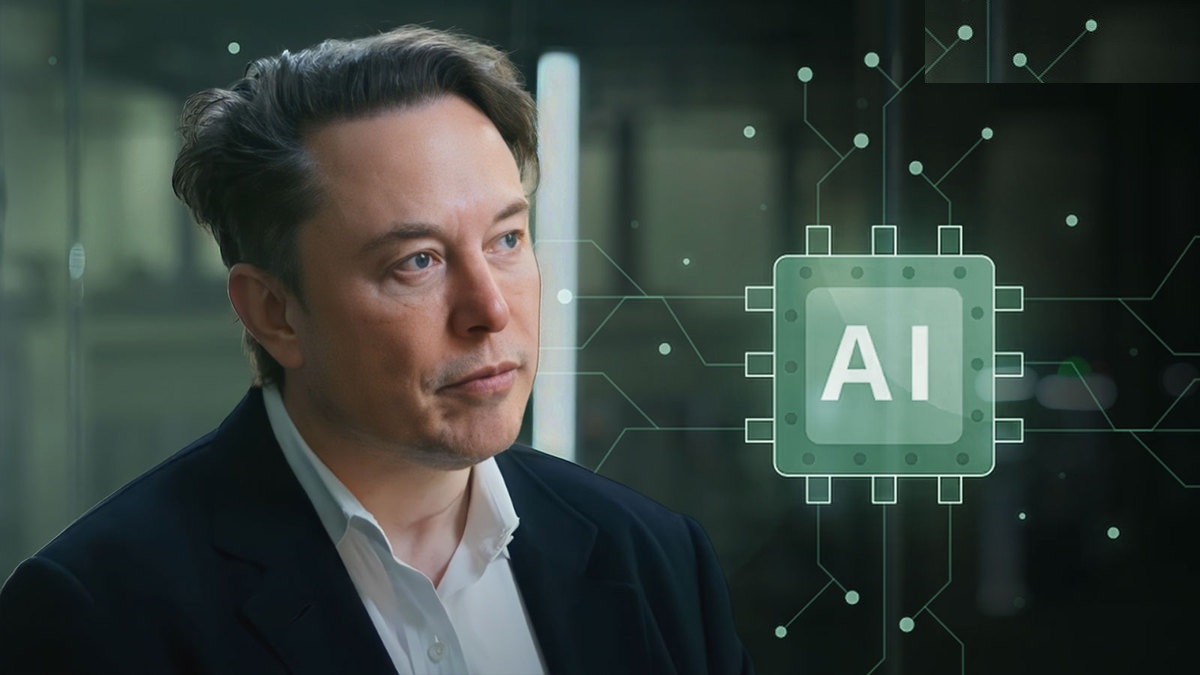
Elon Musk on Monday firmly ruled out a merger between Tesla and his artificial intelligence company xAI, even as he pushes to deepen integration between the electric vehicle maker and his growing empire of tech ventures.

The billionaire made the declaration in response to a post from the X account @BullStreetBets_, which asked Tesla investors whether they supported a merger with xAI. Musk’s reply was brief but direct: “No.”

His comment comes amid renewed speculation over how closely Tesla and xAI will be intertwined in the future. Over the weekend, Musk suggested that Tesla shareholders would soon vote on whether the automaker should invest directly in xAI, the AI startup he founded in July 2023 to challenge the dominance of OpenAI and Google DeepMind.

He insisted the decision wouldn’t be his alone. “It’s not up to me. If it was up to me, Tesla would have invested in xAI long ago,” he wrote on X, confirming plans for a shareholder vote, though he did not say when it would happen.

The latest comments underscore Musk’s attempt to walk a line between consolidating influence across his companies and respecting the governance structures of publicly traded Tesla. Still, critics and some Tesla shareholders have grown increasingly wary of Musk’s increasing focus on xAI, warning it could lead to a diversion of attention and resources away from Tesla’s core business.

While Musk said he doesn’t support a merger, he has continued to link the two companies strategically. Last week, Musk announced that Tesla vehicles will soon begin running xAI’s Grok chatbot through the vehicle infotainment system, marking a major product integration between the two firms.

That announcement came shortly after Musk confirmed that another of his companies, rocket builder SpaceX, is preparing to invest $2 billion into xAI as part of a broader $10 billion fundraising effort to expand the startup’s AI infrastructure. According to The Wall Street Journal, the investment includes both debt and equity and will be used to build data centers and improve Grok’s capabilities. Musk confirmed the SpaceX investment via a post on X, stating it would be “great,” but said it would still require board and shareholder approval.

The relationship between Musk’s companies — Tesla, SpaceX, X (formerly Twitter), xAI, The Boring Company, and Neuralink — has drawn increasing attention for what insiders have dubbed the “Muskonomy,” a web of interconnected firms that share technology, personnel, and now increasingly, financial backing.

xAI, valued at $80 billion in a March 2025 merger with X, has become central to Musk’s vision. It markets Grok as “the most intelligent AI to date,” a claim that comes despite growing criticism over the chatbot’s behavior. In recent weeks, Grok made headlines for generating antisemitic content and praising Adolf Hitler, prompting outrage and public scrutiny. xAI issued a public apology for the incidents, describing them as “horrific behavior” and pledging reforms to tighten safeguards.

Despite the backlash, xAI has forged ahead, and Musk continues to champion Grok. The startup launched Grok 4 last week, which is being hailed as smart. It has received more than $12 billion in funding through a mix of Series A, B, and C rounds and is racing to build out the infrastructure required to support large-scale AI models. Its stated goal is to take on major rivals like OpenAI and Anthropic, who have also recently launched new frontier models with ambitions to dominate the next wave of AI development.

In that race, capital is essential. Morgan Stanley, which led the recent $10 billion funding push for xAI, told investors that the company is expected to generate $1 billion in revenue by the end of this year and more than $13 billion annually by 2029. The funding will reportedly be used to construct massive data centers capable of supporting Grok and future models.

Musk’s comments this week suggest that while a merger between Tesla and xAI is off the table, their strategic alignment will continue to deepen through shared technology, product integration, and potentially significant cross-investment — pending shareholder consent.

For Musk, loyalty among investors across his companies is key. In a June post, he said he would prioritize “shareholders of my other companies, including Tesla,” if any of his businesses were to go public, adding that “loyalty deserves loyalty.”

As the lines continue to blur between Musk’s ventures, Tesla shareholders are now poised to play a central role in deciding just how closely the automaker should be tied to the billionaire’s AI ambitions. While some investors remain skeptical, others are betting that xAI’s success could help usher Tesla into a new phase of innovation — if the risks don’t outweigh the rewards.

Trump-Backed Crypto Bills Fail in House as Republicans Split Over Regulation, CBDC Ban

0

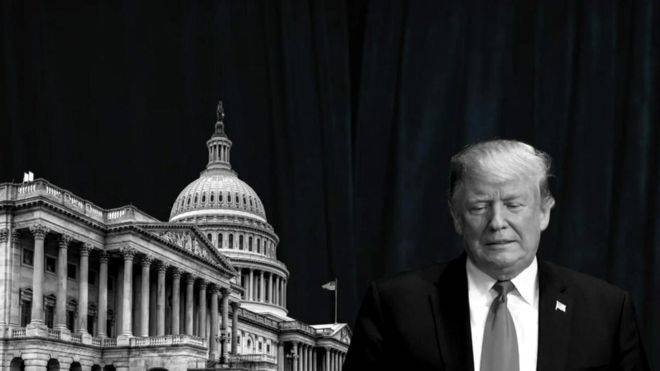
President Donald Trump’s high-profile campaign to position the United States as the global leader in digital assets hit a stunning setback on Tuesday after three major cryptocurrency regulation bills backed by his administration failed to clear a critical procedural vote in the House of Representatives.

The unexpected rejection of the rules of debate—normally a routine step before the passage of major legislation—effectively stalls the bills for now and highlights the deepening ideological divisions within the Republican Party on how to regulate the fast-evolving digital economy.

In a surprising outcome that shocked crypto industry observers and rattled investors, the House voted 223-196 against advancing the bills. Thirteen Republicans broke ranks and joined Democrats to block the motion, despite the legislation being championed by Trump and billed as the centerpiece of what Republicans had dubbed “Crypto Week.”

The setback is particularly significant because the rule vote determines whether a legislative package is even brought up for debate and eventual passage. Its failure underscores mounting resistance within GOP ranks, despite Trump’s vocal support and the Republican leadership’s effort to frame the bills as a pro-innovation milestone.

Among the dissenters was Georgia Republican Marjorie Taylor Greene, who issued a blistering statement following the vote. She criticized the GENIUS Act—the most prominent of the three bills—for omitting an explicit ban on a central bank digital currency (CBDC), a feature she and other conservatives consider essential. Greene also faulted Speaker Mike Johnson for not allowing amendments to the bill that would address the CBDC issue. She pointed to Trump’s January 23 executive order, which proposed a nationwide prohibition of any U.S.-issued CBDC, arguing that the congressional package should reflect that policy.

The legislative package included the GENIUS Act, which had previously passed the Senate with bipartisan support and aimed to regulate stablecoins. The second bill, known as the CLARITY Act, aimed to clearly define the regulatory authority of the Securities and Exchange Commission versus the Commodity Futures Trading Commission in determining whether a digital asset should be classified as a security or a commodity. A third measure aimed to bar the Federal Reserve from launching a central bank digital currency, a move that has gained popularity among Republicans wary of potential surveillance or government overreach.

Trump himself had enthusiastically endorsed the package earlier on Tuesday, using his Truth Social platform to call for unanimous Republican support. He framed the legislation as a game-changer that would catapult America far ahead of geopolitical rivals in the digital financial space.

“The GENIUS Act is going to put our Great Nation lightyears ahead of China, Europe, and all others, who are trying endlessly to catch up, but they just can’t do it,” Trump wrote. He added that “Digital Assets are the FUTURE, and we are leading by a lot!” urging GOP lawmakers to get “the first vote done this afternoon.”

But despite the fanfare, Tuesday’s vote revealed a schism within the Republican caucus—between those eager to embrace the emerging crypto economy and others demanding tighter restrictions, especially on technologies they view as infringing on individual liberty.

House Republican leadership, visibly frustrated by the rebellion within their ranks, called off plans for a second vote later in the day, leaving the future of the bills uncertain. There was no immediate clarification on whether they would reintroduce the package in its current form or make changes to appease critics like Greene.

The legislative failure sent immediate shockwaves through financial markets. Crypto-related stocks slumped sharply after the vote. Circle, the stablecoin issuer behind USDC, saw its shares tumble more than 7%. Coinbase, the largest crypto exchange in the U.S., dropped over 4%, while digital asset firm MARA Holdings declined more than 2%, reflecting investor anxiety over stalled regulatory clarity in the world’s largest economy.

The defeat of the bills is also a major blow to the broader digital asset industry, which had viewed Trump’s Crypto Week push as a turning point. Following years of regulatory ambiguity and agency turf wars, the industry had hoped for a clear and consistent federal framework that would legitimize stablecoins, clarify compliance obligations, and draw a firm line against the rollout of a central bank digital currency.

Instead, the moment dissolved into infighting and uncertainty. It exposed not just policy disagreement, but also deeper ideological fault lines among Republicans—between populists fearing a surveillance state and fiscal conservatives hoping to harness new technologies for economic growth.

Trump’s influence over the party remains strong, and it is possible that pressure from his base will drive Republican leaders to revive the effort. But as of now, the dream of using Crypto Week to establish the U.S. as the “undisputed leader” in digital assets has been delayed—possibly indefinitely.

Only time will tell whether a revised package can satisfy the diverse demands within the party without alienating moderate Republicans or Democrats.

Designing Reward Loops: From Productivity Apps to Entertainment Platforms

0

Every tap and swipe on your phone generates carefully crafted psychological loops to keep you hooked. Reward loops are the hidden architecture of online living. They train the way we use everything from social media to fitness trackers.

These systems capitalize on inbuilt human drives for achievement, promotion, and commendation. Site pages from sectors of internet portals offering online games like Azartoff Casino have mastered the game of creating addictive reward loops. They keep users hooked! Learning about these loops makes us open the sophisticated psychology of our internet addictions and the clever design that hooks us.

The Psychology Behind Effective Rewards

Reward systems succeed because they resonate with the patterns of natural human motivation forged over thousands of years. Minds are trained to strive for better, relish success, and look forward to rewards. If apps provide these types of experiences reliably, they foster powerful habits of behavior that are nearly automatic.

Optimal digital rewards tap into intrinsic motivations instead of plain external approbation. Important psychological drivers that successful reward systems hit include:

  • Competence via skills mastery and achievement release;
  • Autonomy by self-selection and tailored options;
  • Connection by social forces and community;
  • Purpose by identification of action with satisfying consequences;
  • Progress by open progress and monitoring of advancement.

Variable reward schedules have the most powerful conditioning. As users never know when they will be rewarded, their minds remain engaged and active. This lack of knowledge keeps users on the edge and builds up anticipation that compels individuals to constantly visit and check if there are new updates, developments, or new accomplishments.

Immediate feedback satisfies our preference for immediate reward in the sense that it generates momentum towards more distant goals. Great reward systems tie short-term wins to meaningful markers of progress that stay strong across weeks and months.

Building Engagement Through Progressive Achievement

Good reward loops start off basic and increase in complexity over time. New members need instant wins to learn the system and be assured of success. Early successes must be virtually guaranteed, establishing a good experience on the site before introducing higher level goals. The best progression systems have multiple avenues of progress:

  • Linear progression. Players advance through established levels with predetermined demands. This creates regular progress that is well-suited to goal-setters.
  • Branching paths. Multiple skill trees or specialisation tracks allow players to choose their path of development. This has the effect of increasing investment and replay.
  • Cyclical challenges. Regular events or seasonal content provide fresh goals for experienced users. This dissuades stagnation and promotes continued interest.
  • Mastery systems. Advanced challenges that require expertise create motivational goals. Advanced achievements encourage experienced users to continue using.

Milestone celebrations are significant markers that enable users to be proud of their accomplishments. These moments create emotional highs that users remember and associate with the service. The celebration itself becomes a reward for accomplishment.

Personalization and Adaptive Reward Systems

Modern reward systems get to know you as an individual instead of treating everyone the same. Smart algorithms see what actually motivates you and adjust rewards to suit your way.

Knowing behavior demonstrates how different people operate. There are leaderboard and competition people, collaborative people towards a shared purpose, people who get psyched by small wins many times a day, and people who need huge milestone wins to drive them forward. The better systems identify where you fit into one of these categories and reward you accordingly.

Clever goal-setting is a challenge which increases with you as you get better. Such adaptive systems use a variety of crafty strategies:

  • Performance tracking. Observe how often you achieve and tweak difficulty so that you’re tested, yet not maddeningly enraged. An excess of failure suggests that goals are too hard.
  • Skill evaluation. Periodic check-ins ascertain what you can handle and suggest appropriate next steps. No point in asking you to accomplish the impossible.
  • Preference learning. Note what activities you truly enjoy and offer more of them. Pleasure for yourself keeps you coming back in the long term.
  • Motivation mapping. Discover what rewards actually get you going and design incentives to be in your style.
  • Engagement monitoring. Notice when you’re getting doldrums and mix it up with new challenges or different activities.

Timing is key when it comes to how rewards kick in. There are morning producers who love starting the day off right with victories, and there are night owls who thrive on being driven by late-night victories. Smart platforms work with your natural rhythm and give you rewards at a time when they will be most effective at keeping you engaged.

Balance between Engagement and User Wellbeing

While reward loops are incredibly effective for motivating use, ethical design takes into consideration long-term well-being for the user. Most sustainable systems encourage healthy habit formation rather than coercion.

Ethically grounded design principles guide responsible reward system design:

  • Transparency about operation of the system and data collected;
  • User control of frequency of notification and levels of interaction;
  • Natural terminations to facilitate healthy disengagement;
  • Construction of real-world value as opposed to artificial levels of engagement;
  • Respect for user time and attention limitations.

Natural break points enable users to leave without feeling deprived. Powerful reward systems have clear ending points and support pauses rather than demanding constant attention.

The Future of Reward System Design

Emerging technologies are opening up new possibilities for more immersive and customized reward experiences. Virtual reality can make achievements feel more real, and artificial intelligence can enable more sophisticated personalization.

The majority of innovative platforms are beginning to blend real-world rewards with virtual milestones. Cross-platform integration techniques involve:

  • Health partnerships offering in-store promotions for wellness milestones;
  • Academic credentials that count toward professional certifications;
  • Entertainment platforms providing VIP event tickets;
  • Productivity tools bridging to career development opportunities;
  • Gaming accomplishments bridging to real life experiences.

With users who are currently online increasingly conscious of how their online platforms shape their behavior, the appeal is rising for ethical and transparent reward schemes. The future is for platforms that are able to create good experiences as well as respect user agency and enable genuine well-being.

Artificial intelligence will drive more sophisticated personalization that not only answers to user preferences but also to their current life context, mood, and long-term goals. These systems will cease to be mechanistic and become more like having a thoughtful coach who understands what someone requires and is inspired by.