DD
MM
YYYY

PAGES

DD
MM
YYYY

spot_img

PAGES

Home Blog Page 844

2025’s Crypto Betting Craze: Spartans’ Crash Game Is Turning Losses into Wins

0

Crash games have quickly become a go-to pick among online bettors, known for their quick gameplay and rewarding potential. For those ready to get started, this detailed crypto betting guide walks through everything you need to know about mastering crash games on Spartans.

Crash differs from slots or sports picks; timing and decision-making are key. The platform’s intuitive layout, helpful auto tools, and real-time multiplier tracking offer a great starting point for beginners. Whether placing small bets or aiming for higher multipliers, this guide covers each step from entering your first round to analyzing round patterns.

Learn the Basics of Crash Gameplay

To begin, it’s helpful to understand how crash works. In the Spartans’ crash game, the multiplier starts at 1.00x and climbs upward until it suddenly crashes. The challenge is to cash out before the crash occurs.

Cashing out in time means your stake is multiplied by the number shown. Miss it, and the round is lost. Timing plays a big role; deciding whether to stay in longer or exit early can shape your overall returns. Spartans also shows past crash values, making it easier to spot trends and prepare for your next move.

Place a Bet and Set a Target Multiplier

Once you get the concept, it’s time to place a bet. Spartans lets users stake crypto or the local currency equivalent. After choosing the amount, you can select a manual or automatic multiplier for cashing out. For instance, setting a 2.00x auto-cashout tells the system to exit when the multiplier reaches that level.

This feature helps reduce emotional choices. Spartans’ interface makes this process simple with adjustable sliders and quick input options. It offers full control, letting you make changes quickly while seeing updates in real-time.

Make the Most of Auto-Cashout Features

Auto-cashout isn’t just there for ease; it helps build discipline. Many users push for higher multipliers but often miss the ideal moment to leave. With preset auto-cashout values, it’s easier to maintain consistent results.

Spartan’s Games allows changes to your auto-cashout before any round begins. You can go for safer 1.50x exits or risk higher ones like 5.00x. The system allows for flexible choices while keeping things straightforward. New users may find it useful to begin with more modest targets as they adjust to the game.

Study the Multiplier History to Spot Patterns

A standout feature in Spartans’ crash game is its display of recent results. This shows where the crash point happened in earlier rounds. While crash is mostly luck-based, some users adjust tactics by watching for streaks or quick crashes.

If the game crashes below 1.50x several times in a row, you might decide to adjust your target lower. Spartans makes these details clear and easy to access, which can guide your strategy. Reviewing these results can be helpful if you’re trying different tactics or managing your risk.

Use the Countdown Timer to Plan Each Round

One of the reasons players enjoy Spartans is its smooth, round countdown system. The timer gives a clear heads-up on when you can place or adjust your bet, so you’re not caught off guard.

These short intervals allow time to check or change your multiplier settings, study the last crash result, and plan ahead. Every part of the experience, from entering bets to watching the line climb, feels seamless, making it user-friendly for all types of players.

Stick to Limits and Practice Smart Betting

Crash offers big thrills but carries high risk. That’s why any solid crypto betting guide should stress the importance of setting boundaries. Spartans includes useful tools to help you stay on track, like spending logs, deposit caps, and temporary cooldowns.

It’s tempting to aim for higher multipliers after losses, but knowing when to stop is what separates casual play from practiced skill. Stay within a set budget, play mainly for fun, and treat any profits as extra rather than expected. Spartans supports this approach with easy-to-read stats and history tracking.

Final Say!

Crash games bring something different to the table with their fast play and decision-based format. With the right mindset and Spartans’ built-in features, players can steadily improve. From using auto-cashout smartly to reviewing recent results, everything on the site is made to support better control and learning.

This guide has gone through each part of the Crash game so you can begin playing with more confidence. Whether you’re here for the adrenaline rush or working toward a more thoughtful strategy, Spartans delivers a space to refine your skills.

Find Out More About Spartans:


Website: https://spartans.com/

Instagram: https://www.instagram.com/spartans/

Twitter/X: https://x.com/SpartansBet

YouTube: https://www.youtube.com/@SpartansBet
BlockDAG’s 25% Referral Rewards Trigger Wild Buying Frenzy! DOGE Slides Below Key Support & Tron Raises Red Flag

0

Three major coins have drawn heavy attention this week, but for very different reasons. Recent Tron news has reignited fears over central control, as multiple board members at Tron Inc. reportedly share close personal or business connections with Justin Sun. These links have revived long-standing doubts about governance quality and overall project transparency.

On another front, the latest Dogecoin (DOGE) price drop is grabbing headlines. The meme coin has dropped under critical price levels and is showing weak recovery momentum, even after a few short-term stabilization efforts.

Meanwhile, BlockDAG (BDAG) is making real strides. With its viral referral model, both sharers and users benefit, creating a major surge in presale demand. Now past $359 million in total funds raised, many in the crypto space now call BlockDAG the best crypto for 2025.

Tron News: Leadership Connections to Sun Draw Oversight Questions

In updated Tron news, the company’s ongoing structural changes are raising eyebrows over insider dominance. Tron Inc.’s board is chaired by Weike Sun, the father of founder Justin Sun, whose previous SEC charges in 2023 included market manipulation and unauthorized securities sales.

Though Justin Sun is not formally named in any corporate role, key Tron-related figures still hold major positions. The board features a Tron DAO advisor and Tronscan’s head developer, both deeply embedded in the project’s core. Another major revelation in the Tron news cycle is that $100 million worth of Tron used in a reverse merger was held in a Hong Kong trust, where a current board director has significant influence. This has intensified community concerns about potential

DOGE Struggles After Losing Critical Support Levels

Dogecoin (DOGE) has seen a tough week, extending its losses after falling from the $0.250 resistance. The coin slipped through multiple support zones, breaching $0.2350 and $0.2320, eventually bottoming out near $0.2225. It continues to trade under the 100-hour simple moving average, showing bearish pressure.

A trendline resistance has formed near $0.2280, aligned with the 23.6% Fibonacci retracement of the decline. If DOGE manages to break above this point, it could aim to regain $0.2350 and $0.2420 levels. A successful move beyond $0.250 could bring $0.2550 or even $0.2650 into range. Until then, the coin remains under pressure from ongoing sell-offs.

BlockDAG’s Referral Program Fuels Over $359M Presale Boom

BlockDAG is gaining traction as its referral program continues to fuel heavy presale momentum. With a simple process that allows anyone to share a personal BDAG link and earn rewards, the model has proven highly effective. Every referred buyer gets 5% extra BDAG on their first order, while the referrer pockets 25% of the purchase amount in BDAG.

The current presale price stands at $0.0016 in Batch 29 and remains available until August 11. This price offers an early entry before the official listing at $0.05, presenting an anticipated gain of up to 3,025%. This has especially benefited early supporters, who have already witnessed a 2,660% increase in their holdings since Batch 1.

With over 24.6 billion coins already sold and more than $359 million raised, BlockDAG is catching attention across crypto spaces. The platform’s plan to list on 20 exchanges ensures high visibility and strong liquidity. Adding to the excitement, the BEAT VESTING PASS deadline has now been extended to August 4, adding more urgency for users seeking early rewards. Referral links have gone viral on Telegram and Twitter, and Batch 29 is close to being fully claimed.

Final Say!

Fresh Tron news is causing concern due to board relationships and potential governance issues that could impact its credibility. Simultaneously, the Dogecoin (DOGE) price has dropped below support zones has triggering uncertainty, as the meme coin fails to show strong signs of a comeback. Both tokens appear to be in a state of limbo, with short-term prospects unclear.

On the other hand, BlockDAG stands out with its strong presale performance, having crossed $359 million in funding. Priced at just $0.0016 before its confirmed $0.05 launch, the coin presents a strong case for those seeking top crypto gems to buy now. With added referral rewards, over 24.6 billion coins sold, and exchange listings on the horizon, BlockDAG is quickly becoming one of the top crypto gems to buy now.

Given that the current pricing is locked until August 11 and the referral program is still active, BlockDAG’s momentum doesn’t show signs of slowing down. All of these reasons contribute to why it is being discussed among top crypto gems to buy now. As other coins face market turbulence, BDAG is emerging as one of the best cryptos for 2025.

Presale: https://purchase.blockdag.network

Website: https://blockdag.network

Telegram: https://t.me/blockDAGnetworkOfficial

Discord: https://discord.gg/Q7BxghMVyu


Nigeria’s Private Sector Posts Strongest Job Gains in 21 Months as PMI Hits 54.0 in July

0

Nigeria’s non-oil private sector showed signs of strengthening in July 2025, as employment growth surged to its highest level in nearly two years.

The headline Stanbic IBTC Bank Purchasing Managers’ Index (PMI), compiled by S&P Global, climbed to 54.0 from 51.6 in June—its best reading in three months and the eighth consecutive month of improvement.

The latest PMI data reveals a broader recovery in business conditions, as firms recorded significant increases in new orders and output, prompting them to boost capacity through hiring. The report marks July as the strongest month for both output and new business since April 2025, with companies citing stronger customer demand and the successful launch of new products.

“Rising new orders and efforts to speed up the completion of projects encouraged firms to take on extra staff at the fastest pace since October 2023,” the report said. It added that the added workforce helped stabilize backlogs after three straight months of accumulation.

The PMI serves as a barometer for private-sector health, with readings above 50.0 indicating growth. July’s 54.0 score places the economy firmly in expansion territory, underscoring a positive trajectory as the third quarter begins.

Wages Up Amid Transport Pressures, But Input Cost Inflation Softens

Staff cost inflation, however, picked up, hitting a five-month high as businesses responded to growing transport expenses borne by employees. Firms raised wages to cushion the impact, even as broader inflationary pressures showed signs of easing.

Purchase cost inflation slowed for the third consecutive month, with July recording the weakest pace of increase since April 2020. This easing—despite currency depreciation and raw material cost challenges—gave businesses more room to increase their purchasing activity and accumulate inventories.

The report noted a significant improvement in supplier performance, with shorter delivery times contributing to the stock buildup and helping firms respond more nimbly to rising demand.

Discounting Strategies Temper Output Prices

Output price inflation, meanwhile, slowed for the third straight month, reaching its lowest since May 2023. This moderation was attributed to firms passing on the benefit of lower purchase prices to customers through discounts—a strategic move to gain market share in a competitive environment.

Despite the positive trends in employment and output, business confidence dipped slightly in July after nearing a three-year high in June. The pullback reflects cautious optimism among firms, with concerns about macroeconomic conditions—particularly exchange rate instability and persistent cost pressures—still influencing outlook.

However, the report noted that many firms remain hopeful, expecting continued output growth over the next 12 months.

“Companies remained optimistic that output will rise over the coming year, but sentiment eased from the near three-year high posted in June. Those firms that predicted an increase in output linked this to plans to raise capital for business expansions and advertising,” it said.

Broad-Based Growth Across Key Metrics

The PMI’s five core components—output, new orders, employment, stock of purchases, and suppliers’ delivery times—all showed improvement in July, pointing to growing momentum in Nigeria’s non-oil economy.

The data, gathered between July 10 and 29, captures an evolving private sector that is gradually adapting to a challenging environment through strategic hiring, inventory buildup, and more targeted pricing. With easing input costs providing some relief, firms appear better positioned to meet demand without as much financial strain.

July’s report offers a snapshot of cautious recovery—one that remains vulnerable to macroeconomic instability, but which is increasingly finding its footing through expansion and operational resilience.

Tekedia Delivers Board and Executive Management Training on AI in Business

0

AI is not just for techies and operators. That is why we created Tekedia Board, CEO & Directors AI Bootcamp program to help board and executive management of companies to understand the business of AI and AI in business. How do you transform the firm, not just run it, with AI? How can Tekedia Institute’s AI Symphonic Innovation help your business?

Tekedia’s Symphonic Innovation is an innovation that is not domain-specific but is anchored on a unified and harmonious approach in the deployment of technology and business components to accelerate productivity gains and cushion competitiveness. With Symphonic Innovation, you do not deploy and launch for blockchain, for example, only to be tripped by AI; you launch with a mindset that these technologies and business components are like extended musical compositions which must be carefully organized to make the orchestra an unforgettable experience.

In our program, you will master Tekedia’s AI Centricity Deployment Model which advocates for centralized architecture to support core organizational functions within a “four-vector model” at the agentic deployment phase. These vectors – customers, employees, technologists/engineers, and partners/ suppliers – are the critical stakeholders and functions that AI must influence to drive organizational efficiency and productivity in the market. Yes, AI must influence the People, Processes and Tools, shaping the efficiency on the utilization of the factors of production.

And like in biology where cells anchor tissues, and tissues organs, and organs systems, and then the organism, our framework helps you weave your strategic business objectives into your AI deployment.

Allow me to speak for 2-3 hours before your Board and Executive Management. Learn more here.

Apple Faces $1.1bn Tariff Blow from Trump’s Trade Crackdown as Revenue Climbs 10%

0

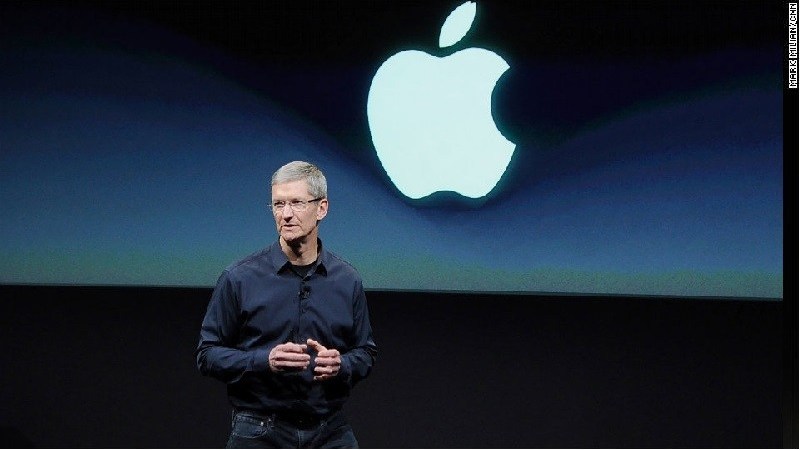
Apple is bracing for a fresh wave of costs tied to President Donald Trump’s trade policies, with CEO Tim Cook revealing that tariffs could add up to $1.1?billion to the company’s expenses in the September quarter.

Cook disclosed during Thursday’s earnings call that Apple had already swallowed about $800?million in tariff costs in the June quarter, a bit less than the $900?million estimate the company gave back in May.

Cook explained that most of the charges stemmed from tariffs imposed under the International Emergency Economic Powers Act (IEEPA), particularly targeting goods sourced from China. While Apple has been trying to diversify its supply chain to mitigate the fallout, Cook warned there were “many factors that could change, including tariff rates,” highlighting the deep uncertainty around U.S.-China trade.

Supply Chain Shuffle: India and Vietnam in Focus

The Trump administration has repeatedly pushed Apple to relocate production to the United States or face even steeper import duties. As a result, Apple has stepped up manufacturing in India, where Cook noted that “the majority” of iPhones sold in the U.S. are now produced.

Meanwhile, most Macs, iPads, and Apple Watches come from Vietnam. These moves, aimed at avoiding the highest Chinese tariffs of around 25%, still leave Apple exposed, since the Trump administration has threatened to expand tariffs to include India and Vietnam if production doesn’t shift to U.S. soil.

Even with this diversification, Apple’s sprawling supply chain, built over decades across Asia, is not easily or cheaply replicated in the U.S., Cook stressed. To blunt the impact of trade threats, Apple has committed to investing $500?billion in U.S. projects over the next four years, including building a Detroit-based manufacturing academy and expanding its domestic semiconductor sourcing.

Apple Powers Ahead Despite Trade Turbulence

Despite the tariff drag, Apple delivered impressive results in the June quarter. Revenue climbed 10% to $94?billion, while net profit rose 9%, thanks to robust demand for the iPhone 16 and steady growth in services. iPhone sales alone jumped 13% to $44.6?billion, and services revenue reached a record $27.4?billion.

Cook credited a mix of “early buy” activity from consumers wary of future price hikes and the sustained popularity of the latest flagship devices. Services—including iCloud, Apple Music, and App Store fees—helped stabilize earnings, offsetting pressure from rising production costs.

As rivals like Microsoft and Google race ahead with large-scale artificial intelligence rollouts, Apple has faced growing pressure to deliver more from its own AI initiatives. Cook confirmed plans to “significantly” expand Apple’s AI investment, and CFO Kevan Parekh said the company could pursue strategic acquisitions to strengthen its position. Analysts argue this shift is crucial if Apple wants to balance tariff-related volatility with new revenue streams.

Industry analysts note that Apple’s focus on “on-device” AI puts it on a different path than cloud-heavy competitors, with the goal of maintaining data privacy while still offering powerful features. However, Apple lags behind its peers in rolling out major consumer-facing AI products, a gap that some fear could widen if trade battles further squeeze margins.

Walking The Tariff Tightrope

Cook’s comments made it clear Apple faces a precarious few months. If tariff rates remain at their current levels, the company could see a cumulative hit of nearly $1.9?billion across two quarters. That figure might rise if Trump follows through on new threats to target imports from India or Vietnam.

Apple is betting that its diversification strategy, robust U.S. investment promises, and a pivot to AI can protect its brand and bottom line from geopolitical turbulence. But the challenges are substantial.

Shares in Apple are down 17% year-to-date, reflecting investor worries about trade risk and competitive pressures. Whether Cook can balance these crosswinds while still keeping Apple’s growth story alive will define the company’s trajectory heading into 2026.