DD
MM
YYYY

PAGES

DD
MM
YYYY

spot_img

PAGES

Home Blog Page 85

As Bitcoin and Ethereum Rally, Avalon X Presale Offers 25% Bonus This Black Friday

0

Top crypto assets like Bitcoin (BTC) and Ethereum (ETH) are setting the mood as the broader market recovers. With the Bitcoin price and Ethereum price rallying, investors seek a modest price altcoin to ride the momentum of these pioneer assets for profit.

Among various options, RWA-based assets are in massive demand and nascent Avalon X (AVLX) is emerging as one of the top new crypto projects in 2025. The hype of this real estate backed cryptocurrency is not an illusion, but fueled by institutional backing, exclusive incentives.

Everyone loves a discount and as this year’s Black Friday looms closer, AVLX has introduced a massive 25% bonus for early birds.

Although Bitcoin and Ethereum are the major movers in the crypto space, the Avalon X crypto offerings position the asset as one of the best altcoins to invest in 2025, especially for investors who don’t want to miss out on what could be a generational wealth creation opportunity.

Bitcoin Price USD Recovers

Amid market recovery, the Bitcoin price today at $87,099 has gained 1.11% in the past day. The trading volume also increased by 2.23%, indicating rising investors’ interest.

The catalyst to this recovery is attributed to recent Bitcoin news, stating that BlackRock’s spot Bitcoin ETF recently deposited an additional 900 BTC worth $77.59 million into Coinbase Prime. This brings the total to a staggering $321.29 million, creating a ripple effect that can lead to reduced volatility and increased liquidity.
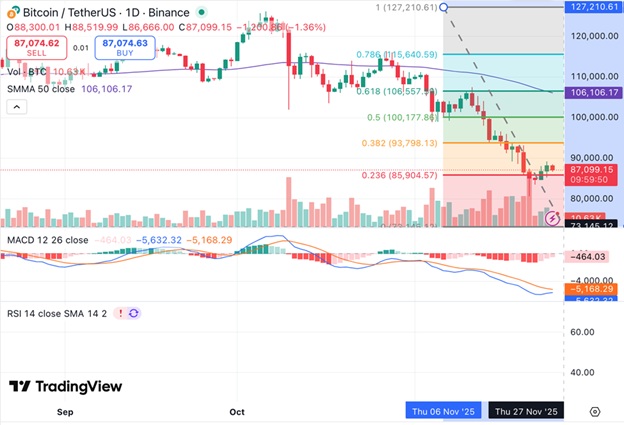
Source: TradingView

Looking at the technical analysis, Bitcoin displays a bearish signal as it trades below its 50-day SMA value of $106,106. However, the Bitcoin price is showing signs of recovery after finding support at the 23.6% Fibonacci retrenchment value of $85,904. A continuous broader market rally could push the pioneer asset into new price levels.

Ethereum Price Prediction: Support at $2,700

At press time, the Ethereum price USD at $2,913 gained 4.02% in the past day. The trading volume also increased by 20.38% in the past 24 hours, showing positive investors’ interest.

This recent rally can be attributed to latest Ethereum news, stating that U.S. banks now have the regulatory approval to hold Ethereum as principal assets. The guidance reflects increasing institutional adoption, which potentially influences Ethereum market dynamics.
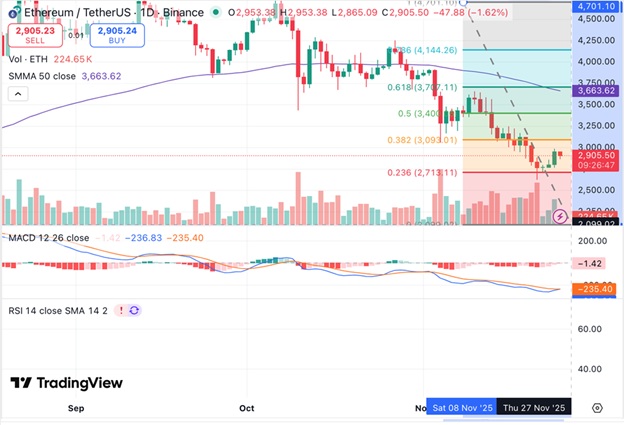
Source: TradingView

According to its technical analysis, the Ethereum price displays a bearish trend as it trails below its 50-day SMA value of $3,663. On the other hand, the asset has found support around the 23.6% Fibonacci retracement level of $2,713. Ethereum needs to hold above this level for a while and push towards the next price level.

Despite the anticipated positive rally from these assets, Avalon X appeal comes from its identity as a crypto backed by real world assets. Unlike market-reliant assets, the real estate tokenization crypto offers stability and long-term wealth-building opportunity.

Avalon X Real Estate Crypto Innovation

Avalon X (AVLX) taps into the multi-trillion dollar real estate industry to simplify investment for everyday investors through property tokenization. This innovation of blockchain and tangible real-world assets is backed by Grupo Avalon, a leading real estate developer with nearly $1 billion in total project value.

Investors can get into this wealth-creating project through the Avalon X token, AVLX, which also grants access to exclusive incentives such as staking rewards, property discounts, and VIP reservations.

Access Avalon X Giveaway And Discounts

To support its community, the project has organized multiple Avalon X contest events and crypto presale bonuses in 2025. As a result, AVLX coin holders can look forward to the $1M crypto giveaway incentive and an opportunity to own a crypto townhouse giveaway in the exclusive Eco Avalon development.

Eco Avalon Townhouse Giveaway

Avalon X is further adding to the excitement with the introduction of its referral program and an extra 25% bonus in tokens this Black Friday. However, note that these events are time-limited so now is the best time to be a part.

Get in Before the Next Price Surge

Although Bitcoin and Ethereum stand as pioneers in the crypto space, their heavy reliance on market trends and high price keeps them out for most everyday investors.

On the other hand, Avalon X (AVLX) currently sells at a modest price of $0.01 per token in Stage 2 following the successful completion of Stage 1, which delivered a 100% return on investment (ROI) to early participants.

The AVLX coin also benefits from a CertiK-audited smart contracts, a deflationary token model, and a forthcoming listing on Binance and Uniswap expected to increase liquidity. However, demand is increasing daily as the Avalon X presale has sold over 77 million tokens already.

Take advantage of the Avalon X 25% bonus now and be a part of the disruption that’s reshaping wealth creation for everyone.


Join the Community

Website: https://avalonx.io

CoinMarketCap: https://coinmarketcap.com/currencies/avalon-x/

Telegram: https://t.me/avlxofficial
X: https://x.com/AvalonXOfficial

US SEC Investigates Jefferies’ Exposure to Bankrupt First Brands Group Amid Complex Debt Defaults

0

The U.S. Securities and Exchange Commission (SEC) has launched a probe into Jefferies’ involvement with the bankrupt auto parts manufacturer First Brands Group, the Financial Times reported Thursday.

The investigation, which is still in its early stages, is focused on whether Jefferies provided investors with sufficient disclosure regarding the Point Bonita fund’s exposure to First Brands’ debt, and whether internal controls at the bank were adequate to prevent conflicts of interest.

An SEC spokesperson, consistent with standard protocol, declined to comment on the existence or nonexistence of a possible investigation. But sources told the Financial Times that it remains unclear whether the probe will lead to formal allegations of wrongdoing.

First Brands’ Debt Web

First Brands Group, a significant supplier in the automotive sector, financed its operations through a highly leveraged and complex debt structure. The company relied on a mix of senior secured loans, subordinated notes, and high-yield credit facilities. Its capital stack included multiple layers of collateralized obligations, intercompany loans, and guarantees between subsidiaries, which created substantial opacity for investors and lenders.

In mid-2024, First Brands began experiencing cash flow pressures due to a combination of supply chain disruptions and lower-than-expected revenue from key auto clients. These operational issues, combined with a debt maturity schedule heavily concentrated in late 2024 and early 2025, triggered cascading defaults across several debt tranches. Senior secured lenders were partially repaid from collateral liquidation, but subordinated noteholders and other unsecured creditors suffered significant losses.

Jefferies’ Point Bonita fund had invested heavily in these instruments, particularly the subordinated and high-yield notes. Market analysts note that the fund’s exposure to these high-risk tranches may not have been fully appreciated by investors, raising questions about whether the bank adequately communicated the intricacies and vulnerabilities of First Brands’ debt structure.

Timeline of Key Events

  • Early 2024: Jefferies initiates exposure to First Brands’ debt via Point Bonita fund.
  • Mid-2024: First Brands begins to experience operational strain; early signs of missed payments emerge.
  • July 2024: Investors report concerns regarding the fund’s exposure, as market rumors about First Brands’ debt struggles circulate.
  • Late 2024: Multiple debt tranches begin defaulting; Jefferies’ fund faces significant mark-to-market losses.
  • Early 2025: First Brands officially files for bankruptcy; Jefferies and other creditors attempt to recover collateral and restructure remaining debt.
  • November 2025: SEC begins inquiry into Jefferies’ disclosures and internal controls related to Point Bonita fund exposure.

Market Impact and Investor Concerns

The collapse of First Brands has reverberated across the auto parts sector and the broader high-yield lending market. Investors are increasingly cautious about complex, layered debt structures that obscure true exposure, particularly when market conditions tighten or operational risks materialize. Jefferies’ share price has suffered, dropping over 12 percent this quarter and 27 percent year-to-date, reflecting heightened investor apprehension.

Analysts suggest that the SEC’s inquiry could have broader implications for hedge funds and asset managers invested in highly leveraged corporate borrowers. It may prompt heightened scrutiny of disclosure practices, especially for funds holding complex or opaque debt instruments. The outcome could influence market perceptions of risk and governance standards, particularly in the high-yield credit space.

While the investigation is still preliminary, Jefferies faces potential reputational and regulatory risks. The SEC’s inquiry may also influence broader regulatory thinking on how banks and investment funds manage and communicate risks associated with highly structured corporate debt, with potential repercussions across Wall Street’s high-yield and structured finance markets.

Alibaba Pushes Into AI Wearables With New Quark Glasses, Challenging Meta’s Global Lead

0

Alibaba on Thursday introduced its new Quark artificial intelligence glasses in China, marking a fresh push by the company to carve out space in a wearables market that global players like Meta currently dominate.

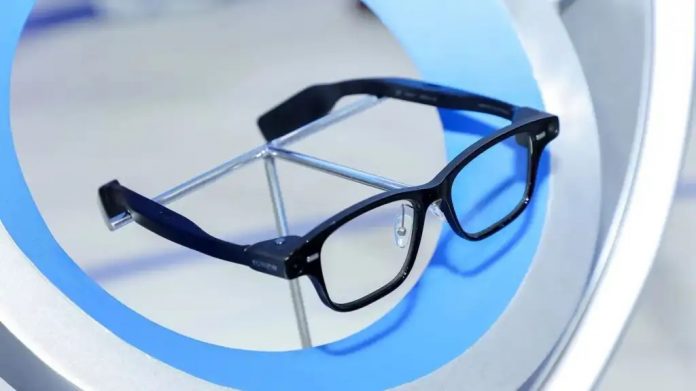
The headset starts at 1,899 yuan ($268.25) and is powered by Alibaba’s in-house Qwen AI model and app. Alibaba has opted for a familiar, everyday look instead of the more conspicuous visor-style designs that have defined Western rivals.

The Quark glasses resemble regular eyewear with a black plastic frame, a design choice that appears aimed at helping the device blend more seamlessly into daily use rather than calling attention to itself.

Alibaba said the glasses will be tightly woven into its ecosystem, including Alipay and its e-commerce platform Taobao. Wearers will be able to use them for functions like on-the-go translation and instant price recognition, positioning the device as an extension of tools consumers already use throughout the Alibaba universe.

Li Chengdong, a Beijing-based electronics industry analyst, said Alibaba’s strength lies in its shopping, payments, and navigation services, and that the Quark headset is designed to work more like a life assistant rather than a purely entertainment or gaming device. He added that the company is moving aggressively into consumer-focused AI after lagging competitors in the space for years.

Earlier this month, Alibaba rolled out a major upgrade to its AI chatbot.

Li said the strategy behind the glasses also reflects the company’s long-term attempt to defend its territory in an increasingly competitive e-commerce sector.

“Alibaba is not a monopoly in e-commerce,” he said. “It hopes AI can help it secure the next-generation traffic gateway.”

The new Quark glasses are available on major Chinese e-commerce platforms, including Tmall, JD.com, and Douyin. Sales numbers have not yet been made public, as the product only officially launched on Thursday.

The release drops Alibaba into a global race that is intensifying as tech companies hunt for the next device category that combines entertainment, communication, and computing underpinned by AI. Meta currently dominates the VR headset market with around 80 percent of global share through its Quest line. Apple’s Vision Pro is also in play, while Samsung, working with Google, introduced its Galaxy XR extended-reality headset in October, incorporating AI features built on Alphabet’s technology.

Alibaba is not alone in China’s AI-wearables experimentation. Xiaomi released its own AI-powered glasses in June, while Baidu has had a comparable product on the market already. The overlapping timelines underline a broader shift within China’s tech sector, where companies are racing to capture new hardware entry points as consumers migrate toward AI-driven interfaces.

Although Alibaba has historically been known for its core e-commerce and cloud operations, the Quark glasses signal the company’s attempt to embed AI more directly into personal devices. It is an area where it has been considered a step behind rivals. The company is now trying to reposition itself as a frontrunner in consumer AI, using its sprawling ecosystem of payment, shopping, and lifestyle services as its leverage.

The headset’s launch comes amid renewed pressure across China’s tech industry to find fresh sources of growth. With the battle for online retail intensifying and user attention fragmenting across platforms, major firms are seeking new hardware that could serve as the next major entry point for digital services. Alibaba is betting that AI glasses—lightweight, functional, and integrated into everyday habits—might become that gateway.

The company’s move signals that the wearables fight in China is only getting started, though it’s not clear yet whether consumers will embrace the device at scale.

Foxconn Secures $569m U.S. Investment Approval to Expand AI Server Operations in Wisconsin

0

Taiwan’s Foxconn has secured regulatory approval to inject an additional $569 million into its Wisconsin operations, a move that signals both the company’s renewed commitment to U.S. manufacturing and the rising strategic value of AI server production.

The approval, granted by the Wisconsin Economic Development Corporation (WEDC), allows Foxconn to scale its facility in Racine County to meet rapidly increasing demand for AI data infrastructure across the United States.

Foxconn, formally known as Hon Hai Technology Group, said the new investment will be directed squarely at expanding its AI server business in Wisconsin, which the company now frames as one of the most important growth segments in its global portfolio. The company explained that the expansion is designed to strengthen domestic U.S. supply chains at a time when the race to build robust AI infrastructure has become a central priority for both industry and government.

“As the demand for more data infrastructure continues to rise, Foxconn will keep responding to our customers’ needs with flexibility and at scale in the United States,” said Foxconn Chief Product Officer Jerry Hsiao.

He added that Wisconsin now accounts for nearly a quarter of Foxconn’s U.S. workforce, and the additional investment will double the company’s presence in the state by 2030, creating 1,374 new jobs.

Foxconn said it has already spent more than $2 billion in Wisconsin over recent years across payroll, capital expenditure, and taxes. The latest investment effectively deepens that footprint, turning the Racine County site into one of the company’s most significant U.S. hubs.

The focus on AI servers gives the story its broader economic significance. These machines, engineered to handle the enormous processing loads required to train large language models and run enterprise-grade AI systems, have become the backbone of the modern cloud economy. Big Tech firms are scrambling for reliable suppliers, and Foxconn’s ability to manufacture at scale gives it a strategic advantage as demand surges in the wake of breakthroughs in generative AI.

It is believed that Foxconn’s move fits a larger shift among global manufacturers who are accelerating plans to build and assemble more advanced computing hardware in the United States. Washington’s push to localize critical technology production — through funding packages, procurement incentives, and strategic partnerships — has reshaped global supply decisions. Foxconn’s announcement shows how international manufacturers are increasingly aligning with this trend, especially in sectors tied to national competitiveness and digital infrastructure.

The Wisconsin facility was originally conceived years ago with ambitions tied to consumer electronics. Its current reorientation toward AI server production underscores how the global tech landscape has changed. Demand for high-performance computing has far outpaced earlier forecasts, and companies that once prioritized consumer devices are now channeling resources into cloud infrastructure, data-center hardware, and AI components.

Foxconn’s renewed commitment also arrives at a moment when the United States is making major policy pushes to reduce exposure to Asia-based supply chains in sensitive technology sectors. Trade tensions and semiconductor shortages led to aggressive moves from Washington to build local resilience. For companies like Foxconn, expanding U.S. operations not only strengthens ties with key clients but also helps navigate geopolitical pressures and maintain long-term market access.

Also, the expansion represents both economic and symbolic gains for Wisconsin. The creation of more than 1,300 jobs, combined with billions of dollars already spent by Foxconn, marks the state as an emerging node in America’s AI hardware supply chain. State officials have argued that attracting companies involved in data infrastructure is vital for reshaping the region’s manufacturing landscape and securing high-quality tech jobs.

Foxconn’s investment also signals increasing competition among global suppliers for dominance in AI server production. The sector has become one of the fastest-growing areas in the tech industry, driven by the adoption of generative AI across enterprises, governments, and research institutions. Companies powering large-scale AI operations require hardware systems that can handle enormous data throughput, and Foxconn is positioning itself to capture a greater share of this demand.

The upgrade at Racine County effectively situates Foxconn deeper inside the U.S. AI ecosystem, where demand for domestic production continues to rise. With U.S. firms racing to build out AI capacity, and with supply chains undergoing realignment to ensure secure access to critical hardware, Foxconn’s latest investment represents a timely move that ties the company’s future more closely to America’s technological trajectory.

Uber Rolls Out Middle East’s First Fully Driverless Robotaxi Service in Abu Dhabi with WeRide

0

Uber and Chinese autonomous vehicle company WeRide have officially launched fully driverless robotaxi services in Abu Dhabi, marking the first driverless deployment in the Middle East and the first city outside of the United States to host fully autonomous operations on the Uber platform.

The launch, which commenced on Wednesday, introduces Level 4 autonomous vehicles—meaning they can manage all driving tasks independently within approved zones—operating without a safety specialist onboard. This milestone positions Abu Dhabi as a critical new battleground for global autonomous vehicle technology.

Key Details of the Launch

The driverless robotaxis, which are WeRide’s GXR model, are currently operating in designated areas of Yas Island, a major tourism and entertainment hub. The launch follows a rigorous testing period and the receipt of a Level 4 fully driverless Robotaxi permit from Abu Dhabi’s Integrated Transport Centre (ITC)—a permit reportedly the first of its kind at the city level outside the U.S.

Riders in Abu Dhabi can request a WeRide robotaxi through several options on the Uber app:

  • UberX or Uber Comfort requests.
  • A newly introduced, dedicated “Autonomous” ride category, which is Uber’s first global option specifically for self-driving vehicles, boosts the chance of being matched with a robotaxi.

The service is a joint effort between Uber, WeRide, and local fleet operator Tawasul Transport. While WeRide supplies the Level 4 technology, Uber oversees the customer experience and, in collaboration with Tawasul, manages fleet operations (maintenance, charging, and support).

The companies have already been operating autonomous rides with safety operators in core areas of Abu Dhabi (like Al Reem and Al Maryah) since July 2025 and plan to extend driverless coverage to more of the city core by the end of the year.

Uber’s Global Partnership Strategy

This Abu Dhabi launch is central to Uber’s renewed strategy to dominate the future of autonomous ride-hailing through partnerships, following the sale of its own internal self-driving unit in 2020. The company now focuses on leveraging its global ride-hailing platform while integrating the best available third-party AV technology.

Uber already offers robotaxi services in three U.S. cities: Phoenix (since late 2023), Austin, and Atlanta (both since early 2025) through its partnership with Alphabet’s Waymo.

The partnership with the Nasdaq-listed WeRide is rapidly expanding its footprint in the Gulf region. Prior to the fully driverless launch, the duo had already deployed autonomous rides with safety operators in Riyadh, Saudi Arabia, since October 2025.

Uber has stated intentions to roll out the WeRide service to 15 more cities, including locations in Europe, over the next five years.

The company is actively diversifying its AV partners, having also secured a six-year deal with electric vehicle maker Lucid and AV startup Nuro.

The Abu Dhabi launch serves as the blueprint for Uber and WeRide’s ambitious global expansion. To accelerate their plan to roll out the service to 15 additional cities across Europe and the Middle East over the next five years, Uber has committed to an additional $100 million equity investment in WeRide.

While the specific list of 15 target cities has not been made public, analysts and corporate statements point to key regulatory-friendly markets. The very next city confirmed for expansion is Dubai, also in the UAE. Furthermore, WeRide has already obtained autonomous driving permits or begun testing in several key European jurisdictions, including Switzerland, France, and Belgium, suggesting these nations will be high on the deployment list.

The expansion will focus entirely on markets outside the US and China, where regulatory complexity and competitive saturation are currently higher. This collaborative model—where WeRide supplies the technology, and Uber handles the customer interface and fleet operations in cooperation with local partners—is designed to rapidly scale to thousands of robotaxis and drive the services toward achieving breakeven unit economics.

Uber has not yet disclosed how revenue from these robotaxi rides is split with its partners.

Meanwhile, competitors are similarly pushing into the market; Lyft recently announced a deal with Waymo to launch robotaxi services in Nashville next year. This rapid cross-pollination of technology and platform services indicates the race for breakeven unit economics and large-scale deployment is accelerating globally.