DD
MM
YYYY

PAGES

DD
MM
YYYY

spot_img

PAGES

Home Blog Page 860

Google’s Android Chief Says Computer Science Degree Needs a ‘Rebrand’ as AI Reshapes Industry Expectations

0

Sameer Samat, President of Android Ecosystem at Google, is calling for a fundamental shift in how computer science is taught and perceived in the age of artificial intelligence.

Speaking at a Google education summit on July 18, Samat argued that the traditional framing of computer science as a coding-centric discipline is outdated and no longer meets the needs of today’s students—or the companies that will eventually employ them.

While many universities and prospective students still treat the degree as a gateway to learning how to code, Samat believes this view misses the point.

“If what you want to do is write Java code, you don’t need a computer science degree,” he said. “That’s not what computer science is.”

Instead, he emphasized the discipline as the art of abstraction—of breaking complex problems into solvable components, designing systems to address them, and collaborating across disciplines to build long-lasting solutions.

His comments come as the influence of generative AI tools, such as GitHub Copilot and Google’s own Gemini, continues to expand. These systems can already auto-generate code snippets, optimize scripts, and suggest full-function logic, prompting fears that human coders might soon become obsolete. But Samat disagrees with the idea that AI will replace the value of a computer science education. Instead, he believes AI will force the field to evolve—and in the process, highlight the deeper value of system-level thinking and architectural design that machines can’t easily replicate.

Samat, who studied computer science at the University of California, San Diego, reflected on how foundational courses in assembly language helped him grasp what’s happening under the hood of modern software. He said this deeper understanding of computing systems is what distinguishes a true computer scientist from someone who merely writes code. It also explains why companies like Google increasingly look for engineers who can integrate technical knowledge with domain-specific expertise.

He also warned against choosing the major purely for job security. “Too many students are selecting computer science because it’s seen as a safe, high-paying field, not because they’re passionate about solving hard problems,” he said. “That doesn’t work anymore.”

Employers now seek individuals who not only possess technical skills but also bring unique perspectives from other disciplines—whether it’s design, psychology, economics, or education.

Drawing from his own experience, Samat described how founding two startups in his twenties taught him more about technology and product development than formal classroom settings. One of those ventures led to a meeting with Google co-founder Sergey Brin, ultimately paving the way for his career at the company.

“When you’re passionate about solving problems, you find ways to go deeper,” he said, urging aspiring students to strive to be in the top 5% of their chosen domain.

Samat’s call to rebrand computer science education comes amid ongoing industry debates about how schools can keep up with the pace of technological change. As AI continues to automate low-level programming tasks, he believes universities must shift their focus toward teaching students how to build systems, think critically, and design for complexity.

He ended his talk with a clear message for students considering the major: Don’t just study computer science because it’s in demand—do it because you’re genuinely interested in how technology can solve real-world problems. And if you do, “go deep.”


Meta Deepens AI Poaching Spree, Grabs More Apple Researchers for Superintelligence Push

0

Meta is not slowing in its aggressive talent grab in the artificial intelligence race, as the company has hired two more high-profile researchers from Apple, strengthening its ambition to lead the next wave of AI innovation.

According to Bloomberg, the two Apple engineers—Mark Lee and Tom Gunter—are the latest additions to Meta’s recently launched Superintelligence division, joining their former colleague Ruoming Pang, who left Apple in July.

Lee has already begun work at Meta, while Gunter is expected to start soon. Both had worked closely with Pang in Apple’s secretive Foundation Models team, which focused on developing in-house large language models. Their defection is another blow to Apple’s internal AI ambitions, which are now facing visible cracks as more talent exits despite Apple’s recent push to integrate AI features into iOS and macOS.

Meta, under Mark Zuckerberg’s direction, is pouring enormous resources into what it calls Superintelligence Labs—a new arm of the company focused on building systems that surpass current AI capabilities and mimic human-level reasoning. The initiative, announced in June, is being spearheaded by Scale AI founder Alexandr Wang as Chief AI Officer and GitHub’s former CEO, Nat Friedman. Their goal is to engineer what insiders describe as “agentic AI”—systems that can not only interpret language, but autonomously reason, plan, and use tools in complex environments.

But building such systems doesn’t only require computing power—it demands elite human capital. And Meta is leaving no stone unturned in securing that. The company is now widely viewed as Silicon Valley’s most aggressive recruiter of top AI researchers. In addition to Pang, Lee, and Gunter, Meta has also poached leading scientists from Google DeepMind, OpenAI, and academic labs. The firm is reportedly offering mind-boggling compensation packages, in some cases exceeding $100 million, to convince key figures to jump ship.

Sources familiar with the deals told Reuters that the offers are structured like contracts for star athletes—multi-year agreements that include equity, bonuses, and large upfront signing incentives. Pang’s deal, for instance, was rumored to exceed $200 million, a sum that dwarfs even the most generous compensation offers at Apple, where stock-based rewards are more conservative and tied to long-term retention.

Apple, meanwhile, has scrambled to contain the damage. Following Pang’s exit, the company began issuing raises to select engineers working on its AI systems. But Meta’s compensation packages are in a league of their own, making it difficult for rivals to compete. Apple’s recent partnerships with OpenAI and Anthropic to power Siri and iPhone AI features have also sparked speculation that the company is shifting its strategy away from building its own foundational models toward licensing them, possibly a result of internal attrition.

Meta’s spree doesn’t look like it will stop anytime soon. Zuckerberg has pledged tens of billions of dollars to build up the company’s AI infrastructure, including data centers and proprietary silicon chips, to support training at a scale that could rival or surpass OpenAI and Google. Internally, the company is also working on “Behemoth,” a massive new LLM intended to leapfrog existing models like GPT-4 and Claude.

Industry analysts believe Meta’s intense recruitment drive and commitment to frontier AI positions it as one of the few serious contenders in the race to develop artificial general intelligence (AGI), or at the very least, agentic systems capable of performing autonomous tasks without direct human supervision.

At the core of this transformation is a belief that AI is not merely a feature but the future of computing, and whoever leads in agentic AI could control the operating system of tomorrow’s digital economy. Meta is betting big on that future, one superstar recruit at a time.

UBA Targets Additional N157bn in Rights Issue, Extends Recapitalization Push Amid Strong Q1 Earnings

4

United Bank for Africa (UBA) Plc is intensifying efforts to shore up its capital base, announcing a fresh plan to raise over N157 billion through a rights issue as part of a broader strategy to meet the Central Bank of Nigeria’s (CBN) recapitalization mandate.

The move underscores the urgency among Nigerian banks to comply with the apex bank’s directive, which aims to fortify the country’s financial sector against economic shocks and currency volatility.

In a notice to trading license holders, the Nigerian Exchange Limited (NGX) disclosed that UBA, through its stockbroker United Capital Securities Limited, has filed an application for the approval and listing of 3,156,869,665 ordinary shares of 50 kobo each. The rights issue, priced at N50.00 per share, will be offered on the basis of one new share for every thirteen ordinary shares held by shareholders as of July 16, 2025.

This latest offering is the second capital raise by UBA within a year. In November 2024, the lender had initiated a rights issue to raise N239.4 billion through the sale of over 6.8 billion shares at N35.00 each. That offering was oversubscribed, with bids exceeding N251 billion. However, in line with its cap, UBA accepted N240 billion, bringing its capital base to N355.2 billion — well on its way to meeting the new regulatory minimum.

The latest effort will further bridge the capital gap as UBA aims to fully comply with the CBN’s recapitalization deadline of March 31, 2026. Under the policy introduced by the CBN in March 2024, commercial banks with international licenses are required to raise their minimum capital to N500 billion, while national banks must raise N200 billion and regional banks N50 billion. The capital computation excludes retained earnings, share premium, and revaluation reserves, meaning banks must raise fresh equity to meet the threshold.

The policy, described by the CBN as a move to “strengthen the resilience of Nigeria’s banking system,” was driven by concerns over the depreciation of the naira, high inflation, and increased macroeconomic risks. Many banks, including UBA, have since adopted phased recapitalization strategies combining rights issues, public offers, and in some cases, mergers or acquisitions to meet the target.

UBA’s recapitalization journey has been reinforced by its strong financial performance. For the first quarter of 2025, the bank posted a pre-tax profit of N204.27 billion — a 30.65% rise from N156.3 billion in the same period last year. Net profit hit N189.84 billion, reflecting a 33.15% growth year-on-year. These earnings were fueled by robust interest income, which climbed to N599.83 billion, up 36% from Q1 2024. The bulk of this came from loans and advances (N260.56 billion) and investment securities (N291.86 billion).

Non-interest income also surged, with electronic banking generating N47.84 billion and account maintenance fees contributing N10.39 billion. The bank’s balance sheet continues to reflect operational strength, with strategic investments in technology and expansion into key African markets paying off.

UBA’s continued capital raise reaffirms its commitment to maintaining its international banking license and supporting its pan-African footprint. For shareholders, the latest rights issue offers another opportunity to deepen their equity in one of Nigeria’s leading financial institutions, even as the industry braces for a new era of capital adequacy and competition.

As the recapitalization deadline inches closer, UBA — like many of its peers — appears to be racing against time. Already, several banks, including Zenith, GTCO, Access Holdings, and FBN Holdings, have unveiled similar plans, issuing public and rights offers, pointing to a sector-wide scramble to meet the CBN’s demands.

Why LinkedIn Became Valuable

0

“In Q1 2025, AWS reported $29.3 billion in revenue—a 17% increase from the previous year—and operating income surged 23% to $11.5 billion. Its operating margin expanded to 32%, up from 29% the prior year, reflecting strong cost discipline and demand for cloud services, particularly AI-driven workloads.” Yet, the AWS unit of Amazon fired many workers!

In the past, resumes were confidential documents. Nobody made his or her resume public. That was the time when companies used to offer lifetime employment. But over time, irrespective of efforts, companies would always find ways to fire workers. As that was happening, the working people of world noticed that company loyalty is a hopeless strategy. Magically, LinkedIn was born, giving people the opportunity to make their resumes PUBLIC.

You know what just happened? The resume/CV is now public in LinkedIn, telling the world “I am here…but available if something better comes”. That has become the relationship as in this age of the market system, your success could destroy your job. You build the technology and that tech makes you irrelevant, and you are asked to go!

Did you get the point? Thriving in career these days goes beyond doing your job well because a job well done could be a reason to be fired because you have removed any need to keep you in that company. Most of these Amazon AWS workers are possibly people who created one AI system which ended up disintermediating them. Sure – they will be fine as there are jobs out there for the best!

This matter is so important that in our Multinational Career module in Tekedia Mini-MBA, I explain why professionals must develop a Personal Career Resilience Framework that goes beyond winning trophies and excellent rating at work because while those still matter, “success” can punt careers in the AI age.

Yes, you need backups in whatever you do because in a record quarter of revenue and profit, it could be that you have fulfilled your mission in that firm. Look at new exit models in AI startups, they hire the CEOs, leave zombie companies and the process makes it impossible for workers to get any benefit unlike the old model of “buying” the company which triggers change of hand, and rewards in the bank accounts.

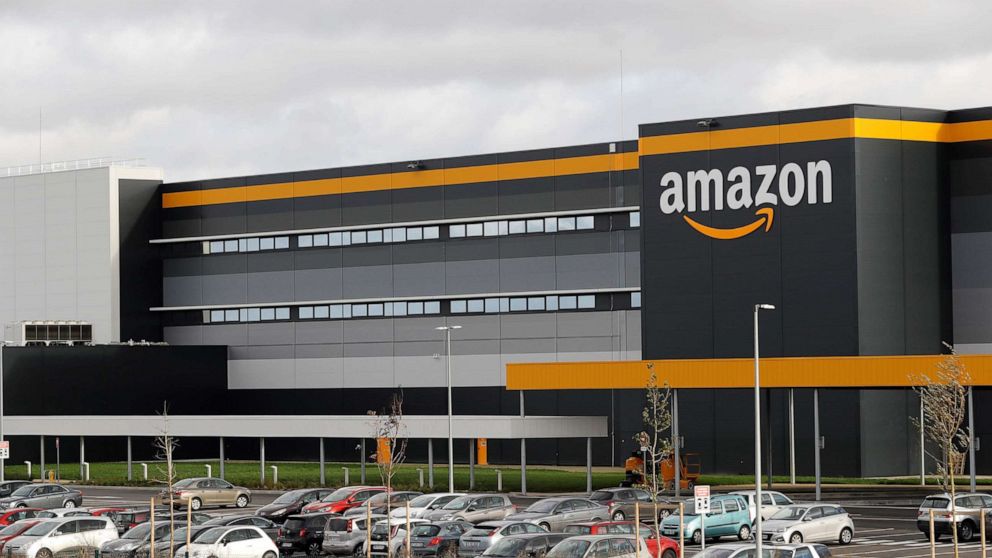
Amazon Lays Off Hundreds of Workers in AWS as Part of Strategic Restructuring Amid AI Shift

Amazon Lays Off Hundreds of Workers in AWS as Part of Strategic Restructuring Amid AI Shift

0

Amazon has reportedly laid off hundreds of employees in its cloud-computing unit, as confirmed by Reuters on Thursday.

A spokesperson at the company, Brad Glasser, confirmed that Amazon is laying off employees in AWS, but did not specify which teams were affected.

Internal messages suggest that affected teams include frontline support, training and certification, and the AWS Worldwide Specialist Organization, which works with customers and product teams.

Amazon said the cuts weren’t primarily due to investments in AI but are a result of efforts to streamline the workforce and refocus on certain priorities. The move is part of a larger restructuring effort to improve efficiency across the company. CEO Andy Jassy has emphasized the importance of making Amazon “leaner,” with recent comments highlighting the growing role of generative AI in reducing corporate overhead.

Recall that last month, Jassy stated that the company’s corporate workforce will shrink further in the coming years as a result of AI. He said Amazon would “need fewer people doing some of the jobs that are being done today, and more people doing other types of jobs.”

Jassy’s remarks sparked concern among employees about job security, especially as automation becomes more prominent within Amazon’s operations. The company has continued to lay off workers this year, after cutting more than 27,000 jobs since 2022.

Despite the recent layoffs, Amazon says it is offering support to affected staff. U.S.-based employees will receive approximately 60 days of continued pay and benefits, in addition to severance packages, extended healthcare coverage, and access to internal job placement services. The company is also encouraging laid-off workers to apply for open roles in high-priority departments where hiring is ongoing.

Importantly, the job cuts are not seen as a result of declining performance within AWS. On the contrary, AWS remains a core profit engine for Amazon.  In Q1 2025, AWS reported $29.3 billion in revenue—a 17% increase from the previous year—and operating income surged 23% to $11.5 billion. Its operating margin expanded to 32%, up from 29% the prior year, reflecting strong cost discipline and demand for cloud services, particularly AI-driven workloads.

AWS’s growth is fueled by enterprise adoption of its AI and machine learning tools, such as Bedrock and SageMaker, alongside infrastructure upgrades like the Graviton4 chip and Trainum accelerators. Strategic partnerships, like the $4 billion investment in Anthropic, bolster AWS’s position in generative AI, competing with Microsoft Azure and Google Cloud.

AWS’s annualized revenue run rate is now over $110 billion, with analysts projecting sustained double-digit growth through 2026 due to AI and digital transformation trends. However, AWS faces intensifying competition from Azure, Google Cloud, and Oracle Cloud Infrastructure, particularly in AI infrastructure, where Oracle’s partnerships with OpenAI and xAI are gaining traction.

Notably, amidst the recent job cuts, Business Insider reports that several Amazon units now require employees to detail how they use AI at work in their promotion applications. The policy, spearheaded by Ring inventor Jamie Siminoff, aims to promote innovative thinking in the talent-evaluation process.

The move mirrors similar AI-first directives from Shopify and Duolingo, though the policies are not yet companywide. This is part of a growing trend among tech CEOs to incorporate AI use into their talent-evaluation process.

Amidst the significant layoffs at the company, it is not alone in this trend. In February 2025, Google also trimmed its cloud division workforce, citing the need to align with evolving customer needs and future growth opportunities. As Amazon doubles down on AI and cloud services, the recent layoffs suggest a company in transition focused on efficiency, innovation, and realignment for long-term competitiveness.