DD
MM
YYYY

PAGES

DD
MM
YYYY

spot_img

PAGES

Home Blog Page 863

Coinbase Unveils All-in-One “Base App” as It Bets on a Super App Future for Crypto

0

Coinbase on Wednesday launched a new all-in-one consumer app called the “Base App” — an ambitious bid to recreate the success of China’s super apps like WeChat and Alipay, and a major departure from the company’s traditional focus on crypto trading.

The app, which replaces the Coinbase Wallet, is designed as a single portal for trading, payments, messaging, identity management, and even social content — all running on the company’s own public blockchain network, Base. Built on Ethereum, Base offers fast, ultra-low-cost transactions and is now being positioned as a key pillar in Coinbase’s effort to pull in users far beyond its traditional crypto base.

Coinbase says the app is designed not just for crypto traders, but for mainstream users — shoppers, content creators, small businesses — who may not be deeply engaged in the crypto economy but still need tools for payments, identity, and social interaction. The company’s broader vision is to build what it calls an “everything app” — a single destination to buy, sell, send, and create on-chain content, interact with decentralized apps (dapps), and connect with communities.

Super App Race in the West

Coinbase’s move pushes it deeper into a race that tech giants like Meta and X have also been trying to crack. While China has long relied on all-in-one apps like WeChat and Alipay to handle payments, communication, social media, and services in one seamless interface, no Western company has yet managed to pull off the same feat. Coinbase’s bet is that by building directly on blockchain, it can offer a new kind of infrastructure that sidesteps traditional app ecosystems, potentially giving users more control over their data and transactions.

The Base App is also Coinbase’s response to a deeper structural problem: its overreliance on trading fees, a revenue stream that has proven volatile amid crypto market downturns. The new app, built around real-world utility, is aimed at diversifying that revenue and drawing users who may never have bought crypto before.

Key Features: Identity, Payments, Creator Economy

As part of the rollout, Coinbase introduced Base Account, a streamlined blockchain-based identity and verification system, and Base Pay, a one-click express checkout system for USDC, the stablecoin issued by Circle. Base Pay is already live on tens of thousands of Shopify stores and will roll out to all merchants by year-end. A tap-to-pay version is also expected for physical retail stores.

Shopify’s product head, Alex Danco, confirmed at the launch event that U.S. users paying with USDC will get 1% cashback later this year. The move strengthens Shopify and Coinbase’s growing partnership, which has expanded as the Trump administration’s pro-crypto policies take effect, fueling a fresh wave of blockchain adoption across fintech and retail.

Coinbase also aims to reshape the creator economy by integrating direct monetization features. Users will be able to send and receive USDC within chat interfaces — with fees waived to encourage adoption — and creators will be rewarded for engaging content directly within the app. Coinbase has committed funding toward creator rewards to kickstart this model, though the company says this will not generate immediate revenue.

The app’s social layer will also support messaging and community functions, creating a decentralized alternative to platforms like Instagram and Twitter. Coinbase is positioning this feature as a major opportunity for content creators frustrated by platform algorithms and revenue-sharing restrictions on traditional apps.

Base Network Grows, Corporate Adoption Expands

Until now, Base has been popular mainly with developers and crypto-native builders. But Coinbase hopes this new app will mark a turning point in its mainstream adoption. One of the biggest recent endorsements came from JPMorgan, which announced in June that it would launch a blockchain-based “deposit token” on Base — a move that signaled growing institutional interest.

Base’s promise of lightning-fast transactions — often under a second and costing less than a cent — gives Coinbase an edge in delivering mass-market fintech services where cost and speed are critical. Those features could make it an appealing alternative to traditional payment rails, especially for merchants seeking lower fees.

The timing of the Base App launch also coincides with a broader regulatory shift in the United States. With Trump back in the White House and Congress poised to pass new crypto legislation, Coinbase and other firms are racing to push out new products under a more favorable policy environment.

Last month, Coinbase partnered with American Express to launch its first credit card, while Shopify integrated USDC-powered payments via both Coinbase and Stripe. The new developments are part of what Coinbase CEO Brian Armstrong has described as a “stretch goal” to make USDC the most used stablecoin globally, challenging Tether’s USDT, which still holds the top spot.

Armstrong has also laid out a bold five-to-10-year vision to turn Coinbase into “the number one financial services app in the world.” The Base App appears to be the centerpiece of that strategy, bringing together all of Coinbase’s efforts — payments, DeFi, identity, commerce, and content — into one user-focused platform.

While it may take time for Coinbase to see meaningful revenue from the new app, the company is betting big that building the future of finance will depend on creating everyday use cases beyond crypto speculation. The Base App, it believes, is that bridge.


Larry Ellison Surpasses Mark Zuckerberg to Become World’s Second Richest as Oracle Rides AI Boom

0

Oracle co-founder and Chief Technology Officer Larry Ellison has climbed to the Number 2 spot on Bloomberg’s Billionaires Index, surpassing Meta CEO Mark Zuckerberg for the first time.

Ellison’s net worth has surged to an estimated $251.2 billion, buoyed by a staggering $59 billion gain since July 2024, as Oracle’s stock continues to rally on growing investor enthusiasm for artificial intelligence.

The tech CEO’s rise comes as Oracle benefits from a wave of AI-driven demand across enterprise clients. Oracle is embedding AI into its enterprise software, such as Fusion Cloud ERP and Oracle Health Data Intelligence, enhancing forecasting, automation, and workforce management. For example, in healthcare, Oracle’s AI tools predict staffing needs, reducing overtime and improving patient care. The Oracle AI Agent Studio allows clients to build autonomous AI systems, redefining enterprise workflows.

Oracle’s stock has nearly doubled in value since April, driven by strong quarterly earnings, cloud partnerships, and continued AI expansion. Its stock climbed from $140.72 in April 2025 to $242.608 as of July 17, 2025, a roughly 72% increase. The company’s fiscal Q4 2025 earnings report underscored its upward trajectory, with revenue rising 11% year-over-year to $15.9 billion. Cloud services and license support brought in $11.7 billion, a 14% increase, while operating cash flow reached $20.8 billion for the fiscal year, up 12%.

Other notable fiscal 2025 highlights include:

  • Total annual revenue: $57.4 billion (up 8% YoY)

  • Cloud services and license support: $44.0 billion (up 12% YoY)

  • Non-GAAP net income: $4.9 billion for Q4

  • Non-GAAP EPS: $1.70

  • Oracle’s market cap: ~$650 billion

  • Global ranking: 16th most valuable company by market capitalization

It is also worth noting that Ellison’s wealth leap was further accelerated by a $3.59 billion drop in Zuckerberg’s fortune on July 15. Despite the dip, Zuckerberg still boasts a $43.4 billion gain year-to-date. Closely behind Ellison is Amazon founder Jeff Bezos, whose net worth stands at $247 billion.

Larry Ellison, now 80, founded Oracle in 1977 and led the company as CEO for 37 years before stepping down in 2014. Today, he remains Oracle’s largest shareholder, owning roughly 40% of the company, a stake that accounts for over 80% of his total fortune. Ellison also served on Tesla’s board from 2018 to 2022. According to Forbes, his net worth was $59 billion in 2020, marking a stunning increase of over 325% in just five years.

His company, Oracle, has recently announced several high-profile AI deals. Just this week, Oracle committed to investing $3 billion to grow its AI and cloud infrastructure in Germany and the Netherlands. Last month, the company unveiled a massive $30 billion annual cloud deal with OpenAI, aimed at powering the growing needs of the ChatGPT maker’s expanding user base.

Oracle’s deal with OpenAI for AI model training, alongside partnerships with xAI (for Grok-3) and IBM (for Watson X), has solidified its position in the AI infrastructure race. These deals leverage Oracle Cloud Infrastructure (OCI) to meet the computational demands of large-scale AI workloads. Notably, Oracle’s strategic focus on AI infrastructure, sovereign cloud solutions, and vertical integration with its enterprise software positions it to capture significant market share in the AI-driven cloud boom, despite competition from hyperscalers.

Ellison’s story continues to exemplify strategic innovation and bold leadership. As AI reshapes the global tech landscape, Oracle’s rapid ascent and Ellison’s wealth boom signal a new era for the enterprise software giant.

Increased Banks Exposure To Crypto Could Tie Traditional Finance To Volatile Markets

0

The Federal Reserve, along with the Office of the Comptroller of the Currency (OCC) and the Federal Deposit Insurance Corporation (FDIC), issued a joint statement clarifying that U.S. banks are permitted to provide custody services for Bitcoin and other crypto assets. This guidance does not introduce new regulations but reaffirms that banks can hold digital assets for customers in both fiduciary and non-fiduciary capacities, provided they adhere to existing risk management frameworks and comply with applicable laws, such as the Bank Secrecy Act, anti-money laundering (AML) regulations, and cybersecurity standards.

Banks must maintain full control over cryptographic keys, ensuring no other party, including customers, can access the assets during safekeeping. They are also liable for any third-party custodians they employ, requiring thorough due diligence. The statement emphasizes the need for robust cybersecurity, operational expertise, and risk assessments to address complexities like key loss, cyberattacks, and market volatility. This regulatory shift, building on earlier guidance relaxations in 2025, aims to reduce uncertainty, foster institutional adoption, and align crypto custody with traditional banking practices.

Banks offering custody services legitimize crypto as an asset class, encouraging institutional investors (e.g., hedge funds, pension funds) to allocate capital to Bitcoin and other cryptocurrencies. This could drive price appreciation and market stability due to increased liquidity. Banks providing custody services lower barriers for retail investors wary of self-custody risks (e.g., losing private keys). This could boost retail participation, potentially increasing crypto market capitalization.

Banks’ involvement strengthens crypto infrastructure, integrating digital assets into traditional financial systems. This could lead to new financial products like crypto-backed loans, ETFs, or derivatives, enhancing market sophistication. The statement builds on earlier 2025 relaxations, providing banks with a clearer path to offer custody services under existing regulations (e.g., Bank Secrecy Act, AML, KYC). This reduces legal ambiguity, encouraging banks to innovate in the crypto space.

Banks must implement robust cybersecurity, key management, and operational controls to mitigate risks like hacks or key loss. This could set industry standards for secure custody, benefiting the broader crypto ecosystem. The U.S. move may pressure other jurisdictions to clarify their crypto custody rules, fostering global regulatory alignment. However, discrepancies (e.g., stricter EU or Asian regulations) could create competitive challenges for U.S. banks.

Custody services open fee-based revenue opportunities for banks, diversifying income beyond traditional lending or wealth management. Large banks like JPMorgan or Goldman Sachs, already exploring crypto, may gain a first-mover advantage, pressuring smaller banks to adapt or risk losing market share. Banks must invest heavily in technology and expertise to manage crypto’s unique risks (e.g., blockchain forks, wallet vulnerabilities), potentially straining resources for smaller institutions.

Increased bank exposure to crypto could tie traditional finance to volatile markets, raising concerns about systemic risk if crypto prices crash, as seen in past cycles (e.g., 2022’s $2 trillion market drop). Banks holding large crypto assets become high-value targets for cyberattacks, necessitating advanced defenses to prevent losses that could impact depositors or shareholders.

While the statement clarifies custody, it may invite stricter oversight of banks’ crypto activities, potentially leading to future restrictions if risks materialize.

Crypto enthusiasts, including figures like Michael Saylor or Cathie Wood, see bank custody as a step toward mass adoption, validating Bitcoin’s role as “digital gold” or a hedge against inflation. They argue it bridges DeFi and TradFi, enhancing trust and accessibility. Posts on X reflect excitement, with some users predicting Bitcoin could hit $100,000 by 2026 due to institutional inflows. Banking purists and regulators like Gary Gensler (former SEC chair) remain cautious, citing crypto’s volatility, lack of intrinsic value, and use in illicit activities (e.g., 5-10% of crypto transactions tied to money laundering, per Chainalysis 2025 estimates).

They argue banks’ involvement risks destabilizing the financial system, especially without stricter oversight. Banks’ entry into custody aligns with CeFi, where trusted intermediaries manage assets. This appeals to institutional and risk-averse retail investors but contrasts with crypto’s decentralized ethos, where “not your keys, not your crypto” emphasizes self-custody.

Crypto purists, active on X and platforms like Reddit, argue bank custody undermines Bitcoin’s core principles of decentralization and censorship resistance. They fear banks could freeze or seize assets under regulatory pressure, as seen in some jurisdictions during 2022-2023 crypto crackdowns. The Federal Reserve’s guidance aligns with pro-innovation regulators who see crypto as a transformative technology. This view is supported by recent U.S. policy shifts, including the 2024 approval of spot Bitcoin ETFs, signaling a friendlier stance.

Some regulators, particularly in the FDIC or international bodies like the Basel Committee, remain wary, advocating for higher capital requirements or restrictions on banks’ crypto exposure. This divide could lead to uneven regulatory enforcement, creating uncertainty for banks. Bank custody may favor wealthy clients and institutions, who gain access to secure, regulated crypto services, potentially widening the wealth gap. Smaller investors reliant on unregulated platforms face higher risks (e.g., exchange hacks like the 2022 FTX collapse).

The Federal Reserve’s statement is a pivotal step toward integrating crypto into mainstream finance, promising increased adoption, regulatory clarity, and banking innovation. However, it introduces risks like market volatility and cybersecurity threats while deepening divides between crypto advocates and skeptics, centralized and decentralized philosophies, and progressive and conservative regulatory approaches.

Factors Fueling Strategy’s $472.5M Bitcoin Purchase

0

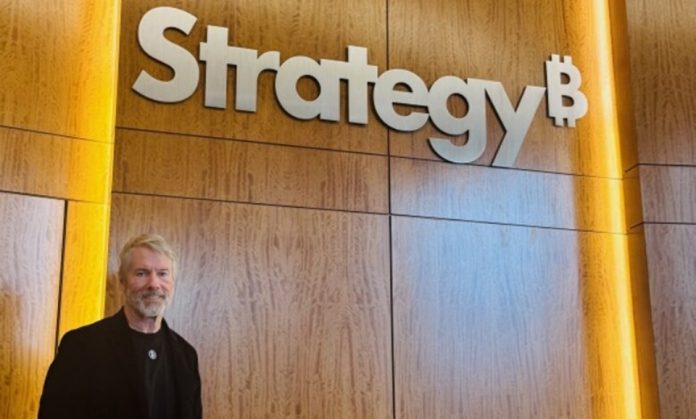
Strategy (formerly MicroStrategy) announced on July 14, 2025, that it acquired 4,225 Bitcoin (BTC) for approximately $472.5 million between July 7 and July 13, at an average price of $111,827 per Bitcoin. This purchase increased Strategy’s total Bitcoin holdings to 601,550 BTC, acquired for about $42.87 billion at an average cost of $71,268 per coin.

The acquisition was funded through the sale of 797,008 shares of Class A common stock (MSTR) for $330.9 million and preferred stock sales (STRK, STRF, STRD) raising $141.4 million. This move, led by Michael Saylor, reflects Strategy’s ongoing commitment to Bitcoin as a treasury asset, achieving a 20.2% BTC yield year-to-date in 2025. The purchase aligns with Bitcoin’s recent price surge, reaching all-time highs above $123,000.

Strategy, under Michael Saylor’s leadership, has positioned Bitcoin as a core component of its corporate treasury strategy since 2020. The company views BTC as a hedge against inflation and currency devaluation, driven by macroeconomic concerns like fiat currency printing and low interest rates.

Bitcoin’s price has soared past $123,000 recently, reflecting growing institutional adoption, market optimism, and positive sentiment following events like the U.S. presidential election and pro-crypto policy signals. This bullish market likely encouraged Strategy to capitalize on momentum.

Strategy funded the purchase through equity sales ($330.9M from MSTR stock) and preferred stock offerings ($141.4M). Its ability to raise capital efficiently allows aggressive Bitcoin accumulation without relying solely on cash reserves. The broader trend of institutions, including BlackRock and Fidelity, embracing Bitcoin via ETFs and custody solutions has bolstered confidence. Strategy’s move aligns with this shift, reinforcing BTC’s legitimacy as an asset class.

Saylor’s public advocacy for Bitcoin as “digital gold” and a superior store of value drives Strategy’s strategy. The company’s 20.2% BTC yield in 2025 underscores its success in this approach, encouraging further investment. Large purchases like Strategy’s can signal strong demand, potentially stabilizing or boosting Bitcoin’s price, especially in a bullish market.

Strategy’s continued commitment reinforces positive market sentiment, encouraging other investors and institutions to consider Bitcoin exposure. Strategy’s success (601,550 BTC valued at ~$74B at current prices) sets a model for other corporations to allocate treasury reserves to Bitcoin, potentially accelerating institutional adoption.

However, it also highlights risks, as Strategy’s stock (MSTR) is increasingly tied to Bitcoin’s volatility, which could deter more risk-averse firms. Large corporate Bitcoin purchases may attract attention from regulators, especially in jurisdictions debating crypto’s role in financial systems. This could lead to stricter reporting or tax requirements for companies holding crypto.

Strategy’s move reinforces Bitcoin’s appeal as an inflation hedge, particularly if global economic uncertainties (e.g., debt levels, monetary policy) persist. Critics may argue that such large holdings by a single entity could exacerbate wealth concentration in crypto markets, raising concerns about market manipulation.

If Bitcoin’s price continues to rise, Strategy’s $42.87B investment could yield significant returns, strengthening its balance sheet. A sharp Bitcoin price correction could impair Strategy’s valuation, given its heavy BTC exposure, potentially impacting shareholders and creditors.

Strategy’s $472.5M Bitcoin purchase is driven by its long-standing belief in BTC as a superior store of value, fueled by favorable market conditions and access to capital. The move strengthens Bitcoin’s institutional credibility but amplifies Strategy’s exposure to crypto volatility. It may inspire other corporations to follow suit, though regulatory and market risks remain key considerations.

OpenAI Partners with Google Cloud to Provide Additional Computing Power For AI Services

0

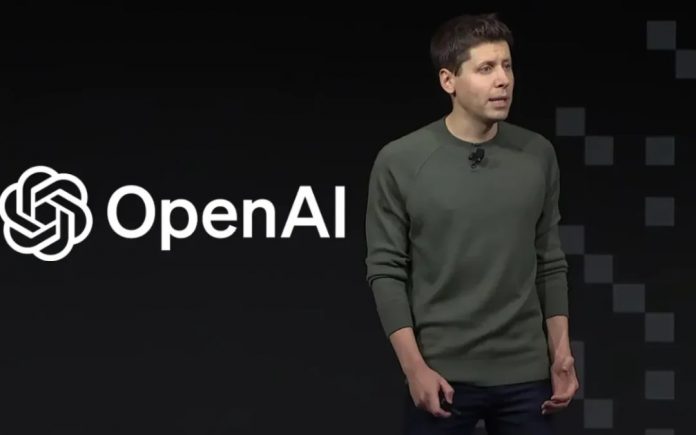
OpenAI said Wednesday it is partnering with Google Cloud to provide additional computing power for its popular AI services, including ChatGPT and its developer-facing API, marking a significant shift in the company’s cloud infrastructure strategy as it scrambles to meet soaring demand for generative AI tools.

The move broadens OpenAI’s roster of cloud providers beyond Microsoft, its most prominent backer and infrastructure partner since 2019. Google now joins Microsoft, CoreWeave, and Oracle as suppliers of computing capacity for OpenAI’s growing suite of AI products. According to the company, ChatGPT and its API will now run on Google Cloud infrastructure in the United States, the United Kingdom, Japan, the Netherlands, and Norway.

This diversification follows rising strain on OpenAI’s capacity. In April, CEO Sam Altman made a blunt public appeal, posting on X: “if anyone has GPU capacity in 100k chunks we can get asap please call!”—a clear sign that the company was hitting the limits of its compute power amid explosive user demand and rapid product expansion. The company relies heavily on Nvidia’s advanced graphics processing units (GPUs) to power its large language models.

The Google partnership marks a key win for Google Cloud, which has been playing catch-up with Amazon Web Services and Microsoft Azure in the cloud services market. It also reinforces Google’s deepening play in AI infrastructure, where it already hosts Anthropic—a leading OpenAI rival founded by former OpenAI employees—and continues to advance its own models like Gemini.

OpenAI’s new arrangement also reflects shifting dynamics in its relationship with Microsoft. Despite Microsoft’s multi-billion-dollar investment in OpenAI and early exclusivity over its cloud workloads, that arrangement has evolved. In January, Microsoft confirmed it had moved to a “right of first refusal” model, meaning OpenAI can now seek other vendors when more capacity is needed. Microsoft still holds exclusive rights to OpenAI’s APIs and integrates them into its own products like Copilot in Microsoft 365, Azure OpenAI Service, and GitHub.

In recent months, OpenAI has aggressively expanded its compute partnerships. In March, it signed a $12 billion deal with CoreWeave, a specialized AI cloud provider backed by Nvidia. That agreement, set to run for five years, aimed to bolster OpenAI’s infrastructure with GPU-dense data centers tailored for training and serving large AI models. Oracle, another infrastructure partner, announced last year it was working with Microsoft and OpenAI to allow OpenAI workloads to run on Oracle Cloud Infrastructure (OCI) via Microsoft’s Azure platform.

Google Cloud, which once lagged in major AI hosting deals, has now become a direct beneficiary of the generative AI gold rush. Its data centers are designed to handle massive AI workloads and include Google’s own Tensor Processing Units (TPUs), which rival Nvidia’s GPUs in AI performance. While OpenAI is not expected to rely on Google’s TPUs in this arrangement, the move still places Google alongside Microsoft as one of the key players supporting ChatGPT’s growth.

Industry analysts say OpenAI’s multi-cloud strategy is part of a broader trend among AI firms trying to reduce risk, avoid vendor lock-in, and ensure continuity amid GPU shortages. It also underscores the arms race among hyperscalers—Microsoft, Google, Amazon, and Oracle—each vying to dominate the infrastructure layer of the AI economy.

The deal enhances Google’s reputation as a credible host for mission-critical AI services, not just for its in-house teams but also for the broader ecosystem of AI companies competing for scale and global reach.