DD
MM
YYYY

PAGES

DD
MM
YYYY

spot_img

PAGES

Home Blog Page 868

Analysts Reveal When Effects of Trump’s Tariffs Will Hit U.S. Economy — Say Lag in Full Economic Fallout Deceptive

0

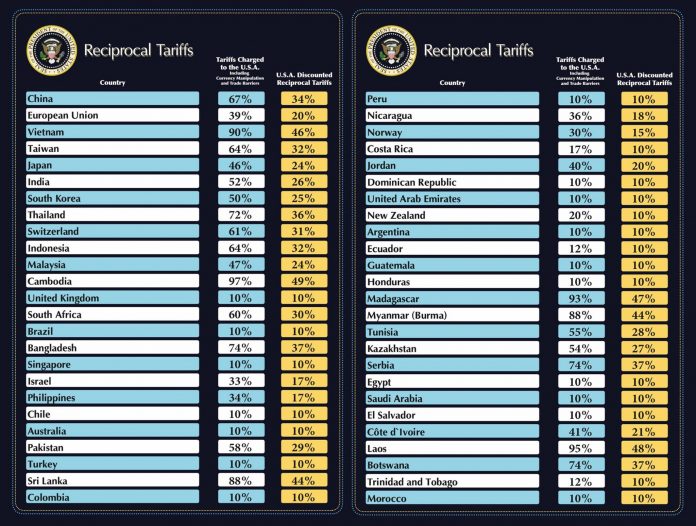
Apollo Global Management’s chief economist Torsten Sløk has warned that the most damaging effects of President Donald Trump’s sweeping tariff policies will begin to grip the U.S. economy toward the end of the year, potentially setting off a dreaded stagflation shock that could drag into 2025.

Speaking to Bloomberg, Sløk said inflation is only beginning to “lift off” and will likely accelerate through November and December, driven largely by the tariff hikes imposed earlier this year. These duties, part of Trump’s broader trade war strategy to reassert U.S. economic leverage, have so far not had the dramatic economic fallout that many had feared. This has fueled a growing belief among some Americans that the tariffs might not hurt the U.S. economy after all.

But Sløk cautioned against such optimism. “They need to wait to see the peak,” he said, referring to the Federal Reserve’s patience in adjusting rates. “We have really only had the take-off stage,” he added, warning that inflationary pressures are just beginning to filter through the system.

So far, headline inflation remains within manageable bounds, rising to 2.7% in June from 2.4% in May. Meanwhile, prices for durable goods — including cars, appliances, and electronics — rose 0.7% year-on-year, marking a second straight month of growth following over two years of steady declines. These figures, Sløk said, are early signs of broader inflation, which he expects to intensify as supply chains adjust and importers pass tariff costs onto consumers.

More importantly, Sløk emphasized that services inflation — which accounts for nearly 60% of the Consumer Price Index — is likely to climb next. This, he warned, will be worsened by Trump’s mass deportation drive, which is tightening the labor market and pushing wages higher, raising costs for employers and ultimately for consumers.

The relatively muted impact of the tariffs to date has led many to dismiss warnings issued by economists earlier this year. When Trump first announced the levies — targeting goods from China, the European Union, and Mexico — several economic analysts and trade experts predicted a dual blow: one to the U.S. economy, through higher input costs and inflation, and another to global supply chains, especially in Asia and Europe. There were fears that global trade volumes could fall, investor confidence would erode, and central banks would be forced into a policy corner.

However, those dire predictions have not fully materialized, at least not yet. Retail sales remain steady, unemployment is still low, and GDP growth has not seen any sharp contractions. This delay in consequences has created a sense that the U.S. economy might weather the tariffs better than expected.

But Sløk argues that the lag is deceptive. In a recent whitepaper, he projected that GDP growth in 2025 could more than halve from its peak in 2024 as inflation becomes entrenched and consumer demand weakens. He estimates inflation will remain elevated around 3% throughout next year, while the unemployment rate could rise gradually over the next two years as businesses struggle to absorb rising labor and input costs.

“This is the start of a stagflation shock,” Sløk warned — a toxic mix of persistent inflation and slowing growth, which limits the Federal Reserve’s ability to cut interest rates. “If the Fed loosens too soon, it risks fanning inflation. If it holds steady, it may stall growth.”

In essence, the early resilience of the U.S. economy may be masking a deeper, slower-moving threat — one that could unwind over the coming quarters as tariffs ripple more forcefully through the pricing system, global supply chains adjust, and wage pressures mount due to labor shortages caused in part by deportations.

For now, the economy appears to be holding. But according to Apollo’s analysis, the real test lies ahead, when the delayed consequences of Trump’s trade war could finally come home to roost, dragging the country into one of the most precarious economic scenarios in modern history.

Microsoft Ends Use of China-Based Engineers for Pentagon Cloud Systems After Espionage Concerns

0

Microsoft has formally halted the use of China-based engineers in maintaining cloud computing infrastructure for the U.S. Department of Defense, following a damning ProPublica investigation that revealed critical national security lapses in the tech giant’s global support model.

The report, which sent shockwaves through Washington and the broader defense community, raised urgent questions over the extent of foreign access to sensitive U.S. military systems.

At the center of the controversy was Microsoft’s reliance on what it described as a “digital escort” model — a system in which U.S.-based citizens with security clearances supervised foreign engineers, including those based in China, as they provided technical assistance to Pentagon-linked cloud environments. But the report found these digital escorts often lacked the technical knowledge required to monitor or prevent malicious activity, exposing a serious vulnerability in the management of high-security data.

Microsoft’s Chief Communications Officer Frank X. Shaw responded on Friday, announcing sweeping policy changes in light of the uproar.

“In response to concerns raised earlier this week about U.S.-supervised foreign engineers, Microsoft has made changes to our support for U.S. Government customers to assure that no China-based engineering teams are providing technical assistance for DoD Government cloud and related services,” Shaw said in a statement posted on X.

The Department of Defense has yet to issue an official statement on the matter, but U.S. Secretary of Defense Pete Hegseth condemned the arrangement publicly, writing on X: “Foreign engineers — from any country, including of course China — should NEVER be allowed to maintain or access DoD systems.”

He also ordered an immediate two-week review of all cloud service contracts involving the Pentagon.

The original ProPublica report disclosed that the Microsoft support system gave Chinese nationals the ability to view and troubleshoot live systems tied to highly sensitive military data, including systems classified under “Impact Level 4 and 5” — levels reserved for critical national defense operations. These include communications systems, weapons development, logistics infrastructure, and classified planning tools.

Although Microsoft disclosed its use of foreign engineers to U.S. regulators during the contracting phase, several Pentagon officials were reportedly unaware of the arrangement until it was publicly exposed. The ProPublica investigation detailed internal confusion within the Defense Department, with one senior official calling the digital escort system “a clear failure of vetting and oversight.”

The revelations have drawn a swift response from lawmakers on both sides of the aisle, but particularly from Republicans who have taken a hawkish stance on China. Senator Tom Cotton, chair of the Senate Intelligence Committee, demanded a comprehensive accounting from the Pentagon and other federal agencies about whether other contractors were also using foreign nationals to support critical systems.

“The U.S. government recognizes that China’s cyber capabilities pose one of the most aggressive and dangerous threats to the United States, as evidenced by infiltration of our critical infrastructure, telecommunications networks, and supply chains,” Cotton wrote in the letter.

The U.S. military “must guard against all potential threats within its supply chain, including those from subcontractors,” he wrote.

House Republicans are reportedly drafting new legislation that would explicitly prohibit foreign nationals — especially from adversarial nations like China — from engaging in the maintenance, support, or oversight of U.S. military or intelligence-related systems, regardless of supervision status.

How the System Worked — And Failed

Microsoft implemented the digital escort framework in 2016 as a workaround to U.S. government requirements that sensitive systems be handled only by citizens or permanent residents. The company claimed that with strict oversight and encrypted access, the risk posed by foreign engineers could be mitigated.

But the ProPublica investigation found the model deeply flawed. Not only did escorts lack the ability to validate the foreign engineers’ actions in real time, but some U.S. staff reportedly raised internal concerns about their inability to monitor specific types of code injections or detect potential backdoor installations. In at least one case, a China-based engineer reportedly maintained unmonitored access for several minutes when the digital escort lost connectivity.

A former Microsoft insider told ProPublica that the company had “pushed the envelope” on what government guidelines allowed, citing intense pressure to meet service-level agreements (SLAs) for government contracts worth hundreds of millions of dollars. Microsoft is one of a few elite cloud vendors authorized to handle government workloads under the Department of Defense’s Joint Warfighting Cloud Capability (JWCC) program.

The episode comes at a time of heightened scrutiny over America’s tech supply chains and digital infrastructure security. U.S. defense policy has increasingly focused on reducing dependency on adversarial nations, especially in areas like semiconductors, rare earth elements, and AI infrastructure.

Ironically, Microsoft had been working to position itself as the most security-focused cloud provider in government. Its Azure Government cloud, designed for classified workloads, had often been touted as the gold standard. But this incident threatens to undermine that reputation — and could open the door for competitors like Amazon Web Services and Oracle to seek tighter Pentagon partnerships.

Analysts believe the breach of protocol could also invite retaliatory audits from federal watchdogs, including the Government Accountability Office (GAO) and the Department of Homeland Security’s Cybersecurity and Infrastructure Security Agency (CISA).

That means Microsoft’s immediate halt to China-based support is only the beginning. The Defense Department’s ongoing review could result in stricter compliance requirements across all federal agencies using cloud providers. Meanwhile, lawmakers are expected to hold hearings in August to further investigate the scale and implications of the digital escort policy.

While Microsoft maintains that no classified data was ever compromised, the damage may already be done — both to its credibility and to confidence in the broader ecosystem of public-private tech partnerships that power the U.S. national security apparatus.

Lawmaker Slams Commerce Secretary Over Nvidia Sales to China, Even as Nvidia Faces Hurdles in Resuming Supply

0

A Republican lawmaker is ramping up pressure on the U.S. Commerce Department over its decision to allow Nvidia to resume exports of its H20 artificial intelligence chips to China, warning that the move could severely undermine America’s technological edge and empower Beijing’s military and surveillance ambitions.

In a strongly worded letter sent Friday to Commerce Secretary Howard Lutnick, Rep. John Moolenaar, who chairs the House Select Committee on the Chinese Communist Party, criticized the reversal of an earlier export restriction and demanded urgent clarification on how the department intends to handle the renewed sales. The ban, initially imposed in April by the Trump administration, was aimed at cutting off China’s access to cutting-edge U.S.-designed AI chips out of national security concerns.

“The Commerce Department made the right call in banning the H20,” Moolenaar wrote, referring to Nvidia’s China-specific chip. “We can’t let the Chinese Communist Party use American chips to train AI models that will power its military, censor its people, and undercut American innovation.”

Moolenaar also warned that allowing the H20 chips into China could tilt the global AI race in Beijing’s favor.

“The H20 significantly outperforms anything Chinese chipmakers like Huawei can currently produce at scale,” he noted, calling it a “substantial increase to China’s AI development.”

His latest remarks are the strongest yet since Nvidia announced earlier this week that it had secured approval to resume H20 shipments to China under a revised licensing regime. Under the current policy, the Commerce Department still requires export licenses for H20 sales, but Nvidia said it has received assurance that licenses will be granted and is preparing to ship chips.

Nvidia designed the H20 in response to Biden-era restrictions that blocked exports of its most advanced GPUs to China. While the H20 was specifically engineered to comply with those rules, it remains potent in key AI tasks like inference — the process by which trained AI models generate real-time responses. Inference computing is now one of the most commercially valuable segments of the AI chip market, with applications spanning from cloud services to AI assistants.

Moolenaar’s letter underscores concern that these chips are already helping Chinese tech giants accelerate AI capabilities. He pointed to Chinese companies like Tencent and DeepSeek, which have reportedly used the H20 in developing massive AI systems and even supercomputers. A recent congressional report released in April 2025 by the Select Committee on China cited the H20’s critical role in enabling DeepSeek’s AI model that stunned the global tech community earlier this year.

The lawmaker’s criticism represents a rare public rebuke of a Trump administration policy by a fellow Republican, underlining how deep the alarm runs among Washington’s China hawks over Beijing’s rapid AI progress. Bipartisan consensus has emerged around restricting China’s access to American-designed chips, a key ingredient in building powerful machine learning models and national security tools.

The decision to ease restrictions has triggered broader market reactions as well. Nvidia shares dipped into negative territory on Friday shortly after Moolenaar issued his letter. A spokesperson for Nvidia defended the move, saying, “The government made the best decision for America, promoting U.S. technology leadership, economic growth and national security.”

The Commerce Department has not commented publicly, but Secretary Lutnick said Tuesday that the move to resume H20 exports is tied to wider negotiations with China involving rare earth materials and strategic commodities like magnets — essential components in both defense and tech industries.

But lawmakers like Moolenaar remain unconvinced. In his letter, he requested a detailed briefing no later than August 8 on how the Commerce Department plans to assess license applications for the H20 and similar chips. He also demanded transparency on the number of chips expected to be exported and the recipients.

The controversy has reignited debate over the delicate balance between preserving America’s technological dominance and engaging in strategic trade, particularly with a geopolitical rival that is actively working to close the AI gap.

Nvidia Faces Hurdles in Resuming China AI Chip Supply Following U.S. Approval

Meanwhile, Nvidia has informed customers in China that it has limited supplies of its H20 artificial intelligence chips, the most advanced model it is allowed to export to the country under current U.S. restrictions.

The disclosure, reported by The Information, adds to growing uncertainty surrounding Nvidia’s business in China, even as the company attempts to navigate intensifying geopolitical and regulatory headwinds.

The H20 was part of a trio of custom AI chips—alongside the L20 and L2—developed by Nvidia to comply with Washington’s sweeping export controls, which aimed to curtail China’s access to advanced U.S. semiconductors for military and surveillance use. While the L20 and L2 made it to market, the H20 faced delays and eventually a halt in shipments following an April directive from the U.S. Commerce Department requiring licenses for sales of all three chips to China.

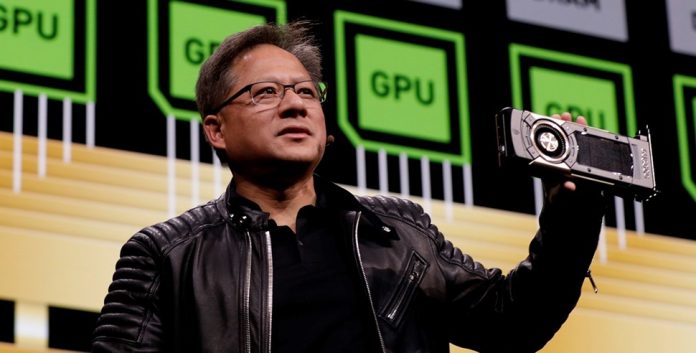
According to The Information, Nvidia was forced to cancel customer orders and manufacturing slots at Taiwan Semiconductor Manufacturing Company (TSMC) as a result of the April policy change. TSMC, which had previously allocated capacity for H20 production, repurposed its lines for other clients, and restarting H20 production would take up to nine months, Nvidia CEO Jensen Huang reportedly told attendees at a media briefing in Beijing this past week.

Despite this disruption, Huang said Nvidia expects licenses for the H20 to be granted swiftly. He also assured that shipments would resume in China, although the recent internal communication cited by The Information suggests supply will be significantly constrained in the near term.

Meanwhile, Nvidia has announced plans to introduce a new graphics chip specifically for the Chinese market called the RTX Pro GPU. This product, the company says, is engineered to fall below the performance thresholds that would trigger U.S. export bans, making it compliant with current restrictions.

The shortage of H20 chips adds to Nvidia’s complex position in China, a market that accounted for about 17% of its data center revenue before the October 2023 export ban. Since then, Nvidia has been trying to shore up its presence with modified hardware, while also adapting to shifting policies from Washington.

The timing of the resumed shipments followed a private meeting between Jensen Huang and President Donald Trump earlier this year, where tech export restrictions and Nvidia’s China interests were reportedly discussed. After that meeting, Huang embarked on a closely watched trip to China, where he met with top executives and publicly expressed optimism that licenses for H20 exports would be processed swiftly.

In Beijing, Huang confirmed that the company was working to increase the supply of the H20 chip in China, and at the same time announced the RTX Pro GPU. The RTX Pro is a graphics chip designed for less advanced AI tasks, making it exempt from the latest round of restrictions.

Analysts say the company’s balancing act—maintaining U.S. compliance while preserving market share in China—will continue to test Nvidia’s strategic flexibility. With high-end chip demand surging due to the AI boom, competitors including Huawei have also ramped up their efforts, seizing the opportunity created by Nvidia’s regulatory constraints.

Nvidia is expected to provide updates on its China strategy during its next earnings report, scheduled for August 21.

Astronomer CEO Resigns After Viral Affair Video Sparks Backlash, Internal Investigation

1

Andy Byron, the chief executive officer of Astronomer, has resigned following mounting pressure over a viral video that captured him in what appeared to be an intimate moment with a senior colleague during a Coldplay concert in the U.S.

The incident, which spread widely across social media this week, triggered an internal investigation and led to his placement on administrative leave before Saturday’s announcement confirming his exit.

In a statement, Astronomer said: “Andy Byron has tendered his resignation, and the Board of Directors has accepted. The Board will begin a search for our next Chief Executive as Cofounder and Chief Product Officer Pete DeJoy continues to serve as interim CEO.”

The footage that led to Byron’s downfall emerged on Wednesday night at a Coldplay concert, where the tech executive was captured by cameras embracing Kristin Cabot, Astronomer’s Chief People Officer. The pair were shown on the concert’s big screen, and Byron — who is married with children — appeared to quickly duck out of view once they realized they were being watched. Lead singer Chris Martin, addressing the audience, quipped: “Either they’re having an affair or they’re just very shy.” That remark, and the video taken by an audience member, went viral, setting off a storm of public and internal company criticism.

By Friday, Astronomer confirmed it had launched a formal investigation and placed Byron on leave. But with the incident continuing to dominate conversation online and within industry circles, Byron formally stepped down less than 48 hours later. In its Saturday update, the company said, “Before this week, we were known as a pioneer in the DataOps space, helping data teams power everything from modern analytics to production AI. Our leaders are expected to set the standard in both conduct and accountability, and recently, that standard was not met.”

A Startup Caught in Crisis

The scandal comes at a delicate time for Astronomer, a fast-growing data orchestration company based in Cincinnati, Ohio. Founded in 2018, Astronomer is best known for developing a commercial distribution of Apache Airflow — an open-source tool used to program, schedule, and monitor data pipelines. Airflow has become a backbone for modern data infrastructure, especially as companies adopt artificial intelligence and cloud-native analytics.

Astronomer positioned itself early on as a go-to platform for enterprises seeking scalable, flexible tools to manage complex data workflows. Its enterprise-grade tools have been adopted by global companies across finance, healthcare, and tech, with users ranging from data scientists to DevOps teams. In many ways, Astronomer rode the wave of the data and AI boom.

The company’s momentum attracted strong venture backing. In May this year, it raised $93 million in a late-stage investment round led by Bain Capital Ventures. The round also saw participation from existing and new investors, including Salesforce Ventures, Insight Partners, and Sutter Hill Ventures. The infusion was intended to support product development, expand its enterprise footprint, and accelerate growth in international markets.

Until the scandal, Byron was seen as a stabilizing force in Astronomer’s transition from a startup to an enterprise-grade platform. He joined the company in 2022 after serving in senior roles at cybersecurity firm Lacework and software company DataRobot. His appointment was seen as a move to mature Astronomer’s operations and position it for an eventual IPO or acquisition.

Internally, however, sources say tensions had been building over the executive team’s management style. While the company had built a reputation around innovation and technical excellence, the recent scandal triggered broader conversations among staff about culture, accountability, and HR leadership, especially given the involvement of Kristin Cabot.

It remains unclear whether Cabot will remain at the company. Astronomer has not commented on her role in the investigation or whether she will face disciplinary action. Multiple employees have reportedly expressed concern over the company’s handling of the situation, with some questioning whether the board acted swiftly enough given the nature of the incident and its potential for reputational damage.

With interim CEO Pete DeJoy — a cofounder and head of product — now at the helm, Astronomer is hoping to stabilize its image and reassure investors and customers that the core business remains intact. DeJoy has been with the company since its inception and is seen as a key figure behind the technical success of its Airflow-based platform.

Block Set to Join S&P 500, Sparks Over 10% Stock Surge

0

Block Inc., the fintech company formerly known as Square, is set to join the S&P 500 index, replacing Hess Corp., which was recently acquired by Chevron.

The announcement, made late Friday by S&P Dow Jones Indices, triggered an immediate investor reaction—Block’s shares surged over 10% in after-hours trading, closing at $80.88.

This development marks one of two sudden index changes this week, the other being The Trade Desk’s addition following Synopsys’ acquisition of Ansys. Block’s inclusion will officially take effect before markets open on Wednesday, July 23.

Founded by Jack Dorsey in 2009, Square changed its name to Block in 2021 to emphasize its focus on blockchain technologies.

Why Block Was Picked

Despite earlier expectations that Robinhood or AppLovin—both boasting higher market capitalizations of $93 billion and $120 billion, respectively—would be selected, S&P Dow Jones opted for Block. Analysts believe the decision was influenced by sector balancing and Block’s unique positioning in digital payments and cryptocurrency, a combination that diversifies the index’s tech weight.

Block has a current market cap nearing $45 billion, well above the S&P 500’s eligibility floor. Until Friday’s announcement, its shares had been down around 14% year-to-date, weighed by investor caution over consumer spending and broader economic uncertainty.

In May, Block reported first-quarter results that missed Wall Street expectations on Thursday and issued a disappointing outlook, leading to a plunge in the stock price. Block’s forecast for the second quarter and full year reflected challenging economic conditions that followed sweeping tariff announcements by President Donald Trump.

“We recognize we are operating in a more dynamic macro environment, so we have reflected a more cautious stance on the macro outlook into our guidance for the rest of the year,” the company wrote in its quarterly report.

But the index inclusion has reversed that sentiment, triggering buying pressure from index-tracking funds that must now add Block to their portfolios.

A Crypto-Driven Differentiator

Beyond fintech, Block brings a bold and unique edge to the S&P 500—Bitcoin. The company holds substantial Bitcoin assets and has committed to reinvesting 10% of its monthly Bitcoin gross profits back into BTC. VanEck analysts say this makes Block potentially the first S&P 500 company with a formal Bitcoin accumulation strategy.

While Tesla and MicroStrategy are known for their Bitcoin holdings, Block’s methodical reinvestment signals a structured crypto commitment. Market analysts note that Block’s Bitcoin integration could pave the way for broader institutional exposure to digital assets via mainstream index funds.

The Index Effect and Market Expectations

Inclusion in the S&P 500 typically boosts a company’s visibility, credibility, and liquidity. Institutional investors who mirror the index will be compelled to buy Block shares, further fueling demand. However, analysts caution that such spikes often cool down after initial inflows, and longer-term performance will depend on fundamentals.

Block has its next earnings report scheduled for August 7. Investors will be watching closely to see if its Q2 performance justifies the market’s renewed optimism. The company has faced a mixed economic environment, with macroeconomic headwinds including tariffs and spending slowdowns, particularly under ongoing policies from the Trump administration.

Robinhood Left Waiting—Again

Robinhood’s exclusion, despite qualifying on market cap and liquidity grounds, has drawn attention. The company has previously missed out on index inclusion due to profit volatility, and this latest snub is likely another blow for its institutional appeal. AppLovin, another expected contender, was also bypassed.

S&P’s choices reflect a nuanced balancing act that factors in industry exposure, index composition, and long-term growth outlook—areas where Block’s integration of payments, commerce, and crypto seem to offer a stronger match.

Block’s entry into the S&P 500 is a milestone—not just for the company, but for the broader acceptance of fintech and crypto in traditional financial benchmarks. The stock’s double-digit surge underscores investor excitement, but the true test will come in its upcoming earnings and ability to sustain momentum.