This Tekedia Daily podcast by Ndubuisi Ekekwe, inspired by Nvidia’s recent market valuation milestone, provides a historical and contemporary analysis of “category king companies.” It argues that market dominance is not solely a function of technological innovation but also, crucially, of effective business models.
The discussion begins by tracing the evolution of market leadership through different eras. US Steel, in the early 20th century, exemplified a category king driven by its mastery of steel technology, which was fundamental to industrial expansion. Following this, IBM emerged as a dominant force in the mid-20th century, propelled by its pioneering work in mainframe computing and other catalytic technologies that automated and transformed American industries.
However, the narrative shifts with General Electric (GE) in the late 20th century. GE’s success, particularly under Jack Welch, was attributed less to groundbreaking technological inventions and more to its revolutionary management systems and business models that enabled the efficient operation of a vast, diversified conglomerate, delivering exceptional shareholder value.
The presentation then brings the discussion to the present, highlighting Apple, Microsoft, and particularly Nvidia, as current category kings. Nvidia’s ascendancy is linked to its provision of foundational hardware and infrastructure for artificial intelligence, underscoring the continued importance of technological leadership.
A central theme is the symbiotic relationship between technology and business models. The speaker uses Tesla as a prime example of a company whose innovative pricing mechanism—incorporating continuous subscriptions beyond the initial car purchase—demonstrates how a unique business model can unlock and capture significant value. Similarly, Microsoft’s success is tied to its ability to establish a model for monetizing software.
To provide a localized perspective, the presentation examines market evolutions in Nigeria. The banking sector in the 1990s saw “new generation banks” become category kings by using technology to create networked branches, allowing customers unprecedented flexibility. This was followed by the rise of telecommunications companies (Telcos) like MTN and Glo, which initially offered voice telephony and later mobile internet, transforming mobile devices into internet nodes. Currently, Nigeria is in the “application utility age,” where new companies are emerging by building services atop mobile internet, proving that category kings can arise even in local markets.
The concluding remarks emphasize the challenges of predicting future market leaders in this “new era.” It reiterates the critical insight that while technology is vital, it alone is insufficient for sustained category dominance. The failures of some highly anticipated technologies (like metaverse and NFTs) to fully establish “category king” status highlight the necessity of a robust business model. Ultimately, the presentation asserts that understanding and developing the right business model alongside technological innovation is paramount for any company aspiring to achieve and maintain market leadership.
At Blucera, home of Blucera WinGPT (AI personal educator and coach), eVault Legal Custodial services (store vital personal, family and business documents securely), business tools to grow enterprises, and global archives of Tekedia courses and libraries, Ndubuisi Ekekwe podcasts every week day. Some Tekedia Institute programs offer bonus access to Tekedia Daily or one can register at Blucera for the podcast.
USC experts talk about the importance of U.S.-China trade and how it affects the economy. (Illustration/iStock)
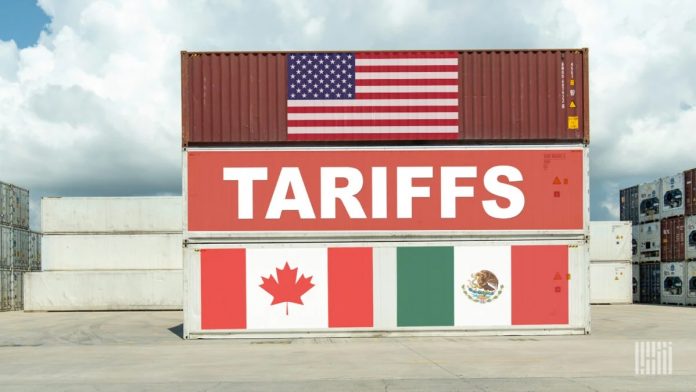
President Donald Trump’s expanding tariff campaign may backfire on American families, with new research by Yale University’s Budget Lab warning that the newly imposed and proposed duties could saddle U.S. households with up to $2,400 in additional costs in 2025 alone.
The analysis, released Wednesday, paints a stark picture of the cumulative effects of Trump’s trade policies—suggesting they could trigger a significant inflation spike, slower economic growth, job losses, and tighter consumer margins.
If all announced tariffs remain in place, the U.S. would face an 18% effective tariff rate—the highest seen in nearly a century, dating back to the protectionist Smoot-Hawley Act of 1930.
Tariffs Surge, Prices Follow
The study factors in new tariffs on a wide swath of imports, including Trump’s planned 50% duty on copper—a vital component for construction, electronics, vehicles, and national defense—as well as sweeping new rates targeting Brazil, Japan, South Korea, and potentially the pharmaceutical sector.
Already, copper prices surged 10%, reaching a historic high just hours after Trump confirmed the move. Analysts say this increase signals broader inflationary risks across industries dependent on copper.
“If this is the case, American businesses will pay a lot more than 10% extra to buy copper, raising prices for all products that use copper,” said Peter Schiff, Chief Economist at Euro Pacific Asset Management.
Schiff, a long-time critic of protectionist trade measures, warned the tariffs would ignite a consumer cost crisis.
“As I warned, Trump just imposed an additional 25% tariffs on imports from South Korea and Japan… Consumers need to brace for much higher prices and get used to higher interest rates.”
What Will Get More Expensive?
According to Yale’s model, clothing, shoes, electronics, metals, leather goods, and cars will bear the brunt. In the short term, clothing prices are expected to rise 37%, shoes by 39%, and electrical equipment by 26%. Long term, prices may stabilize—but not before settling 18% higher on average.
Even everyday essentials like coffee, fruits, vegetables, and orange juice—especially those imported from Brazil—are projected to become more expensive. Groceries may see more moderate increases, but they still compound the cost-of-living burden for low-income households.
GDP Loss, Jobs at Risk
The tariff blow won’t just be at the checkout counter. Yale projects a 0.7% drop in U.S. GDP in 2025 and a 0.4% increase in the unemployment rate, as businesses cut jobs or delay hiring to manage rising costs. The damage could be more permanent too: with tariffs in place long term, GDP would remain 0.4% smaller every year, amounting to an annual loss of $110 billion.
Sectors like construction, agriculture, retail, and auto manufacturing are expected to be disproportionately affected. Yale researchers did note a possible 2% increase in U.S. manufacturing, but they cautioned that this boost comes at the cost of broader economic stability.
Massive Revenue or Massive Burden?
On paper, Trump’s trade strategy could generate $2.6 trillion in revenue between 2026 and 2035, with $2.2 trillion in net gains after accounting for losses. That projection is what the Trump administration points to in defending the tariffs as a vital revenue source and a measure to “level the playing field.”
However, economists warn this windfall is heavily regressive, coming at the expense of consumers and small businesses. Most of the revenue would be collected through higher prices on imports—paid indirectly by the public—not foreign exporters.
Businesses Brace for the Blow
A KPMG survey of 300 U.S. business executives found that 83% expect to raise prices in the next six months, and more than half say tariffs have already started to squeeze their profit margins.
“The full impact on consumers is likely still to come,” said Brian Higgins, Advisory Partner at KPMG US. “Many companies are holding off price increases until August 1.”
Despite the sweeping impact, the full extent of Trump’s tariff program remains uncertain. The president has frequently shifted positions on trade policy, earning the nickname “TACO Trump”—‘Trump Always Chickens Out’—due to delays and reversals.
After global markets plunged earlier this year following the announcement of Trump’s “Liberation Day” tariffs, the White House paused implementation for 90 days. That pause expires August 1, and most of the tariffs are now slated to kick in immediately thereafter. While some countries—like China, Vietnam, and the U.K.—have reached partial agreements, Trump continues to send letters to foreign governments saying rates could still change depending on the “relationship with your Country.”
Notably, Yale’s $2,400 cost estimate does not account for potential Federal Reserve responses, such as interest rate adjustments, that could further impact household budgets. Should inflation accelerate, the Fed could be forced to hike rates again—raising borrowing costs and mortgage payments for millions.
While the Trump administration insists the tariffs are strategic and patriotic, the mounting data tells a more sobering story.
This month, Perplexity AI launched Comet, its AI-powered web browser that intends to challenge Google Chrome’s 68% market share. Also, this month, rumours emerged that Apple is buying the company.
No doubt, Perplexity will shape AI’s future, but how?
In this article, I will explore why joining Apple is Perplexity’s best shot at shaping AI’s future, and why Apple needs to make this deal happen.
Apple’s AI Crisis: Perception, Product, Strategy
Already, Apple faces a trifecta of challenges that make Perplexity an irresistible target.
First, there’s a perception problem. Microsoft’s integration of OpenAI’s tech has added over $1 trillion to its market cap since 2023, recasting it as an AI leader. Apple, despite its $3.5 trillion valuation, is seen as lagging, with WWDC 2025 offering iterative updates but no game-changing AI breakthrough. Investors are restless, questioning if Apple’s innovation engine has stalled.
Second, there’s a product problem. Siri, once a pioneer, now falters against ChatGPT, Google’s Gemini, and Perplexity’s conversational AI. A 2024 user survey found 62% of iPhone owners rarely use Siri for complex tasks, citing its inability to handle nuanced queries like summarizing documents or planning trips. This gap risks making Apple’s hardware feel outdated.
Finally, a strategic problem: Apple’s privacy-first, on-device AI approach limits its access to the vast datasets fueling competitors’ cloud-based models. Perplexity, with its sophisticated AI trained on public web data, offers a shortcut to world-class AI expertise without compromising Apple’s privacy ethos, as its models can be adapted for on-device processing.
Perplexity’s Edge: Redefining the User Experience
Perplexity’s strength lies in its user experience, not just its tech. Unlike Google search, Perplexity delivers synthesized, cited answers, prioritizing clarity. Its newly launched browser, Comet takes this further, transforming browsing into an AI-driven experience. TechCrunch called Comet “a glimpse into a post-Chrome world,” positioning it against rivals like Arc, which blends browsing and productivity, and Anthropic’s Claude, which powers conversational AI.
The Synthesis: What an Apple-Perplexity Future Looks Like
If a deal were to happen, how would Apple use its new prize?
Based on Apple’s history with acquisitions like Beats Audio (which retained its brand) and Dark Sky (which was fully absorbed), two paths emerge.
Scenario A.
In this version, Perplexity’s technology is used to supercharge Siri and Apple Search behind the scenes. The Perplexity brand is sunsetted, and its team is integrated into Apple’s existing AI/ML divisions. This is the safe, incremental play—a much-needed upgrade to existing services, but one that falls short of a true paradigm shift.
Scenario B.
This is the move that could redefine the next decade. Instead of just a better Siri, Perplexity becomes a native OS-layer, creating a true “answer-first” operating system. The grid of apps becomes secondary to a conversational interface that can understand complex requests—planning trips, summarizing meetings, drafting emails—by synthesizing information from the web, your apps, and your data.
I hope Tim Cook and Perplexity CEO Aravind Srinivas make this deal to happen. Fingers crossed.
Crypto markets have shown a recent uptick in investor-driven action, but it’s not just price charts getting attention—Telegram groups are turning into high-velocity engines of capital flow. Analysts tracking group-based signals have noted a remarkable trend: projects with active and fast-growing Telegram communities tend to outperform on early-stage metrics. In fact, some decentralized analysts now rank Telegram engagement higher than X (formerly Twitter) follower counts when evaluating meme coin potential.
This week’s spotlight has turned to a rising trend of retail speculation, where the strength of Telegram chatter seems to forecast presale success. Blockchain researcher Miles Deutscher highlighted several projects this month crossing the $1M threshold in presale funding while maintaining under 10k followers on X—yet boasting over 15k active Telegram participants. The takeaway is clear: Telegram has become the early-warning radar for where the retail crowd is about to swarm.
One such project generating buzz is a meme coin campaign that just shattered the $1M mark within its early presale stages. Community signals, often tracked by analysts using platforms like Dune and DexScreener, pointed to an unusual level of social activity clustered in presale stages that typically fly under the radar. Momentum indicators flipped bullish following cascading community mentions in Telegram alpha groups.
Decentralized exchanges (DEXs) and select centralized platforms are taking notice. Uniswap’s liquidity monitors began detecting wallet movements linked to several trending Telegram tokens, sparking chatter that early liquidity provisioning might happen ahead of public token generation events. A recent snapshot from CoinGecko also shows several Telegram-hyped meme coins moving up rapidly in the 24-hour watchlist rankings.
The emphasis on community traction comes as exchanges refine how they select which tokens to support. While volume and liquidity are still essential, more and more listings are being driven by social velocity and token governance mechanics. One Binance Labs contributor recently suggested during an interview that 2025 will be the year exchanges “move closer to user-initiated governance listings,” referencing tokens with DAO frameworks already embedded.
This shift may redefine how meme coins gain legitimacy. Rather than being filtered top-down, platforms like PancakeSwap, MEXC, and Gate.io are beginning to prioritize tokens that display self-sustaining momentum fueled by bottom-up enthusiasm. Some of these tokens are using their Telegram base as a direct governance quorum.
Telegram Waves Echo Into the Memetrix
Amid this evolving meta, Neo Pepe Coin ($NEOP) has emerged not only with staggering Telegram interest but also a distinct structural edge. Nearly passing Stage 3 of its ongoing presale, Neo Pepe is set to enter Stage 4 where its token price will climb to $0.08. For now, the token is hovering around $0.07—making this a rare window for early entry.
At its core, Neo Pepe is a symbol-driven meme coin project that goes beyond surface-level hype. It fuses narrative depth with real crypto mechanics. Built on Ethereum and backed by an auto-liquidity engine, every buy or sell incurs a 2.5% fee routed directly into Uniswap LP pools, with tokens burned for permanent price support. That mechanism, alongside its DAO-based governance system, has earned it a Certik Audit score of 71.96, providing extra legitimacy in a sea of undifferentiated coins.
The presale itself is structured into 16 stages and has already crossed over seven figures in total funding. With capped allocation per stage, the progressive pricing model continues to create urgency. Token unlocks happen hourly post-launch, reducing whale-led dumps and giving smaller holders more control.
DAO Power Blends With Memetic Identity
Neo Pepe’s governance model is more than window dressing. Powered by the NEOPGovernor contract, any holder with over 1 million $NEOP can submit proposals. The process includes a voting delay, seven-day voting period, and enforced execution delay via timelock, making rash decisions almost impossible. This design gives the community genuine influence over decisions like exchange listings, treasury spending, and even protocol-level fees.
Neo Pepe’s structure has also earned high marks among influencers, including prominent trader Pentoshi, who recently commented on the project’s use of real DAO mechanics inside a meme coin wrapper as “a new kind of serious for 2025.” That sentiment is echoed in the roadmap, which outlines potential listings on both decentralized and centralized exchanges by Q4 2025.
While SHIB and PEPE continue to dominate top-of-mind awareness in the meme coin world, Neo Pepe is capturing attention from those looking for what comes next. You might want to get a little Pepe. But let’s be clear, a little -Neo- Pepe.
How to Join & Why It Still Matters
With the presale nearing the entry to Stage 4, potential buyers can still participate at the ~$0.07 range by visiting the official Neo Pepe site and choosing from ETH, USDC, or BNB-based payment options. The total supply of $NEOP is fixed at 1 billion, and the project’s roadmap shows strong follow-through: including global marketing pushes, initial DEX offerings, and targeted CEX discussions already underway.
The broader Telegram swell has become a proving ground for meme coins, but only a few carry both narrative and mechanism. Neo Pepe does both. Between its meme coin branding, serious DAO mechanics, liquidity permanence, and symbolic edge against centralization, it’s increasingly being ranked by analysts as a best crypto to watch—not just a hype train.
For those watching the next evolution in pepe coin dominance and seeking opportunities to buy crypto while prices are still in early-stage brackets, Neo Pepe’s campaign offers a rare blend of narrative resonance and governance integrity. Whether you’re tracking crypto price shifts or evaluating the future of digital communities, $NEOP is making its presence felt—Telegram-style.
Crypto participants seeking thoughtful insights about Neo Pepe’s token presale can find valuable analysis from Crypto Gems 2.0. Within their latest review, this respected YouTuber carefully unpacks Neo Pepe’s structured token offering, sophisticated auto-liquidity protocol, and transparent governance model, presenting clear reasons why informed crypto enthusiasts are increasingly intrigued by this upcoming opportunity.
Top Meme Coins Reshaping 2025
As the meme coin sector evolves, here are five tokens dominating sentiment, social traction, and structural innovation in 2025:
Neo Pepe Coin ($NEOP) – With a DAO-driven ecosystem, hourly token unlocks, an aggressive presale structure, and a fully audited smart contract framework, Neo Pepe is setting a new standard for meme coins in 2025. Its governance-led model and auto-liquidity design offer genuine innovation wrapped in symbolic storytelling.
Shiba Inu (SHIB) – A legacy meme coin still holding strong with a massive community and solid exchange presence. Despite fewer major developments in 2025, SHIB remains a top-tier player by sheer market cap and retail recognition.
Pepe (PEPE) – After a historic run in 2023–2024, PEPE has cemented itself as a cultural token. However, without deeper functionality or governance, its role is increasingly symbolic, especially compared to new entrants.
Dogecoin (DOGE) – The original meme coin still benefits from celebrity backing and mainstream familiarity. Though its development pipeline has stagnated, DOGE’s listing power and liquidity remain unmatched.
SPX6900 (SPX) – A rising meme token on Ethereum that blends internet culture with economic satire. Its smart branding and growing Telegram base have helped it gain a foothold with Gen Z traders looking beyond traditional meme archetypes.
Enter the Memetrix
The crypto world has changed, and so has the battleground. Neo Pepe is not just a project—it’s an awakening. This is a call to the red-pilled, the culturally alert, and the ones who see past centralized noise. The Memetrix is open, but only for those who choose to walk forward, eyes wide.
You have a decision to make. Stand by while the next movement defines crypto—or take the first step into a realm where the memes are more than jokes, and the governance is more than rhetoric. You are not too early, but you are almost too late.
Plug in. Take action. Join the Neo Pepe Telegram, visit the official site, and read the Certik Audit. The Memetrix awaits.
Stage 3 Concludes & Stage 4 Begins with Strong Momentum
As cryptocurrency markets heat up again, one particular meme coin is making headlines by rapidly concluding its third presale stage in record-breaking time, officially moving into its fourth stage. This presale event has attracted attention from crypto enthusiasts, analysts, and investors alike, demonstrating the potent allure of meme coins within the current bullish climate.
Influential crypto analyst Ben Armstrong, known in the crypto sphere as “BitBoy Crypto,” highlighted the event in his recent livestream. Armstrong emphasized how crucial presale stages are for maximizing potential returns, especially when the transition between stages is as rapid as this one. This presale’s current pace is almost unmatched, showcasing investor confidence and suggesting significant market demand.
Urgency Intensifies—Stage 4 Price Set at $0.08
Now officially in Stage 4, Neo Pepe Coin’s price has risen to $0.08 per token. This incremental escalation model continues to create urgency, encouraging investors to participate sooner rather than later, as future stages only push crypto prices higher.
Major decentralized exchanges (DEXs) like Uniswap have already noted significant activity surrounding the token’s contract, underscoring the broadening interest and growing liquidity pools associated with this emerging crypto.
Why Timing Could Dramatically Impact Your Portfolio
This strategic presale design isn’t merely marketing savvy; it’s fundamentally sound tokenomics in action. The incremental increase rewards early adopters with potentially greater returns, particularly as each stage swiftly sells out. Investors who understand the volatile yet potentially lucrative meme coin sector realize that strategic timing to buy crypto during presale stages could profoundly impact portfolio performance.
Entering the crypto spotlight as one of the best crypto prospects currently available, Neo Pepe Coin ($NEOP) leverages the memetic power of pepe coin lore combined with rigorous decentralized finance (DeFi) governance. It distinguishes itself by merging meme culture with robust DAO mechanisms, firmly placing community control and transparency at its core.
Neo Pepe Coin’s presale structure is intelligently tiered across 16 stages, designed explicitly to reward those who act decisively. The coin’s auto-liquidity mechanism—a 2.5% transaction fee automatically contributing to liquidity pools on Uniswap—permanently locks liquidity, fostering stability and investor confidence.
Community Governance & Technical Solidity—Neo Pepe’s Edge
Neo Pepe operates on Ethereum, adhering to ERC-20 standards, and boasts a Certik Audit score of 71.96, a mark of significant reliability and transparency within the crypto community. The DAO governance system ensures holders directly shape critical decisions, including treasury management and strategic exchange listings, fundamentally distinguishing Neo Pepe from traditional meme coins.
This rigorous approach has attracted widespread participation, successfully propelling Neo Pepe into Stage 4 at $0.08 per token.
Indeed, as BitBoy Crypto noted, “the intersection of memes, community governance, and robust tokenomics like Neo Pepe’s rarely converges in crypto.” For investors keen on meme coin opportunities, you might want to get a little Pepe. But let’s be clear, a little -Neo- Pepe. Neo Pepe isn’t just another meme coin; it’s a serious DeFi initiative powered by meme lore.
Crypto Royal Uncovers Neo Pepe Standout Strategy
Crypto Royal skillfully breaks down what positions Neo Pepe Coin ahead of competitors in the memecoin arena. His analysis draws attention to the project’s distinct auto-liquidity model, carefully planned presale stages, and dedicated community governance—factors making Neo Pepe an appealing prospect in crypto’s dynamic landscape.
Top 5 Meme Coins to Watch
Neo Pepe Coin ($NEOP) – Leveraging meme culture with sophisticated DeFi mechanisms, Neo Pepe is rapidly gaining traction, demonstrating strong community governance and auto-liquidity strategies.
Shiba Inu (SHIB) – Often dubbed “Dogecoin Killer,” SHIB has gained immense popularity for its community-driven ecosystem and potential scalability through the Shibarium layer-2 network.
Pepe (PEPE) – Known for its cultural relevance and rapid adoption, PEPE continues to attract significant investor attention, solidifying its place within meme crypto markets.
FLOKI (FLOKI) – Inspired by Elon Musk’s Shiba Inu puppy, FLOKI features extensive marketing campaigns and real-world utilities including educational initiatives, gaming, and NFT integration.
ApeCoin (APE) – Developed by the Bored Ape Yacht Club creators, ApeCoin boasts strong utility within the gaming and NFT spaces, further driving its adoption within crypto communities.
Your Next Crypto Move—How to Buy Neo Pepe
Given Neo Pepe’s current progression in Stage 4, crypto enthusiasts are encouraged to act swiftly. To buy crypto tokens of Neo Pepe, simply visit the official Neo Pepe website and use popular cryptocurrencies such as ETH, USDT, or USDC.
Stay ahead of the curve, secure your place in the Memetrix, and watch Neo Pepe Coin continue its unprecedented presale momentum.