DD
MM
YYYY

PAGES

DD
MM
YYYY

spot_img

PAGES

Home Blog Page 880

Implications of the U.S. 10-Year Treasury Rate at 4.423%

0

The U.S. 10-Year Treasury rate holding steady at 4.423% reflects a moment of stability in the bond market, often tied to expectations around inflation, economic growth, and Federal Reserve policy. The U.S. 10-Year Treasury rate at 4.423% has wide-ranging implications for the economy and highlights a growing economic divide.

The 10-year Treasury yield is a critical benchmark for various interest rates, including mortgages, corporate bonds, and consumer loans. At 4.423%, borrowing costs remain elevated compared to historical lows (e.g., sub-2% yields during 2020). This impacts affordability for homebuyers, businesses seeking expansion, and consumers financing big-ticket items like cars. 30-year fixed mortgage rates, closely tied to the 10-year yield, hover around 6.5-7%, making homeownership less accessible for middle- and lower-income households.

A stable yield at 4.423% suggests markets expect moderate economic growth and inflation around 2.5%, as noted by U.S. Bank analysts. Rising yields often signal optimism about growth and inflation, while falling yields indicate caution or recession fears. The current stability reflects a resilient U.S. economy (2.7% GDP growth in 2024, exceeding 1.2% forecasts), but uncertainty persists due to tariff policies and fiscal deficits.

Higher yields make Treasuries more attractive than riskier assets like stocks, potentially diverting investment from equities. This can dampen stock market performance, particularly for growth-oriented companies. Bond prices move inversely to yields, so a stable 4.423% keeps bond values steady but reduces returns for new investors compared to higher-yield periods (e.g., 4.7% in April 2024). The U.S. deficit, at $1.8 trillion in 2024, and projected debt growth of $22 trillion over the next decade, put upward pressure on yields.

Investors may demand higher returns to absorb increased Treasury supply, especially if confidence in U.S. debt wanes. Tariff policies and potential tax cuts (e.g., the “One Big Beautiful Bill Act”) could exacerbate deficits, pushing yields higher and increasing borrowing costs across the economy. The 10-year yield affects global capital flows, as it’s a benchmark for international markets. A stable but elevated yield attracts foreign investment to U.S. Treasuries, strengthening the dollar but potentially weakening demand for emerging market bonds.

Higher yields benefit investors holding Treasuries or fixed-income assets, as they earn more interest. Wealthier households, with greater access to financial markets, gain disproportionately, while lower-income households, often without investments, miss out. Stable or rising yields can suppress stock prices, hurting middle-class investors with 401(k)s or equity-heavy portfolios, while bondholders (typically wealthier) benefit.

Elevated mortgage rates tied to the 10-year yield (e.g., 6.5-7%) make homebuying less affordable, particularly for lower- and middle-income families. This widens the gap between homeowners (who build wealth through property) and renters. Large corporations can access credit markets at favorable rates, while small businesses face higher borrowing costs, limiting their ability to compete or expand.

Strong economic growth (2.7% in 2024) supports low unemployment (4.1%), but wage growth has slowed to 3.9% from a 2022 peak of 5.1%. This benefits employers but squeezes workers, particularly in lower-wage sectors, as inflation erodes purchasing power. Interest rate-sensitive sectors (e.g., construction, real estate) lag, reducing job opportunities for blue-collar workers, while high-skill sectors thrive, favoring educated professionals.

Tariff-induced volatility, as seen in April 2025 when yields spiked to 4.5%, disproportionately harms lower-income consumers. Tariffs raise prices for goods, squeezing budgets for those with less disposable income, while wealthier households can absorb cost increases. Fiscal policies favoring tax cuts over deficit reduction (e.g., proposed legislation) may fuel inflation, further eroding real incomes for lower- and middle-class households.

A strong U.S. dollar, bolstered by high Treasury yields, reduces demand for emerging market assets, limiting capital flows to developing economies. This exacerbates global inequality, as poorer nations face higher borrowing costs and currency depreciation. While establishment narratives emphasize the 10-year yield as a neutral economic signal, it’s worth noting that sustained high yields can entrench structural inequalities.

Policies driving deficits (e.g., tax cuts, increased spending) benefit elites with financial assets while burdening future generations with debt. Moreover, the Federal Reserve’s focus on inflation control often prioritizes bondholder interests over wage earners, as tighter monetary policy can suppress job growth.


Cognition Snaps Up Windsurf’s Remaining Assets After Google’s $2.4bn Talent Raid

0

In a dramatic twist in Silicon Valley’s intensifying AI arms race, Cognition Labs—the startup behind the AI software engineer Devin—has acquired the remaining assets of Windsurf, just days after Google scooped up the company’s CEO and key researchers in a separate $2.4 billion licensing and talent deal.

Cognition announced Monday that it is taking over Windsurf’s intellectual property, product stack, enterprise contracts, branding rights, and remaining staff. While financial terms were not disclosed, the acquisition effectively closes the loop on a startup that, only months ago, was in talks to be acquired by OpenAI at a rumored $3 billion valuation.

The dramatic split marks the latest maneuver in what has become a high-stakes tug-of-war for artificial intelligence talent and code-generation infrastructure, particularly as tech giants rush to build tools that automate software engineering tasks at scale. Windsurf, a rising star in the AI coding space, had built a full-stack IDE powered by proprietary AI models designed to write, test, and ship code with minimal human oversight.

OpenAI’s talks to acquire Windsurf fell apart earlier this year, reportedly due to complications arising from Microsoft’s close partnership with the lab. The collapse of the deal opened the door for Google, which last Friday announced it had hired Windsurf co-founder and CEO Varun Mohan, along with chief scientist Douglas Chen and several other senior developers. In exchange, Google agreed to pay a massive $2.4 billion fee to license Windsurf’s code-generation engine and compensate its new hires.

But Google’s deal did not cover the full company. That left Windsurf’s remaining team, product infrastructure, and enterprise customer base—reportedly including more than 350 paying clients and $80 million in recurring revenue—on the table. Cognition’s acquisition fills that gap.

Cognition CEO Scott Wu, in a memo to staff, described the move as a unifying moment for both companies, saying all incoming Windsurf employees will be treated equally with existing staff. The memo emphasized financial participation for the acquired team, waived vesting cliffs, and fully accelerated equity as part of the deal—an effort to ensure morale and retention after a turbulent few months.

The acquisition gives Cognition access to an industrial-grade IDE and deep integration tools that will now be woven into Devin, the company’s autonomous software engineer. It positions Cognition to push further into the “agentic coding” frontier—a new class of AI tools that don’t just assist developers but actually write, debug, and submit code autonomously. The company aims to consolidate both code-generation and deployment into a single AI-powered environment that could fundamentally shift the economics of software development.

For Google, the move signals a renewed commitment to its Gemini AI suite, which is expected to gain significant new capabilities from the Windsurf talent and licensing. The integration of Windsurf’s backend models could help Google catch up in the rapidly evolving AI developer tools market, where Microsoft-backed GitHub Copilot and Amazon’s CodeWhisperer currently hold significant traction.

The Windsurf story also highlights the new dynamics of startup acquisitions in the AI era. Founders and key engineers are becoming more valuable than the startups themselves, often resulting in “fractioned” deals where companies are effectively split—talent going to one firm, technology to another. It also underscores how the race to own AI coding infrastructure has moved from startup playgrounds to billion-dollar boardroom decisions.

What started as a promising startup with strong backing from Peter Thiel’s Founders Fund, Greenoaks, and Kleiner Perkins, has now become the centerpiece of a broader reshuffling in the AI coding space. Cognition, having now inherited Windsurf’s core assets, is expected to unveil the first integrated version of Devin and Windsurf’s IDE later this year. Google, meanwhile, is likely to showcase Windsurf-powered Gemini enhancements at its upcoming developer conference.

The deal underlines the emerging reality of the AI arms race: the battle is no longer just about who builds the best model, but who controls the full ecosystem—from code-writing agents to the infrastructure that supports them. And in this new paradigm, even a fractured acquisition can be a strategic masterstroke.

CoinDesk 20’s 3.87% Gain To 3,700.93 Signals A Robust Crypto Market

0

The CoinDesk 20 Index, which tracks the performance of top digital assets, is reported to be up 3.87% at 3,700.93. This aligns with recent market updates indicating positive performance, with 17 of 20 assets trading higher. Notably, Stellar (XLM) surged 20.8% and Hedera (HBAR) gained 19.1%, while Bitcoin Cash (BCH) and Filecoin (FIL) were among the laggards, declining 4.3% and 0.5%, respectively.

The 3.87% rise in the CoinDesk 20 Index to 3,700.93 reflects a bullish trend in the cryptocurrency market, but the performance of individual assets like Stellar (XLM) surging 20.8% and Hedera (HBAR) gaining 19.1%, contrasted with laggards like Bitcoin Cash (BCH) and Filecoin (FIL) declining 4.3% and 0.5%, highlights a growing divide in crypto asset performance.

The CoinDesk 20’s upward movement suggests strong market confidence, but the selective performance (17 of 20 assets trading higher) indicates that gains are not uniform. Assets like XLM and HBAR are driving momentum, potentially due to project-specific developments or investor interest in smaller-cap tokens, while larger-cap assets like BCH and FIL lag, reflecting a market favoring innovation or niche use cases over established coins.

The CoinDesk 20 is designed with market-cap weighting and caps (30% for Bitcoin, 20% for others like Ethereum) to promote diversification. This structure mitigates over-reliance on Bitcoin or Ethereum, allowing investors to gain exposure to a broader digital asset market. The index’s performance underscores its role as a benchmark for diversified crypto investments, appealing to institutional and retail investors seeking balanced exposure.

The index’s rise signals potential opportunities for investors, particularly in products like the Hashnote CoinDesk 20 Index Fund or Bullish’s CD20/USDC-PERP futures, which track the index. These products simplify access to a diversified crypto portfolio without managing individual wallets, appealing to institutional investors. However, the performance divide suggests that active management or selective asset allocation may yield higher returns than passive index tracking.

The crypto market’s volatility remains a key factor, with rapid price swings in assets like XLM and HBAR are driving momentum and captures over 90% of the market’s capitalization (excluding stablecoins), the divergent performance of its constituents reflects the speculative nature of smaller-cap assets versus the relative stability of large-caps like Bitcoin. Investors must weigh high-growth potential against higher risks.

The market shows a clear divide between large-cap cryptocurrencies (e.g., Bitcoin, Ethereum) and mid/small-cap altcoins (e.g., XLM, HBAR). Large-caps, with market caps above $10 billion, offer liquidity and lower risk but may underperform in bull markets compared to mid/small-caps, which have higher growth potential but increased volatility and risk. The recent surge in XLM and HBAR versus the decline in BCH and FIL exemplifies this dynamic.

Posts on X highlight an emerging ideological split in crypto: decentralized, censorship-resistant protocols (“DarkFi”) versus regulated, compliant frameworks (“RegFi”). High-performing assets like XLM and HBAR may align with RegFi due to their focus on enterprise solutions and regulatory-friendly use cases (e.g., Stellar’s cross-border payments, Hedera’s enterprise blockchain). Meanwhile, assets tied to fully decentralized ecosystems may face different investor sentiment or regulatory scrutiny, contributing to performance disparities.

The performance gap often stems from project-specific developments. For instance, Stellar’s focus on remittances and Hedera’s enterprise adoption (e.g., governance by major corporations) may drive investor interest, while BCH and FIL face challenges like slower adoption or market saturation. Investors are increasingly selective, favoring projects with clear utility or institutional backing.

Regulatory clarity, such as the EU’s MiCA regulation, supports assets with compliant frameworks, potentially boosting RegFi-aligned tokens. Meanwhile, institutional adoption (e.g., ether ETFs, Bitcoin holdings by firms like Strategy and El Salvador) stabilizes large-caps but may divert capital from smaller assets, widening the performance gap.

The CoinDesk 20’s 3.87% gain to 3,700.93 signals a robust crypto market, but the divide between high-flying altcoins (XLM, HBAR) and underperformers (BCH, FIL) underscores selective investor sentiment and varying project fundamentals. This divide reflects broader trends: large-cap stability versus small/mid-cap growth potential, and the ideological split between DarkFi and RegFi protocols.

Growing Revenue and Transforming Companies with Agentic AI: Case Study of Odion AI 

0

Agentic AI, characterized by its ability to act autonomously and make decisions to achieve specific goals, is rapidly redefining the landscape of business. For companies seeking sustainable revenue growth and profound transformation, embracing agentic AI is no longer optional but imperative. This technology empowers organizations to automate complex processes, enhance operational efficiencies, and unlock entirely new revenue streams by intelligently interacting with data and systems.

The case study of Odion AI exemplifies this potential, demonstrating how a specialized agentic AI can drive significant value by streamlining functions, optimizing customer interactions, and even facilitating market expansion through its unique capabilities, such as multi-language support or industry-specific financial applications.

The transformative power of agentic AI extends beyond mere efficiency gains; it fundamentally reshapes how businesses operate and compete. By deploying AI agents like Odion AI, companies can achieve unprecedented levels of personalization in customer service, predictive analytics for strategic decision-making, and dynamic resource allocation. This leads to a more agile and responsive enterprise, capable of adapting quickly to market shifts and capitalizing on emerging opportunities. Ultimately, the integration of agentic AI fosters a culture of innovation, enabling businesses to not only grow their top line but also to fundamentally reinvent their core processes, ensuring long-term competitiveness and market leadership in an increasingly AI-driven economy.

In this Tekedia Institute Mini-MBA lecture, OdionAI, the most important AI company in Nigeria which is powering banks, stock brokerages, fintechs, insurance firms, will explain the technology and the future ahead.

  • Date: Tue, July 15
  • Time: | 7pm-8pm WAT
  • Topic: Growing Revenue and Transforming Companies with Agentic AI: Case Study of Odion AI

Faculty: Mavino Ikein Michael, OdionAI.

To register for Tekedia Mini-MBA 18, go here

Best Free Data Recovery Software in 2025

0

Why We Recommend Magic Data Recovery

Why Free Recovery Tools Still Matter

  • Accidental file deletions, formatting errors, or unexpected drive issues can happen to anyone.
  • While tools like Tenorshare 4DDiG are popular, their limitations or hidden costs in free versions can be frustrating.
  • That’s why it’s smart to compare available free or trial-based recovery tools—and try out modern, effective alternatives like Magic Data Recovery.

Top Free Data Recovery Tools (2025 Updated List)

Tool Name Key Features Free Trial Supported Devices
Disk Drill Clean UI, reliable scan results Limited free recovery HDD / USB / SD, etc.
Recuva Lightweight Windows recovery 100% free HDD / USB
PhotoRec Powerful but CLI-based 100% free Multiple device types
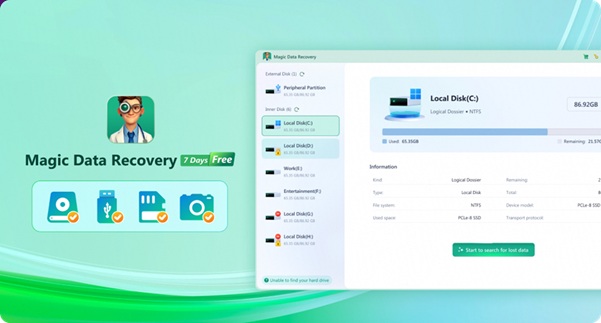
Magic Data Recovery ? Recommended Newcomer Free recovery quota available HDD / SSD / USB / SD / Cameras


Why Magic Data Recovery Stands Out

  • Offers a free recovery quota so you can test real results without paying upfront
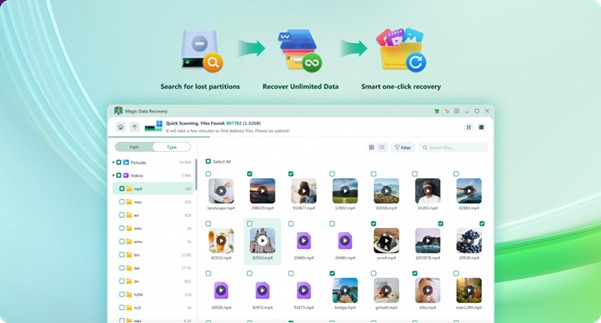
  • Built with advanced recovery algorithms for both standard and deep scan modes
  • Supports a wide range of devices: HDDs, SSDs, USB drives, memory cards, cameras, and more
  • Designed for Windows users with a clear, beginner-friendly interface
  • Handles over 400+ file formats, including DOCX, JPG, PDF, MP4, ZIP, and RAW files

 Try Magic Data Recovery – Free Download Page

Choosing the Right Tool – Quick Tips

  1. If files were just deleted recently, tools like Recuva or PhotoRec may be enough.
  2. For formatted drives, corrupted partitions, or large file types, test Magic Data Recovery within its free quota.
  3. If your priority is full functionality and modern UI, Magic’s free trial experience is a smart starting point.

Final Recommendation

As of 2025, Magic Data Recovery offers one of the most practical free data recovery solutions—with a usable free quota, high compatibility, and strong recovery power out of the box.

Start with Magic Data Recovery’s free version to see how much you can restore—before considering paid plans.

Download and try it free