DD
MM
YYYY

PAGES

DD
MM
YYYY

spot_img

PAGES

Home Blog Page 881

CoinDesk 20’s 3.87% Gain To 3,700.93 Signals A Robust Crypto Market

0

The CoinDesk 20 Index, which tracks the performance of top digital assets, is reported to be up 3.87% at 3,700.93. This aligns with recent market updates indicating positive performance, with 17 of 20 assets trading higher. Notably, Stellar (XLM) surged 20.8% and Hedera (HBAR) gained 19.1%, while Bitcoin Cash (BCH) and Filecoin (FIL) were among the laggards, declining 4.3% and 0.5%, respectively.

The 3.87% rise in the CoinDesk 20 Index to 3,700.93 reflects a bullish trend in the cryptocurrency market, but the performance of individual assets like Stellar (XLM) surging 20.8% and Hedera (HBAR) gaining 19.1%, contrasted with laggards like Bitcoin Cash (BCH) and Filecoin (FIL) declining 4.3% and 0.5%, highlights a growing divide in crypto asset performance.

The CoinDesk 20’s upward movement suggests strong market confidence, but the selective performance (17 of 20 assets trading higher) indicates that gains are not uniform. Assets like XLM and HBAR are driving momentum, potentially due to project-specific developments or investor interest in smaller-cap tokens, while larger-cap assets like BCH and FIL lag, reflecting a market favoring innovation or niche use cases over established coins.

The CoinDesk 20 is designed with market-cap weighting and caps (30% for Bitcoin, 20% for others like Ethereum) to promote diversification. This structure mitigates over-reliance on Bitcoin or Ethereum, allowing investors to gain exposure to a broader digital asset market. The index’s performance underscores its role as a benchmark for diversified crypto investments, appealing to institutional and retail investors seeking balanced exposure.

The index’s rise signals potential opportunities for investors, particularly in products like the Hashnote CoinDesk 20 Index Fund or Bullish’s CD20/USDC-PERP futures, which track the index. These products simplify access to a diversified crypto portfolio without managing individual wallets, appealing to institutional investors. However, the performance divide suggests that active management or selective asset allocation may yield higher returns than passive index tracking.

The crypto market’s volatility remains a key factor, with rapid price swings in assets like XLM and HBAR are driving momentum and captures over 90% of the market’s capitalization (excluding stablecoins), the divergent performance of its constituents reflects the speculative nature of smaller-cap assets versus the relative stability of large-caps like Bitcoin. Investors must weigh high-growth potential against higher risks.

The market shows a clear divide between large-cap cryptocurrencies (e.g., Bitcoin, Ethereum) and mid/small-cap altcoins (e.g., XLM, HBAR). Large-caps, with market caps above $10 billion, offer liquidity and lower risk but may underperform in bull markets compared to mid/small-caps, which have higher growth potential but increased volatility and risk. The recent surge in XLM and HBAR versus the decline in BCH and FIL exemplifies this dynamic.

Posts on X highlight an emerging ideological split in crypto: decentralized, censorship-resistant protocols (“DarkFi”) versus regulated, compliant frameworks (“RegFi”). High-performing assets like XLM and HBAR may align with RegFi due to their focus on enterprise solutions and regulatory-friendly use cases (e.g., Stellar’s cross-border payments, Hedera’s enterprise blockchain). Meanwhile, assets tied to fully decentralized ecosystems may face different investor sentiment or regulatory scrutiny, contributing to performance disparities.

The performance gap often stems from project-specific developments. For instance, Stellar’s focus on remittances and Hedera’s enterprise adoption (e.g., governance by major corporations) may drive investor interest, while BCH and FIL face challenges like slower adoption or market saturation. Investors are increasingly selective, favoring projects with clear utility or institutional backing.

Regulatory clarity, such as the EU’s MiCA regulation, supports assets with compliant frameworks, potentially boosting RegFi-aligned tokens. Meanwhile, institutional adoption (e.g., ether ETFs, Bitcoin holdings by firms like Strategy and El Salvador) stabilizes large-caps but may divert capital from smaller assets, widening the performance gap.

The CoinDesk 20’s 3.87% gain to 3,700.93 signals a robust crypto market, but the divide between high-flying altcoins (XLM, HBAR) and underperformers (BCH, FIL) underscores selective investor sentiment and varying project fundamentals. This divide reflects broader trends: large-cap stability versus small/mid-cap growth potential, and the ideological split between DarkFi and RegFi protocols.


Growing Revenue and Transforming Companies with Agentic AI: Case Study of Odion AI 

0

Agentic AI, characterized by its ability to act autonomously and make decisions to achieve specific goals, is rapidly redefining the landscape of business. For companies seeking sustainable revenue growth and profound transformation, embracing agentic AI is no longer optional but imperative. This technology empowers organizations to automate complex processes, enhance operational efficiencies, and unlock entirely new revenue streams by intelligently interacting with data and systems.

The case study of Odion AI exemplifies this potential, demonstrating how a specialized agentic AI can drive significant value by streamlining functions, optimizing customer interactions, and even facilitating market expansion through its unique capabilities, such as multi-language support or industry-specific financial applications.

The transformative power of agentic AI extends beyond mere efficiency gains; it fundamentally reshapes how businesses operate and compete. By deploying AI agents like Odion AI, companies can achieve unprecedented levels of personalization in customer service, predictive analytics for strategic decision-making, and dynamic resource allocation. This leads to a more agile and responsive enterprise, capable of adapting quickly to market shifts and capitalizing on emerging opportunities. Ultimately, the integration of agentic AI fosters a culture of innovation, enabling businesses to not only grow their top line but also to fundamentally reinvent their core processes, ensuring long-term competitiveness and market leadership in an increasingly AI-driven economy.

In this Tekedia Institute Mini-MBA lecture, OdionAI, the most important AI company in Nigeria which is powering banks, stock brokerages, fintechs, insurance firms, will explain the technology and the future ahead.

  • Date: Tue, July 15
  • Time: | 7pm-8pm WAT
  • Topic: Growing Revenue and Transforming Companies with Agentic AI: Case Study of Odion AI

Faculty: Mavino Ikein Michael, OdionAI.

To register for Tekedia Mini-MBA 18, go here

Best Free Data Recovery Software in 2025

0

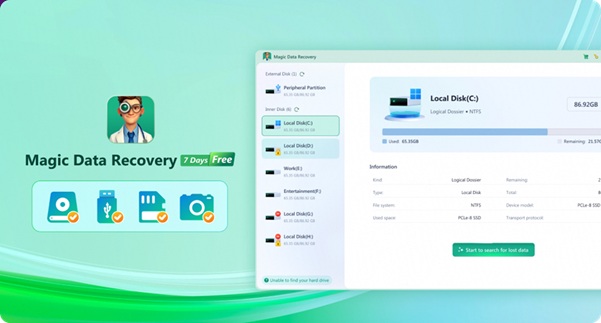
Why We Recommend Magic Data Recovery

Why Free Recovery Tools Still Matter

  • Accidental file deletions, formatting errors, or unexpected drive issues can happen to anyone.
  • While tools like Tenorshare 4DDiG are popular, their limitations or hidden costs in free versions can be frustrating.
  • That’s why it’s smart to compare available free or trial-based recovery tools—and try out modern, effective alternatives like Magic Data Recovery.

Top Free Data Recovery Tools (2025 Updated List)

Tool Name Key Features Free Trial Supported Devices
Disk Drill Clean UI, reliable scan results Limited free recovery HDD / USB / SD, etc.
Recuva Lightweight Windows recovery 100% free HDD / USB
PhotoRec Powerful but CLI-based 100% free Multiple device types
Magic Data Recovery ? Recommended Newcomer Free recovery quota available HDD / SSD / USB / SD / Cameras


Why Magic Data Recovery Stands Out

  • Offers a free recovery quota so you can test real results without paying upfront
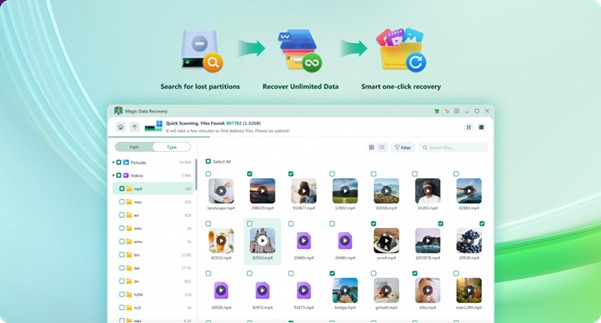
  • Built with advanced recovery algorithms for both standard and deep scan modes
  • Supports a wide range of devices: HDDs, SSDs, USB drives, memory cards, cameras, and more
  • Designed for Windows users with a clear, beginner-friendly interface
  • Handles over 400+ file formats, including DOCX, JPG, PDF, MP4, ZIP, and RAW files

 Try Magic Data Recovery – Free Download Page

Choosing the Right Tool – Quick Tips

  1. If files were just deleted recently, tools like Recuva or PhotoRec may be enough.
  2. For formatted drives, corrupted partitions, or large file types, test Magic Data Recovery within its free quota.
  3. If your priority is full functionality and modern UI, Magic’s free trial experience is a smart starting point.

Final Recommendation

As of 2025, Magic Data Recovery offers one of the most practical free data recovery solutions—with a usable free quota, high compatibility, and strong recovery power out of the box.

Start with Magic Data Recovery’s free version to see how much you can restore—before considering paid plans.

Download and try it free


South Africa Leads H1 2025 Startup Funding as Nigeria Posts Lowest Performance Since 2020

0

In the first half of 2025, Africa’s startup funding landscape remained heavily influenced by the continent’s Big Four—South Africa, Egypt, Kenya, and Nigeria, which collectively accounted for a significant amount of the total capital raised.

According to a report by Africa: The Big Deal, the funds raised in the first half of the year by these regions, marked a 78% increase from the $800 million recorded in H1 2024.

While their share of startups raising at least $100,000 was slightly lower at 67%, they dominated the $1 million+ category, with 84 out of 106 qualifying startups, or 79%, coming from these four countries.

South Africa Tops the Charts

South Africa led the continent in total funding with $344 million, marking its strongest half-year since H1 2023. Although it did not have the highest number of startups raising over $100,000 (37 deals), it topped the $1 million+ category with 26 ventures securing significant rounds.

The standout deals included South African health tech pioneer hearX, which raised $100 million through a merger with Eargo and a subsequent investment from Patient Square Capital.

Also, Stitch, a fintech company raised $55 million in Series B funding. This brings the company’s total funding to $107 million since its launch in 2021. The funding round was led by QED Investors and included participation from Flourish Ventures, Norrsken22, Glynn Capital, and angel investor Trevor Noah. The funds, according to the company, will be used to expand its in-person payment offerings, strengthen its online payment suite, and facilitate its entry into card acquiring.

On the other hand, Naked an Insurtech startup, raised a $38 million Series B2 round. The round was led by Blue Orchard and included participation from existing investors like Hollard, Yellowwoods, the IFC, and DEG. The funding will be used to expand Naked’s AI-powered digital insurance platform, enhance product development, and further its market reach. 

Egypt’s Steady Climb

Egypt closely followed with $339 million, also recording its best half-year since H1 2023. A total of 42 startups secured at least $100,000, while 21 of them raised $1 million or more, matching Nigeria in that bracket.

Egypt’s top three deals—collectively representing half of the country’s total funding—were Tasaheel’s $50 million bond issue (a subsidiary of MNT-Halan), Bokra’s $59 million sukuk raise, and Nawy’s $75 million raise (a combination of $52 million Series A and debt financing), which stands as the largest-ever proptech deal on the continent.

Kenya’s Lowest H1 Since 2021

Kenya reported $227 million in total funding, its lowest half-year total since H1 2021. The country ranked #4 in both the number of startups raising at least $100,000 (30) and those securing $1 million or more (16). The two largest Kenyan deals came from the energy sector, with Burn Manufacturing raising $85 million and PowerGen securing $55 million.

Nigeria’s Decline in Capital

Despite its historic dominance, Nigeria posted only $176 million in H1 2025, its lowest half-year funding performance since H2 2020. However, the country matched Egypt in the number of startups raising $100,000+ (42) and tied again for second place in the $1 million+ category (21).

Nigeria’s largest deals included LemFi, a payment and remittance firm which raised $53 million in Series B, led by Highland Europe with participation from previous investors Left Lane Capital, Palm Drive Capital, Endeavor Catalyst and Y-Combinator. The new round brings LemFi’s total capital raised to $85 million to date. Also, OmniRetail, Nigerian retail technology company, raised a $20 million Series A, and Arnergy (energy) with $18 million in Series B funding.

The data reinforces the dominance of the Big Four in Africa’s venture capital ecosystem while highlighting shifting dynamics, with South Africa and Egypt leading in capital raised, and Nigeria now more active in deal volume than deal size.

U.S. House Ways And Means Committee Hearing Billed For July 16th 2025

0

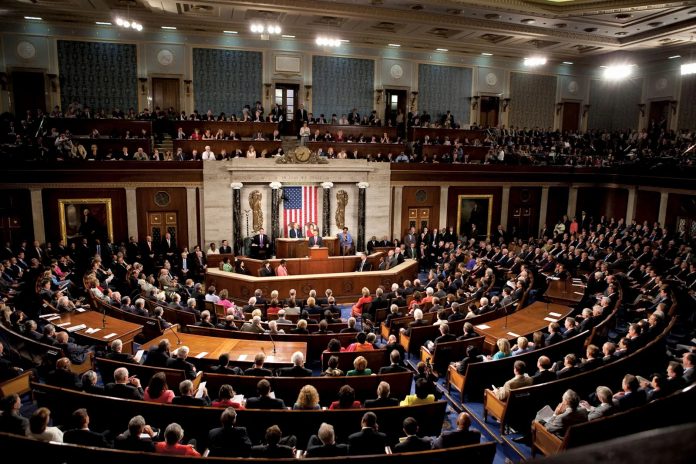
The U.S. House Ways and Means Committee Oversight Subcommittee hearing, titled “Making America the Crypto Capital of the World: Ensuring Digital Asset Policy Built for the 21st Century,” was scheduled for July 16, 2025, at 9:00 AM ET in the 1100 Longworth House Office Building. The hearing aimed to explore the establishment of a modern digital asset tax policy to position the U.S. as a global leader in cryptocurrency.

It was part of a broader “Crypto Week” (July 14-18, 2025), during which Congress focused on digital asset policies, including discussions on the CLARITY Act, the GENIUS Act, and the Anti-CBDC Surveillance State Act. The hearing focused on creating a clear tax policy framework for digital assets, addressing industry concerns about regulatory uncertainty and exploring industry-friendly policies to foster blockchain innovation.

The hearing focused on establishing a modern tax policy framework for digital assets, addressing a long-standing industry pain point: unclear tax regulations. A clear framework could reduce compliance costs, encourage innovation, and attract institutional investment by providing certainty for crypto businesses and investors.

Legislation like the CLARITY Act, which aims to delineate regulatory authority between the SEC and CFTC, and the GENIUS Act, which provides a framework for stablecoin issuance, could streamline oversight and reduce regulatory overlap, potentially boosting market liquidity and investor confidence. Clearer rules could position the U.S. as a global crypto hub, drawing capital inflows and fostering blockchain innovation, as noted by industry advocates like Jag Kooner from Bitfinex.

A pro-crypto tax policy could encourage broader ecosystem participation, including by institutional investors, potentially stabilizing and growing markets for major cryptocurrencies like Bitcoin (BTC) and Ethereum (ETH). The GENIUS Act, if passed, could enable banks, fintechs, and retailers to issue stablecoins, expanding consumer access and integrating digital assets into mainstream finance.

This could enhance the U.S. dollar’s global dominance through stablecoin adoption. However, without robust consumer protections, there’s a risk of market instability, as seen in past crypto collapses. Witnesses like Timothy Massad have emphasized the need for a regulatory framework to ensure stablecoin stability and prevent systemic risks. The hearing reflects a push to prevent the U.S. from falling behind jurisdictions like Singapore and the UAE, which have clearer crypto regulations.

Senate Banking Committee members, like Sen. Tim Scott, argue that regulatory clarity is essential to retain jobs and innovation domestically. A strategic Bitcoin reserve or national digital asset stockpile, as proposed in the Trump administration’s upcoming report, could further position the U.S. as a crypto leader, though such ideas remain speculative. Critics, including Carole House, highlight risks like cybersecurity vulnerabilities and illicit finance, citing events like the February 2025 North Korean crypto heist.

Robust anti-money laundering (AML) and know-your-customer (KYC) measures are critical to address these concerns. A balanced framework could mitigate these risks while fostering innovation, but overly lax regulations might exacerbate vulnerabilities in the crypto sector. Republican leadership, including House Speaker Mike Johnson and Rep. Jason Smith, champions an industry-friendly approach, framing the U.S. as a potential “crypto capital.” They support bills like the CLARITY Act and GENIUS Act to reduce regulatory burdens and encourage innovation.

Republicans argue that the Joe Biden administration’s “regulation by enforcement” approach drove innovation offshore, and they advocate for “light-touch guardrails” to protect investors while fostering growth. The CLARITY Act, advanced by bipartisan majorities in House committees, reflects some Republican success in pushing for clearer SEC-CFTC boundaries, though it faces Senate scrutiny.

Democrats, led by figures like Rep. Maxine Waters, express significant concerns about the proposed legislation, particularly citing President Trump’s personal crypto ventures, estimated at $2.9 billion. They argue that his financial interests, including the TRUMP token, create conflicts of interest and risk regulatory capture. A dramatic walkout by Democrats during a May 2025 hearing underscores their frustration, with some labeling the bills “dangerous” and accusing Republicans of prioritizing Trump’s interests over consumer protections.

Democrats advocate for stronger consumer protections, AML/KYC measures, and cybersecurity safeguards, warning that deregulation could exacerbate fraud, manipulation, and systemic risks in the crypto market. While the CLARITY Act and GENIUS Act initially had bipartisan support, Democratic backing has waned due to concerns about Trump’s influence and inadequate protections. This has fractured earlier consensus, as seen in the rejection of Democratic amendments to strengthen consumer safeguards.

The Senate Banking Committee’s separate hearings, featuring industry leaders like Ripple’s Brad Garlinghouse, suggest a more cautious approach, with Democrats pushing for comprehensive frameworks over rushed deregulation. However, critics like Rep. Waters highlight risks of corruption and inadequate oversight, resonating with those wary of deregulation. This divide mirrors broader public and industry debates about balancing innovation with accountability.

The July 16, 2025, hearing and “Crypto Week” could set the stage for transformative U.S. crypto policy, potentially making the country a global leader by clarifying tax and regulatory frameworks. However, the political divide threatens progress. Republicans push for deregulation to spur innovation, while Democrats demand stronger protections to mitigate risks, fueled by concerns over Trump’s crypto ventures.