DD
MM
YYYY

PAGES

DD
MM
YYYY

spot_img

PAGES

Home Blog Page 899

EFCC Raises Alarm Over Politicians Hiding Loot in Crypto Wallets, Days After IMF Warns of Cryptocurrency Risks to Nigeria

0

The Chairman of Nigeria’s Economic and Financial Crimes Commission (EFCC), Ola Olukoyede, has raised fresh concerns about the rising use of cryptocurrencies by corrupt politicians to conceal looted funds—an assertion coming just hours after the International Monetary Fund (IMF) warned that virtual assets pose serious threats to Nigeria’s economic and financial stability if left unchecked.

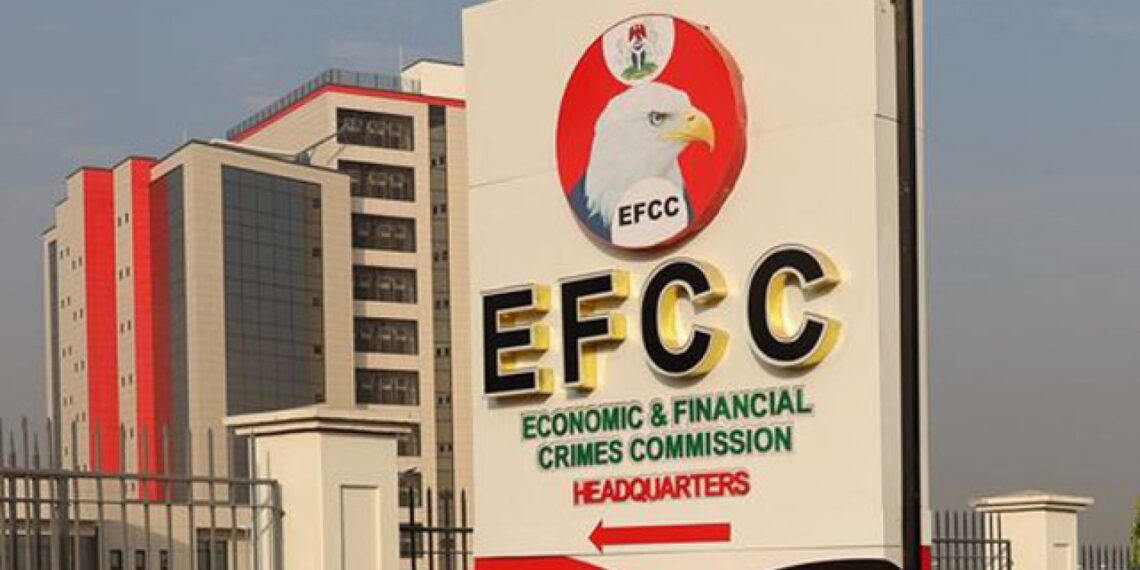
Speaking during a public lecture at the EFCC headquarters in Abuja on Thursday to mark the 2025 African Union Anti-Corruption Day, themed “Understanding Virtual Asset and Investment Fraud,” Olukoyede disclosed that the Commission has uncovered multiple cases where politically exposed persons have diverted stolen public wealth into cryptocurrency wallets to shield them from detection.

“Our findings showed that fraudulent politicians are already perfecting schemes and hiding their loot in cryptocurrencies to beat the investigative dragnets of anti-corruption agencies,” he stated. “Stolen funds and unexplained wealth are being warehoused in wallets, and payments for services are being done through this window.”

According to Olukoyede, the anonymity and decentralized nature of cryptocurrency platforms are enabling corrupt elites to bypass traditional banking systems and regulatory oversight, making it increasingly difficult to trace financial crimes.

The EFCC’s revelation comes just days after the International Monetary Fund issued a stark warning about Nigeria’s growing exposure to virtual assets. In a country-focused report titled “How Nigeria Can Unleash Its Economic Potential,” the IMF cautioned that the rapid adoption of cryptocurrencies in Nigeria could create major risks for the financial system—particularly as crypto assets are already being used to facilitate capital flight, tax evasion, and illicit finance.

The IMF stressed that the government must urgently strengthen its oversight of virtual assets and build capacity among regulators to track crypto transactions, especially given Nigeria’s growing use of digital platforms for payments and investments.

The timing of the EFCC’s findings suggests that the risk is no longer hypothetical. As both the IMF and Nigeria’s top anti-corruption agency raise alarm, the need for coordinated regulatory and enforcement action is believed to have become more pressing.

Crypto Is Not the Villain — But the Misuse Is

Olukoyede clarified that cryptocurrency itself is not inherently criminal. Rather, the issue lies in how it is used.

“Virtual assets are not fundamentally criminal. It is when they are wrongfully or fraudulently used that they become criminal,” he said. “Technology is moving at a supersonic speed around the world. As with every progressive innovation, fraudsters usually evolve ways of perverting their genuine purposes.”

He added that while cryptocurrencies were originally designed to improve financial access and serve as a store of value, they are now being exploited for illicit enrichment by individuals who understand that tracking digital assets can be more challenging for traditional enforcement agencies.

The EFCC Chairman noted that the agency is not sitting idly. According to him, the Commission has taken proactive steps, including advanced training of personnel and the deployment of sophisticated technology to trace and disrupt fraudulent activities involving virtual assets.

Olukoyede pointed to the successful investigation and prosecution of the CBEX crypto investment scam, in which thousands of Nigerians lost money, as an example of the agency’s growing capacity to crack down on crypto-related fraud.

“We are all aware of the hues and cries of many investors in CBEX that lost their funds to the shenanigans of the operators.?This unfortunate situation is preventable,’ he said.

The Public’s Role in Enabling Scams

The EFCC boss also took a swipe at the public’s role in sustaining fraudulent schemes, blaming negligence, poor due diligence, and the rush for high returns as key enablers.

“The lessons derivable from the CBEX situation are very clear: the investing public does inadvertently aid fraudulent practices through lack of due diligence on schemes advertised to them,” he said.

He added that Ponzi schemes and deceptive crypto platforms continue to flourish because people fall for unrealistic returns, refusing to verify the legitimacy of the operators. This, he said, helps fuel the cycle of fraud and financial loss.

“Another lesson is that investors hardly send suspicious transaction reports to the EFCC until they are defrauded. We must understand that no investment scam can succeed without the negligence of investors.”

Olukoyede also noted that investment fraud and virtual asset scams are now spreading like wildfire across Africa, with criminals exploiting both the desperation of investors and regulatory gaps in many countries.

As both the IMF and EFCC amplify warnings about the dangers of unregulated virtual assets, the Nigerian government has come under renewed pressure to strengthen digital financial regulations.


Dear Africa’s Entrepreneurs, You Are the Future of Global Innovation

0

If you’ve built a company in Lagos, Nairobi, or Accra, this message is for you.

While startups in Silicon Valley raise millions on pitch decks, you’ve bootstrapped through power outages, fragmented payment systems, and markets where trust is earned, not assumed. The good news is that these challenges are forging you into a new breed of talent that’s poised to dominate the next wave of global innovation.

Let me explain.

Constraints Breed Superpowers

In Africa, the absence of seamless infrastructure, reliable internet, widespread credit card penetration, or stable logistics forces entrepreneurs to rethink fundamentals. While a San Francisco founder might optimize a SaaS funnel, you’re building agent networks to deliver cash payments when digital channels fail.

This explains why an African operator in Silicon Valley sees beyond the low-hanging fruit of ad-driven or subscription models to spotting opportunities in underserved niches.  Consider Flutterwave, a Nigerian fintech unicorn. In 2016, its founders tackled Africa’s fragmented payment landscape, where 60% of transactions were cash-based and digital infrastructure was unreliable. They built a platform that seamlessly integrated mobile money, bank cards, and USSD codes, processing over $20 billion in transactions by 2024. Or take Kenya’s M-KOPA, which scaled solar energy access to over 3 million households by creating a pay-as-you-go model tailored to low-income users with inconsistent cash flows.

If you are an operator that has honed your skills in the African market, when you step into mature markets that have stable infrastructure and deep capital pools, your skills should become your superpowers, not a disadvantage.

It’s time to reframe your narrative

To African entrepreneurs and operators:

Your constraints are your edge. On your résumé, don’t list “built a startup in Lagos.” Say “engineered a payment system that scaled to 1 million users despite 40% network downtime.” In investor pitches, highlight how your hybrid model outperformed Western playbooks. Your ability to create value under pressure is your unique selling point.

To global hiring managers:

If you want process managers, hire the polished résumé. If you want innovators who can solve impossible problems, look to Africa. Integrate them into your teams not as “diverse hires” but as strategic assets who see what others miss.

AWS to Launch AI Agent Marketplace with Anthropic as Partner, Eyes Major Push into Next Wave of Enterprise AI

0

Amazon Web Services (AWS) is preparing to roll out a dedicated AI agent marketplace next week, with support from key partner Anthropic, in a move that could reshape how businesses deploy artificial intelligence across enterprise software environments.

According to two sources familiar with the matter, who spoke to TechCrunch, the launch is scheduled to take place at the AWS Summit in New York City on July 15, TechCrunch has reported exclusively.

While AWS and Anthropic declined to comment, the initiative marks Amazon’s most direct push into a competitive and fast-growing corner of the AI market—autonomous agents that operate independently to perform tasks, make decisions, and interact with software systems using AI models at their core.

The marketplace will provide AWS customers with a centralized platform to discover, install, and pay for AI agents designed by third-party startups. Those startups will, in turn, gain a direct distribution channel to AWS’s massive enterprise base, a move that could dramatically boost reach and recurring revenue.

What Are AI Agents—and Why Is Everyone Betting on Them?

Though the term remains loosely defined, AI agents are typically autonomous software programs powered by AI models capable of interacting with websites, apps, and other digital systems to execute tasks without direct human input. This includes actions like making bookings, sorting emails, pulling records from CRMs, or even coordinating workflows across tools like Slack or Salesforce.

AI giants like OpenAI, Anthropic, and Google DeepMind have embraced the concept of agents as the next frontier of generative AI. So has Silicon Valley’s venture capital engine, with investor enthusiasm reaching levels not seen since the launch of ChatGPT in late 2022. The challenge, however, has been fragmentation: each company typically offers agents within isolated ecosystems, making them difficult to integrate into broader enterprise architectures.

With its marketplace, AWS hopes to solve that, offering a central hub for AI agent discovery and deployment, potentially leapfrogging rivals in distribution efficiency.

Anthropic’s Critical Role

Anthropic, the OpenAI rival behind the Claude family of models, is not just a marketplace participant—it’s also backed by Amazon, which has committed up to $4 billion in investment to the startup. In May, Anthropic crossed $3 billion in annualized revenue, fueled by enterprise demand for its Claude-powered API and growing adoption of its multi-modal agents.

Unlike OpenAI, Anthropic has structured its business around enabling agent creation at scale via its API. This makes it particularly well-positioned to thrive in an ecosystem where developers and enterprises browse, pay for, and install pre-built or customizable agents as easily as they would install software plugins.

The new AWS marketplace could dramatically expand Anthropic’s reach, especially among businesses already running infrastructure on Amazon’s cloud or looking to integrate agents into existing AWS workflows. That includes rivals’ customers who may be looking to diversify their AI vendor base.

How It Will Work

Sources say the AWS agent marketplace will mirror the structure of SaaS marketplaces. Developers and startups can list agents with tiered pricing models, and AWS will take a small revenue cut. This monetization model is expected to be more flexible than bundled services and could offer recurring subscription pricing or usage-based charges.

For enterprise customers, the marketplace will be a one-stop location to search, evaluate, and deploy AI agents based on business needs. Agents may be optimized for customer service automation, finance, logistics, or DevOps, depending on the developer’s focus.

While Amazon is not the first to introduce an AI agent marketplace—Google Cloud, Microsoft, Salesforce, and ServiceNow have already launched similar platforms—AWS enters the space with a larger cloud footprint and stronger enterprise AI demand, giving it a significant distribution edge.

AWS’s push into AI agents comes at a time when control over enterprise AI deployment is emerging as the next major battleground in the tech industry. Google’s AI Agent Marketplace, launched in April, offers developers tools to sell agents directly into Google Cloud environments. Microsoft’s Agent Store, introduced in May as part of Microsoft 365 Copilot, targets office productivity users with customizable task agents. Salesforce and ServiceNow have also baked agent marketplaces into their own SaaS offerings.

But AWS, which serves as the backend for a vast number of AI startups, could use its new marketplace to create a network effect. By giving developers access to its user base—and potentially bundling agent functionality into AWS-native services—it could become the go-to marketplace for buyers and sellers alike.

Crucially, the marketplace opens another monetization front for Amazon’s cloud business, which is under pressure from Google and Microsoft in the race to define AI’s next chapter. It also offers AWS a way to expand its ecosystem around developer tools, data services, and AI infrastructure, creating lock-in that goes beyond compute or storage.

With the AWS Summit New York just days away, all eyes will be on how Amazon frames the announcement—and how startups like Anthropic position themselves within the new ecosystem. If successful, the marketplace could become a central pillar of how businesses adopt and scale AI agents across industries.

The launch also signals a maturing of the agent space. What began as experimental chatbots is now evolving into a structured marketplace for autonomous enterprise software, with Amazon betting that AI agents will be as essential to cloud computing as apps were to mobile.

Digital Governance could be Nigeria’s Untapped Engine for Reforms

0

Recently, while casually browsing the internet, I stumbled upon Rwanda’s IremboGov platform, it is a centralized digital portal that offers access to over 100 government services. It was a quiet discovery, but a powerful one. IremboGov allows Rwandans to apply for national IDs, pay taxes, register births, request land certificates, and more, all online and from one place. The platform is simple, intuitive, and integrated. As I navigated, I couldn’t help but ask: why can’t Nigeria adopt this?

Though, Nigeria is no stranger to digital initiatives since over the years, we have developed several platforms such as the Corporate Affairs Commission’s (CAC) business registration portal, the Treasury Single Account (TSA), and the National Identity Number (NIN), Bank Verification Number (BVN) systems, etc. Each of these has contributed something valuable, but the common thread among them is fragmentation. They exist in isolation, often unreliable, and riddled with technical or bureaucratic challenges. The reality is that most Nigerians still engage with government services through inefficient, paper-based, and manual systems. It’s not unusual to visit a government office multiple times just to complete a simple process like renewing a license or retrieving a lost certificate.

These touchpoints breed not only frustration but also corruption, as they place disproportionate power in the hands of civil servants who often act as gatekeepers to essential services. In many government offices across Nigeria, basic administrative tasks such as processing documents, verifying identity, or approving applications are deliberately delayed, creating opportunities for possible extortion. What should be routine becomes transactional. The absence of transparent, automated systems allows discretionary power to continue unchecked. Citizens are frequently told to “come back tomorrow,” only to be subtly asked for favours to speed up the process. This behavior is partly driven by a deeply ingrained culture where the public office is seen as a personal money-making enterprise. Without digital systems that log, timestamp, and track every step of a service process, corruption remains while ordinary Nigerians continue to bear the cost in time and money.

This is where Rwanda’s IremboGov and similar platforms around the world can offer valuable lessons. What Rwanda has built is not just a website, but a vision of governance that is citizen centered, efficient, and transparent. And Rwanda is not alone. India through UMANG, an initiative of the India Ministry of Electronics and Information Technology, integrates more than 1,200 public services across both state and federal levels. Kenya’s eCitizen portal has also achieved major strides in making government services easily accessible and transparent.

What these platforms have in common is not just their functionality, but their philosophy which is for government services to be accessible, accountable, and devoid of unnecessary human intervention.

Nigeria, by contrast, continues to operate in silos. Our public sector platforms often fail to communicate with each other. A citizen’s NIN is not automatically useful across all agencies. Taxpayer data is not integrated. Procurement systems are rarely transparent. And in many cases, even where platforms exist, the user is still expected to visit a physical office to complete the process.

The result is an administrative culture that is slow and prone to abuse. But more than inefficiency, this fragmentation comes at a steep cost. Without unified data systems, we lose opportunities to make smarter policy decisions. Without real-time dashboards for project spending, budget allocations, or procurement contracts, we leave the door wide open for waste and fraud.

What Nigeria needs is a comprehensive national platform, a singular digital gateway where citizens can access all government services, submit documents, make payments, track applications, and file complaints. It should be built with interoperability in mind, integrating systems like BVN, NIN, CAC, and tax databases. Moreover, one of the most strategic entry points for Nigeria’s digital governance transformation could be the National Identity Number (NIN). If fully optimized, the NIN can serve as Nigeria’s equivalent of the U.S. Social Security Number (SSN); a single, trusted identity used across all public and private sector platforms.

The Federal Ministry of Communications, Innovation and Digital Economy is uniquely positioned to spearhead Nigeria’s transition to a fully digital governance framework. The ministry can lead the charge by developing a unified e-governance blueprint anchored on collusion, data security, citizen access, and service integration. However, true success depends on cross-ministerial collaboration. The ministry must move beyond siloed ICT initiatives and work closely with other ministries such as Finance, Interior, Health, Education, and Works to digitize their service delivery processes and ensure that all government platforms speak the same digital language.

Through inter-ministerial task forces, performance dashboards, and digital service standards, the ministry can foster collective ownership of digital governance. Moreover, by involving stakeholders from the state and local government levels and aligning with national strategies like the Nigeria e-Government Master Plan from The Nigeria Information Technology Development Agency (NITDA), the ministry can build an holistic approach that places citizens, not bureaucracy, at the center of public service delivery.

This is an opportunity to transform not just how government functions, but how citizens experience governance. Through digitization, we can reduce corruption, increase transparency, and restore credibility in public institutions. We can empower a young, tech-savvy population that already interacts with banks, retailers, and media online but still struggles to interact with government in the same way.

GTCO Eyes 15% Dividend Yield, 25% ROE as Landmark LSE Listing Signals New Phase of Global Ambition

1

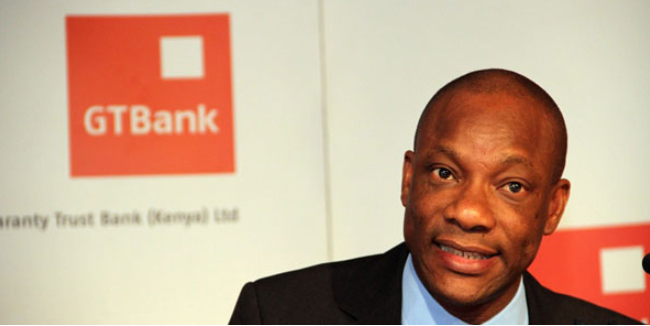
Guaranty Trust Holding Company (GTCO) is setting bold new financial benchmarks following the dual listing of its ordinary shares on the London Stock Exchange (LSE), moving away from its legacy Global Depositary Receipts (GDRs) in a bid to attract long-term global capital and deepen investor confidence.

Speaking in London shortly after the listing on July 9, 2025, Group CEO Segun Agbaje unveiled the company’s post-listing objectives: a minimum dividend yield of 15% and a floor return on equity (ROE) of 25%—targets aimed at aligning shareholder returns with macroeconomic realities, particularly in a high-inflation environment like Nigeria.

“Every Nigerian company should pay at least 15% dividend yield, especially when you look at the inflation rate,” Agbaje said during a media briefing. “We are also setting our ROE floor at 25%, especially considering the macro volatility in Nigeria.”

From GDRs to Ordinary Shares

GTCO’s decision to transition from GDRs—where each unit represented 50 ordinary shares—to a full share listing on the LSE was not just symbolic. For Agbaje, it was a calculated move to eliminate liquidity constraints and attract more meaningful institutional flows.

“For years, the GDRs served their purpose, offering global investors a way to access our stock without the frictions of the Nigerian market. But that structure became too limiting,” he said.

The new listing creates a direct pathway for institutional capital and opens the door for deeper market participation. Trading volumes are expected to rise significantly now that the company’s ordinary shares are accessible to global investors on two major exchanges: the Nigerian Exchange (NGX) and the LSE.

GTCO raised N209 billion locally before heading abroad to raise the balance through its LSE listing. The strategy, Agbaje said, was designed to protect the over 50% of GTCO’s shareholder base that comprises Nigerian retail investors.

“We didn’t want to dilute our domestic investors unnecessarily,” he explained.

With new capital secured and the holding structure firmly in place, GTCO is gearing up for its next expansion phase. Already, the group’s income profile is diversifying, with Nigeria now accounting for 67% of its profit, West Africa 27%, East Africa 1.5%, and the UK 1.8%.

Agbaje revealed Senegal as GTCO’s next market entry, but stressed that expansion would be deliberate and anchored on dominance, not token presence.

“There’s no point being in 30 countries and being dormant. The goal is to be dominant in every market we enter, top five in each country—that’s the aspiration,” he said.

Asked about prospects in Asia or the U.S., Agbaje offered a cautious yet open view: “We’re still digesting the UK… but when we do look outward, the Far East may be a better strategic fit for us than the U.S., especially in terms of trade flows.”

Agbaje was candid about the level of scrutiny and discipline demanded by the LSE, noting that Nigerian companies must prepare for an environment where every word and action is judged by global standards.

“You must be able to defend every word. That’s the standard international markets demand—and it’s something we must adopt in Nigeria too,” he said.

He also issued a subtle critique of Nigeria’s media culture, lamenting the tendency for unchecked reports that could hurt investor confidence and due diligence processes.

“When you do due diligence on a company, everything said about it shows up. You have to be ready to defend it. But many don’t see it that way,” Agbaje added.

Forbearance and the CRR: GTCO Saw It Coming

On the controversial issue of regulatory forbearance withdrawal by the Central Bank of Nigeria (CBN), Agbaje dismissed the notion that banks were caught unprepared.

“We had letters in 2023 to exit forbearance. Therefore, we should have exited by the end of 2024,” he stated. “So whatever the regulator chose to do shouldn’t have come as a surprise. We were given more than enough time.”

He also downplayed alarm over the Cash Reserve Ratio (CRR), calling it a “legacy tool” for liquidity management, and expressed optimism that Nigeria’s monetary policy would eventually return to more conventional strategies.

Backstory: A Pivot with Purpose

GTCO’s decision to transition away from GDRs and list its ordinary shares on the LSE represents a major realignment in its international growth strategy. The bank had maintained GDRs on the LSE since July 2021 as a bridge to foreign investors wary of directly accessing Nigerian equities. But structural constraints and limited market activity eventually made the vehicle less attractive.

By directly listing its ordinary shares, GTCO has eliminated that middle layer, improved transparency, and positioned itself for a broader base of global investors. The move also coincides with Agbaje’s vision of building an African financial giant with robust international credibility and resilience.

A New Era for Nigerian Banks?

GTCO’s LSE listing—and the performance benchmarks it has set—may raise the bar for Nigerian financial institutions seeking to deepen international participation. Agbaje’s bold claim that “every Nigerian company should pay at least 15% dividend yield” isn’t just an investor pitch—it’s a challenge to peers.

The bank’s ambitions for regional dominance, its measured approach to international expansion, and its insistence on investor-friendly policies could redefine what it means to be a truly pan-African financial institution.

With its dual-market presence now formalized, GTCO enters a new chapter—one that will test not only its financial acumen but also its ability to lead by example in a space where capital follows clarity, discipline, and vision.