
DD
MM
YYYY

PAGES

DD
MM
YYYY

spot_img

PAGES

Home Blog Page 9

Liquidations Accelerate in Crypto Market as Leverage Unwinds

0

A classic deleveraging cascade is where falling prices trigger forced closures of leveraged positions especially long bets, creating additional selling pressure that pushes prices lower in a self-reinforcing loop.

What’s Happening Right Now

The crypto market has been experiencing sharp sell-offs, with Bitcoin dropping significantly recently testing lows around $60,000–$65,000 in some reports, down roughly 50% from late-2025 peaks.

Altcoins like Ethereum, XRP, Solana, and others have faced even steeper declines due to their higher beta and leverage exposure. In the past 24 hours, total crypto liquidations have ranged from $1.4 billion to over $2.4 billion across sources like CoinGlass.

Long positions dominate the damage such as the $1.24B–$1.92B in longs vs. far less in shorts, indicating over-leveraged bulls getting flushed out. As prices breach key support levels, exchanges automatically liquidate positions via market orders.

This floods the market with sell orders, accelerating declines and triggering more liquidations—creating the “cascade” effect. This follows extreme leverage buildup (futures open interest hit highs earlier), combined with risk-off sentiment, potential macro pressures and thinner liquidity amplifying moves.

Altcoins bore the brunt in one 24-hour window, with liquidations climbing rapidly from ~$428M in an hour to over $1.4B total. Specific assets like XRP saw sharp plunges from leverage unwinds and fading risk appetite.

Bitcoin and Ethereum extended declines overnight, with liquidations hitting hundreds of millions to billions in short bursts. This isn’t necessarily driven by fundamental “new” bad news but by mechanical unwinding of overextended positions.

Such events often “reset” the market by clearing excess leverage, potentially leading to more stable recoveries once spot buying from long-term holders dominates over forced selling. The market remains highly volatile—watch for stabilization signals like reduced liquidation volumes, open interest drops indicating deleveraging completion, or spot inflows.

The ongoing liquidation cascade in the crypto market, with over $2.5 billion in positions wiped out in recent days, has put significant stress on DeFi protocols. However, the sector has demonstrated notable resilience compared to previous downturns, with total value locked (TVL) declining primarily due to falling asset prices rather than mass user withdrawals.

DeFi’s TVL has dropped to approximately $93.2 billion, reflecting a -7.67% change in the last 24 hours and broader weekly/monthly declines of 15-40% across major protocols. This isn’t a full-blown capitulation but a macro-driven risk-off environment amplified by leverage unwinds.

Key effects include increased liquidations, reduced liquidity, and contagion risks, but also highlights of protocol maturity like automated liquidations without failures. DeFi liquidations spiked to $229.9 million over the past seven days, representing about 0.45% of TVL—elevated but well below stress thresholds from past cycles

This is a fraction of the broader market’s $5 billion+ in total liquidations since late January. Lending platforms like Aave, Morpho, Compound: These bore the brunt, with Aave alone handling over $140 million in collateral liquidations across networks without any protocol issues, showcasing improved risk management.

However, synchronized thresholds across protocols like Aave, Compound, Morpho, and Spark create contagion: a price drop triggers multi-protocol cascades, as seen in past events with $431 million liquidated in a day.

Ethereum faces particular pressure from a billion-dollar leveraged position at risk on Aave, where thin liquidity could accelerate unwinds. Liquid staking derivatives (LSDs) e.g., Lido, ether.fi: Hardest hit category, with Lido’s TVL down -31.6% weekly and -36.1% monthly to $18.5 billion.

Heightened ETH exposure and forced deleveraging of staked positions amplified losses, signaling risk aversion in yield-generating strategies. DEXes and Perp Platforms Forced selling dominated DEX volumes during the January 31-February 2 crash, creating a reflexive loop: price drops ? liquidations ? more selling ? further drops

On the positive side, platforms like Hyperliquid (HYPE) saw gains from surging trading fees and liquidations, positioning them as “defensive” assets in downturns. Other protocols like Binance staked ETH (-31.9% weekly to $7 billion) and EigenCloud (-31.7% weekly to $8.7 billion) reflect broad-based capitulation, with no safe havens emerging

TVL and Liquidity Dynamics

The 12% TVL drop (to ~$93 billion) is modest relative to the market’s 20-40% price declines in major assets like ETH (-21%) and SOL (-17%). This suggests users are holding through volatility rather than exiting, thanks to conservative loan-to-value (LTV) ratios learned from events like the 2025 “Tariff Tantrum”

Severe contractions in liquid staking (-30%+ weekly) and lending (-15-20% weekly). Broader liquidity pullback: Synchronized negative performance across categories indicates macro factors over protocol-specific flaws.

Unlike past winters, DeFi’s structure has matured: no widespread failures, with protocols like Aave and Maple proving robust under stress. Transparency in positions and thresholds allows for better monitoring, though it also exposes contagion risks.

Events like this “reset” excess leverage, potentially paving the way for recoveries once spot demand returns. However, if prices continue sliding like BTC toward $50K as some warn, DeFi could face deeper TVL erosion and more cascades. This isn’t financial advice—crypto remains high-risk, and users should monitor on-chain metrics closely. If you’re trading or holding, risk management is crucial in these environments.
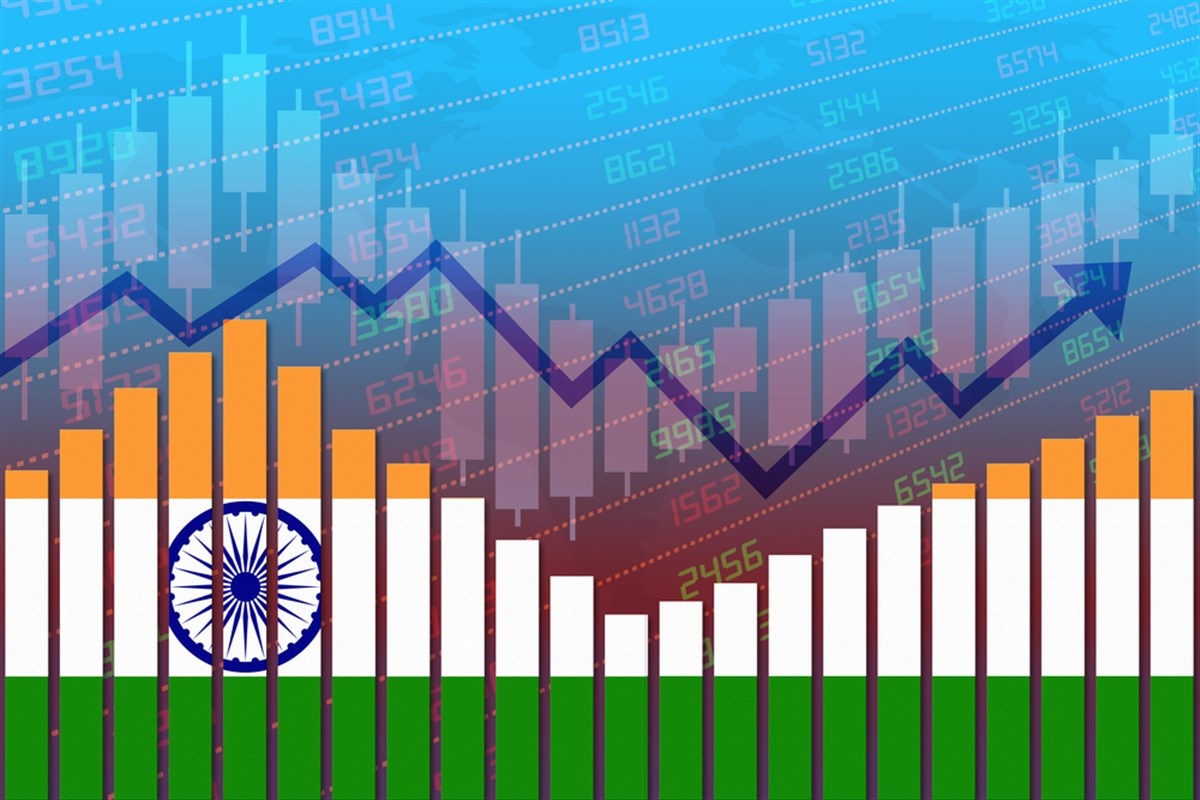

RBI Holds Rates at 5.25% as Trade Deals Ease External Risks, Shifting Focus to Liquidity and Transmission

0

India’s central bank is signaling a prolonged pause on rate cuts, betting that trade relief from Washington and Brussels will cushion growth even as global risks mount.

India’s central bank kept its policy rate unchanged on Friday, opting for caution as newly secured trade deals with the United States and the European Union reshape the outlook for the world’s fastest-growing large economy.

The Reserve Bank of India (RBI) held the benchmark rate at 5.25%, in line with expectations from economists polled by Reuters. The decision marks a clear pause after a cumulative 125 basis points of rate cuts delivered last year, with policymakers now turning their attention to how effectively those reductions are flowing through the financial system.

RBI Governor Sanjay Malhotra said global conditions remain challenging, but recent progress on trade has materially improved India’s external backdrop. “External headwinds have intensified, though the successful completion of trade deals augurs well for the overall economic outlook,” Malhotra said, adding that near-term prospects for both inflation and growth remain supportive.

Market participants read the statement as confirmation that the easing cycle is on hold for an extended period. Radhika Rao, senior economist and executive director at DBS Bank Singapore, said the central bank struck a balanced tone that points to stability rather than fresh stimulus. In her view, attention will now move squarely to liquidity conditions and policy transmission.

Malhotra reinforced that message, saying the RBI will remain proactive in managing liquidity to ensure banks have sufficient funds to meet productive demand and to support the pass-through of earlier rate cuts. That stance increases the likelihood of further open market operations over the coming quarters, a tool the central bank has used to inject durable liquidity into the system.

The pause also follows a major shift in India’s external environment. Earlier this week, U.S. President Donald Trump announced that Washington would cut tariffs on Indian exports to 18%. The move eased a key concern raised by the RBI at its previous policy meeting, when officials flagged trade uncertainty as a risk to growth.

Until the announcement, India had been facing tariffs of up to 50%, among the highest imposed by the U.S. and even steeper than those applied to China. The rollback marks a reset in trade relations between New Delhi and Washington and removes a significant drag on export-oriented sectors.

Economists say that development reduces the urgency for further rate cuts. Santanu Sengupta, chief India economist at Goldman Sachs, said the central bank is likely to hold rates for at least a year. He added that a cut might only have been considered if the U.S.-India trade deal had fallen through.

Even with borrowing costs steady, challenges remain on the bond market side. Sengupta noted that long-term yields are unlikely to ease meaningfully, as banks and insurance companies scale back purchases of government securities while supply continues to rise.

India’s borrowing plans underline that pressure. Finance Minister Nirmala Sitharaman said the government will borrow 17.2 trillion rupees, about $187 billion, in the financial year beginning April 1. The figure represents an 18% increase from the revised estimate for the current year and exceeded market expectations, raising questions about demand absorption in the debt market.

Against that backdrop, the RBI’s emphasis on liquidity management takes on added importance. With limited room for long-end yields to fall, policymakers are leaning on operational tools rather than headline rate moves to support credit conditions.

On growth, the central bank has reason for confidence. India’s latest economic survey projects expansion of 7.4% in the fiscal year ending March 2026, followed by growth of between 6.8% and 7.2% the year after. Those numbers keep India firmly ahead of its peers and extend its position as the fastest-growing major economy.

Inflation dynamics also give the RBI breathing space. Consumer inflation rose to 1.33% in December, up from 0.71% a month earlier, but remains far below the central bank’s medium-term target. The RBI now sees inflation averaging 2.1% in the current financial year, only marginally higher than its previous estimate.

Food supply conditions are expected to remain favorable in the near term, and the RBI said underlying price pressures should stay within range once volatility linked to precious metals is stripped out.

The policy decision underscores a shift in priorities. With growth resilient, inflation contained, and trade risks easing, the RBI is stepping back from aggressive rate action. Analysts believe the next phase of monetary policy will be defined less by headline cuts and more by how effectively past easing works its way through banks, bond markets, and, ultimately, the real economy.

Polymarket Files to Trademark POLY and $POLY 

0

Polymarket’s parent company, Blockratize Inc., has filed trademark applications for “POLY” and “$POLY” with the United States Patent and Trademark Office (USPTO).

Polymarket is preparing to launch its own native token, likely called $POLY.Key details from reports: The filings cover categories such as downloadable software for blockchain-based prediction markets, financial services involving virtual currency, cryptocurrency services, financial trading platforms, blockchain-based payment systems, and digital currency for online community members.

Trademark experts note that such applications often precede product or token launches by 6–18 months, building on earlier hints. This comes amid ongoing speculation about a $POLY token: Polymarket’s CMO previously confirmed plans for a token and airdrop back in late 2025 tied to utility, governance, or rewards, after prioritizing the U.S. platform relaunch.

Prediction markets ironically on platforms like Polymarket itself show the probability of a token launch by the end of 2026 rising sharply to around 70.8% following this news. Polymarket currently has no native token—trading and rewards use USDC—and the platform has warned against scams claiming airdrops.

The move fuels excitement in the crypto community, given Polymarket’s massive volume often $2–3B+ monthly as the leading decentralized prediction market. A token could enable features like fee mechanisms, governance, revenue sharing, or incentives for users.

This isn’t a launch—it’s brand protection—but it’s widely seen as one of the strongest signals yet that $POLY is coming, especially since Polymarket executives have previously confirmed token and airdrop plans prioritized after U.S. relaunch and regulatory milestones.

Community sentiment and prediction markets have reacted sharply: odds of a Polymarket token by December 31, 2026, jumped to around 70.8% per aggregated prediction data post-filing. Earlier speculation pegged it for 2026 anyway, but this filing accelerates conviction—trademark-to-launch timelines in crypto often span 6–18 months, pointing to potential mid-to-late 2026.

If/when launched, $POLY would likely add real utility beyond pure speculation: Governance — Voting on platform features, market resolutions, or upgrades. Staking for fee shares, liquidity provision, or user airdrops/farming rewards especially for high-volume traders.

Possible revenue sharing or reduced fees for holders. Token for online members, aligning with the filing’s “virtual currency for use by members of an online community.”

This could drive even more volume; Polymarket already handles billions monthly by rewarding loyalty and turning users into stakeholders. A successful $POLY could position Polymarket among top crypto projects—some speculate massive FDV potential.

It would formalize incentives in the decentralized prediction space, potentially attracting more institutional/serious users. However, hype could lead to short-term pumps in related assets or copycat plays, but actual value depends on tokenomics, airdrop fairness, and execution.

Polymarket faces ongoing scrutiny, past CFTC-related penalties around $1.4M for U.S. access issues, though they’ve since relaunched U.S. operations compliantly via QCX LLC. Trademarking strengthens IP protection amid legal battles and helps build a “regulated moat.” Partnerships show focus on compliance and infrastructure first—token launch would likely follow similar careful sequencing to avoid SEC/CFTC pitfalls.

No whitepaper or tokenomics details yet; expect those before any TGE. If an airdrop/retrodrop is in play as hinted before, ramping volume now could position users well—though nothing is guaranteed, and Polymarket warns against scam airdrop claims.

This is still speculative. Filings are defensive/optional; delays or pivots happen. Watch official Polymarket channels for announcements. Overall, this shifts $POLY from “maybe someday” to “probably this year”—a bullish catalyst for the platform’s growth in DeFi/prediction markets. The next big moves: official confirmation, token design reveal, or regulatory green lights.

Stablecoins Supply Shrank Amid Crypto Volatility

0

Analytics from firms like Santiment highlighted a notable contraction in the market cap of major stablecoins, a drop of around $2.2–2.7 billion in top stablecoins like USDC and USDT.

Normally, when investors sell riskier crypto assets like Bitcoin or altcoins during downturns, they park proceeds in stablecoins as “sidelines” within the ecosystem—preparing for potential re-entry or dips.

This time, the stablecoin supply shrank instead, signaling capital exiting crypto entirely rather than staying parked digitally. That outflow coincided with precious metals rallying hard, drawing inflows and retail/social media attention.

Gold approached or hit levels near $5,000 with some reports of parabolic moves, and silver outperformed dramatically up massively in percentage terms over recent periods, sometimes described as +149% in 2025 contexts or sharp intraday surges.

Sources described this as investors “skipping the usual crypto sidelines” by reallocating directly into traditional safe havens like gold and silver, bypassing stablecoins amid macro uncertainty, geopolitical tensions, risk-off sentiment, and questions around crypto’s “digital gold” narrative.

This shift contributed to broader crypto weakness like Bitcoin falling below pre-2025 highs in some reports, with extreme fear levels, while metals were seen as more reliable hedges. Social discussions on platforms like X reflected retail pivots or debates about abandoning crypto for metals, though some viewed it as temporary rotation.

It’s a sign of capital flight from speculative digital assets to proven physical ones during stress, rather than the typical intra-crypto de-risking via stablecoins. Long-term, views differ—some see Bitcoin regaining appeal relative to gold, while others note metals’ persistent outperformance in debasement/inflation hedge scenarios.

This isn’t universal or permanent, but a notable behavioral pivot in the current cycle. Platinum, often dubbed the “rich man’s gold,” serves as a compelling alternative hedge in portfolios, blending the safe-haven appeal of precious metals with strong industrial fundamentals that differentiate it from gold and silver.

Unlike gold’s primary role as a monetary store of value or silver’s dual monetary-industrial profile, platinum’s value is heavily tied to real-world applications, making it a hedge not just against inflation and currency debasement but also against supply disruptions and shifts in global energy trends.

In the context of early 2026’s economic landscape—marked by geopolitical tensions, fiscal uncertainties, and a risk-off sentiment driving capital from speculative assets like crypto into hard assets—platinum has emerged as an undervalued option for diversification.

Platinum’s spot price hovers around $1,985 to $2,029 per ounce, reflecting a recent pullback of about 4-12% over the past month amid broader market volatility. This follows a dramatic surge in 2025, where prices climbed over 77-150% from lows around $955 per ounce in January 2025 to highs near $2,600-2,700 by late January 2026, driven by constrained supply and robust demand.

Year-to-date in 2026, platinum has rebounded strongly from a modest year-end 2025 correction, gaining momentum alongside gold and silver but with added upside from industrial tailwinds. For instance, it experienced a 34% top-to-bottom correction in late 2025 but is now finding fresh bids, with technical resistance levels at $2,295 and $2,415 per ounce.

Historically, platinum has traded at a premium to gold, but it currently sits at a discount, with the gold-platinum ratio jumping from a three-year low of 1.74 to around 2.20—highlighting its relative cheapness. Compared to silver, which has outperformed with 27% gains through mid-2025 platinum’s 30% rise in the same period underscores its catch-up potential.

This pricing dynamic has drawn investors priced out of gold’s meteoric rise now over $4,800 per ounce toward platinum as a more economical entry point into precious metals. Platinum’s hedging appeal stems from its scarcity and supply vulnerabilities, concentrated in South Africa and Russia, making it sensitive to geopolitical risks and mining disruptions—factors that could “moon” prices during U.S.-related tensions.

Unlike gold and silver, which face potential capital controls amid capital flight concerns, platinum has historically avoided such restrictions, positioning it as a resilient alternative in turbulent times.

Its industrial demand—accounting for about 80% of usage—adds a layer of protection: autocatalysts in vehicles to reduce emissions, hydrogen fuel cells for green energy, jewelry, and applications in electronics and medicine provide built-in elasticity during economic recoveries or energy transitions.

In inflationary environments, platinum has proven effective at preserving purchasing power, often rising alongside eroding fiat currencies. Recent structural deficits reinforce this, with limited new mine output exacerbating tightness—similar to silver but amplified by platinum’s rarity.

Analysts project it could outshine gold in 2026, with potential for parabolic highs if supply issues persist. Social sentiment on platforms like X echoes this, viewing platinum as a volatile but high-upside hybrid for diversification against economic uncertainty.

Silver trading at discounts to gold, it offers speculative upside for catch-up trades. Demand from green tech and autos provides a buffer in growth phases, unlike gold’s pure safe-haven status. Adding platinum to gold/silver portfolios balances performance variance and enhances overall hedging.

Supply risks from key producers add a premium during global instability. It can swing more sharply than gold e.g., 2008 crisis-like surges but deeper corrections, making it less stable for conservative hedgers. Industrial exposure means it underperforms during recessions, unlike gold’s counter-cyclical strength.

Lower liquidity for Platinum: Inferior to gold/silver, which can amplify price moves but deter some investors. Bullish forecasts dominate, with platinum poised for new all-time highs amid persistent deficits, green energy demand, and relative-value trades versus gold.

However, risks like easing industrial demand or resolved supply issues could cap gains. In a fragile world, platinum complements gold and silver by offering industrial-leveraged protection, making it a strategic addition for those skipping crypto sidelines in favor of tangible hedges.


CasinoBonusesFinder: Redefining Bonus Discovery with Transparency and Smart Technology

0

How CasinoBonusesFinder Is Redefining Bonus Discovery Through Technology and Transparency

Finding a genuinely usable casino promotion in the UK has become harder than it should be. Bonus lists go out of date quickly, terms are often vague, and many offers vanish just when a player tries to claim them. CasinoBonusesFinder was created to address exactly this problem. Instead of acting as another promotional directory, the platform treats bonus discovery as a practical challenge that needs better data, clearer rules, and tools that actually work for players.

The Problem With Traditional Bonus Discovery

For a long time, players have depended on static bonus pages that struggle to keep pace with how quickly offers change. Promotions expire without warning, wagering requirements are quietly adjusted, and bold headlines often hide strict limitations.

This is rarely accidental. Many platforms are built to maximise clicks rather than clarity, which leaves users digging through offers that are no longer valid. The lack of personalisation makes things worse. Everyone sees the same deals, regardless of what they play or what they have already used.

CasinoBonusesFinder emerged as a response to these deeper issues. It was not designed as another affiliate layer, but as a system meant to reduce friction and bring some trust back into the process.

How Technology Changes the Way Bonuses Are Found

At its core, the platform is built around the idea that bonus discovery is ongoing. It is not something that should reset every time a player visits a page. Instead of pushing every offer to every user, Casino Bonuses Finder focuses on relevance and user control.

Key features that shape the experience include:

  • Advanced filters that sort bonuses by type, wagering conditions, and availability
  • Personalised search tools based on player preferences
  • Bonus subscriptions that alert users when relevant offers appear
  • Automatic hiding of expired, claimed, or non-working bonuses

This setup cuts through a lot of unnecessary noise and helps players focus on offers they can realistically use. That is especially important with sensitive promotions like a no deposit bonus UK, where fine print is often missed or misunderstood.

“Transparency is not about showing more offers. It is about showing the right ones, at the right time, without surprises.”

Community as a Quality Control Layer

One of the platform’s strongest features is its active user community. Player feedback plays a direct role in spotting misleading terms, outdated bonuses, and questionable practices. Rather than relying only on internal reviews, the system benefits from real experiences shared by users.

This community layer works as an early warning system, often highlighting issues faster than traditional editorial updates ever could.

How CasinoBonusesFinder Compares to Traditional Platforms

Aspect Traditional Bonus Sites CasinoBonusesFinder
Bonus updates Manual and irregular Continuously monitored
Personalisation None User-driven
Transparency Marketing-focused Data-focused
User feedback Ignored Integrated
Expired offers Often visible Automatically hidden

Looking Ahead: Mission and Future Direction

The long-term vision behind casinobonusesfinder.co.uk goes far beyond listing promotions. The platform continues to invest in smarter automation, deeper personalisation, and stronger community tools to improve the overall player experience.

The goal is straightforward, but not easy. Make bonus discovery transparent, reduce misleading practices, and give players real control over what they see. As the market becomes more competitive and more closely regulated, platforms that value clarity over volume are likely to set the standard going forward.

Casino Bonuses Finder is moving firmly in that direction, steadily changing how players interact with bonuses, one filtered result at a time.