DD
MM
YYYY

PAGES

DD
MM
YYYY

spot_img

PAGES

Home Blog Page 9

I Want to Fund Startup Ideas of People Who Can’t Code: Altman Declares ‘Revenge of the Idea Guys’ as AI Upends Silicon Valley’s Old Rules

0

OpenAI chief executive Sam Altman says artificial intelligence is fundamentally reshaping the startup world, lowering the barriers that once kept non-technical founders from building major companies and altering long-held assumptions about what makes a successful entrepreneur.

Speaking at Stripe Sessions alongside Patrick Collison, Altman argued that the rise of generative AI tools has sharply reduced the premium Silicon Valley traditionally placed on elite engineering talent, creating room for founders whose main strength is a deep understanding of customer problems rather than coding expertise.

“For a long time, I think the most important ingredient that I looked for YC looked for, that kind of this part of our industry looked for on a founding team was technical talent,” Altman said. “And that’s still very important, but now people who just really deeply understand their users and can’t code at all. I want to fund those people.”

The remarks mark a striking shift from the culture that defined Silicon Valley for decades, particularly within startup accelerator Y Combinator, where Altman built his reputation before leading OpenAI.

For years, investors routinely dismissed so-called “idea guys” — founders who claimed to have transformative business concepts but lacked the engineering ability to build products themselves. In the pre-AI era, venture capital firms often viewed technical founders as indispensable because software development required highly specialized coding expertise and large engineering teams.

Altman acknowledged that this mindset is now changing rapidly as AI coding assistants, autonomous software agents, and large language models dramatically compress development timelines.

“All of a sudden it’s like the revenge of the idea guys,” he said.

The comments come at a time when generative AI is beginning to alter the economics of startup formation across industries. Tools from OpenAI, Anthropic, Google, Microsoft, and a growing list of AI firms are allowing small teams to perform work that previously required large engineering departments, from writing software code and debugging systems to building websites, automating customer support, and analyzing data.

That transition is already reshaping venture capital strategies. Investors increasingly believe the next wave of startups may emerge from domain specialists in healthcare, law, logistics, education, and finance who can pair industry expertise with AI systems rather than build large technical teams from scratch.

The shift is also helping fuel an explosion in AI-native startups. According to multiple industry estimates, funding for AI companies has surged to record levels this year as investors race to back firms seen as capable of leveraging foundation models into scalable businesses with lower staffing costs and faster product cycles.

Altman, whose early investment track record includes stakes in Reddit, Stripe, and Airbnb, suggested that founders with sharp product instincts may now hold greater leverage than in previous startup cycles.

He recalled how Silicon Valley once openly mocked entrepreneurs who guarded vague business ideas while searching for programmers to execute them.

“There were these people that wanted to start a company and they’d say like, ‘I have the best idea. I’m not going to tell you what it is. I have the best idea. I just need a coder to build it for me and then I’m going to be in great shape,’” Altman said. “And we would make fun of these people.”

Now, however, AI systems are increasingly acting as those coders.

But the development carries broader implications for the technology labor market. Analysts say AI-assisted programming is already beginning to compress demand for entry-level software engineering tasks while increasing the importance of product design, workflow integration, and industry-specific expertise.

Several technology firms have also started reorganizing teams around AI-enhanced productivity. Companies are increasingly expecting smaller engineering groups to deliver output that previously required significantly larger workforces.

Still, Altman cautioned that AI has not erased all traditional startup fundamentals. He maintained that founder chemistry and long-term trust remain critical ingredients for building enduring companies.

“The teams that came together seven days before applying to YC on a cofounder matching side or whatever, that didn’t work too often,” he said.

Altman pointed to his long-standing relationship with OpenAI cofounder Greg Brockman as a major reason the company survived years of intense pressure, competition, and internal turmoil.

“I think we had this deep mutual respect and complimentary skillset that has just worked really well,” Altman said.

The comments arrive as OpenAI sits at the center of an increasingly fierce global AI race involving rivals such as Google, Microsoft, Amazon, and Anthropic. The company’s rapid ascent has transformed Altman from a well-known Silicon Valley investor into one of the most influential figures in global technology and policy discussions surrounding artificial intelligence.
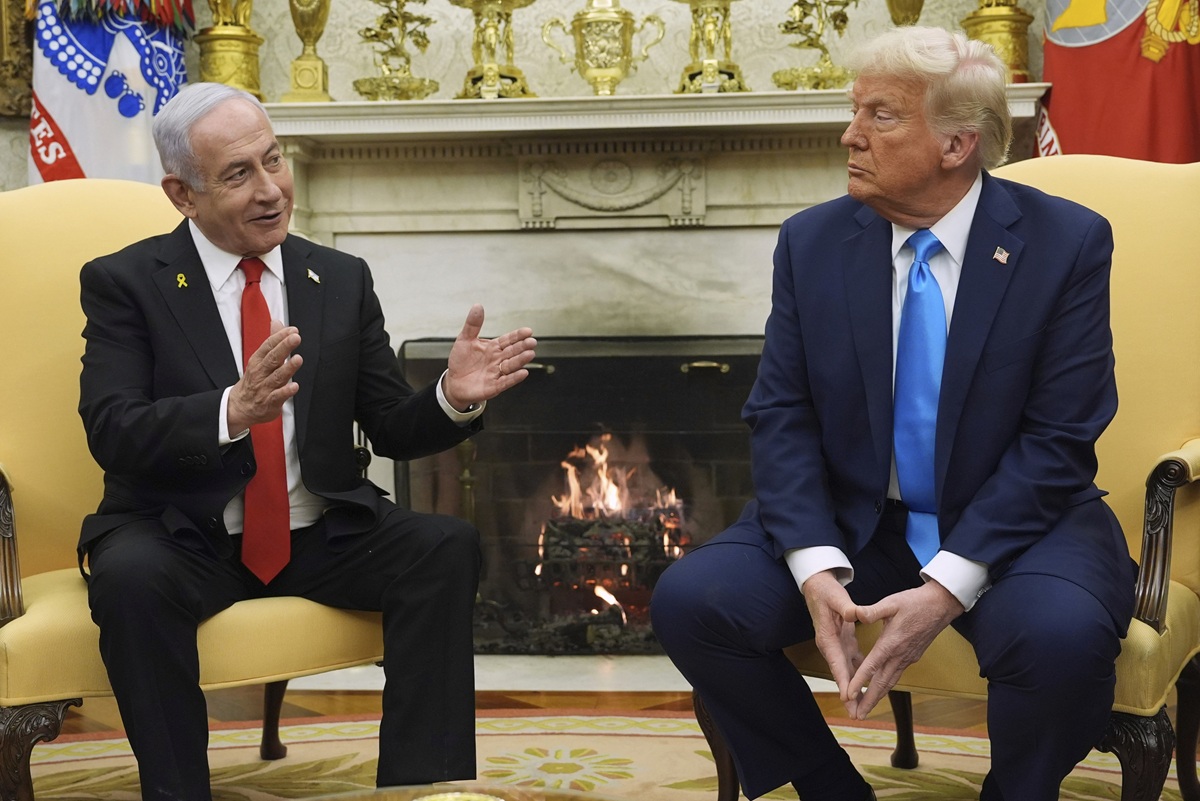
President Donald Trump Recent Notification of Congress that US Military Operations in Iran is Terminated

0

President Donald Trump’s recent notification to Congress declaring that U.S. military operations in Iran have been terminated marks a pivotal moment in an already contentious and legally complex conflict. The statement, delivered through formal letters to congressional leadership, asserts that hostilities which began on February 28, 2026, have officially ended following a ceasefire that has held since early April.

According to the administration, there has been no exchange of fire between U.S. and Iranian forces since April 7, and therefore the conditions that initially justified military engagement no longer exist. At its core, the notification is structured around the requirements of the War Powers Resolution of 1973, a post-Vietnam-era statute designed to limit unilateral executive military action. Under this law, the president must inform Congress within 48 hours of deploying forces and must either secure authorization or terminate hostilities within 60 days.

The Trump administration’s letter arrives precisely as that deadline becomes politically and legally unavoidable, making the declaration of termination as much a constitutional maneuver as it is a military assessment. The administration’s central justification rests on a specific interpretation of what constitutes hostilities.

Officials argue that the ceasefire established in early April effectively paused active combat, meaning the statutory clock no longer applies in the same way. This reasoning allows the White House to maintain that it has complied with the law while avoiding the need to seek explicit congressional authorization for continued engagement or extension. Critics, including several lawmakers and legal scholars, reject this interpretation, arguing that ongoing force posture adjustments, naval blockades, and regional military deployments indicate that hostilities have not truly ceased in any substantive sense.

Politically, the move reflects a familiar tension between the executive and legislative branches over war-making authority. Congress retains the constitutional power to declare war, yet in modern practice presidents have repeatedly initiated and managed military operations under broad interpretations of commander-in-chief authority. This episode is another iteration of that long-running struggle, with the War Powers Resolution serving as both a constraint and a source of ambiguity rather than a definitive limit.

The broader strategic context also matters. The conflict with Iran, which escalated rapidly after coordinated strikes in late February, had already produced significant regional instability, disrupted energy markets, and drawn in allied and proxy dynamics across the Middle East. A ceasefire mediated through indirect diplomatic channels reduced immediate kinetic escalation, but it did not eliminate underlying tensions or the presence of U.S. forces in the region.

As such, the declaration of termination is as much a diplomatic and legal framing device as it is a reflection of battlefield reality. Reactions in Washington have been predictably divided. Supporters of the administration argue that the ceasefire represents a functional end to active warfare and that Congress should focus on long-term authorization frameworks rather than procedural disputes.

Opponents counter that the declaration effectively sidesteps congressional oversight and sets a precedent for redefining war to fit political timelines rather than operational realities. Ultimately, the significance of Trump’s notification lies less in the wording itself and more in its implications for executive power. By formally declaring the termination of hostilities while maintaining a robust military posture in the region, the administration has effectively tested the elasticity of the War Powers framework.

Whether Congress accepts this interpretation or challenges it through legislative or legal means will determine not only the future of U.S.-Iran relations but also the boundaries of presidential war authority going forward.

Nigerian Stock Exchange Reports Strong Financial Performance For Q1 2026 With 70% Income Rise

0

The Nigerian Exchange Group Plc (NGX Group) has reported a strong financial performance for the first quarter (Q1) of 2026, with profit after tax rising by 93.67% to N4.09 billion ($2.98 million), according to its unaudited financial statements.

Total income for the period climbed 70.51% to N7.80 billion ($5.67 million), significantly outperforming the same period last year. The standout performer was transaction fee income, which surged an impressive 189.08% to N5.80 billion ($4.22 million), becoming the largest contributor to the group’s revenue.

The surge in fees highlights how elevated market participation continues to benefit exchange operators amid evolving economic conditions and regulatory improvements. NGX Group’s performance comes at a time when African financial markets are attracting greater domestic and international attention.

In February 2026, the Nigerian stock market emerged as Africa’s best-performing equity market in 2026, marked by rising valuations. According to reports, the NGX delivered a remarkable 34.4% year-to-date return in dollar terms as of February 20, 2026.

This significant performance marked a major jump from last year, when the market ranked fourth on the continent, signaling renewed global confidence in Nigeria’s capital markets.

In recent years, the Nigerian stock market has transitioned from cautious recovery to sustained expansion, positioning itself as one of Africa’s most dynamic investment destinations.

This robust growth is primarily attributed to a marked increase in trading activity on Nigeria’s leading capital market platform. Higher transaction volumes across equities, fixed income, and other instruments reflect renewed investor confidence and improved market liquidity.

Investor sentiment has remained upbeat this year, with continued price rallies and expanding trading volumes signaling confidence in listed companies’ earnings potential. The surge in transactions also reflects growing participation from both institutional and retail investors seeking higher returns amid shifting macroeconomic conditions.

Notably, a new wave of retail participation is reshaping Nigeria’s equities landscape, as young investors are increasingly turning to the stock market to build wealth amid a prolonged market rally and improving access to investment tools.

Amidst the price rally on the Nigeria’s stock exchange which has spurred the interest of many young Nigerians, a critical catalyst behind the recent surge in participation is the emergence of fintech-driven investment platforms designed to simplify equity ownership.

Platforms such as Cowrywise, Bamboo, and Risevest, etc, have streamlined access to stocks through mobile-first interfaces, fractional investing options, and simplified verification processes.

These platforms allow users to begin investing with relatively small amounts of capital, eliminating the traditional barriers that once restricted market participation. Financial analysts increasingly describe the growing youth participation as a generational shift rather than a temporary trend. Younger investors are demonstrating a stronger orientation toward structured, long-term investment strategies compared with previous cohorts.

Outlook

Looking ahead, analysts expect the growth trajectory to remain positive, although not without potential volatility. Sustained investor confidence, improving macroeconomic stability, and ongoing regulatory reforms are likely to continue supporting activity on the Nigerian Exchange. If current trends persist, transaction volumes could remain elevated, further boosting fee-based revenues for NGX Group throughout 2026.

A key driver of this outlook is the continued strength of the naira and its impact on foreign portfolio inflows. Should currency stability hold, Nigeria’s equities market may retain its appeal among global investors seeking high-growth frontier opportunities.

Additionally, expectations of stronger corporate earnings across key sectors—particularly banking, consumer goods, and energy—could sustain the bullish sentiment seen in the early part of the year.

Valuation Fears Shadow Anticipated SpaceX IPO as ‘Mr. IPO’ Warns of Potential Underperformance

0

Anticipation is building around a possible public listing of SpaceX, with some estimates placing its valuation as high as $2 trillion. Yet, beneath the enthusiasm, concerns are emerging from parts of the academic and investment community that the pricing may be running ahead of fundamentals.

Jay Ritter, widely known for his long-running research on initial public offerings, has raised doubts about whether the company can justify such a lofty valuation in the public markets. His caution is not centered on the quality of the business itself, but rather on the gap between operational performance and the expectations embedded in its projected market value.

At the core of Ritter’s skepticism is Starlink, the satellite internet arm widely seen as the primary driver of SpaceX’s future cash flows. The prevailing bullish narrative assumes that margins will expand significantly as launch costs decline and scale improves. Ritter is not convinced that this trajectory is guaranteed.

“I’d be willing to bet against it,” he said, pointing to uncertainty around whether cost efficiencies will materialize at the pace required to support current projections.

The concern is seen as part of a broader tension in equity markets, particularly in high-growth sectors, where valuation multiples are increasingly being stretched by expectations tied to future technological dominance rather than present earnings power.

Ritter said that at a $2 trillion valuation, he would consider shorting SpaceX once it becomes publicly traded. His stance echoes similar reservations he has expressed about Palantir Technologies, where he argues that investor optimism has pushed valuations beyond what near-term financial performance can sustain.

His position aligns with that of Andrew Left of Citron Research, who previously described Palantir’s valuation as “absurd” when announcing a bearish bet against the company.

Ritter’s analysis draws on historical IPO data, which suggests a pattern of underperformance among companies that debut with aggressive valuation multiples. Specifically, firms that went public with inflation-adjusted sales above $100 million and price-to-sales ratios exceeding 40 have, on average, lagged the broader market over the following three years.

That historical precedent is now being applied to SpaceX, where expectations around future growth, particularly in satellite broadband and space infrastructure, are being priced in aggressively.

Ritter was careful to separate his view of the company’s technological strength from its investment profile.

“As far as I can tell, [SpaceX] is a great company,” he said. “But is it worth $1.5 trillion? An awful lot of things have to go right to get the company’s operations and profits to grow into that valuation.”

The debate highlights a recurring dynamic in equity markets: strong companies do not always translate into strong investments when entry prices are elevated.

SpaceX’s case is further complicated by the capital-intensive nature of its business. Even with falling launch costs driven by reusable rocket technology, the company continues to require substantial upfront investment to expand its satellite constellation, maintain infrastructure, and compete globally in both commercial and government markets.

Meanwhile, Starlink faces intensifying competition from terrestrial broadband providers and emerging satellite networks, raising questions about long-term pricing power and margin sustainability.

The broader market backdrop adds another layer of risk. Investor appetite for high-growth, high-valuation companies has historically been sensitive to interest rate cycles. With global rates still elevated and inflation uncertainties lingering, the tolerance for richly valued IPOs could face renewed pressure.

At the same time, speculative momentum in space-related equities has been building, driven by expectations that the sector could mirror the trajectory of earlier technology booms. That optimism has contributed to rising valuations across the industry, even as profitability timelines remain uncertain.

For now, SpaceX remains one of the most closely watched potential listings in modern market history. But Ritter’s warning underscores a more cautious view taking shape among some analysts: that the success of the IPO, if it proceeds, will depend less on the company’s technological achievements. Many analysts believe that the success will depend more on whether investors are willing to sustain confidence in a valuation that assumes near-flawless execution over the coming decade.

Exxon Mobil CEO Warns Oil Market Has Yet to Feel Full Shock of Hormuz Shutdown as Supply Buffers Erode

0
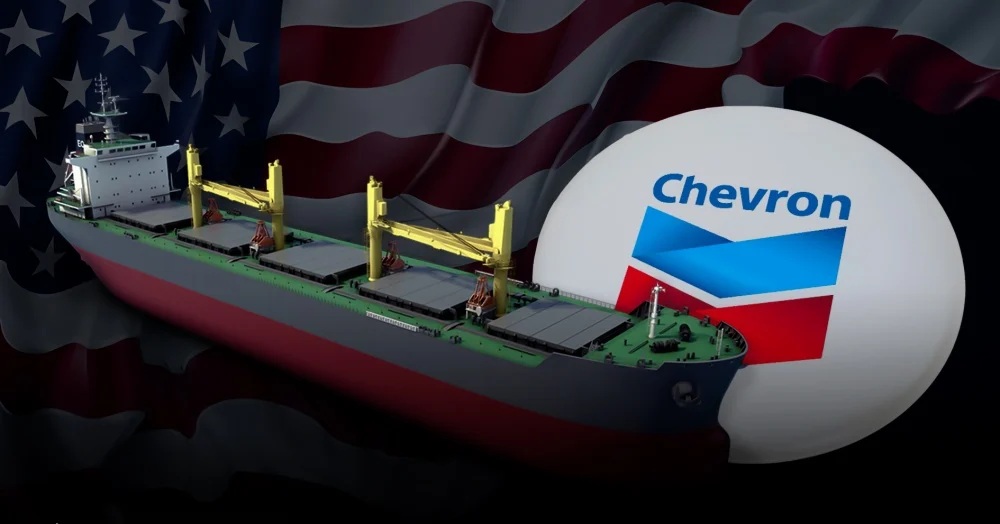
chevron oil tanker
chevron oil tanker

Exxon Mobil chief executive Darren Woods has issued one of the starkest warnings yet about the deepening fallout from the Iran war, cautioning that global energy markets have not fully priced in the scale of disruption caused by the closure of the Strait of Hormuz.

Speaking during Exxon’s first-quarter earnings call, Woods said current oil prices fail to reflect what he described as an “unprecedented disruption” to global crude and natural gas supplies, arguing that temporary buffers have masked the severity of the shock.

“It’s obvious to most that if you look at the unprecedented disruption in the world supply of oil and natural gas, the market hasn’t seen the full impact of that yet,” Woods said. “There’s more to come if the strait remains closed.”

The remarks come as traders, governments, and energy companies struggle to gauge the long-term consequences of a conflict that has destabilized one of the world’s most critical energy corridors. The Strait of Hormuz handles roughly a fifth of global oil trade and a significant share of liquefied natural gas shipments, making it one of the most strategically sensitive chokepoints in the global economy.

While oil prices initially surged after the outbreak of hostilities, markets have since swung violently between fears of prolonged disruption and hopes for diplomatic de-escalation. U.S. crude fell more than 3% Friday to about $101 per barrel, while Brent crude slipped to roughly $108. Even at those levels, Woods suggested the market remains underestimating the potential supply shock.

“These prices are more consistent with historic levels over the past decade rather than the scale of the disruption in the Middle East,” he said.

A key reason prices have not climbed even higher, according to Exxon, is that the market has been cushioned by short-term emergency supply channels. Loaded oil tankers that had already departed the Gulf before the closure continued delivering cargoes during the first month of the conflict. Governments also tapped strategic petroleum reserves, while refiners and traders drew down commercial inventories to stabilize supply chains.

But Woods warned those buffers are finite.

“The disruption has been mitigated by the large number of loaded oil tankers that were in transit during the first month of the war,” he said, adding that reserve releases and inventory drawdowns had also softened the immediate impact. “One of these supply sources will become exhausted as the conflict goes on.”

That warning carries broader implications for inflation, industrial activity, and energy security. Analysts have increasingly cautioned that sustained oil prices above $100 per barrel could reignite inflationary pressures globally, complicating monetary policy at a time when major central banks are already navigating elevated geopolitical risk and slowing growth.

The effects are already visible inside Exxon’s own operations. The company said its Middle East production would decline by 750,000 barrels per day compared with 2025 levels if the Strait of Hormuz remains shut through the second quarter. Refinery throughput globally would also fall about 3% from fourth-quarter 2025 levels.

Woods later told CNBC that roughly 15% of Exxon’s overall production has been affected by the disruption.

The fallout extends beyond oil. Iranian attacks on Qatar’s liquefied natural gas export infrastructure damaged two production lines in which Exxon holds ownership stakes. According to a filing submitted to the Securities and Exchange Commission earlier in April, those facilities accounted for approximately 3% of the company’s upstream production last year.

The LNG disruption is particularly significant because Qatar is among the world’s largest gas exporters, supplying key markets across Europe and Asia. Any prolonged impairment raises concerns about tighter global gas markets heading into peak seasonal demand periods.

Woods also outlined what could become the next phase of the supply crunch even after the conflict eventually subsides. He expects flows through the Persian Gulf to normalize within one or two months after the strait reopens, but warned that the recovery process itself could create additional upward pressure on prices.

“Tanker fleets need to be repositioned, the supply backlog needs to be worked through, and it takes time for vessels to reach their destinations,” Woods said.

That means the market may face a secondary demand surge once hostilities ease. Governments and commercial operators that depleted reserves during the crisis will likely move aggressively to rebuild stockpiles, adding fresh pressure to already strained supply chains.

“Governments and industry will need to refill their strategic reserves and commercial inventories if stockpiles are depleted when the conflict ends,” Woods said. “This will bring more demand to the market and put upward pressure on prices.”

The comments lend credence to a growing concern among energy executives that markets may be underestimating the duration and complexity of the disruption. Unlike previous regional flare-ups, the current conflict has directly targeted shipping routes and export infrastructure central to global energy flows.

Yet investor response has remained relatively muted. Exxon shares were down about 1% in midday trading on Friday and have remained largely flat since the conflict began, even as oil prices have climbed roughly 57% over the same period.

That divergence suggests equity markets remain uncertain whether elevated crude prices will translate into sustained earnings gains for oil majors, especially if operational disruptions offset some of the benefits from higher prices.

The larger issue confronting markets is that the current disruption is no longer being viewed as a short-lived geopolitical shock. With strategic reserves steadily being depleted, commercial inventories tightening, and shipping routes constrained, the conflict is increasingly exposing the fragility of the global energy system.

Woods’ warning signals that the industry believes the most severe economic consequences may still lie ahead.