DD
MM
YYYY

PAGES

DD
MM
YYYY

spot_img

PAGES

Home Blog Page 9

Top Rated Telegram Gambling Sites Are Booming in 2026

0

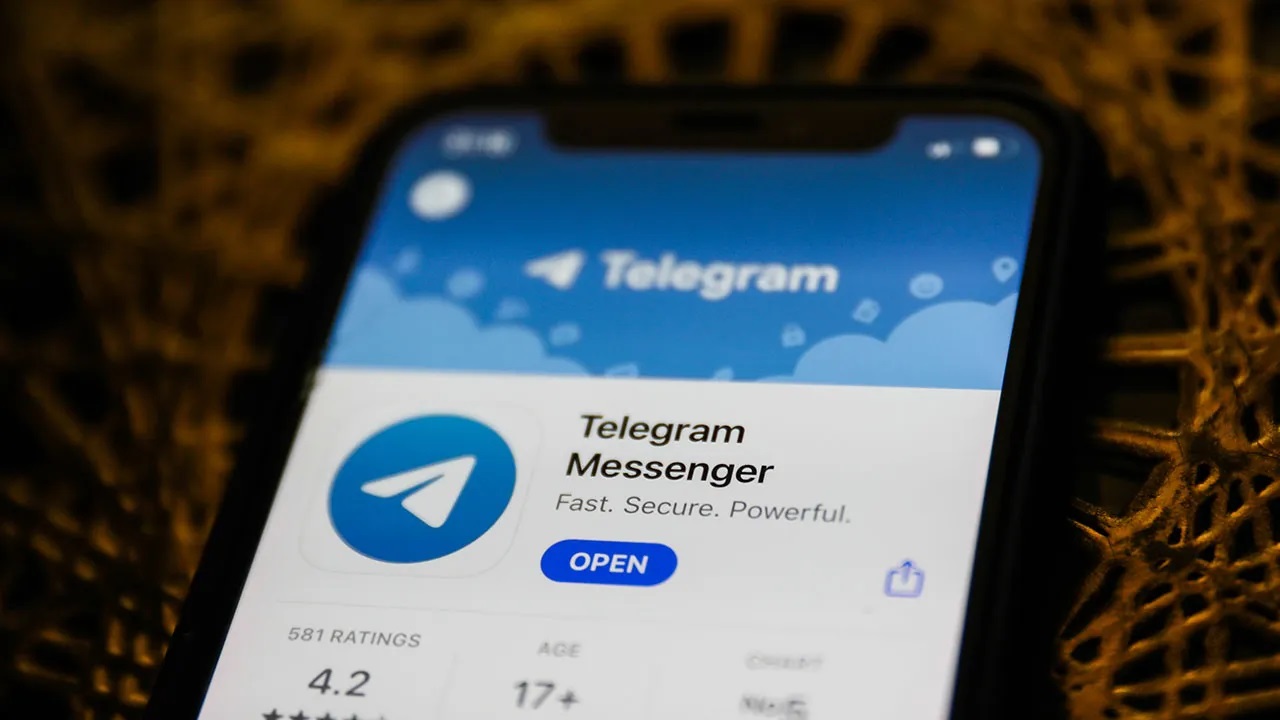
If you told me five years ago that we’d be spinning slots and betting on the Premier League inside a messaging app, I’d have told you to lay off the high-variance progressive games. Yet, here we are in 2026, and the shift is undeniable. Telegram has gone from a simple WhatsApp alternative to the “Wild West” of the iGaming world, and it is actually working better than most of the clunky browser-based platforms I have tested over the years.

The Death of the Browser Casino?

Let’s be real. Logging into a traditional online casino can be a pain. You’ve got the slow-loading banners, the pop-ups asking you to “Opt-In,” and the inevitable mobile lag. Telegram bots bypass all that fluff. You’re basically playing through a streamlined API that handles the heavy lifting. It is fast, it is light on data, and it feels like you are just texting a mate, only this mate happens to have a full suite of Pragmatic Play slots and a live dealer studio.

Most of the top-rated Telegram gambling sites have figured out that players want zero friction. You don’t have to fill out a five-page registration form or wait for a verification email that inevitably ends up in your spam folder. You just click ‘Start’ on the bot, and you are pretty much in the lobby.

Privacy, Crypto, and the Gray Areas

The real driver behind this boom is anonymity. In an era where banks are getting increasingly “judgmental” about how you spend your own money, Telegram offers a layer of separation. Most of these bots are crypto-native, meaning you’re depositing LTC, USDT, or Bitcoin. There is no paper trail on your bank statement that says “Casino Deposit,” which is a huge plus for anyone who values their financial privacy.

However, don’t mistake “privacy” for “unregulated chaos.” While the [suspicious link removed] explains how your data is shielded on the platform level, the casino itself is a different beast. You still need to do your due diligence. I have seen some “pop-up” bots disappear with player balances faster than a dealer can flip a blackjack. If a bot looks like it was built in five minutes and offers a 500% bonus with no wagering requirements, run the other way.

Why the Pros Are Moving to Bots

It isn’t just about the “incognito” mode. The UX (User Experience) is actually superior for a lot of us.

  • Instant Notifications: You get a ping the second your withdrawal is processed or when a new tournament starts.
  • Lower Overhead: Because these operators don’t have to maintain massive website infrastructures, they sometimes pass that back to the player through slightly better cashback deals.
  • Community: A lot of these bots have attached “Chat” groups. It’s fun to see other people hitting big wins (or commiserating over a bad beat) in real-time.

The Honest Truth

Is it all sunshine and massive multipliers? Of course not. The “House” still has its edge, and the speed of these bots can make it very easy to tilt. Since there is no “Logout” button in the traditional sense, the app is always in your pocket, it requires a lot more self-discipline.

I’ve spent a few late nights chasing losses on Telegram, and the convenience can be a double-edged sword. If you’re the type who finds it hard to walk away, the 24/7 accessibility of a bot might be a bit dangerous. Treat it like a tool for convenience, keep your stakes sensible, and don’t let the “hidden” nature of the app make you forget that real money is on the line. 2026 is definitely the year of the bot, but the old rules of bankroll management still apply.
FBI Arrests and Charges 30 Individuals Connected to a Decade-long Insider Trading Scheme 

0

The arrest and charging of 30 individuals in connection with a decade-long insider trading scheme tied to major law firms marks one of the most significant financial crime crackdowns in recent years.

According to federal investigators, the operation involved confidential corporate information being leaked from prominent legal institutions and used to execute highly profitable stock trades ahead of mergers, acquisitions, and other market-moving events. The case highlights the persistent vulnerability of financial markets to insider abuse and underscores the increasing sophistication of white-collar crime networks.

Insider trading has long been a concern for regulators because it undermines the principle of fair and transparent markets. Investors are expected to compete on equal footing, relying on publicly available information when buying or selling securities. When privileged individuals gain access to confidential knowledge before it becomes public and use it for profit, it creates an uneven playing field that damages trust in financial institutions.

Federal prosecutors allege that the scheme operated for nearly ten years, generating millions of dollars through illegal trades based on nonpublic corporate information. What makes this case particularly alarming is the alleged involvement of individuals connected to law firms. Corporate law firms frequently handle sensitive information related to mergers, acquisitions, earnings reports, restructurings, and regulatory matters before such events are announced publicly.

Lawyers and support staff are therefore entrusted with highly confidential material that can dramatically impact stock prices once released. The FBI claims that certain individuals exploited this access by secretly passing information to traders who then positioned themselves ahead of major market announcements. Authorities believe the network operated with remarkable coordination and secrecy. Prosecutors allege that participants used encrypted communication methods, shell accounts, and carefully timed trades to avoid detection.

Some reportedly used relatives or associates to place trades in order to conceal direct involvement. Despite these efforts, investigators were able to piece together patterns of suspicious trading activity over several years, eventually linking transactions to leaks originating from legal professionals and insiders with privileged access.

The case also demonstrates how advances in financial surveillance technology are transforming market enforcement. Regulators such as the FBI and the Securities and Exchange Commission increasingly rely on sophisticated data analytics to detect abnormal trading patterns.

Unusual stock purchases before major corporate announcements often trigger automated reviews, and investigators can now trace communication records, financial transfers, and digital footprints with far greater efficiency than in the past. The sheer scale of this operation suggests that authorities are becoming more aggressive and capable in identifying complex insider trading rings.

Beyond the criminal charges, the scandal raises serious reputational concerns for the legal industry. Law firms depend heavily on client trust and confidentiality. Even the perception that sensitive information could be leaked for financial gain threatens the credibility of institutions tasked with safeguarding corporate secrets. As a result, many firms are likely to tighten compliance controls, increase monitoring of employee communications.

The broader implications extend to Wall Street as well. Insider trading cases often fuel public skepticism about whether financial markets truly operate fairly. Retail investors may feel disadvantaged when institutional actors appear capable of exploiting privileged access for enormous profits. High-profile prosecutions therefore serve both punitive and symbolic purposes: they punish wrongdoing.

The FBI’s sweeping action against this alleged insider trading ring sends a powerful warning across the financial and legal sectors. As markets become more interconnected and information moves faster than ever, regulators are signaling that no institution or individual is beyond scrutiny. The case may become a defining example of how modern enforcement agencies are adapting to combat increasingly sophisticated forms of financial crime.

A Look into First Tokenized Treasury Transaction involving Ripple, JPMorgan Chase and Mastercard

0

The convergence of blockchain technology and traditional finance has entered a new phase with the first tokenized Treasury transaction reportedly involving Ripple, JPMorgan Chase, and Mastercard.

The deal represents more than a technical experiment; it signals that some of the world’s largest financial institutions are now actively building the infrastructure for a tokenized financial system. For years, blockchain advocates argued that real-world assets such as government bonds, stocks, and commodities would eventually migrate onto distributed ledgers. This Treasury deal appears to provide one of the clearest demonstrations yet that tokenization is moving from theory into practical financial execution.

Tokenized Treasuries refer to digital representations of U.S. government debt instruments issued or managed on blockchain networks. Instead of relying solely on traditional settlement systems, ownership and transfer can be recorded instantly on distributed ledgers. The significance of such a system lies in efficiency. Traditional financial settlements often require intermediaries, delayed clearing periods, and substantial operational costs.

Blockchain-based settlement can potentially reduce these frictions by enabling near-instant transactions, improved transparency, and programmable compliance. The involvement of Ripple is particularly notable because the company has spent years positioning its blockchain infrastructure as a bridge between conventional banking and digital assets.

Ripple’s enterprise-focused approach has emphasized cross-border payments, liquidity management, and institutional blockchain integration. Participation in a tokenized Treasury transaction demonstrates how Ripple is attempting to extend beyond payments into broader capital market infrastructure. JPMorgan’s participation carries even greater symbolic importance.

JPMorgan has often balanced skepticism toward public cryptocurrencies with aggressive investment in blockchain technology itself. Through its blockchain division and the development of tokenized payment systems, the bank has repeatedly shown that it views distributed ledger technology as a strategic tool for the modernization of finance. By participating in a tokenized Treasury transaction, JPMorgan effectively validates the idea that blockchain can play a role in high-value institutional markets rather than merely speculative crypto trading.

Mastercard’s role also reflects the growing convergence between payment networks and digital asset infrastructure. The payments giant has increasingly expanded into blockchain-related services, stablecoin integrations, and digital identity systems.

By participating in tokenized Treasury infrastructure, Mastercard appears to be preparing for a future where financial assets, payments, and settlement systems operate in a more interconnected digital ecosystem. The broader implications of the deal could be profound. Tokenized Treasuries are increasingly viewed as one of the most promising applications of blockchain because they combine the stability of government-backed assets with the efficiency of digital settlement systems.

Institutional investors may gain access to faster liquidity, 24-hour markets, and reduced operational complexity. Smaller investors could eventually benefit from fractional ownership and improved market accessibility. However, major challenges remain. Regulatory uncertainty continues to shape the pace of adoption, especially regarding custody, compliance, and cross-border legal standards.

Cybersecurity risks, interoperability issues, and questions surrounding blockchain scalability also remain unresolved. Additionally, governments and regulators will likely move cautiously before allowing large-scale migration of sovereign debt infrastructure onto decentralized or semi-decentralized systems.

Even with these concerns, the collaboration between Ripple, JPMorgan, and Mastercard represents a milestone in financial evolution. The transaction demonstrates that tokenization is no longer confined to crypto-native startups or experimental pilots.

Instead, some of the world’s most influential financial institutions are now directly participating in the construction of blockchain-based capital markets. If this trend accelerates, tokenized finance could fundamentally reshape how value moves across the global economy in the coming decade.

Utility Era Begins With a Bang: BlockDAG Casino Is Live Now! Investors See It as the Smarter Bet Over Doge & Shiba Inu

0

Crypto sentiment has shifted noticeably this week, with meme coins leading much of the retail conversation. Dogecoin is making higher highs with whale buying and stable funding, moving toward $0.13 resistance, break above could target $0.15. Shiba Inu is forming an ascending triangle, with rising burns and Shibarium boosting adoption in the background.

Both are worth watching closely. BlockDAG, though, just delivered something neither of them has: a fully live casino where BlockDAG deposits, daily gameplay, and token rewards create a self-sustaining demand cycle. Ranked as the second most viewed coin on CoinMarketCap and backed by over 4 million x1 mining app users, BlockDAG (BDAG) is not building hype; it is building daily activity.

Dogecoin Price Rally Targets Key $0.15 Breakout

Dogecoin continues to gain traction as the broader crypto rally fuels renewed investor optimism. The recent surge in Dogecoin price reflects growing bullish momentum, with DOGE forming higher highs and higher lows on shorter timeframes. Analysts note that whale accumulation and positive funding rates are supporting a healthier recovery rather than a heavily leveraged rally.

Technical indicators, including MACD, RSI, and the Awesome Oscillator, also point toward strengthening momentum. If the Dogecoin price successfully breaks above the critical $0.13 resistance zone, traders could see a push toward the $0.15 retest in the near term.

At the same time, steady capital inflows and controlled leverage reduce liquidation risks, creating a more sustainable setup. However, failure to maintain momentum could trigger a short-term correction before the next advance in Dogecoin price.

Shiba Inu Price Surge Signals Breakout as Bulls Eye New Highs

The Shiba Inu price is gaining renewed attention after a strong breakout fueled by whale accumulation, rising burns, and expanding ecosystem activity. Market sentiment has turned increasingly bullish as buyers regain control across key support levels.

At the moment, the Shiba Inu price trades near consolidation zones, but technical charts suggest a potential ascending triangle formation. A decisive break above resistance could trigger a larger rally toward higher targets. Burn activity has surged sharply, reducing supply pressure, while Shibarium continues to strengthen its utility and long-term adoption.

Whale outflows from exchanges further reinforce confidence in accumulation trends. Still, volatility remains a factor, and the Shiba Inu price must clear key resistance levels to confirm sustained upside momentum in the next phase.

BlockDAG Just Dropped the Biggest Casino of 2026

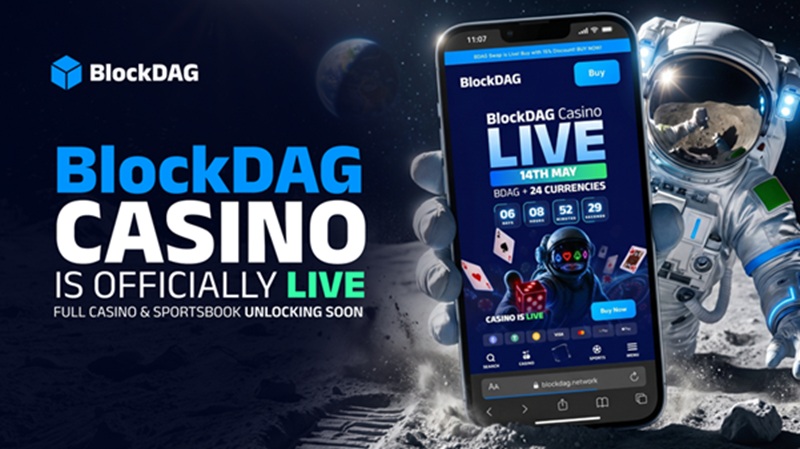
BlockDAG Casino is finally live, and the excitement attached to this launch is completely justified. After months of anticipation, the platform is open, functional, and already doing what it was designed to do: keep BDAG moving. Users deposit BDAG, engage with games, collect rewards paid entirely in BDAG, and return to the cycle again.

There is no exit point built into the structure. Everything feeds back through the token, creating a demand engine that does not depend on new buyers alone to stay active. For the most popular cryptocurrency discussions happening right now, this launch is the headline.

Ranking as the second most viewed coin on CoinMarketCap is not a small achievement. It means that among thousands of assets competing for attention, BlockDAG has found its way to the top of what people are actively searching, reading, and discussing. That kind of visibility is usually a reflection of something real happening underneath the surface.

The conversation around the most popular cryptocurrency increasingly involves utility as a deciding factor. A token that powers real activity inside a product that real users engage with daily is a fundamentally different proposition from one that trades purely on news cycles.

The x1 mining app, which now has over 4 million users and continues to grow, was the first signal that BlockDAG’s user base is unusually large for a project at this stage. The casino is the next layer on top of that community, giving those millions of users a new way to interact with BDAG daily. When a coin ranked second on CoinMarketCap by views also has a live casino feeding daily transactions, the case for long-term relevance becomes considerably stronger.

Conclusion

Dogecoin price targeting a break above $0.13 toward $0.15, backed by whale accumulation and controlled leverage, gives it a cleaner setup than most meme coins right now. Shiba Inu coin price is similarly building, with rising burn activity and Shibarium expanding utility underneath the chart.

Both tell a story of gradual recovery. BlockDAG tells a different one entirely. BlockDAG Casino is now live, functional, and already running the exact demand cycle it was built for: deposits in BDAG, rewards in BDAG, and users returning daily.

With over 4 million x1 mining app users, second place on CoinMarketCap by views, and a casino feeding real transactions, BlockDAG makes the strongest case right now for the best crypto to buy today.

Presale: https://purchase.blockdag.network

Website: https://blockdag.network

Telegram: https://t.me/blockDAGnetworkOfficial

Discord: https://discord.gg/Q7BxghMVyu

Possibility of Diplomatic Breakthrough between US and Iran Sent Shockwaves through Global Financial Markets

0

The possibility of a diplomatic breakthrough between the United States and Iran has sent shockwaves through global financial markets, energy trading desks, and geopolitical circles alike.

Reports that Washington and Tehran are close to finalizing a 14-point memorandum of understanding (MOU) to end the ongoing Gulf conflict have dramatically altered investor expectations around oil supply, inflation, and global stability.

Yet alongside the optimism surrounding a potential ceasefire, another development has triggered controversy: approximately $920 million worth of crude oil short positions were reportedly placed just 70 minutes before news of the negotiations became public. The timing has raised immediate questions about insider knowledge, market manipulation, and the increasingly blurred line between geopolitics and financial speculation.

According to multiple reports, the proposed agreement would formally end hostilities and initiate a 30-day negotiation framework addressing some of the most contentious issues in the conflict. These include reopening shipping lanes through the Strait of Hormuz, easing sanctions on Iran, establishing nuclear inspection protocols, and potentially placing limits on uranium enrichment.

Pakistan has reportedly acted as a mediator in the talks, while both U.S. and Iranian officials continue to negotiate the finer details of the arrangement. The importance of the Strait of Hormuz cannot be overstated. Roughly one-fifth of the world’s oil supply passes through the narrow waterway, making it one of the most strategically significant chokepoints in global commerce.

Since the outbreak of hostilities earlier this year, disruptions in the region have caused oil prices to surge, fueling inflation fears worldwide. Brent crude briefly climbed above $120 per barrel at the height of tensions, reigniting concerns about supply shocks reminiscent of past Middle Eastern crises.

However, the mere prospect of peace negotiations immediately reversed market sentiment. Oil prices plunged sharply as traders rushed to price in the possibility of normalized shipping routes and restored Iranian exports. Financial markets broadly rallied on the expectation that lower energy costs could ease inflationary pressure and reduce recession risks.

This sudden shift in market positioning underscores how sensitive global markets remain to geopolitical developments, especially those involving major energy producers. What transformed the story from a geopolitical development into a financial scandal, however, was the discovery of a massive oil short placed shortly before the news broke.

Analysts from The Kobeissi Letter reported that nearly 10,000 crude oil contracts — representing approximately $920 million in notional value — were shorted roughly 70 minutes before Axios first reported the pending agreement. By the time oil prices collapsed more than 12% later that morning, the trade was reportedly sitting on paper profits estimated at over $125 million.

The timing of the trade has naturally fueled suspicions. Large trades occur in commodity markets every day, but placing such an enormous bearish wager during low-liquidity overnight hours, immediately before a market-moving geopolitical announcement, appears highly unusual. Market participants and online commentators quickly compared the situation to classic insider trading cases, arguing that the trader may have had advance knowledge of the diplomatic breakthrough.

Regulators are now likely to face mounting pressure to investigate whether confidential information leaked from political, diplomatic, or financial circles. At a deeper level, the episode highlights the increasingly interconnected nature of politics, warfare, and financial markets in the modern era.

Geopolitical events no longer unfold separately from financial speculation; instead, they are instantly translated into trades involving commodities, currencies, equities, and cryptocurrencies. In many ways, markets have become real-time betting systems on diplomacy and conflict.

Still, despite the optimism surrounding the proposed MOU, significant uncertainty remains. Iran has reportedly pushed back on several provisions, particularly those involving long-term nuclear enrichment restrictions. Hardliners within both countries may resist compromise, and the agreement itself appears to be more of a framework for future negotiations than a final peace settlement.

Whether the agreement ultimately succeeds or collapses, the market reaction has already demonstrated one undeniable reality: in today’s global economy, information moves faster than diplomacy, and fortunes can be made or lost before the public even learns what happened.