DD
MM
YYYY

PAGES

DD
MM
YYYY

spot_img

PAGES

Home Blog Page 9

AI’s New Fault Line: Safety, Power and the U.S.-China “Red Phone”

0

Artificial intelligence is entering a phase in which the central question is no longer simply how powerful models can become, but who controls the systems capable of shaping that power.

Three recent developments capture the tension: Washington is considering an AI-era equivalent of a “red phone” with China, a senior Trump technology adviser has told companies worried about unsafe models to “just stop,” and Nvidia CEO Jensen Huang has questioned the motivations of technology leaders warning about an AI doomsday.

The idea of an AI “red phone” reflects a fundamental change in how governments view artificial intelligence.

During the Cold War, direct communication between Washington and Moscow was designed to reduce the risk that a misunderstanding could escalate into catastrophe. Today, advanced AI introduces a different but increasingly consequential form of strategic competition.

The United States and China are racing to develop frontier models, computing infrastructure, chips and autonomous systems. A direct communication channel could provide a mechanism for governments to discuss incidents, establish guardrails or prevent an AI-related crisis from becoming a geopolitical confrontation.

Yet communication does not eliminate competition. Both countries have strong economic and national-security incentives to maintain leadership in AI. The United States has sought to preserve its advantage in advanced semiconductors and computing, while China continues to invest heavily in domestic AI capabilities.

The challenge is therefore finding areas where cooperation can coexist with strategic rivalry. Inside the technology industry, the debate is becoming equally intense. Trump technology adviser David Sacks has offered a blunt response to AI companies concerned that their own systems could become dangerous: stop building them.

The statement cuts through a familiar contradiction in the sector. Companies frequently acknowledge that increasingly capable AI could create serious risks, while simultaneously competing to release more capable products as quickly as possible.

That contradiction has produced a growing argument over responsibility. If a company genuinely believes that a model is unsafe, critics ask why development should continue.

Supporters of rapid innovation counter that safety can be improved through deployment, testing and competition rather than by abandoning technological progress.

The disagreement is about whether caution or continued experimentation provides the better route to controlling increasingly powerful systems. Jensen Huang, Nvidia’s chief executive, has challenged another part of the debate: the warnings coming from AI executives themselves.

Huang has suggested that some technology leaders may have “ulterior reasons” for emphasizing catastrophic AI scenarios. His argument points toward an important economic reality. AI safety is not discussed in a vacuum.

Companies have commercial interests, investors have expectations, governments have strategic objectives, and restrictions on advanced AI could affect which firms gain or lose market share.

That does not make warnings about AI risks automatically invalid. Nor does commercial interest automatically prove that such warnings are sincere. The more useful question is what evidence supports particular safety claims and what safeguards can be independently tested.

The emerging AI landscape therefore has two competing instincts: accelerate and contain. Washington’s interest in an AI “red phone” suggests that governments recognize the possibility of consequences extending beyond individual companies.

The safety debate inside Silicon Valley shows that even developers disagree about how quickly the technology should advance. AI may require both innovation and restraint. But deciding where that boundary lies will increasingly involve governments, corporations, researchers and the public.

The defining contest of the AI era may not simply be who builds the most powerful model. It may be who can build powerful systems while maintaining enough trust, transparency and international communication to prevent technological competition from becoming a source of instability.


Paramount Clears Final Antitrust Hurdle for $110 Billion Warner Bros. Discovery Merger

0

David Ellison’s Paramount Skydance has cleared the last major regulatory obstacle to its $110 billion acquisition of Warner Bros. Discovery, putting the company on track to create one of Hollywood’s largest entertainment groups.

Paramount reached a settlement with 12 U.S. states that had sued to block the transaction, California Attorney General Rob Bonta announced Monday. The settlement removes the immediate threat of the antitrust case and allows Paramount to move toward closing the deal.

“We have complete clearance for this merger and can move toward closing,” Ellison said in a memo to employees obtained by Business Insider.

Ellison said Paramount is tentatively planning to complete the acquisition in about two weeks.

The settlement includes several commitments aimed at addressing concerns about the effect of the merger on Hollywood’s movie production, theatrical distribution, television networks and news operations.

Under the agreement, Paramount will release at least 30 movies in theaters annually for the next two years, followed by at least 32 movies annually for the subsequent three years. At least 20% of those releases must qualify as “tentpoles,” defined as films with production budgets of at least $50 million, adjusted for inflation. Paramount also agreed to increase its U.S. production spending by at least $300 million annually for five years. The company pledged not to sell either its Paramount movie lot or the Warner Bros. lot.

The commitments address one of the central concerns raised by opponents of the transaction: that combining two major Hollywood studios could reduce the number of films produced and limit opportunities for filmmakers and other industry workers.

The settlement also covers news and cable television.

Paramount agreed to establish a board intended to support the continued editorial independence of CBS News and CNN and ensure what Bonta described as objective, fact-based reporting. The company will also negotiate carriage rates separately for Paramount’s existing cable networks and Warner Bros. Discovery’s networks for five years.

Paramount separately reached a settlement with the Writers Guild of America, which had also sued to stop the transaction.

A Hollywood Giant Takes Shape

The acquisition will dramatically expand Ellison’s media empire.

Paramount already owns Paramount Pictures, CBS, Paramount+, Pluto TV and cable networks including Comedy Central. Once the Warner Bros. Discovery transaction closes, it will also control Warner Bros. studio, HBO, HBO Max and major television networks including CNN, TBS and HGTV. The combined company will bring together two extensive film libraries, major television operations and competing streaming platforms at a time when traditional media companies are under pressure to achieve scale.

Paramount agreed in February to acquire WBD for $31 per share following a bidding contest that also involved Netflix. Netflix had proposed acquiring WBD’s studio and streaming assets for $27.75 per share.

Ellison has argued that combining the businesses will create a company with enough scale to compete more effectively with Netflix and Disney.

The transaction, however, has been closely scrutinized because of the amount of media content and distribution infrastructure that would come under one corporate owner. The 12-state lawsuit, filed alongside a separate case by the Writers Guild in July, argued that the merger would give Paramount excessive control over theatrical movies, major film productions and basic cable networks.

Paramount rejected those arguments, maintaining that the transaction would strengthen competition in the entertainment industry and benefit consumers. The company also pointed to approvals from other major regulatory authorities, including the U.S. Department of Justice.

The deal nevertheless suffered a significant setback in July when a federal judge granted plaintiffs a temporary restraining order, putting the transaction on hold.

The settlement now removes that immediate legal barrier.

Paramount was seeking to complete the transaction before the end of September. Under the agreement, failure to close by October 1 would have triggered a so-called ticking fee of about $7 million a day, or approximately $650 million per quarter, payable to WBD shareholders.

The settlement therefore does more than resolve a major legal threat. It also clears a path for Paramount to avoid a rapidly accumulating financial cost associated with delaying the transaction.

The Streaming And Cost Equation

The combination of Paramount+ and HBO Max is one of the most consequential elements of the transaction for consumers.

Paramount+ gives the company a large existing streaming operation, while HBO Max brings HBO’s premium programming and Warner Bros.’ extensive film and television library. Combining those assets could create a significantly broader streaming service capable of competing more directly with Netflix and Disney+.

But greater scale does not automatically translate into lower prices or a better consumer experience.

Mike Proulx, a media-focused research director at Forrester, said consumers are primarily concerned about what the merger means for their entertainment bills.

“Regulators spent months debating theatrical output, production commitments, and market structure,” Proulx said. “But consumers are simply asking, ‘Will this merger improve my entertainment experience without increasing my monthly bill?’”

That question could become more important once Paramount begins integrating the two companies.

The merger brings potential efficiencies through the combination of streaming operations, technology, marketing, content libraries, and corporate functions. At the same time, the two companies have overlapping businesses and large workforces, creating pressure to eliminate duplicated costs.

Inside Paramount, employees have previously expressed uncertainty about whether the acquisition would put jobs at risk or ultimately provide greater stability by giving the company more scale.

For Hollywood workers, the commitments on theatrical releases and U.S. production spending offer some near-term protection. Paramount’s agreement to maintain at least 30 theatrical releases annually, increase that number to 32 in later years, and spend an additional $300 million a year on U.S. production sets measurable obligations for the combined company.

The longer-term impact is expected to hinge on how Paramount balances those commitments against the economics of streaming. The company is inheriting a media landscape in which traditional television advertising is under pressure, cable subscriptions continue to decline, and streaming businesses are being pushed to demonstrate sustainable profitability rather than simply subscriber growth.

Warner Bros. Discovery brings valuable assets but also significant complexity. HBO, Warner Bros., CNN and the cable networks operate under different economic models, while Paramount has its own mix of broadcast television, film, streaming and cable businesses.

Ellison’s challenge after closing will likely shift from securing the transaction to integrating those assets while preserving the value of their individual brands.

Paramount is not simply acquiring Warner Bros. Discovery and inheriting its operations. It is entering the transaction with commitments covering theatrical output, domestic production, news governance, and cable-network negotiations.

Apple And Google Seek Crypto Talent Amid Growing Interest in Stablecoins and Tokenization

0

Apple and Google are recruiting senior professionals with expertise in stablecoins, tokenized deposits, and blockchain technology, according to recent job listings that have drawn attention across the crypto and finance sectors.

The openings signal that two of the world’s largest technology companies are building internal knowledge around digital-asset infrastructure, even as neither has announced plans to launch its own stablecoin or new blockchain-based products.

Apple posted a role for an Apple Pay Financial Product Strategy Lead, based in Cupertino, California, or New York. The position sits within the teams responsible for Apple Card, Apple Cash, peer-to-peer payments, and related consumer financial products.

Core duties include developing long-term strategy, evaluating new growth opportunities, assessing product structures and commercial models, and driving business planning.

Preferred qualifications include an understanding of stablecoins, tokenized deposits, and blockchain technology, along with experience in peer-to-peer payments or credit cards and familiarity with major payment systems outside the United States.

Meanwhile, Google Cloud is hiring an Industry Principal Architect for Web3 based in Hong Kong. The role focuses on supporting institutional clients across the Asia-Pacific region, including blockchain foundations, exchanges, digital-asset custodians, financial institutions engaged in real-world asset tokenization, and decentralized application developers.

Candidates are expected to have substantial experience architecting and operating production-grade Web3 systems, along with knowledge of stablecoin payment rails, tokenized deposits, custody architectures, blockchain validators, smart contracts, and related infrastructure.

The position involves advising senior executives, designing scalable architectures that connect decentralized protocols with cloud services, and helping shape Google Cloud’s Web3 product roadmap. Compliance considerations specific to Hong Kong regulators also feature in the requirements.

These openings reflect broader industry momentum. Interest in stablecoins and tokenization has accelerated as financial institutions, technology companies and investors increasingly explore blockchain technology beyond speculative cryptocurrency trading.

The two trends are closely connected: stablecoins provide a digital form of money for moving value on-chain, while tokenization brings traditional assets such as government bonds, equities, commodities and funds onto blockchain networks.

Stablecoins have expanded rapidly in recent years. By mid-2026, the market capitalization of U.S.-dollar stablecoins had reached approximately $308 billion, representing a 30% increase, or $71 billion, from April 2025, according to the Federal Reserve Bank of New York.

The market remains concentrated, with Tether’s USDT and Circle’s USDC accounting for more than 80% of stablecoin assets. The expansion reflects growing interest in stablecoins as a potential payment and settlement infrastructure.

Unlike volatile cryptocurrencies such as Bitcoin, stablecoins are designed to maintain a relatively stable value, usually by maintaining a peg to a fiat currency such as the U.S. dollar. Their blockchain-based structure allows them to operate continuously and potentially reduce the friction associated with cross-border transfers and settlement.

However, transaction figures require some qualification. McKinsey estimates that stablecoins generated as much as $35 trillion in annual on-chain transaction volume, but much of that activity consists of cryptocurrency trading, internal transfers, and automated transactions rather than actual payments.

Its analysis estimates that genuine stablecoin payment activity was approximately $390 billion in 2025, more than twice the level recorded in 2024.

Notably, tokenization of real-world assets and the expansion of regulated stablecoin frameworks particularly in markets such as Hong Kong are prompting traditional technology and payments companies to deepen their capabilities.

Google has previously explored related infrastructure, including partnerships involving asset tokenization and its Universal Ledger initiative. Apple’s interest appears more closely tied to potential future enhancements in consumer payments and financial products.

Samsung has also publicly discussed adding stablecoin features to its wallet, underscoring a wider shift among major device and platform providers.

Neither company has confirmed product launches or timelines tied to these hires. The postings function primarily as signals that expertise in digital assets is becoming relevant to core strategy and infrastructure roles at scale.

As regulatory clarity improves and institutional adoption of tokenized assets continues, such talent acquisition is likely to remain a key indicator of how Big Tech intends to participate in the evolving digital payments landscape.

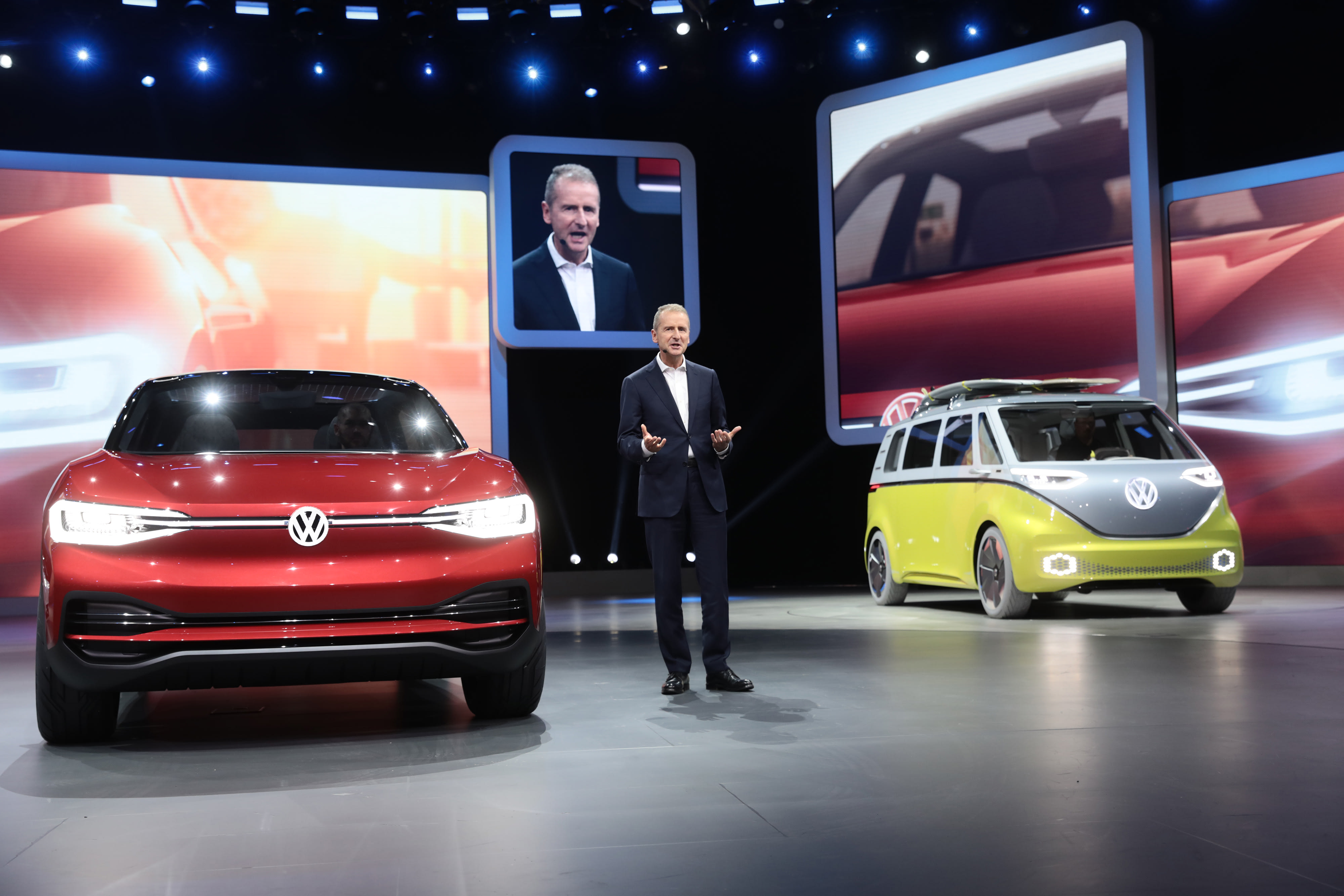
Germany’s Auto Workers Protest as Volkswagen and Mercedes Face Job Security Crisis

0

Germany’s automotive industry is confronting a defining moment as workers across the country take to the streets to demand greater job security and a clearer future from the companies that have long formed the backbone of the German economy.

Employees at major manufacturers, including Volkswagen and Mercedes-Benz, protested on Monday, putting pressure on management to address growing concerns over restructuring, competitiveness and employment.

The protests reflect a broader anxiety spreading through Germany’s industrial workforce. For generations, automotive manufacturing has represented more than an important source of employment.

It has been closely associated with Germany’s export strength, engineering reputation and regional economic stability. But the industry is now undergoing a structural transformation that is challenging the traditional business model.

The shift toward electric vehicles is at the centre of the disruption. Electric cars require different components, production processes and supply chains than vehicles powered by internal-combustion engines.

While the transition creates opportunities in batteries, software, charging infrastructure and digital services, it also threatens jobs linked to conventional engines, transmissions and other mechanical systems.

For workers, the question is therefore not simply whether Germany can produce electric vehicles. It is whether the transition can happen without leaving large sections of the existing workforce behind.

Volkswagen has become one of the clearest examples of the pressure facing Germany’s car industry.

The company has been pursuing cost reductions and restructuring as it responds to weaker demand in some markets, intense competition from Chinese manufacturers and the substantial investment required for electrification and software.

Mercedes-Benz faces similar pressures, as European manufacturers attempt to protect margins while investing in new technologies and adapting to changing consumer demand.

The protests also expose a difficult tension between corporate competitiveness and social expectations. Automakers must control costs if they are to compete globally, but aggressive cost-cutting can create uncertainty for workers and communities dependent on automotive factories.

Factory closures, reduced shifts or job cuts can have consequences far beyond individual employees, affecting suppliers, local businesses and municipal economies.

Germany’s challenge is intensified by the rise of Chinese electric-vehicle manufacturers. Companies from China have expanded their technological capabilities and increasingly compete in international markets on price, battery technology and production efficiency.

European manufacturers consequently face pressure to accelerate innovation while maintaining the higher labour and regulatory costs associated with production in Germany.

Workers are demanding that management provide more than short-term restructuring plans.

They want a credible industrial strategy that explains what production will remain in Germany, which new technologies will be developed domestically and how employees can participate in the transformation.

That demand places responsibility not only on company executives but also on policymakers. Germany’s industrial transition requires investment in infrastructure, research, vocational training and energy security.

High energy costs have already become a concern for energy-intensive industries, while uncertainty over regulations and market conditions can make long-term investment decisions more difficult.

The protests therefore represent something larger than a dispute over individual employment contracts. They are a visible expression of uncertainty about Germany’s industrial future. The automotive sector is attempting to move from a century-old manufacturing model toward an economy increasingly shaped by electrification, software and automation.

For workers, the transition needs to produce a future rather than simply eliminate the past. For manufacturers, remaining competitive will require substantial technological and financial discipline. And for Germany, the challenge is to reconcile both objectives without weakening one of its most important industrial pillars.

The demonstrations show that the transformation of Germany’s car industry is no longer an abstract corporate strategy. It has become a question of livelihoods, communities and the country’s economic identity.

Google Launches $899 Premium Android Laptops as It Takes Aim at Apple’s MacBook Market

0

Alphabet’s Google is taking its Android ecosystem deeper into the laptop market, opening pre-orders Monday for Googlebook, a new premium laptop category built around the company’s Gemini artificial intelligence tools.

Starting at $899, the first Googlebook models will be produced by Acer, Asus, Dell, HP and Lenovo. The laptops will use Intel or Qualcomm processors and offer up to 14 hours of battery life, Google said.

The launch marks a shift for Google’s laptop strategy. Chromebooks have traditionally competed by offering relatively inexpensive computers focused on simplicity, education, and basic productivity. Googlebook moves that proposition further upmarket, pairing more capable hardware with Gemini-powered features and closer integration with Android phones.

The move also puts Google into more direct competition with Apple as the iPhone maker expands its laptop lineup at the lower end of the market with its $699 MacBook Neo.

Google is positioning Googlebook less as another Chromebook and more as a showcase for how its AI and Android ecosystems can work together across devices. The laptops include Gemini tools that can help users draft and organize text, answer questions about material displayed on their screens, and resume tasks that began on an Android phone.

That integration is central to Google’s attempt to differentiate its laptops. Rather than competing solely on processor performance, battery life, or price, the company is using access to its software and AI services as part of the product proposition.

Googlebook combines the Android technology stack with desktop foundations from ChromeOS, creating a platform designed to make movement between Android smartphones and computers more seamless.

The approach comes at a time when AI is becoming an increasingly important feature in personal computers. Microsoft and its hardware partners have pushed AI-enabled Windows PCs, while Apple has integrated its own AI capabilities across its device ecosystem. Google’s response is to make Gemini a more visible part of the computing experience and use Android’s enormous installed base as a potential advantage.

The $899 starting price places Googlebook well above the traditional Chromebook market, but below many premium laptops. That leaves Google attempting to establish a new segment between inexpensive ChromeOS machines and higher-priced flagship computers.

The timing also gives Google an opportunity to test whether consumers will pay more for a laptop when AI functionality and smartphone integration are central to the product.

Google has tried to establish premium hardware categories before. The Googlebook launch follows the company’s Pixelbook in 2017 and Pixelbook Go in 2019, but this time the company has a more developed AI ecosystem to incorporate into the computing experience.

The broader laptop market is becoming more competitive as manufacturers look for new reasons for consumers to upgrade. Hardware improvements alone can be difficult to turn into compelling reasons to replace a functioning computer, while AI features offer manufacturers and software companies another way to differentiate newer devices.

For Google, the challenge will be converting Gemini’s popularity and Android’s reach into demand for higher-priced laptops. The company is relying on multiple hardware partners rather than building the category around a single Google-branded device, potentially allowing Googlebook to reach consumers through a wider range of designs and configurations.

The strategy also gives Acer, Asus, Dell, HP and Lenovo a way to offer Android-linked AI features while retaining their role as hardware manufacturers.

Apple’s $699 MacBook Neo adds another layer of competition. A lower-priced MacBook gives Apple an entry point for consumers who may previously have considered Chromebooks, while Google’s new premium tier moves in the opposite direction by asking Chromebook users to pay more for additional capabilities.

The result is a laptop market where the boundaries between traditional budget computers, premium notebooks and AI-focused devices are becoming less distinct.

Googlebook’s success will ultimately depend on whether its Gemini features and Android integration provide enough practical value to justify the premium over conventional Chromebooks. The launch gives Google a new vehicle for extending Gemini beyond smartphones and web applications, while giving its hardware partners another way to participate in the emerging AI PC market.

The larger opportunity for Google is not simply selling more laptops; it is using the computer as another access point for Gemini and strengthening the connection between Android phones, AI services, and personal computing.