DD
MM
YYYY

PAGES

DD
MM
YYYY

spot_img

PAGES

Home Blog Page 92

Do Kwon Formally Requests That US Judge Cap His Prison Sentence to 5 Years

0

Do Kwon, co-founder of Terraform Labs, has formally requested that a U.S. federal judge cap his prison sentence at five years for his role in the 2022 collapse of the TerraUSD (UST) stablecoin and its sister token Luna, which resulted in approximately $40 billion in investor losses.

This request was filed on November 26, 2025, in Manhattan federal court, ahead of his sentencing hearing scheduled for December 11, 2025, before U.S. District Judge Paul Engelmayer.

The case stems from criminal charges of conspiracy and wire fraud brought by the U.S. Department of Justice, accusing Kwon of misleading investors about the stability of Terra’s algorithmic stablecoin ecosystem.

Kwon pleaded guilty in August 2025 to two counts of wire fraud and conspiracy to defraud, shortly after his extradition from Montenegro where he had been detained since March 2023 on unrelated forgery charges.

Under the plea deal, prosecutors agreed to recommend no more than 12 years in prison, a significant reduction from the statutory maximum of 25 years. However, Kwon’s legal team argues that even this is “far greater than necessary,” proposing five years as “more than sufficient” punishment.

In the court filing, Kwon’s lawyers highlighted: Nearly three years already served in detention, including over half under “brutal conditions” in Montenegro. Kwon’s acceptance of civil penalties, including forfeiture of over $19 million in assets.

The broader context of his remorse, as expressed in a prepared statement during the plea: “What I did was wrong, and I want to apologize for my actions.” Kwon faces a separate trial in South Korea for the same conduct, where prosecutors are seeking up to 40 years.

While bound by the plea to cap their recommendation at 12 years, federal sentencing guidelines for fraud of this scale with massive victim impact could suggest far longer terms—potentially approaching life before caps.

Legal experts anticipate the judge may impose 15–20 years, given Engelmayer’s history of strict sentences in financial fraud cases. The Terra ecosystem imploded in May 2022 when UST—a stablecoin meant to maintain a $1 peg through an algorithmic balance with Luna—depegged catastrophically.

This triggered a death spiral, wiping out $40 billion in market value and contributing to broader crypto market turmoil, including the downfall of FTX. The SEC’s parallel civil case against Kwon and Terraform Labs concluded in 2024 with a jury finding them liable for deceiving investors, resulting in additional fines and bans.

This development echoes other high-profile crypto fraud sentencings, such as Sam Bankman-Fried’s 25-year term in 2024 for the FTX collapse involving $8–10 billion in losses. Kwon’s plea has reduced his exposure compared to a trial, but the request for a lenient cap has sparked debate on X and in crypto communities about accountability for systemic risks in decentralized finance.

Observers note that while Kwon’s case highlights regulatory crackdowns on stablecoin fraud, it also underscores ongoing challenges in extradition and international jurisdiction for crypto executives. Post-U.S. sentencing, South Korean authorities are expected to pursue their case aggressively.

Do Kwon’s request for a five-year prison cap highlights the complexities of sentencing in high-stakes financial fraud cases, particularly those involving emerging technologies like blockchain.

Under federal guidelines, fraud causing $40 billion in losses could theoretically justify sentences approaching life imprisonment, but Kwon’s August 2025 guilty plea to conspiracy and wire fraud limited the statutory maximum to 25 years, with prosecutors bound to recommend no more than 12.

His defense argues for proportionality, citing nearly three years already served including over 18 months in “brutal” Montenegrin conditions, $19 million in asset forfeitures, and a public apology where Kwon accepted full responsibility.

However, Judge Paul Engelmayer’s track record in fraud cases suggests a likely outcome of 15–20 years, emphasizing victim impact and deterrence. A lenient sentence could set a precedent for crediting pre-trial detention in international extraditions.

While a harsher one might reinforce aggressive U.S. prosecution of white-collar crypto crimes. Post-U.S. sentencing, Kwon’s transfer to South Korea for a parallel trial—where prosecutors seek up to 40 years—could invoke double jeopardy challenges, though treaties allow concurrent jurisdiction for cross-border fraud.

He must serve at least half his U.S. term before transfer eligibility, potentially extending his total incarceration to decades and underscoring the risks of multi-jurisdictional accountability for global crypto executives.

Invitation to Tekedia AI Lab’s Vibe Coding Module Today

0

Tekedia AI Lab Co-Learners (October 2025): This is a reminder and a special invitation to join our current November edition class as I teach Vibe Coding today. When you previously took the course, this module had not yet been introduced. We would be delighted to have you join us and experience it.

The Zoom link is available on your Tekedia Institute class board. And in case the timing is short and you’re unable to attend, we will upload the full session video afterward; so you are fully covered.

In this lab, co-learners will master how to plan, design, and deploy on a cPanel environment. Those using AWS, Google Cloud, or other cloud platforms can also deploy there. The current class has not done VPS setup but you know how to do that and can also setup therein. We will work with Google AI Studio, so please ensure you have a Gmail account.

  • Week 3 Session
  • Sat, Nov 29 | 3pm – 6pm WAT
  • Topic: Building AI Agents & Websites via Vibe Coding – Setup, Implementation, Deployment
  • Venue: Zoom (link on your Tekedia class board)

Meanwhile, for those interested in joining our widely subscribed Tekedia AI Lab, the next edition begins on Jan 24, 2026. Our Black Friday Deals significantly reduce the fee. Reserve your seat here.

The Abia State’s Transformation Under Governor Otti and Unlocking Abundance in Trillion-Naira Budget

0

Umu Abia: I want to take this moment to share the good news coming our way in 2026 and beyond. Immediately after the election, His Excellency Dr. Alex Otti invited a group of professionals to help design and architect a roadmap for Abia’s future. I was privileged to be included in the transition council and had the honour of serving as Co-Chair, Economic Transformation.

At that time, the public sentiment was gloomy: Abia was described as broke, unable to pay polytechnic lecturers, unable to keep the state university teaching hospital functioning, with the college of education abandoned and pensioners left without hope. But a comprehensive document was submitted to the new administration, anchored on Governor Otti’s mandate. He improved it, refined it, and embedded his grand execution strategy, a methodical framework built on People, Processes, and Tools.

From day one, Governor Otti understood that Abia was not poor; rather, its wealth was locked away. He began unlocking it systematically. First came the tools, fixing key roads, restoring public infrastructure, repositioning education. Then came the people, clearing pension arrears, paying salaries promptly, restoring dignity. Then the processes, reviving the courts across LGAs, digitizing bureaucracy, and building a governance architecture that works.

Abians responded. Investors responded. Confidence returned. And Governor Otti’s core doctrine came alive: if Aba, the industrial heartbeat, is revived, Aba will revive the rest of Abia. Today, Aba is back: working, producing, exporting, and creating economic velocity that is lifting the entire state. Abia’s IGR, once stuck near N20 billion a few years ago, is projected to hit N100 billion in 2025 and potentially climb to N223.4 billion in 2026!

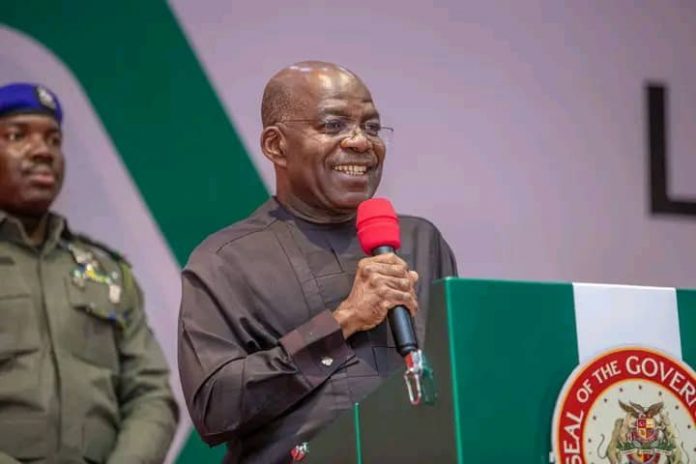
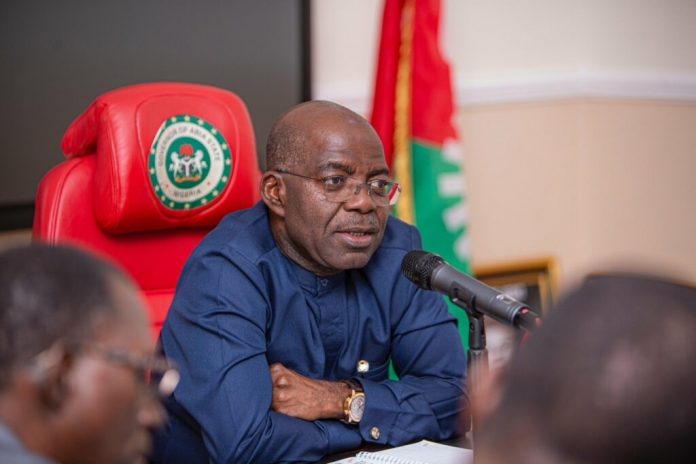
Now, the game is elevating: in the 2026 budget, Abia will cross the N1 trillion mark: “For the first time in the budget history of Nigeria’s South-East, a state has crossed the trillion-naira threshold. Abia achieved that milestone on Tuesday as Governor Alex Otti presented a N1.016 trillion budget proposal for 2026 to the State House of Assembly”. About 80% will go into capital projects; the rest into recurrent spending. Please understand that Abia is ranked #1 in Nigeria by the federal DMO as the most fiscally responsible in Nigeria.

Tagged “Budget of Acceleration and New Possibilities,” the plan marks a dramatic leap in the state’s financial ambition. It is a development many observers see as a pointed signal of how far Abia has travelled under Otti’s stewardship since 2023. The rise to a trillion-naira estimate, they argue, mirrors a growing administrative confidence backed by an economy that has become more active and more attractive to investors over the past two years.

Otti told lawmakers that the 2026 plan is designed to deepen infrastructure, strengthen social services, and lock in the gains of ongoing reforms. The size of the estimate represents a 13 percent rise from the 2025 budget.

A striking feature of the proposal is its aggressive capital allocation. Abia intends to channel N811.8 billion — or 80 percent — into capital projects, while recurrent spending is capped at N204.4 billion, or 20 percent. Otti explained that the state is targeting a point where internally generated revenue, now rising sharply, fully covers recurrent expenditure.

Fellow Abians, fellow Nigerians, Abia is working. Our Governor leads with merit, pragmatism, and honesty. The 2026 budget is tagged “Budget of Acceleration and New Possibilities” because Mr. Governor wants Abia to fund platforms of commerce (social services, infrastructure, etc), accelerate growth to unlock possibilities and abundance for all. May the good Lord bless Abia, Nigeria.

Strategy Reveals Discovery of Something Better Than Bitcoin

0

Strategy, the world’s first and largest Bitcoin treasury company, has set the crypto community buzzing with a bold declaration that perfectly reflects its unshakeable conviction.

In a recent post on X, the firm teased that it had discovered something better than Bitcoin.

It wrote,

“We discovered something better than bitcoin. More bitcoin.”

Backed by numbers, Strategy highlighted its strong financial position, noting that if Bitcoin were to drop to its $74K average cost basis, the company would still maintain a 5.9x asset-to-convertible-debt ratio, which it calls the BTC Rating of its debt. Even at $25K per BTC, the ratio would stand at 2.0x.

This comes as Strategy is facing its most consequential structural risk since its CEO Michael Saylor began transforming the software firm into a leveraged Bitcoin vehicle five years ago.

It is understood that JPMorgan has stated that the company may be removed from major equity indices including the MSCI USA Index. The MSCI USA Index is a major stock market benchmark created by MSCI (Morgan Stanley Capital International). It tracks the performance of large- and mid-cap U.S. companies, which together represent about 85% of the U.S. stock market.

This statement was issued when Bitcoin faced one of its steepest declines earlier this month, plunging as low as $80,563. JPMorgan research note warns that the company’s plunge isn’t just about Bitcoin weakness, it says index rules may now threaten Strategy’s place in mainstream equity benchmarks.

In response to MSCI Index Matter CEO Michael Saylor wrote that Strategy is not a fund, not a trust, and not a holding company. He stated that the company is a publicly traded operating company with a $500 million software business and a unique treasury strategy that uses Bitcoin as productive capital.

“This year alone, we’ve completed five public offerings of digital credit securities $ STRK, $STRF, $STRD, $STRC, and $STRE —representing over $7.7 billion in notional value. We also launched Stretch ($STRC), a revolutionary Bitcoin-backed treasury credit instrument that provides variable monthly USD yield to institutional and retail investors.

“Funds and trusts passively hold assets. Holding companies sit on investments. We create, structure, issue, and operate. Our team is building a new kind of enterprise—a Bitcoin-backed structured finance company with the ability to innovate in both capital markets and software.

No passive vehicle or holding company could do what we’re doing. Index classification doesn’t define us. Our strategy is long-term, our conviction in Bitcoin is unwavering, and our mission remains unchanged: to build the world’s first digital monetary institution on a foundation of sound money and financial innovation”, he stated.

In a subsequent statement, Saylor disclosed that his Strategy is structurally prepared to survive any massive Bitcoin downturn. Speaking in an interview with Grant Cardone, he outlined the stress limits of MicroStrategy’s balance sheet and emphasized that a collapse in BTC would not force the firm to liquidate its holdings.

He explained that, with roughly $8 billion in debt and tens of billions in equity tied to Bitcoin, the company could withstand a decline of up to 90% before its collateral levels become tight. Even in such a severe scenario, he noted that the firm would turn to equity dilution before selling its Bitcoin. “The equity is going to be a loser,” he said, underscoring that shareholders, not BTC reserves, would absorb the blow.

He insisted that liquidation is not an option in any realistic downturn. When asked if MicroStrategy could ever be compelled to unwind its Bitcoin position, Saylor said, “We’re not going to liquidate.” Only if Bitcoin collapsed to zero, a total and permanent disappearance of value would bondholders face default risk”. As he summarized, “If Bitcoin fell to zero tomorrow forever, then the bonds would default.

At current BTC levels, the company noted that it has invested 71 years of dividend coverage assuming the price stays flat. And any $BTC appreciation beyond 1.41% a year fully offsets our annual dividend obligations.

Amidst earlier Bitcoin decline that has sent shivers amongst investors, the crypto asset has experienced a brief rebound, with the overall market rising. Bitcoin, along with most of the top 20 cryptocurrencies, has so far posted gains, signaling renewed bullish momentum.

Bitcoin has rallied above $90,000, fueled by optimism following the recent liquidation of long traders over the past four weeks. The recent rebound demonstrates renewed bullish momentum, supported by recovering global economic activity and strong interest from institutional investors.

As Bitcoin rallies above $90,000, rebounding sharply from last week’s decline, the surge provides Strategy with a timely and strategic advantage, especially in the wake of threats to remove the company from the MSCI index.

Abia Breaks the Trillion-Naira Barrier: Inside the Ambitious 2026 Budgets Reshaping the South-East

0

For the first time in the budget history of Nigeria’s South-East, a state has crossed the trillion-naira threshold. Abia achieved that milestone on Tuesday as Governor Alex Otti presented a N1.016 trillion budget proposal for 2026 to the State House of Assembly, drawing both admiration and scrutiny in equal measure.

Tagged “Budget of Acceleration and New Possibilities,” the plan marks a dramatic leap in the state’s financial ambition. It is a development many observers see as a pointed signal of how far Abia has travelled under Otti’s stewardship since 2023. The rise to a trillion-naira estimate, they argue, mirrors a growing administrative confidence backed by an economy that has become more active and more attractive to investors over the past two years.

Otti told lawmakers that the 2026 plan is designed to deepen infrastructure, strengthen social services, and lock in the gains of ongoing reforms. The size of the estimate represents a 13 percent rise from the 2025 budget.

A striking feature of the proposal is its aggressive capital allocation. Abia intends to channel N811.8 billion — or 80 percent — into capital projects, while recurrent spending is capped at N204.4 billion, or 20 percent. Otti explained that the state is targeting a point where internally generated revenue, now rising sharply, fully covers recurrent expenditure.

Abia expects a combined internal and external revenue inflow of N607.2 billion in 2026, leaving a N409 billion deficit — roughly 40 percent of the entire plan. The size of the gap has raised questions about full implementation, yet analysts familiar with the state’s recent trajectory say Abia is now better placed to borrow and close the financing hole.

The reasoning is that the state’s economic profile has shifted. Investments in infrastructure, security, and digital revenue systems have helped broaden economic activity and improve investor sentiment. Otti reminded lawmakers that Abia’s IGR, once stuck near N20 billion a few years ago, is projected to hit N100 billion in 2025 and potentially climb to N223.4 billion in 2026. The state, in other words, is now seen as bankable.

Where the Money Will Go

Otti laid out an expansive list of spending priorities. Education takes N203.2 billion, or 20 percent of the entire proposal. The plan covers salaries for approximately 15,000 teachers, new model schools, three technical colleges, and ICT labs for more than 100 public schools, along with investments in ABSU, Ogbonnaya Onu Polytechnic, and the Abia State College of Education (Technical) in Arochukwu.

Healthcare receives N149.7 billion. The state intends to supply new equipment to ABSUTH and 23 other public facilities, upgrade seven general hospitals, and expand infrastructure for training more medical professionals.

Roads and transport together consume one of the largest slices. Abia is planning to spend N169.3 billion on road construction and rehabilitation, from the Umuahia–Ikot Ekpene axis to Ahiaeke–Okwuta–Bende and several community-impact routes. Another N11.1 billion is set aside for the transport sector, including N6 billion for 80 more electric buses, after the arrival of the first batch of 20.

The proposal also includes support programmes for entrepreneurs, farmers, youths, women, and vulnerable households, alongside more than N229 billion for housing, urban renewal, environmental cleanup, and cultural development.

Anambra’s Push: A N757 Billion Plan to Keep Momentum

Across the Niger Bridge, Anambra is charting a different path but with equal determination.

Governor Chukwuma Soludo has submitted a N757 billion proposal to the State House of Assembly for 2026. The figure rises 24.1 percent above the state’s 2025 estimate, which stood at N606.99 billion.

Soludo’s proposal allocates N595.3 billion for capital expenditure — about 79 percent of the budget — while N161.6 billion is dedicated to recurrent spending. He told lawmakers that the administration recorded more than 60 percent budget performance in 2025, even in an election year.

The plan, titled “Changing Gears 3.0: Solution Continues,” aims to consolidate the administration’s push toward a more digital and economically diversified Anambra. The budget carries a deficit of N225.7 billion, which the government hopes to finance through a blend of public–private partnerships, concessions, improved internal revenue, and support from financial institutions.

Commissioner for Budget and Economic Planning, Chiamaka Nnake, later told reporters that the state’s 2025 budget had already hit 61 percent performance as of October, and could close the year around 75 percent.

Ebonyi’s “Actualization and Hope” Budget Hits N884.8 Billion

In Ebonyi, Governor Francis Nwifuru is pursuing his own ambitious vision with a N884.868 billion proposal for 2026. His plan — “Budget of Actualization and Hope” — is said to be anchored on the administration’s “People’s Charter of Needs,” a framework built around infrastructure expansion, human capital improvement, and social-sector consolidation.

The estimate includes N749.49 billion for capital expenditure, representing 84.7 percent of the total. Recurrent expenditure is pegged at N135.37 billion. Nwifuru credited the State Assembly for its cooperation, saying the administration had restored stability across key institutions.

“We are building not just roads and schools, but resilient people empowered to be globally competitive,” he said.

A Region Entering a New Fiscal Cycle

Taken together, the 2026 proposals tabled by Abia, Anambra, and Ebonyi show a South-East in transition. All three states are leaning heavily on capital spending, infrastructure upgrades, and rising internal revenue as they attempt to push their economies into a new phase.

Yet Abia stands out this year. Breaking through the N1 trillion ceiling has positioned the state at the center of attention — partly because of its milestone significance, partly because it reinforces a narrative about renewed administrative direction and growing investor confidence.

The N409 billion deficit still looms, and full execution will depend on Abia’s ability to secure concessionary financing and sustain its rising revenue curve. But after two years of steady reforms and visible capital work, the state is no longer seen as a risk-heavy territory. This perception, many argue, is the biggest factor that could help Abia bridge the gap and keep its trillion-naira plan alive.