DD
MM
YYYY

PAGES

DD
MM
YYYY

spot_img

PAGES

Home Blog Page 923

Adeleke’s Defection: What Nigerians Are Saying

0
Osun local government

Governor Ademola Adeleke of Osun State has become the subject of an intense political debate following rumors that he may defect from the People’s Democratic Party (PDP) to the All Progressives Congress (APC). The responses from Nigerians, especially on social media, show just how politically sensitive and emotionally charged such a move would be. More than anything, the public reaction reveals a growing concern about loyalty, political identity, and the credibility of Nigeria’s political leaders.

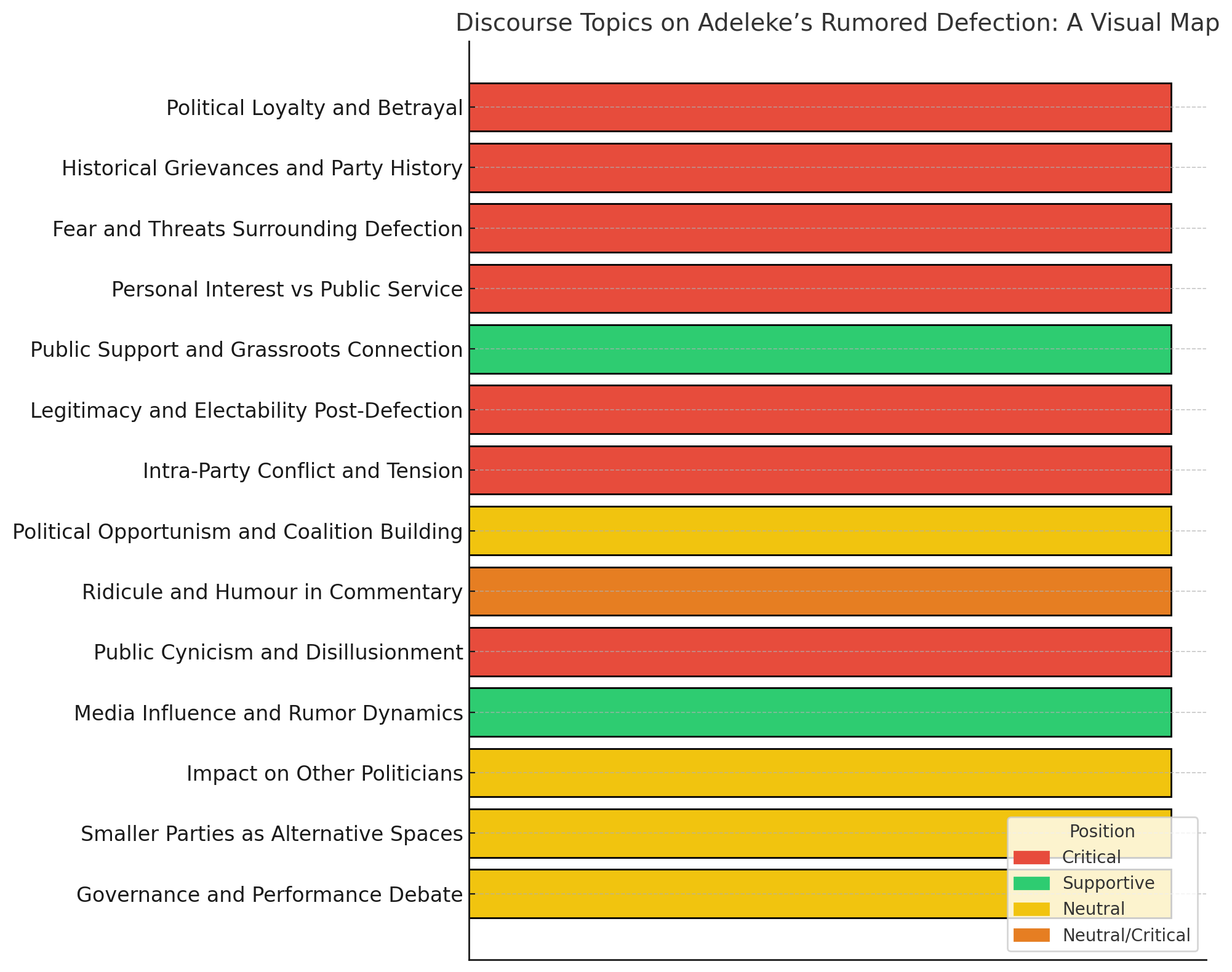
For many, the possibility of Adeleke leaving the PDP feels like a betrayal of those who supported him when it mattered most. One commenter wrote, “Adeleke joined APC for his personal, selfish interest. Osun people won’t follow APC.” This view reflects a widely held belief that Adeleke owes his political career to the PDP and the people who stood with him when the APC, in their eyes, turned its back on him.

Some went further, recalling the political history between the Adeleke family and the APC. One post pointedly said, “APC problem started in Osun when they frustrated Adeleke’s family out of the party. PDP accepted Ademola Adeleke and gave him Senate and governorship tickets.” The message is clear: returning to the APC would not just be politically risky, but morally questionable.

Amid these criticisms, a strong emotional undercurrent runs through the public conversation. A particularly dramatic warning came from Primate Ayodele, who said, “You will lose your life if you join APC.” While extreme, this statement reflects how deeply some Nigerians view political loyalty, not just as strategy, but as a moral and even spiritual obligation.

Yet, not everyone sees Adeleke’s potential move in such dark terms. Some frame it as political realism. As one person suggested with a mix of humor and sarcasm, “APC is in advanced talks to sign marquee player in Osun State. Governor Adeleke, all paperwork has been completed… Here we go soon.” This football-style analogy shows how politics is often viewed like a high-stakes transfer market, less about ideology and more about power and survival.
Source: Social Media, 2025; Infoprations Analysis, 2025

Still, others are torn. “So will Adeleke now become a bad governor after moving to APC?” one user asked, pointing out that the quality of leadership should matter more than party labels. This view challenges the idea that changing parties automatically means changing values, or that political allegiance should define a leader’s competence.

There’s also skepticism about the entire narrative of pressure being placed on Adeleke. One respondent wrote, “Except you’re being paid to tweet that nonsense, it’s sheer foolishness for anyone to conclude that someone is pressuring Demola Adeleke to decamp to the APC.” Here, the writer questions not just the rumor itself, but the credibility of the people spreading it.

Despite the uncertainty, some believe Adeleke remains aware of his people’s preferences. As one person put it, “He remains grounded because he understands his people don’t support the APC. The connection is his strength and I expect him to stand by their choice.” This sentiment reinforces the idea that Adeleke’s political power stems not from party platforms, but from his perceived bond with ordinary Osun citizens.

The debate also brought out the tensions within both major parties. One contributor predicted that, “If Adeleke finally moves to APC, some aggrieved members of both APC and PDP will join ADC. It won’t be significant though.” While such a shift may not immediately change the political map, it speaks to a broader disillusionment with the status quo.

Perhaps the most revealing part of the public reaction is not what people are saying about Adeleke himself, but what they’re saying about Nigerian politics more broadly. Many see this as yet another example of how political actors change allegiances for convenience, not conviction. One comment summed it up: “Just because of the seized LGA funds. He’ll be making the biggest mistake of his political career.”

In the end, this is more than a story about whether Adeleke joins the APC. It’s about what Nigerians want from their leaders. They are asking whether politics should be about service or self-interest, principles or positioning. Regardless of the outcome, this moment has given Nigerians a chance to express their growing demand for transparency, consistency, and leadership that actually listens.


OpenAI to Launch AI-Powered Web Browser, Challenging Google Chrome’s Grip on the Internet

0

OpenAI is preparing to take on one of the tech industry’s most entrenched monopolies—Google’s Chrome browser—with the imminent launch of its own AI-powered browser, three people familiar with the development told Reuters.

The browser, which could debut within weeks, is part of a broader move by OpenAI to expand its footprint far beyond conversational chatbots and into core consumer technology used daily by billions.

If successful, the launch could disrupt a critical pillar of Google’s dominance—user data acquisition—and threaten its lucrative advertising empire, which relies heavily on data harvested from Chrome’s more than 3 billion users worldwide.

OpenAI, which shook the tech world with the release of ChatGPT in 2022, is now pushing into more integrated digital experiences. According to the sources, its upcoming browser is built atop Chromium, the same open-source architecture used by Google Chrome and Microsoft Edge, but is being custom-tailored to embed AI functionality into everyday browsing tasks. That includes an AI agent capable of carrying out actions on users’ behalf—such as filling out forms, booking reservations, or navigating content—directly on the websites themselves.

In effect, OpenAI is positioning the browser as more than just a traditional web tool. Instead of leading users from one link to another, it aims to keep interactions within a native AI chat interface, similar to ChatGPT, offering a fundamentally different approach to how people engage with the internet.

A Data War Brewing

By launching its own browser, OpenAI stands to tap directly into user behavior, the same stream of behavioral data that has helped Google build an advertising empire. Nearly three-quarters of Alphabet’s revenue comes from ads, much of it fueled by insights gathered through Chrome, which remains the default gateway for internet traffic and Google Search queries.

With more than 400 million weekly active ChatGPT users, OpenAI already has a strong base to convert. The integration of ChatGPT-style AI inside a native browser environment could dramatically increase user engagement, while simultaneously allowing OpenAI to access the kind of granular behavioral data previously only available to Google.

While OpenAI declined to comment on the development, sources said the company has opted to build the browser itself, rather than operate as a plugin within an existing browser. The decision, they added, gives OpenAI greater control over the data and user interface—key advantages as it races to stay ahead in the AI arms race.

The browser will also serve as a natural integration point for OpenAI’s “Operator,” an AI agent capable of executing digital tasks autonomously. With access to browser-level data, Operator could evolve into a full-fledged assistant managing entire workflows, from researching a topic to completing purchases or scheduling travel.

An Uphill Climb

However, OpenAI faces a formidable uphill climb. Chrome currently controls more than two-thirds of the global browser market, according to StatCounter. Apple’s Safari trails far behind with 16%, and other Chromium-based browsers like Opera and Microsoft Edge occupy smaller slivers of the market.

OpenAI is not the only player trying to reshape the browser. Perplexity recently launched its own AI browser called Comet. Brave and The Browser Company have also unveiled AI-infused tools designed to navigate or act on behalf of users. But OpenAI’s move may carry more weight given its existing user base and the momentum behind ChatGPT’s brand.

The browser push also follows OpenAI’s foray into hardware. In May, the company acquired AI startup “io,” founded by former Apple design chief Jony Ive, in a $6.5 billion deal. These moves signal a new phase for OpenAI as it seeks to build not just software tools, but entire ecosystems.

Adding to its firepower, OpenAI has brought in heavyweight talent from Google itself. Last year, it hired two longtime vice presidents from Google who were among the original architects of Chrome. The hires hint at long-term ambitions to build a Chrome rival from the inside out.

The Legal Overtones

The timing of OpenAI’s browser push could prove strategic. The U.S. Department of Justice is currently pursuing a major antitrust case against Google’s search dominance and has floated the possibility of breaking up parts of its empire, including divesting from Chrome. In a recent hearing, an OpenAI executive even testified that the company would be interested in acquiring Chrome if such a divestiture occurred.

For now, Google has resisted any move to sell and plans to appeal the monopoly ruling. But OpenAI appears to be preparing to challenge Google’s grip on internet navigation head-on—first with its own tools, and potentially later, with deeper ambitions.

The arrival of an OpenAI browser marks a pivotal moment in the AI era. If it gains traction, it could become the competition that Google needs to keep Chrome – as it might finally crack open Google’s once-impregnable dominance over the modern internet.

Perplexity AI Launches ‘Comet,’ AI Browser to Compete with Google and Microsoft

0

Perplexity AI on Wednesday unveiled Comet, a new AI-powered web browser aimed at reshaping how users interact with the internet and enterprise apps—marking the startup’s boldest step yet into the consumer tech space, as it squares off against giants like Google and Microsoft.

The browser, described by the company as an “intelligence amplifier,” is currently available only to Perplexity Max subscribers at $200 per month. An invite-only waitlist for broader access will gradually roll out this summer.

In a demo shared Wednesday, Comet demonstrated the ability to interact with enterprise tools like Slack, allowing users to pose complex questions via both voice and text, and receive instant answers powered by Perplexity’s AI system. Unlike traditional browsers that direct users to a search engine, Comet brings AI into the browsing layer itself—blurring the lines between exploration, assistance, and action.

“We built Comet to let the internet do what it has been begging to do: to amplify our intelligence,” the company said in a blog post, framing the browser as a next-generation tool for navigating both the open web and corporate platforms.

From Search Engine to Ecosystem

Perplexity made its name with an AI search engine that provides concise, citation-rich answers, distinguishing itself from ChatGPT and other large language model tools by focusing on real-time web results and attribution. That model came under scrutiny in 2023 when Perplexity was accused of lifting content from news organizations without permission or payment. The backlash prompted the company to introduce a revenue-sharing program for publishers, offering them a cut of revenue generated from their content.

Now, with Comet, Perplexity is expanding its offering to include a fully integrated browser, betting that users will pay a premium for a tool that fuses AI capabilities with real-time internet access and workplace productivity.

Growing Ambitions, Soaring Valuation

Wednesday’s launch comes just weeks after reports surfaced that Perplexity was in late-stage talks to raise $500 million at a valuation of $14 billion. The startup, still only a few years old, has attracted serious interest from major tech players: Meta reportedly approached Perplexity for an acquisition earlier this year, though those discussions did not result in a deal.

While Meta’s interest underpinned the strategic value of Perplexity’s AI infrastructure, the startup appears determined to chart its own course—and Comet is now at the center of that strategy.

The release of Comet coincides with growing activity in the AI browser space. OpenAI is preparing to launch its own browser in the coming weeks, aiming to challenge Google Chrome by integrating AI agents directly into the browsing experience. Others, like Brave and The Browser Company, have also launched tools that embed AI into how users search, read, and act on web content.

But Perplexity’s approach is different: Comet is not simply a smarter search bar. It’s being positioned as a hub for personal and professional productivity, leveraging AI to connect across platforms, carry out tasks, and deliver context-rich responses on demand.

In its launch announcement, the company hinted at future upgrades, saying: “We will continue to launch new features and functionality for Comet, improve experiences based on your feedback, and focus relentlessly—as we always have—on building accurate and trustworthy AI that fuels human curiosity.”

It’s too early to conclude whether Comet can compete against entrenched players like Chrome and Edge—or convince users to pay $200/month for an AI-native browser. But with its deep war chest, rising valuation, and expanding vision, Perplexity is no longer just a startup with a clever search engine. It’s now staking a claim to the future of the web itself.

Nvidia Briefly Tops $4tn in Market Value, Solidifying Its Role as the AI Era’s Hardware Powerhouse

0

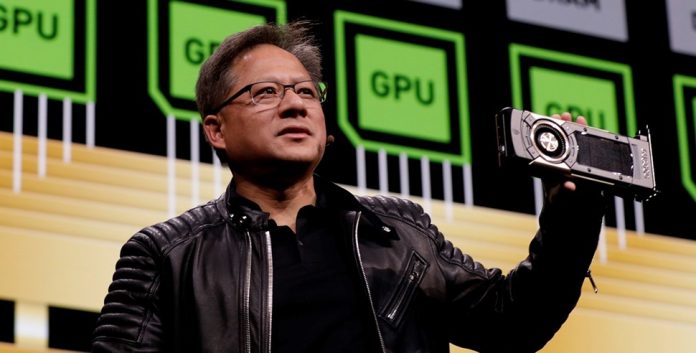
Nvidia added another milestone to its meteoric rise on Wednesday, when its stock briefly pushed the company’s market value above $4 trillion during trading—making it the first company in history to achieve that valuation intraday.

Although it ended the day with a slightly lower market cap of $3.97 trillion, the surge reinforced Nvidia’s position as the world’s most valuable company, surpassing both Microsoft and Apple, which each crossed the $3 trillion mark earlier.

Founded in 1993, the California-based chipmaker is now riding a wave of unprecedented demand for the hardware that powers artificial intelligence systems, particularly the graphics processing units (GPUs) that run large language models like ChatGPT. Since the launch of OpenAI’s chatbot in late 2022, Nvidia has cemented itself as the backbone of the AI revolution, with demand for its chips outstripping supply for months.

The company’s share price has soared more than fifteenfold in five years, and over the last month alone it gained 15%, adding to a 22% increase year-to-date. The sharp rally reflects investor confidence that Nvidia will remain central to the next generation of computing—one driven not by personal computers, but by machines that understand, respond, and act on human language.

From $2 Trillion to $4 Trillion in Months

Nvidia’s trajectory is nothing short of historic. The company passed the $2 trillion threshold in February 2024 and hit the $3 trillion mark in June. Just weeks later, it crossed $4 trillion in trading—an achievement no other firm has accomplished.

Driving that momentum is Nvidia’s dominance in the AI hardware market. Its GPUs are regarded as the gold standard for training and running AI models, giving the company a virtual monopoly over high-performance AI chips. The H100 and newer Blackwell chip architectures are being deployed by virtually every major tech company—including one of Nvidia’s largest customers, Microsoft.

Navigating Headwinds

Nvidia’s rise has come amid ongoing geopolitical tensions and export curbs have stung the company, particularly restrictions on shipping advanced chips to China, one of its biggest markets. In May, CEO Jensen Huang acknowledged that U.S. export restrictions on the H20 chips designed for China would cost Nvidia up to $8 billion in lost sales, underscoring the stakes involved.

“The $50 billion China market is effectively closed to U.S. industry,” Huang said during the company’s earnings call, adding that being locked out of China would be a “tremendous loss” for Nvidia. Despite those obstacles, the company has recovered from earlier concerns that Chinese models like DeepSeek might reduce long-term demand for Nvidia’s chips.

‘Creating a New Industrial Revolution’

Commenting on the significance of Nvidia’s ascent, CNBC’s Jim Cramer, a longtime supporter of the company, called it the driving force of a new industrial revolution.

“Neither Microsoft nor Apple can claim that they’re currently creating a new industrial revolution, like Nvidia can,” Cramer said, suggesting that the era of the personal computer is giving way to the age of AI.

Cramer emphasized the broader implications of Nvidia’s AI dominance, predicting that the company’s technology would enable humanoid robots, self-driving vehicles, and potentially automate white-collar jobs.

“Every single computer with a GPU that’s not as good as Nvidia’s is obsolete,” he said.

He also framed Nvidia as a crucial geopolitical lever, calling it perhaps America’s strongest bargaining chip in its economic standoff with China. While China remains the U.S.’s largest manufacturing partner, Cramer said China needs Nvidia’s products more than the U.S. needs Chinese exports.

“Bottom line? Nvidia, own it, don’t trade it,” he added. “Oh, and see you at $5 trillion.”

The Road to $4 Trillion Valuation

With Nvidia’s AI hardware powering everything from cloud data centers to research labs and enterprise software tools, many analysts see even more growth on the horizon. The company’s influence over how AI systems are built and deployed makes it the central node in the AI supply chain.

While trade disputes and chip bans may continue to present headwinds, the foundational role Nvidia plays in the global AI economy—as both a tech vendor and a symbol of innovation—may prove too vital for countries and corporations alike to ignore.

However, market uncertainties cast doubt on whether Nvidia can sustain this breakneck pace. But with a market cap now flirting with $4 trillion, and a brand synonymous with the future of computing, it’s clear the company isn’t done yet.

What Type of Position Do Nigerian Influencers Hold on FALIT Platforms?

0

Nigerian influencers across business, social, and political spheres frequently use Facebook, LinkedIn and Twitter to comment on a range of issues affecting the nation. But what kind of positions do they actually hold? Are they supportive, critical, or neutral about the socio-economic and political issues they raise?

Analysis of influencer-generated content by Infoprations’ team offers valuable insight. By examining posts  made by business, social, and political influencers across the FALIT platforms, the data reveals a striking trend. The overwhelming majority of influencers, regardless of their domain, adopt a position of criticism. A far smaller percentage offer support, while a notable segment, particularly in the business sector, opt for neutrality or refrain from expressing a clear opinion.

The Critical Majority

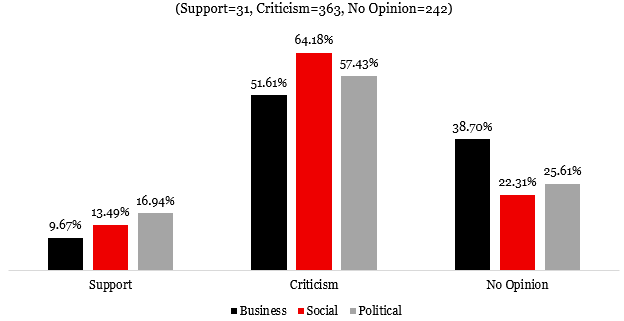
The most dominant disposition across all influencer categories is criticism. Social influencers lead the charge with 64.18% of their posts expressing disapproval or concern about social, economic, or governance-related issues. Political influencers follow with 57.43%, and business influencers contribute 51.61% of critical content.

Exhibit 1: Variety of position

Source: Social media handles, 2025; Infoprations Analysis, 2025

This trend reflects a broader pattern of dissatisfaction and distrust in public institutions, policies, and leadership. Social influencers often serve as cultural commentators and watchdogs, amplifying public frustration and societal grievances. Their high level of criticism underscores their role in holding leaders accountable and pushing for social change. Political influencers, too, use these platforms to critique opposing ideologies, challenge government inefficiencies, and advance alternative political narratives.

Even in the business category, which is typically more reserved, over half of the posts lean critical. This suggests that business voices are not insulated from the country’s challenges and are increasingly speaking out on matters such as economic instability, regulatory uncertainty, and corruption.

Support is Scarce

Supportive content is surprisingly low across all sectors. Only 9.67 percent of business influencers expressed support for the topics they raised, while social influencers followed with 13.49 percent. Political influencers were the most supportive, yet still only 16.94 percent of their posts took a positive stance.

This limited support may reflect the general sentiment within the country. When policy decisions or social developments are viewed as ineffective or misaligned with public needs, influencers are unlikely to offer endorsement. For political influencers, the relatively higher level of support may stem from partisan affiliations or loyalty to political figures. However, even among them, support is clearly the minority position.

The lack of supportive discourse also signals a missed opportunity for government agencies, policymakers, and institutions. When even influential voices hesitate to offer commendation, it raises questions about the visibility, credibility, and impact of positive initiatives. It suggests a gap in public engagement strategies and the need for more inclusive, transparent governance.

Neutrality and Strategic Silence

A significant number of influencers also refrain from taking a clear stance, opting instead for neutral or observational posts. Business influencers are the most reserved in this regard, with 38.70% of their posts reflecting no opinion. Political influencers posted neutrally 25.61% of the time, while social influencers did so in only 22.31% of cases.

This pattern is particularly telling in the business sphere. Business influencers often navigate complex relationships with clients, regulators, and the broader public. Remaining neutral or silent allows them to maintain professional credibility without alienating stakeholders. It also reflects the strategic positioning of business leaders who prefer not to engage directly in politically sensitive debates.

Neutrality among political influencers may suggest cautious political messaging, especially in an environment where statements can be easily misinterpreted or weaponized. Social influencers, whose brand often thrives on emotional and ethical engagement, are least likely to remain silent.

What This Means for the Future of Public Discourse

The FALIT platforms have evolved into important venues for civic engagement in Nigeria. Influencers play a crucial role in shaping narratives, spotlighting issues, and mobilizing public sentiment. The predominance of criticism across all sectors is not merely reactive. It reflects a maturing digital public sphere where expectations are high, and tolerance for failure is low.

However, this critical mass also calls for introspection. While criticism drives accountability, the near absence of supportive voices might lead to a one-sided discourse that overlooks progress or underrepresents nuance. The growing neutrality in the business community raises questions about whether certain sectors are disengaging from important national conversations to protect interests.

As Nigeria continues to navigate complex social and economic challenges, understanding these attitudinal dispositions is vital. Policymakers, activists, and communicators must learn to interpret digital signals from influencers not just as commentary, but as indicators of where trust lies, where engagement is needed, and where new narratives must be built.

Editor’s Note: This article is a product of Infoprations’ Communicative Strategies of Nigerian Influencers Project, 2025. The team includes Abdulazeez Sikiru Zikirullah, Moshood Sodiq Opeyemi, Bello Opeyemi Zakariyha, and Oni Oluwaseun.