DD
MM
YYYY

PAGES

DD
MM
YYYY

spot_img

PAGES

Home Blog Page 928

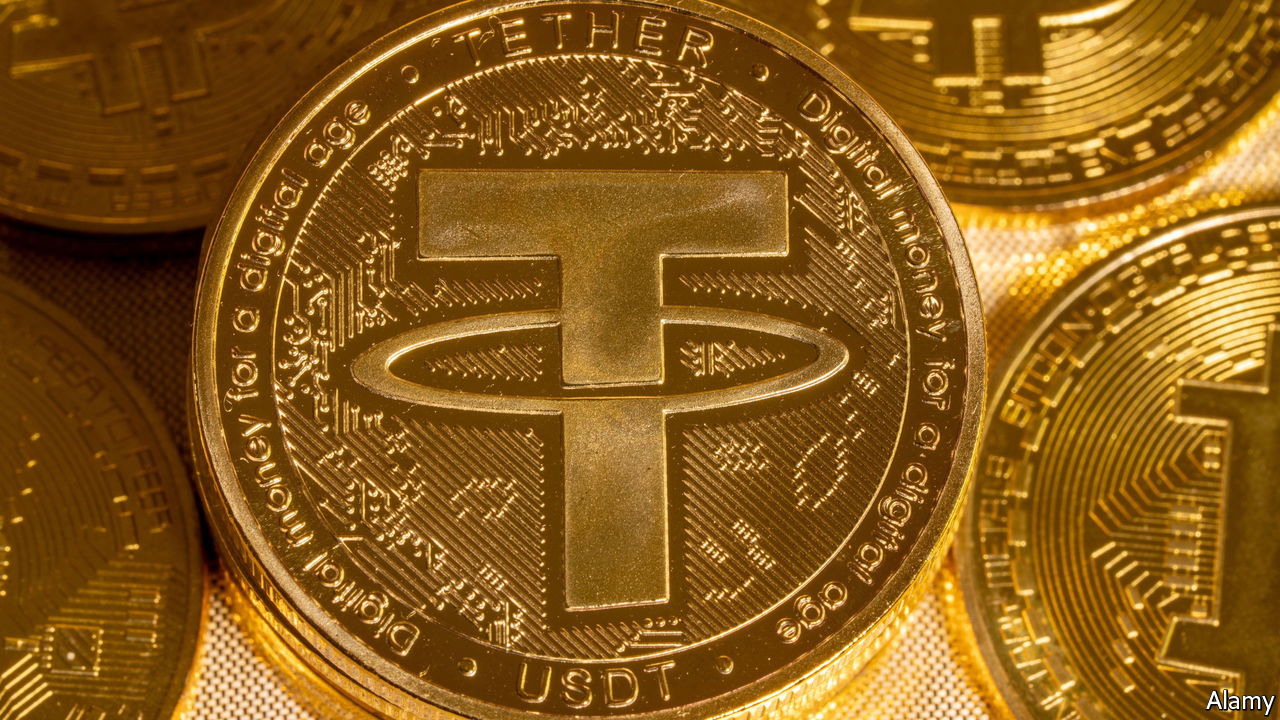
Tether Raising $1B Through SPAC For A Publicly Traded Crypto Reserve

0

Reeve Collins, a co-founder of Tether, and Chinh Chu, a former Blackstone executive, are raising $1 billion through a Special Purpose Acquisition Company (SPAC) called M3-Brigade Acquisition V Corp to create a publicly traded crypto reserve fund. The fund aims to hold a diversified portfolio of digital assets, including Bitcoin (BTC), Ethereum (ETH), and Solana (SOL), focusing on long-term stability and institutional investment. Cantor Fitzgerald is advising on the deal, with Wilbur Ross, former U.S. Secretary of Commerce, and Gabriel Abed, Binance board chairman, serving as vice chairs.

Jaime Leverton, former CEO of Hut 8, will lead the venture. The fundraising is ongoing, and the $1 billion target may change based on investor interest. This initiative reflects growing institutional confidence in cryptocurrencies, aligning with a broader trend of public companies adopting crypto treasuries. The $1 billion SPAC raise led by Tether co-founder Reeve Collins to launch a crypto reserve vehicle has significant implications for the crypto market and highlights a growing divide in how cryptocurrencies are perceived and adopted.

The involvement of high-profile figures like Chinh Chu (ex-Blackstone) and Wilbur Ross, along with Cantor Fitzgerald’s advisory role, signals increasing institutional acceptance of cryptocurrencies. A publicly traded crypto reserve fund could normalize digital assets as a legitimate asset class, attracting traditional investors. The fund’s diversified portfolio (Bitcoin, Ethereum, Solana) may set a precedent for institutional-grade crypto investment vehicles, offering a safer entry point for risk-averse investors compared to direct crypto purchases.

By holding a diversified basket of major cryptocurrencies, the fund could act as a stabilizing force, reducing volatility for included assets. Large-scale institutional buying could also boost liquidity, making it easier for other investors to enter or exit positions. The fund’s focus on long-term stability may counter perceptions of crypto as a speculative bubble, potentially encouraging broader adoption.

A SPAC-backed crypto fund will likely face intense regulatory oversight, especially given Tether’s controversial history with transparency and reserve backing. This could set a benchmark for compliance in the crypto space, influencing future regulations. Success could pave the way for more regulated crypto investment vehicles, while failure might reinforce skepticism among regulators and traditional finance.

Tether, the issuer of the USDT stablecoin, remains a dominant force in crypto markets. This move could strengthen Tether’s ecosystem by linking it to a broader investment vehicle, potentially increasing demand for USDT as a trading pair within the fund. However, Tether’s past regulatory issues (e.g., fines for misrepresenting reserves) could cast a shadow, raising questions about the fund’s credibility.

The fund targets institutional and accredited investors, signaling a shift toward “Wall Street-ification” of crypto. This could marginalize retail investors, who may lack access to such vehicles or feel priced out as institutional money drives up asset prices. Retail investors, who fueled much of crypto’s early growth, may view this as a departure from the decentralized ethos of cryptocurrencies. The involvement of traditional finance heavyweights could alienate those who see crypto as a rebellion against centralized systems.

The fund’s structure, tied to a SPAC and traditional finance, leans heavily centralized, contrasting with the decentralized ideals of many crypto purists. This could deepen the ideological split between those who embrace institutional integration and those advocating for peer-to-peer, trustless systems. Tether itself, as a centralized stablecoin issuer, embodies this tension, and its involvement may amplify debates about centralization in crypto.

The fund’s focus on long-term stability clashes with the speculative trading culture prevalent in crypto markets. While it may attract conservative investors, it could alienate speculators who thrive on volatility, creating a divide between those seeking steady returns and those chasing high-risk, high-reward opportunities. In regions with less developed financial infrastructure, crypto is often a lifeline for unbanked populations or a hedge against currency devaluation.

A Wall Street-backed fund may seem disconnected from these use cases, potentially widening the gap between developed markets (focused on investment) and emerging markets (focused on utility). The $1 billion SPAC crypto reserve vehicle could accelerate institutional adoption and market maturity, but it risks deepening divides between centralized and decentralized visions, institutional and retail investors, and speculative versus stable strategies.
Binance To Delist BSW, ALPHA, KMD, LEVER, and LTO July 4th

0

Binance announced the delisting of Biswap (BSW), Stella (ALPHA), Komodo (KMD), LeverFi (LEVER), and LTO Network (LTO) from its spot trading platform, effective July 4, 2025, at 03:00 UTC. This decision follows Binance’s routine evaluation, which assesses projects based on criteria like development activity, transparency, trading volume, network security, community involvement, and regulatory compliance. Spot trading for these tokens will cease, and open orders will be canceled, with remaining tokens returned to users’ spot wallets. Deposits will stop on July 5, 2025, at 03:00 UTC, and withdrawals will be halted by September 3, 2025. Futures trading for these tokens remains unaffected, though Binance may implement protective measures for contracts without further notice.

The delisting triggered significant market volatility. Komodo (KMD) saw the steepest decline, dropping up to 50% to $0.041 before recovering slightly to $0.068, still down 17%. LTO Network (LTO) fell 42.8%, trading at $0.0176 after a partial recovery, having lost 82.8% over the past year. Stella (ALPHA) and Biswap (BSW) experienced smaller double-digit drops of 17.6% and 15%, respectively, but later rebounded, with ALPHA up 14.7% to $0.0218 and BSW up 28.6% to $0.0284. LeverFi (LEVER) had the mildest dip at 7.8%, recovering to $0.000425, up 8.6%. Notably, BSW showed resilience, with some reports citing a 50%+ surge to $0.035 in certain market conditions.

Binance’s move reflects its push for stricter listing standards to ensure compliance and user protection amid evolving market and regulatory dynamics. Traders are advised to close positions, cancel orders, or transfer tokens to other exchanges or private wallets before the deadlines to avoid potential losses. The delisting reduces liquidity and visibility for these tokens, likely prompting investors to seek alternative platforms, such as decentralized exchanges, for trading.

Delisting from Binance, a high-liquidity platform, restricts trading access, likely reducing trading volume and price stability for these tokens. The immediate price drops—KMD (-50%), LTO (-42.8%), ALPHA (-17.6%), BSW (-15%), and LEVER (-7.8%)—reflect this loss of liquidity and investor confidence. Investors holding these tokens on Binance must transfer them to other exchanges or wallets before the withdrawal deadline (September 3, 2025), potentially incurring fees or facing challenges finding alternative platforms with comparable liquidity.

Lower liquidity can hinder project growth, as tokens become less attractive for new investors or use in ecosystems (e.g., BSW for DeFi swaps, LTO for enterprise blockchain solutions). Binance’s delisting, tied to criteria like low development activity or regulatory concerns, may signal to the market that these projects are struggling, potentially deterring partnerships or community support.

Reduced token value and trading volume could limit project funding, as many rely on token sales or market performance to sustain operations. For example, Komodo’s focus on interoperability or LTO’s enterprise solutions may face scrutiny if funding dries up. Projects like Biswap, which rebounded strongly (+28.6% to $0.0284), may leverage community-driven efforts or DeFi platforms to recover, while others like LTO, with an 82.8% yearly loss, face steeper challenges in regaining trust.

Projects may pivot to DEXs like Uniswap, PancakeSwap (where BSW is native), or others to maintain trading access. However, DEXs often have lower liquidity and higher slippage, which could exacerbate price volatility. Tokens may remain listed on smaller exchanges, but these platforms typically offer less visibility and trading volume, potentially marginalizing the projects further. Investors may move tokens to non-custodial wallets, increasing decentralization but requiring users to manage their own security, which can be a barrier for less technical users.

Binance’s delisting reflects a broader trend among centralized exchanges to enforce rigorous listing criteria amid regulatory scrutiny. Projects failing to meet transparency, compliance, or activity benchmarks face increased risk of exclusion. The delisting may accelerate consolidation in the crypto market, favoring established or high-performing projects while marginalizing smaller or less active ones, widening the gap between top-tier and niche tokens.

Binance’s delisting underscores the power centralized exchanges wield over token visibility and liquidity. CeFi platforms act as gatekeepers, enforcing compliance and performance standards that may not align with DeFi’s ethos of decentralization and open access. This creates a divide where CeFi prioritizes regulatory alignment, while DeFi emphasizes permissionless innovation.

Delisted tokens like BSW, which is tied to the Biswap DEX, may find a lifeline in DeFi ecosystems. PancakeSwap or other DEXs could absorb trading volume, but the lower liquidity and complexity of DeFi platforms may alienate retail investors accustomed to CeFi’s user-friendly interfaces. Projects with strong DeFi roots (e.g., BSW, ALPHA) may fare better post-delisting by leveraging community governance and decentralized infrastructure. For instance, Biswap’s 50%+ surge to $0.035 in some markets suggests robust community support, possibly via DeFi trading. Conversely, projects like KMD or LTO, with less DeFi integration, may struggle to bridge this divide.

The delisting highlights a divide between projects that can recover and those that may fade. Biswap and LeverFi’s quick rebounds (+28.6% and +8.6%, respectively) contrast with LTO’s persistent decline (-82.8% yearly). Factors like active development, community engagement, and DeFi utility determine a project’s resilience. Projects like Komodo (interoperability) or LTO (enterprise blockchain) target niche use cases, which may limit their appeal compared to DeFi-focused tokens like BSW or ALPHA. The delisting widens this divide, as mainstream investors gravitate toward high-visibility projects, leaving niche tokens at risk of obscurity.

Projects with diversified listings or strong DeFi ecosystems are better positioned to weather delistings. For example, BSW’s integration with PancakeSwap and ALPHA’s DeFi lending focus provide alternatives, while KMD and LTO face greater dependency on remaining CeFi exchanges. The delisting aligns with Binance’s strategic shift to prioritize regulatory compliance and high-quality projects amid global scrutiny of crypto exchanges. This could push smaller projects toward DeFi or force them to innovate to survive.

Traders should secure tokens before the withdrawal deadline, explore DEXs or smaller exchanges, and monitor project updates for signs of recovery or pivots. For example, BSW’s community-driven surge suggests potential, while LTO’s prolonged decline warrants caution. Affected projects must enhance transparency, boost development activity, and strengthen community engagement to regain listings or thrive in DeFi. Partnerships with other blockchains or exchanges could also mitigate the impact.

Binance’s delisting of BSW, ALPHA, KMD, LEVER, and LTO amplifies the divide between CeFi and DeFi, as well as between resilient and struggling projects. While some tokens may recover through DeFi or community efforts, others risk fading without swift adaptation. The event underscores the crypto market’s evolving standards and the challenges smaller projects face in a consolidating landscape.

ApeCo Gaining Momentum As ApeCoin DAO Dissolution Governance Voting Progresses

0

The ApeCoin DAO dissolution proposal, initiated by Yuga Labs CEO Greg Solano, passed with 99.66% community support, marking a significant shift in the ApeCoin ecosystem. The proposal, AIP-596 titled “Sunsetting the DAO and Launching ApeCo,” transfers the DAO’s assets, including over a billion APE tokens, to ApeCo, a new Yuga Labs-controlled entity. ApeCo will focus on ApeChain, Bored Ape Yacht Club, and the Otherside metaverse, aiming for streamlined operations and high-impact projects.

Yuga Labs’ Otherside metaverse recently released update videos showcasing new AI-driven user creation tools, enhancing user-generated content capabilities. These tools align with Otherside’s vision as an AI-supercharged, Unreal Engine-powered Roblox-like platform, as hinted in posts on X.  The updates emphasize creative freedom for users, potentially boosting engagement in the metaverse where ApeCoin serves as the primary currency.

No specific details on the AI tools’ functionalities were provided in the sources, but the focus is on empowering builders within the ecosystem. This dual development signals Yuga Labs’ pivot toward efficiency and innovation, though the shift to a centralized ApeCo raises questions about community governance versus operational pragmatism in the Web3 space.

The dissolution of the ApeCoin DAO, a community-governed entity, and the transfer of over a billion APE tokens to ApeCo, a Yuga Labs-controlled entity, marks a pivot away from decentralized governance. ApeCo’s streamlined structure under Yuga’s leadership prioritizes efficiency and high-impact projects like ApeChain, Bored Ape Yacht Club (BAYC), and the Otherside metaverse. This could accelerate development and decision-making but risks alienating Web3 purists who value decentralization.

The 7% price drop of APE to $0.66 post-announcement suggests market uncertainty about centralized control. Investors may worry about reduced community influence, though some see ApeCo as a bullish move for focused execution. ApeCo’s mandate to prioritize ApeChain and Otherside signals a strategic consolidation around Yuga’s core assets. The introduction of AI user creation tools for Otherside enhances its appeal as a user-driven metaverse, potentially increasing adoption and utility for APE as its currency.

These tools, leveraging AI and Unreal Engine, position Otherside as a competitive player in the metaverse space, akin to a Web3 Roblox with BAYC integration. Increased user-generated content could drive engagement, attracting creators and players to Otherside, which may bolster APE’s long-term value if adoption grows. However, success hinges on the tools’ accessibility and functionality, details of which remain sparse.

The 99.66% vote in favor reflects strong community support for Yuga’s vision, likely driven by frustration with the DAO’s inefficiencies (e.g., high operational costs and slow decision-making). However, centralizing control under ApeCo could reduce community input, potentially stifling the participatory ethos of Web3. This trade-off between efficiency and decentralization is a critical tension.

If ApeCo fails to deliver on promised high-impact projects or lacks transparency, it could erode trust among token holders and BAYC collectors, who have significant stakes in the ecosystem. Yuga’s move reflects a broader trend in Web3 where projects balance decentralization ideals with practical needs for speed and scalability. The ApeCoin DAO’s dissolution could inspire other projects to reassess governance models, especially if ApeCo succeeds in driving value for APE and Otherside. Conversely, it may fuel criticism from decentralization advocates, impacting Yuga’s reputation in the crypto community.

Many community members, including influential voices like @Rahim_mahtab and @BoredApeGazette, view the DAO’s dissolution and ApeCo’s formation as a positive reset. They argue the DAO was inefficient, with high costs (e.g., millions spent on operations) and bloated processes that hindered progress. ApeCo’s centralized approach is seen as a way to streamline efforts, focus on high-value projects like Otherside, and restore confidence in Yuga Labs’ leadership.

The Otherside AI tools are broadly celebrated as a step toward making the metaverse more interactive and creator-friendly. Enthusiasts see this as a way to differentiate Otherside from competitors, potentially driving APE adoption and BAYC’s cultural relevance. This group prioritizes results over ideology, believing Yuga’s track record with BAYC justifies trust in a more controlled structure. They view the 99.66% vote as a mandate for change.

A smaller but vocal group, exemplified by users like Lanzer on X, expresses concern about centralization. They argue that dissolving the DAO undermines the Web3 principle of community ownership, handing control to Yuga Labs and potentially marginalizing smaller token holders. Questions about ApeCo’s transparency and accountability persist, with fears that Yuga could prioritize profits over community interests.

While the AI tools are less controversial, some skeptics question whether they’ll deliver meaningful value or remain superficial features. Without detailed specs, critics worry about hype outpacing execution, a recurring critique of Yuga’s ambitious promises. This group values decentralized governance as a core tenet of Web3 and sees ApeCo as a step backward, potentially alienating the community that fueled ApeCoin’s early success.

The divide reflects a fundamental tension in Web3: idealism versus pragmatism. Yuga Labs’ decision to prioritize efficiency through ApeCo and innovate with AI tools in Otherside suggests a bet on execution over ideological purity. If ApeCo delivers on its promises—robust ApeChain development, a thriving Otherside metaverse, and increased APE utility—the community may rally behind the new structure, and the price dip could reverse.

However, failure to communicate transparently or deliver tangible results could deepen skepticism, especially among decentralization purists. The AI tools’ success will depend on their ease of use and ability to attract creators, which could solidify Otherside’s position in the competitive metaverse landscape. Meanwhile, the broader Web3 space will watch closely, as Yuga’s experimentRezultado de la búsqueda.

Meta’s Talent Strategy In AI Era, And Lessons from Dangote’s Accumulation of Capabilities [Podcast]

0

I examine Meta’s strategic partnership with Scale AI to enhance both infrastructure and expertise in AI. By investing in Scale AI—renowned for its data annotation services—Meta secured critical data capabilities and opened doors to elite engineering talent. Simultaneously, Meta aggressively recruited top researchers and engineers from Scale AI and other companies, enticing them with competitive offers and compelling opportunities to work on high-impact AI initiatives. 

This dual strategy—capital investment combined with talent acquisition—enables Meta to integrate Scale AI’s strengths, accelerate AI-driven innovation, and strengthen its position in the competitive AI landscape. 

In this podcast, I connect the Meta’s talent acquisition playbook to the broad Accumulation of Capabilities construct, and use the Dangote Group to explain how acquiring and deepening capabilities can build competitive advantages in firms, and anchor long-term value creation.

Podcast slide is here. For the video, see How To Listen to Tekedia Daily below.

About Tekedia Daily

To read our short introduction of Tekedia Daily – podcasting revelations on business, click here.

How To Listen to Tekedia Daily

At Blucera, home of Blucera WinGPT (AI personal educator and coach), eVault Legal Custodial services (store vital personal, family and business documents securely), business tools to grow enterprises, and global archives of Tekedia courses and libraries, Ndubuisi Ekekwe podcasts every week day. Some Tekedia Institute programs offer bonus access to Tekedia Daily or one can register at Blucera for the podcast.

The ‘New Deal’ for Stablecoin : Bitcoin trajectory and the future of Crypto replacing Gold as a backer of Sovereign Currency.

0

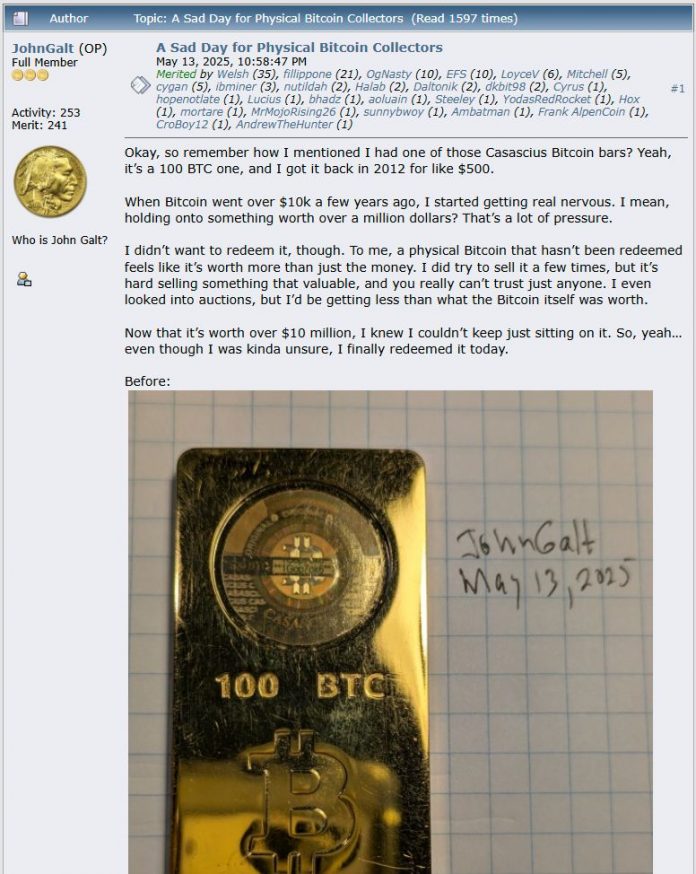
In the digital age of cryptocurrency, the Casascius Coin stands out as a rare and tangible relic. Introduced in 2011 by Utah-based software engineer Mike Caldwell, these physical Bitcoins bridged the gap between the virtual and physical worlds—embedding real Bitcoin value into a handheld, brass coin.

Here we see the journey of indecision between 2012, when John Galt bought a 100BTC Casasius Coin for $500 USD and May 2025, when he sold it for $10 Million.

There is still some subtle anxiety in his decision to sell it when he did.

9ja Cosmos don’t take a position on Bitcoin, neither as a BTC maxi, nor as a sceptic. A lot has to do with global perception of exactly what liquidity is.

At the moment FIAT is still king from a liquidity perspective.

You go into many online sites with some focus on crypto and Web3, and you will see Coinmarketcap, Coingeko, Trading View, Coinbase, and Yahoo Finance telling you the value of Bitcoin in US Dollars.

You pick up a quick entry level job anywhere, from the Diner in Chicago to the Pub in Ireland to the open-air market in Lagos, Nigeria, they pay you in local currency, there are no crypto options.

FIAT currently is still dominating markets globally.

But things are changing.  The product segment that includes debit/credit cards like Chainlink, MetaMask, Holyheld, Sora, Crypto.com, Nexo, and Gnosis are becoming more numerous and the product segment is expanding.

They allow people to hold crypto on account but allow them to pay for everyday services with either MasterCard or Visa as partners, handling the PoS (Point of Sale) payment journey. They look like any regular Debit or Credit Card.

These draw in all sorts of people that don’t actually need to have niche knowledge about Blockchain or Web 3, but they may struggle in economies like Nigeria where trade among the masses is often done with cash changing hands, rather than card payments.

Perhaps one day we will reach the point where Bank of America, Goldman Sachs, Wells Fargo, Royal Bank of Canada, HSBC, Mitsubishi UFJ Financial Group, CitiGroup, or indeed First Bank or Guaranty Trust Bank need to clarify exactly what a Dollar or a Naira means, by illustrating  its value in Bitcoin?

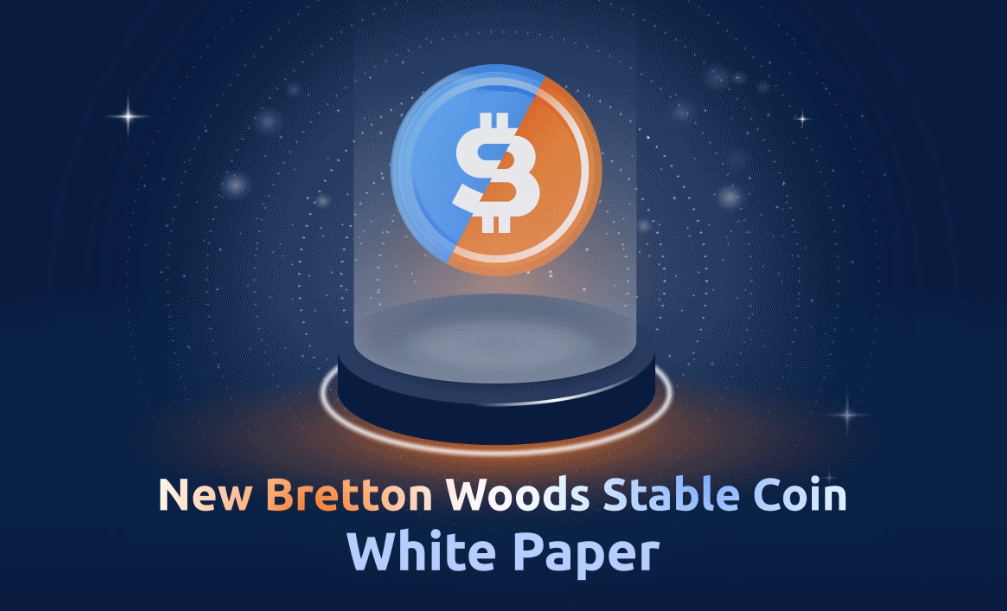
While Nigeria contemplates an archaic and obsolete monetary future with an UNstablecoin backed by Naira, the US is already securing the future of the $USD by creating a STABLEcoin that backs it with Bitcoin.

This is the endeavour of  New Bretton Woods (NBW) Labs, formed by several Harvard students and alumni, leveraging membership of the Harvard Innovation Labs.

Yes, it is Bitcoin that becomes guarantor for the US Dollar, not the other way around!

Did John Galt pick an opportune time to sell? Or is he due for a disappointment of monumental proportions?

A liquidity tipping point away from FIAT may be on the Horizon.

New Bretton Woods is here, while old Bretton Woods, and the Gold Standard are long dead.

John Galt’s legacy as a visionary or strategic blunderer remains uncertain.

Only time will tell.

Credit : Veronica Bridgewater, 9ja Cosmos Ambassador focusing on LinkedIn presence.

9ja Cosmos is here…

.9jacom Domains

.det0x Domains

Detoxant 3 Tokenized Artworks

Detoxants – FiendYard Fruit & Veg

Opaque Emotion Pathways Tokenized Artworks

Preview our Sino Amazon/Sinosignia releases (Ente)

Visit 9ja Cosmos LinkedIn Page

Visit 9ja Cosmos Website

Follow 9ja Cosmos on X