DD
MM
YYYY

PAGES

DD
MM
YYYY

spot_img

PAGES

Home Blog Page 940

Trump’s $3tn Domestic Megabill Clears Congress in Razor-Thin House Vote, Heads to His Desk

0

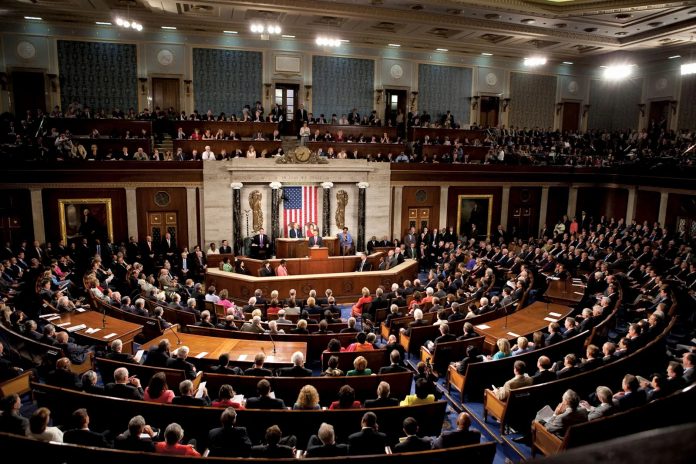
President Donald Trump is on the verge of achieving one of his most consequential legislative victories yet, after the House of Representatives on Thursday narrowly passed his sweeping tax-and-spending package—dubbed the “One Big, Beautiful Bill”—marking a historic advance for his domestic agenda.

The bill passed by a vote of 218-214, with two Republicans—Reps. Thomas Massie of Kentucky and Brian Fitzpatrick of Pennsylvania—joining every Democrat in voting against it. The narrow approval came after intense, last-minute pressure from Trump and House Speaker Mike Johnson, R-La., who spent days trying to wrangle skeptical GOP lawmakers amid growing concerns over the bill’s deficit implications.

The legislation, which includes trillions of dollars in tax cuts, heightened immigration enforcement spending, and large-scale Medicaid cuts, passed the Senate earlier this week by a single vote—51-50—requiring Vice President JD Vance to break the tie. Republicans hold only slim majorities in both chambers.

A Late-Night Push to Flip Dissenters

The House vote followed a dramatic overnight push to flip a handful of GOP holdouts who had initially blocked a procedural vote on Wednesday night. The impasse delayed floor action for several hours until four of the five Republican defectors ultimately reversed course by 3:30 a.m. ET Thursday, allowing the final vote to proceed later in the day.

According to White House aides, Trump had been personally involved in lobbying members, making calls, and issuing public warnings that failure to pass the bill would be a “betrayal” of the conservative base. The president had long set a July 4 deadline for final passage, tying the bill’s success to national pride and political momentum ahead of the election season.

Sweeping Overhaul and Deep Cuts

The legislation enshrines large tax cuts aimed at both individuals and corporations, expands border security spending, and imposes strict new work requirements on Medicaid eligibility. But it has drawn sharp rebukes from Democrats, who argue it will deepen inequality and leave millions of low-income Americans without access to healthcare and basic support services.

House Minority Leader Hakeem Jeffries, D-N.Y., led the opposition with a marathon eight-hour, 44-minute floor speech that broke the chamber’s record for the longest in history. Jeffries accused Republicans of waging a “chainsaw” campaign against core safety-net programs, warning that the legislation would devastate the most vulnerable Americans.

Deficit Concerns and Political Calculations

The Congressional Budget Office (CBO) projects that the bill will add $3.4 trillion to the federal deficit over the next decade—an alarming figure that has drawn concern even from some fiscal hawks within the Republican Party. The national debt currently sits at over $36 trillion. The White House has dismissed the CBO’s projections, claiming the agency’s analysis was politically motivated.

House Republicans maintain that the package will drive long-term economic growth by reducing what they label as “waste, fraud, and abuse” in entitlement programs and by encouraging work and private investment.

More than 71 million Americans are currently enrolled in Medicaid. The proposed changes could see millions dropped from coverage in the coming years. Republicans argue that the new work requirements and tighter eligibility criteria are aimed at making the system more efficient and sustainable.

Tariffs Looming, Economic Uncertainty Grows

The bill’s passage also comes amid growing global uncertainty about Trump’s economic strategy. The president is set to reintroduce a sweeping series of “reciprocal” tariffs on major trading partners by July 9—a move economists warn could further strain U.S. trade relationships and global supply chains.

Investors and foreign governments are closely watching how Trump’s legislative and trade ambitions will collide in the weeks ahead, especially with major changes to healthcare, tax law, and border policy now poised to be signed into law.

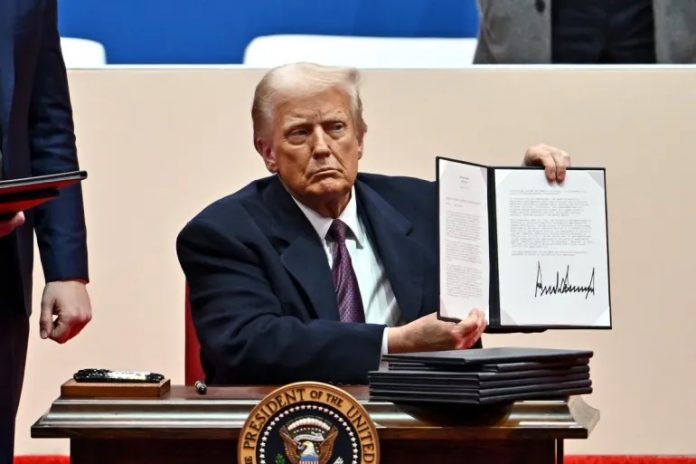
Trump is expected to sign the bill in a major White House ceremony before July 4, positioning it as a centerpiece of his reelection campaign and a defining contrast to what he has called “years of bureaucratic failure in Washington.”

If signed into law, the “One Big, Beautiful Bill” would mark the most comprehensive overhaul of domestic policy in a generation, reshaping the role of government in everything from health care and immigration to taxes and trade.

Nigeria’s Fiscal Deficit Set to Rise to 4.7% of GDP in 2025, Says IMF

0

Nigeria’s fiscal deficit is projected to widen to 4.7% of GDP in 2025, reversing a modest improvement seen in 2024, the International Monetary Fund (IMF) has warned in its latest Article IV report.

The expected deterioration underscores deep-seated vulnerabilities in Nigeria’s public finance structure, still heavily exposed to oil revenue volatility and compounded by growing expenditure pressure.

The IMF’s projection is markedly higher than the 3.9% deficit outlined in Nigeria’s 2025 federal budget, revealing a likely revenue shortfall as global oil prices remain under pressure and domestic production underwhelms.

Already, the Fund estimates that budget assumptions—set around 1.78 million barrels per day at $77 per barrel—are far too optimistic. Instead, IMF staff forecast lower production levels around 1.45 mbpd and a global oil price average of $70 per barrel. This would severely undermine Nigeria’s federally retained earnings and constrain overall budget implementation.

In 2024, Nigeria managed to reduce its fiscal deficit from 4.8% of GDP in 2023 to 4.1%, largely due to exchange-rate-induced gains in oil-related revenue and improved non-oil tax collection. However, those gains are proving unsustainable in 2025, with the country likely to slide back into deeper deficit territory. Notably, interest payments already consume a staggering over 100% of federal revenue, according to the IMF’s debt sustainability analysis, raising fears about future borrowing and debt rollover risks.

Spending, Revenue Mismatch Persists

On the spending side, government wage bills and pension liabilities are projected to grow by double digits, especially following new wage awards and security force recruitment. At the same time, Nigeria’s fuel subsidy removal—hailed as a fiscal reform milestone—is yielding lower-than-expected savings. While the government expected subsidy savings equivalent to 2% of GDP in 2024, the IMF said only N1.1 trillion (around 0.6% of GDP) was realized, mainly due to reintroduced price caps and incomplete market liberalization.

The revenue side shows promise, but progress remains slow. The ongoing tax reform roadmap aims to expand the country’s narrow tax base by introducing measures like e-invoicing, VAT automation, and digital economy taxation. However, implementation has been patchy across Nigeria’s 36 states, many of which still lack the capacity to enforce modern tax collection systems.

According to the IMF, Nigeria’s general government revenue stood at 7.3% of GDP in 2024, far below the sub-Saharan African average of 13–15%. Although the Value Added Tax (VAT) and Company Income Tax (CIT) reforms have begun to improve non-oil revenue mobilization, their impact will only materialize in the medium term, the Fund said.

Structural Pressures, Mounting Debt

Nigeria’s public debt-to-GDP ratio remains moderate at around 46%, but the structure of the debt is becoming increasingly unsustainable. Over 70% of federal government borrowing is now done at double-digit domestic interest rates, with foreign investors still wary of macroeconomic uncertainty and FX volatility.

Efforts to raise funds through Eurobonds or concessional loans have so far been cautious, as authorities seek to avoid piling up expensive foreign currency liabilities. The IMF noted that the government has ruled out new borrowings from the Central Bank of Nigeria (CBN) via the Ways and Means facility, a previous source of deficit monetization that had stoked inflation and weakened the naira.

The Fund also emphasized the need for a flexible macroeconomic framework, calling on authorities to align fiscal and monetary policies, strengthen exchange-rate stability, and ensure better cash management across MDAs.

IMF Recommendations

To bridge the fiscal gap and ensure long-term sustainability, the IMF made several key recommendations:

  • Fully liberalize the fuel market to capture the full value of subsidy removal, including implementing an automatic petrol pricing formula;
  • Accelerate tax reforms, particularly by unifying VAT administration, expanding excise coverage, and removing inefficient tax exemptions;
  • Rationalize capital spending, prioritizing projects with high economic returns while shelving low-impact ones;
  • Cap recurrent expenditure growth, especially in non-essential sectors;
  • Establish a fiscal anchor, such as a debt service-to-revenue cap, to guide borrowing and expenditure discipline.

The Fund’s warning comes as Nigeria grapples with rising inflation, volatile FX markets, and subdued growth, compounding fiscal stress. Analysts say that unless the government significantly scales up revenue and cuts wasteful spending, the projected deficit could even exceed 5% of GDP in a downside scenario involving further oil shocks or naira depreciation.

The Ministry of Finance is expected to revise its Medium-Term Expenditure Framework (MTEF) by September, possibly adjusting budget assumptions to reflect lower oil revenue. Meanwhile, the 2025 Tax Reform Bills – signed into law last week – are expected to enable additional revenue-generating measures.

The report concludes that while Nigeria has taken bold steps to reform its economy, the road ahead remains fragile. Sustaining reforms in the face of political pushback, revenue shortfalls, and inflationary pressures will be key to stabilizing Nigeria’s fiscal health.

Trump–Vietnam Trade Deal, a Strategic Strike on China

0

U.S. President Donald Trump on Wednesday announced a new trade agreement with Vietnam, cutting his earlier proposed 46% tariff on Vietnamese imports down to 20% and securing a commitment from Hanoi to allow American goods into the country duty-free.

Trump also revealed that a 40% tariff would be imposed on any goods suspected of being transshipped through Vietnam—an apparent warning to Chinese exporters seeking to bypass U.S. tariffs.

The development marks another sharp turn in Trump’s aggressive trade strategy, with analysts interpreting the deal as less about bilateral trade with Vietnam and more about tightening controls on China’s access to U.S. markets via Southeast Asia.

“It is my Great Honor to announce that I have just made a Trade Deal with the Socialist Republic of Vietnam,” Trump said on Truth Social.

“It is my opinion that the SUV or, as it is sometimes referred to, Large Engine Vehicle, which does so well in the United States, will be a wonderful addition to the various product lines within Vietnam,” he added.

Aimed at China, Not Just Vietnam

The tariff compromise, which reduces steep penalties originally floated in April, comes just as Vietnam’s economy continues to thrive as a global manufacturing hub—largely benefiting from multinationals fleeing China during Trump’s first trade war. But the most significant clause may be the newly imposed 40% penalty on “transshipped” goods, a direct effort to block Chinese supply chains from exploiting loopholes through third countries.

“The ‘China quotient’ in U.S. negotiations with other Asian economies is arguably evident in the deal with Vietnam,” said Vishnu Varathan, head of Asia macro research at Mizuho Bank. “The U.S.’s intent is quite obviously to not disincentivize Vietnam’s role as a substitute for China at a lower 20% tariff.”

Vietnam has become a favored destination for multinationals rerouting production lines away from China, a shift that accelerated during Trump’s first administration. In 2023, the U.S. trade deficit with Vietnam surged to $123.5 billion—its third-largest globally, after China and Mexico.

But Washington has grown increasingly wary that some of Vietnam’s rising exports are in fact Chinese goods repackaged or rerouted to dodge U.S. duties. The U.S., thus, is signaling that such practices will face steep consequences under the new deal, by including a transshipment clause with sharply higher tariffs.

The agreement appears to be part of a larger shift in Trump’s trade strategy—favoring smaller, issue-specific frameworks over comprehensive multilateral pacts. Eli Clemens, a policy analyst at the Information Technology and Innovation Foundation, said the Vietnam deal may serve as a model.

“A tariff framework that targets transshipment while preserving the potential benefits of efficient cross-border commerce is a smart move—if enforced transparently and paired with clear rules of origin,” Clemens noted. “Future trade negotiations should also include targeted transshipment deterrents that level the playing field for U.S. manufacturers and retailers.”

The structure reflects lessons from previous U.S.–China trade battles, where supply chains merely shifted locations rather than altering core dependencies.

China’s Warning

Beijing responded to the development with a warning. Speaking at a press conference Thursday, He Yongqian, a spokeswoman for China’s Ministry of Commerce, said China was closely reviewing the U.S.–Vietnam deal for possible harm to its commercial interests.

“We are happy to see all parties resolve trade conflicts with the U.S. through equal negotiations but firmly oppose any party striking a deal at the expense of China’s interests,” she said, warning of retaliation if Beijing’s concerns were validated.

“If the agreement is found to harm China, we will firmly strike back to protect our own legitimate rights and interests.”

Chinese officials have long suspected that the U.S. is working to reshape Indo-Pacific trade networks to isolate China, particularly in the technology, semiconductors, and clean energy sectors. The Vietnam agreement is only the latest in a series of U.S. efforts to shift supply chains elsewhere.

Washington’s firm stance on transshipment enforcement and its willingness to reward partners like Vietnam puts other Asian economies on notice. Countries such as Thailand, Malaysia, and the Philippines may find themselves under pressure to either align with U.S. trade rules or face steep penalties.

“It would be remiss to ignore this critical pillar of U.S. trade deals with the rest of Asia, which is trained on undermining China’s economic reach and influence,” Mizuho’s Varathan said.

He also warned that this approach could increase Beijing’s suspicion and lead to further instability.

“Other Asian economies will be particularly vulnerable to a two-sided geoeconomic squeeze given that their reliance on both China and the U.S. are significant,” he added.

Impact on Energy and Autos

Trump has spotlighted U.S.-made SUVs and liquefied natural gas (LNG) as potential winners under the deal, projecting that Vietnam’s growing middle class and energy needs will drive up American exports. But economic fundamentals in Vietnam tell a more complex story.

Despite the trade opening, Vietnam’s domestic transportation remains dominated by motorcycles, which account for more than 90% of all registered vehicles. The car ownership rate is a modest 22 per 1,000 people, compared to over 500 per 1,000 in more developed economies.

Meanwhile, LNG exporters may face headwinds. Coal remains the dominant source of electricity in Vietnam, generating over 50% of power, while natural gas use has declined to under 10% due to shrinking domestic reserves and limited infrastructure. With no gas power plants currently under construction and over 50 GW of wind and solar projects in pre-construction, Vietnam’s energy future is leaning green—not gas-powered.

Markets Cheer Deal

Despite long-term uncertainties, the deal immediately boosted market confidence. The S&P 500 and Nasdaq hit fresh record highs on Wednesday, and U.S. stock futures extended those gains on Thursday. Vietnam’s VN-Index also rose to its highest level since April 2022.

However, the geopolitical fallout may be only beginning. China sees the Vietnam deal as a direct attempt to sideline its trade influence, and further retaliation from Beijing—either economically or diplomatically—cannot be ruled out.

For Trump, the deal represents another piece to his reshaped trade puzzle: a framework that blends economic leverage with geopolitical pressure, aims to restrict China’s backchannels, and courts new allies in America’s quest to rewire global commerce.

Top Ethereum and Cardano Wallets Spotted Buying Little Pepe (LILPEPE) Under $0.0015, Should You Too?

0

Many believe there will be a massive bull run, and large wallet activity is becoming one of the most reliable signals for savvy investors. Recently, blockchain data revealed that some of the most prominent Ethereum and Cardano wallets have started accumulating a curious meme token under $0.0015—Little Pepe (LILPEPE). That’s right. While retail investors debate whether Ethereum (ETH) will surpass $5,000 or if Cardano (ADA) will finally surpass XRP, the whales have moved. And their sights are now set on a meme coin doing much more than telling jokes. Should you follow the money? Let’s examine why Little Pepe commands major wallets’ attention, what sets it apart, and whether buying before the price breaks out is a good move.

Whales Are Circling: What Wallet Data Tells Us

On-chain analytics have confirmed significant buys of LILPEPE from high-value Ethereum and Cardano wallets. Several of these addresses previously participated in presales of other blue-chip tokens and have historically exited with 10x to 100x profits. In this case, the purchases appear strategic, timed during Stage 4 of the LILPEPE presale at $0.0013, ahead of the next stage price hike to $0.0014. With over 2.39 billion tokens sold and $2.7 million already raised, institutional wallets seem confident that this token isn’t just another flash-in-the-pan meme play. While wallet activity alone isn’t a guarantee of price appreciation, it does provide a compelling signal. The smart money often enters early and quietly, capitalizing on asymmetric risk. With interest in LILPEPE among whales rising, it’s worth asking what these buyers see that the rest of the market might be missing.

Not Just Another Meme: LILPEPE’s Real Tech Advantage

What’s setting LILPEPE apart from the thousands of meme tokens that launch and fail each year? In short, utility. Little Pepe isn’t just a meme coin; it’s launching its own Layer-2 blockchain built entirely for the meme economy. This chain is designed to be fast, inexpensive, and highly efficient, allowing for frictionless meme coin launches without the congestion and high fees associated with the Ethereum mainnet. And here’s the game-changer: LILPEPE will be the only meme chain with sniper bot protection at the protocol level. That means fair launches, no front-running, and an ecosystem built on real community engagement. This kind of technology is a breath of fresh air for whales and serious traders alike. Add to that a dedicated meme coin launchpad, which provides new tokens with infrastructure and exposure, and you’re looking at the beginning of an entire meme economy, not just a standalone token.

Tokenomics, Presale Performance, and the $777K Giveaway

Tokenomics is another reason institutional wallets pay attention. Here’s the breakdown:

  • 5% – Presale
  • 30% – Chain Reserves
  • 5% – Staking
  • 10% – Liquidity
  • 10% – Marketing
  • 10% – DEX Listings
  • 0% – Tax

With zero buy/sell tax and over three-quarters of the presale tokens already sold, Little Pepe appears to be structurally designed to pump and sustain that growth. That’s crucial for large buyers who want to ride momentum but also need a clear exit strategy. Another major hook is the $777,000 LILPEPE giveaway, which remains live during the presale. It’s offering 10 winners a jaw-dropping $77,000 each, with bonus entries for sharing, referrals, and completing tasks. To qualify, you only need to contribute a minimum of $100 to the presale. This marketing push is creating a viral loop, attracting thousands of new participants and rapidly expanding LILPEPE’s reach.

Should You Buy Like the Whales Are?

Following whale activity isn’t about copying blindly but understanding their motives. These large Ethereum and Cardano wallets aren’t chasing hype. They’re hunting undervalued projects with massive upside and solid fundamentals. Little Pepe (LILPEPE) ticks all the boxes: real infrastructure, presale momentum, and a growing cult-like community. With Stage 4 still active at $0.0013, entry is affordable for retail investors, and the runway ahead appears to be long. The upcoming price stage increases—and eventual CEX listings—mean early buyers could potentially see explosive returns. So, should you buy like the whales? If you believe in tech, fair launches, and the evolution of meme coins into functional ecosystems, then the answer might be yes. Remember, the best time to buy is often before the rest of the market catches on.

Conclusion

Ethereum and Cardano whales are positioning themselves for the next breakout opportunity, and all signs suggest that Little Pepe (LILPEPE) is their latest bet. With its own Layer-2 chain, bot-proof launches, a meme launchpad, and a massive giveaway fueling presale momentum, LILPEPE is more than a meme—it’s a movement. At $0.0013, the window for early adoption is closing fast. The smart money is already here. The question is—will you join them before the next leg up?


For more information about Little Pepe (LILPEPE) visit the links below:

Website: https://littlepepe.com

Whitepaper: https://littlepepe.com/whitepaper.pdf

Telegram: https://t.me/littlepepetoken

Twitter/X: https://x.com/littlepepetoke

U.S. Rescinds Chip Design Software Export Controls to China in Major Step Toward Easing Tech Tensions

0

In a shift that signals a thaw in escalating tech tensions between Washington and Beijing, the U.S. government has rescinded its export restrictions on advanced chip design software to China. The decision, confirmed by three of the largest players in the electronic design automation (EDA) industry—Siemens EDA, Synopsys, and Cadence—marks a potentially significant de-escalation in the ongoing U.S.-China technology trade conflict.

The companies said Thursday that they each received formal notification letters from the U.S. Department of Commerce stating that the previous licensing requirements imposed on exports to China had been reversed. The letters were issued just weeks after the Department informed these firms, on May 23, that they must obtain licenses before selling chip design software and related technologies to Chinese clients.

With the restrictions now lifted, Germany’s Siemens AG, whose U.S.-based semiconductor software unit Siemens EDA is headquartered in Oregon, confirmed it had already restored full access to its restricted technologies. Sales and customer support services to Chinese firms have resumed, the company said. U.S.-based Synopsys and Cadence also confirmed receipt of the reversal order and indicated they are in the process of restoring services to their Chinese clients.

Background and Market Impact

The electronic design automation (EDA) software provided by these firms is critical to the design and manufacturing of semiconductors, including those powering artificial intelligence, 5G networks, and advanced computing systems. The global EDA market is overwhelmingly dominated by the U.S., with Synopsys holding 31% market share, Cadence 30%, and Siemens EDA 13%, according to 2024 figures from TrendForce.

The recent rollback of restrictions comes amid signs of a broader trade détente between the U.S. and China. Last week, Beijing signaled it had reached conditional agreements with Washington to resume some technology exchanges, including limited exports of rare earth materials and joint research frameworks. The lifting of chip software controls appears to be a reciprocal gesture from the U.S., reflecting cautious optimism in repairing fractured trade ties.

Shares of both Synopsys and Cadence surged by about 5% following the announcement, reflecting investor relief over the regained access to China—one of the world’s largest semiconductor markets. Synopsys CEO Sassine Ghazi had earlier flagged a noticeable revenue slowdown from Chinese customers during the company’s second fiscal quarter ending April 30, with China accounting for roughly 10% of its $1.6 billion revenue during the period.

Industry analysts see the move as not just a business reprieve, but a strategic recalibration. For over a year, EDA companies had been caught in the crosshairs of U.S. efforts to choke off China’s access to advanced semiconductor capabilities. The licensing requirement introduced in May came on the heels of broader bans targeting hardware—such as Nvidia and AMD’s AI chips—on national security grounds.

With the rollback now in effect, the Trump administration appears to be balancing its national security concerns with the economic interests of U.S. tech firms, many of which depend heavily on overseas markets. The reversal also acknowledges China’s progress in localizing its chip ecosystem and designing homegrown alternatives. Synopsys had noted in prior earnings calls that Beijing had accelerated policies to build its own EDA industry, heightening the urgency for U.S. firms to stay competitive through continued market access.

The EDA policy shift also underscores a broader recalibration in U.S.-China relations, particularly in the technology sphere. As both powers edge toward a new phase of strategic competition, there is growing recognition that mutual interdependence—especially in foundational technologies like semiconductors—cannot be severed overnight without global economic fallout.

Restoring software export rights is seen as one of several confidence-building steps. It comes amid tentative discussions around a new U.S.-China trade framework that could involve limited cooperation in AI safety standards, rare earth mining, and green technology development.

While neither side has confirmed the details of any formal tech truce, the Commerce Department’s quiet reversal—without a formal public announcement—underlines that Washington is moving cautiously, perhaps testing the waters for more pragmatic engagement.