DD
MM
YYYY

PAGES

DD
MM
YYYY

spot_img

PAGES

Home Blog Page 941

The Roadmap For Stablechain Powered By USDT and EURAU’s Integration of Stablecoins Into Traditional Finance

0

Stablechain, a Layer 1 blockchain powered by Tether’s USDT, has outlined a three-phase roadmap to enhance its infrastructure for stablecoin transactions, focusing on speed, cost-efficiency, and scalability. Launched in June 2025, Stablechain uses USDT as its native gas and settlement token, offering sub-second transaction finality, fees under one cent, and full EVM compatibility.

It also supports gas-free peer-to-peer transfers via USDT0, a LayerZero-enabled token, and is backed by Bitfinex and the USDT0 development team. Implements core features like USDT as the native token for fees and settlements, eliminating volatile token requirements. Introduces gas-free USDT0 transfers and institutional tools such as guaranteed blockspace, batch transactions, and confidential transfers for compliance.

Features a user-friendly Stable Wallet with social login, debit/credit card integration, and human-readable aliases. Supports high-throughput transactions with sub-second finality, targeting retail and institutional use for cross-border payments and DeFi applications. Plans to introduce optimistic parallel execution to boost transaction throughput. Will deploy enterprise tools and developer SDKs to expand ecosystem growth, enhancing support for fintech platforms and businesses integrating stablecoin payments.

Stablechain aims to transition to a Directed Acyclic Graph (DAG)-based consensus mechanism to further improve processing speed, network resilience, and resource efficiency. Focuses on optimizing developer tools and refining the consensus model to support mass adoption of USDT for global payments.

The roadmap aligns with Stablechain’s goal to simplify stablecoin transactions, leveraging USDT’s $157.7 billion market cap and $100 billion daily settlement volume to drive adoption in emerging markets and institutional finance. The project coincides with regulatory developments like the U.S. GENIUS Act, which may support its compliance-oriented design.

Stablechain’s use of USDT as the native gas and settlement token eliminates reliance on volatile cryptocurrencies, making it attractive for retail and institutional users seeking predictable transaction costs. Sub-second finality and sub-cent fees could disrupt traditional payment systems, particularly for cross-border transactions, by offering faster and cheaper alternatives to SWIFT or card networks. The gas-free USDT0 transfers via LayerZero may drive adoption in peer-to-peer payments, competing with services like PayPal or Venmo in emerging markets where USDT is widely used (e.g., Africa, Latin America).

Enterprise tools and SDKs could integrate USDT-based payments into fintech platforms, e-commerce, and remittance services, potentially capturing a share of the $7 trillion global cross-border payment market. Higher transaction throughput via optimistic parallel execution may position Stablechain as a backbone for DeFi protocols, increasing USDT’s utility in lending, staking, and yield farming.

A DAG-based consensus could make Stablechain one of the fastest and most scalable blockchains, potentially handling millions of transactions per second. This could challenge existing high-throughput networks like Solana or Visa, positioning USDT as a dominant settlement layer for global finance, especially in regions with limited banking infrastructure.

Full EVM compatibility ensures developers can easily port Ethereum-based dApps to Stablechain, fostering a robust DeFi and NFT ecosystem. The Stable Wallet’s social login and card integration lowers barriers for non-crypto users, potentially driving mass adoption. Institutional tools like confidential transfers and batch processing address privacy and scalability needs, appealing to businesses and regulated entities.

Optimistic parallel execution could push Stablechain’s throughput beyond current Layer 1 blockchains, reducing bottlenecks during peak usage. Developer SDKs will likely accelerate dApp creation, expanding use cases like tokenized assets or supply chain tracking. A DAG-based consensus shift could redefine blockchain scalability, offering near-infinite transaction capacity with minimal resource use. This could make Stablechain a preferred platform for high-frequency trading, IoT microtransactions, or real-time payment systems, but it may require significant testing to ensure security and decentralization.

Stablechain’s roadmap aligns with regulatory trends, particularly the U.S. GENIUS Act (2025), which proposes a framework for stablecoin oversight. Features like confidential transfers and compliance tools could position Stablechain favorably under stricter regulations, appealing to institutions wary of regulatory risks. However, Tether’s historical scrutiny over reserve transparency may invite regulatory pressure, especially in jurisdictions like the EU under MiCA, potentially affecting adoption if compliance costs rise.

The focus on institutional tools and emerging markets could navigate regulatory fragmentation by offering compliant solutions for banks and fintechs, but global adoption hinges on Tether addressing concerns about USDT’s backing and auditability. Stablechain’s low-cost, high-speed infrastructure challenges existing stablecoin ecosystems like Circle’s USDC on Ethereum or Solana, potentially shifting market share toward USDT (already at $157.7 billion market cap).

Its institutional focus could attract partnerships with major players like Bitfinex, but competition from centralized payment giants (e.g., Stripe, Ripple) or other Layer 1s (e.g., Aptos, Sui) remains a hurdle. The roadmap’s emphasis on emerging markets leverages USDT’s dominance in regions with currency volatility (e.g., Argentina, Nigeria), but success depends on Stablechain’s ability to maintain low fees and reliable infrastructure amidst growing network demand.

Transitioning to a DAG-based consensus in Phase 3 is untested at scale and could introduce vulnerabilities or centralization risks if not carefully implemented. Tether’s opaque reserve history could undermine trust, especially if regulators demand stricter audits or impose sanctions. While Stable Wallet lowers entry barriers, competing with established payment apps requires significant marketing and user education, particularly for non-crypto audiences.

High-throughput systems and institutional tools may attract cyberattacks, requiring robust security measures to maintain trust. Stablechain could redefine stablecoin utility by bridging crypto and traditional finance, particularly in underserved regions. Its roadmap positions it as a scalable, compliant, and user-friendly platform, but success depends on execution, regulatory navigation, and maintaining USDT’s market dominance.

EURAU’s Launch Marks A Pivotal Step Toward Integrating Stablecoins Into Traditional Finance

AllUnity, a joint venture involving Deutsche Bank’s asset management arm DWS, Flow Traders, and Galaxy Digital, received an e-money institution (EMI) license from Germany’s Federal Financial Supervisory Authority (BaFin) on July 1, 2025. This license allows AllUnity to issue EURAU, Germany’s first regulated euro-denominated stablecoin, compliant with the EU’s Markets in Crypto-Assets (MiCA) framework.

EURAU is fully collateralized, offering institutional-grade transparency through proof-of-reserves and regulatory reporting. It aims to facilitate 24/7 cross-border settlements and seamless integration for financial institutions, fintechs, and enterprise clients across Europe and beyond. The launch of EURAU, Germany’s first regulated euro-denominated stablecoin by AllUnity (a joint venture including Deutsche Bank’s DWS, Flow Traders, and Galaxy Digital), has significant implications for the financial ecosystem.

The e-money license from BaFin, under the EU’s MiCA framework, signals regulatory approval, boosting confidence among institutional investors and traditional financial entities. This could accelerate stablecoin adoption in mainstream finance. EURAU’s design for 24/7 settlements can streamline cross-border transactions, reducing costs and delays associated with traditional banking systems, particularly for European markets.

With Deutsche Bank’s involvement, EURAU is positioned to bridge traditional finance (TradFi) and decentralized finance (DeFi), enabling banks, fintechs, and enterprises to integrate stablecoins into their operations. A regulated stablecoin could lower barriers for unbanked or underbanked populations in Europe by enabling digital payments without traditional bank accounts, assuming accessible platforms emerge.

EURAU could facilitate smart contracts, tokenized asset trading, and other blockchain-based applications, fostering innovation in financial services. It may push other financial institutions to explore or adopt blockchain-based solutions to remain competitive, potentially leading to a wave of tokenized financial products. EURAU’s compliance with MiCA sets a benchmark for stablecoin regulation in the EU, potentially influencing global standards. This could encourage other jurisdictions to develop clear regulatory frameworks, reducing uncertainty for crypto businesses.

Regulated stablecoins like EURAU, backed by proof-of-reserves, aim to mitigate risks seen in unregulated stablecoins (e.g., TerraUSD’s collapse), enhancing market stability. A euro-backed stablecoin strengthens the euro’s role in digital finance, potentially countering the dominance of USD-denominated stablecoins like USDT and USDC. EURAU could challenge existing stablecoins and spur competition, especially as other regions (e.g., the U.S. or Asia) develop their own regulated digital currencies.

EURAU targets institutional and enterprise clients, offering seamless integration into existing financial systems. This could drive large-scale adoption in corporate treasury management, trade finance, and cross-border payments. Retail users may see limited immediate benefits, as EURAU’s institutional focus might not prioritize consumer-facing applications like peer-to-peer payments or microtransactions. Accessibility for smaller users depends on third-party platforms adopting EURAU.

Backed by Deutsche Bank and regulated by BaFin, EURAU bridges centralized finance with blockchain technology, appealing to risk-averse institutions seeking compliance and transparency. Its centralized backing and regulatory oversight may alienate DeFi purists who favor fully decentralized stablecoins (e.g., DAI). This could limit EURAU’s adoption in certain crypto-native ecosystems. MiCA compliance provides a clear legal framework, reducing risks for businesses and investors. This could attract more traditional financial players to the crypto space.

Strict regulation may stifle innovation for smaller crypto projects unable to meet compliance costs, creating a divide between well-funded ventures like AllUnity and smaller startups. Additionally, global regulatory fragmentation could limit EURAU’s reach outside the EU. EURAU strengthens Europe’s position in the global digital asset market, potentially reducing reliance on USD-based stablecoins and enhancing the euro’s digital presence.

Competition with established stablecoins like USDT and USDC, which dominate global markets, may be fierce. EURAU’s success depends on its ability to scale beyond Europe and gain acceptance in markets dominated by dollar-based systems. EURAU could lower transaction costs and improve financial efficiency, benefiting businesses and consumers in the Eurozone. Wealthier institutions and regions with robust infrastructure are likely to benefit first, potentially exacerbating economic disparities if smaller economies or underserved communities lack access to EURAU-compatible platforms.

EURAU’s launch marks a pivotal step toward integrating stablecoins into traditional finance, with implications for efficiency, innovation, and the euro’s global role. However, it also underscores divides between institutional and retail users, centralized and decentralized systems, and global and regional markets. Its success will depend on balancing regulatory compliance with accessibility, fostering interoperability with DeFi ecosystems, and navigating competitive and geopolitical challenges.


 

Moove Set to Raise $1.2 Billion Debt Round to Fund US Expansion

0

Moove, an African-born global mobility fintech, is poised to transform the transportation sector with a landmark $1.2 billion debt financing round.

The funds will primarily drive the deployment of an autonomous-driving fleet in collaboration with Alphabet’s Waymo, marking a pivotal moment for the company and African tech innovation.

The capital will also fuel Moove’s expansion into the United States, solidifying its role as a pioneer in innovative mobility solutions. While final details are expected to be concluded in the coming weeks, the deal marks a significant milestone for the mobility company as it ramps up its global ambitions.

Commenting on the funding round, Moove CEO Ladi Delano said,

“Moove has built strong relationships with some of the world’s leading lenders. We have also fully repaid our first-ever debt facilities, which signals our maturity and marks a key milestone that demonstrates the strength of our platform as we enter the next phase of global autonomous-vehicle infrastructure deployment”.

Founded in 2020 by Ladi Delano and Jide Odunsi, Moove provides revenue-based vehicle financing to mobility entrepreneurs in ride-hailing, logistics, mass transit, and instant delivery sectors. By using alternative credit-scoring technology, Moove enables drivers to own vehicles (cars, bikes, buses, or trucks) over 12-60 months by meeting performance KPIs, with payments tied to weekly revenues.

Moove’s model supports local economies by enabling drivers to serve growing urban populations, particularly in Africa’s megacities, where reliable transport is critical. Through partnerships like the one with Waymo, Moove is deploying electric and autonomous vehicle fleets, contributing to lower carbon emissions in mobility. Its focus on electric vehicles (EVs) aligns with sustainable transport goals.

While expanding into autonomous vehicles, Moove remains deeply committed to serving its existing customers in emerging markets. The company will continue to provide its flagship Drive-to-Own (DTO) product, which democratises access to vehicle ownership for underserved mobility entrepreneurs, enabling them to thrive.

The company currently operates in over a dozen countries, including Mexico, India, and the United Arab Emirates, and boasts a fleet of 38,000 vehicles. Its revenue has also seen strong growth, hitting nearly $400 million so far in 2025, up from $275 million in 2024, according to sources.

In January this year, Moove announced the acquisition of kovi, an urban mobility provider headquartered in São Paulo. This strategic acquisition aligns with the company’s commitment to advancing mobility and expanding its footprint in the rapidly growing Latin American market.

The acquisition increased Moove’s total global fleet to 36,000 vehicles and operations to 19 cities across 6 continents. It not only strengthened the company’s position as one of the world’s largest rideshare fleet operators but incorporates Kovi’s proprietary IoT software and advanced driver behavior algorithm, which complement Moove’s existing focus on safety and efficiency.

In 2025 alone, Moove reportedly repaid approximately $100 million in loans, demonstrating its financial discipline and operational strength. This track record has attracted high-profile backers, including Uber, which invested in its $100 million Series B round in 2024, valuing the startup at $750 million.

Also, this year, Moove has facilitated over 25 million trips and created thousands of indirect jobs through its financing model. It targets underserved communities, helping drivers transition from renting to owning vehicles, which boosts their financial independence.

Other investors, such as Mubadala and BlackRock, have also supported its growth, recognising its potential to disrupt traditional ride-hailing models. 

Studio Azuki’s Launch Could Redefine Anime Production By Merging Web3 Innovations

0

Azuki, a Web3 brand known for its anime-inspired NFT collection, announced the formation of Studio Azuki, a U.S.-based anime studio in collaboration with Japanese companies COMISMA Inc. and Xenotoon Inc. The studio aims to develop, produce, and globally distribute original anime IPs and adaptations, blending traditional Japanese anime culture with innovative Web3 technologies like NFTs to enhance fan ownership and creative input.

Studio Azuki has also partnered with Westbrook Inc., a multimedia company founded by Will Smith, Jada Pinkett Smith, Miguel Melendez, and Ko Yada, to leverage Hollywood’s global entertainment network for broader distribution. COMISMA, known for its manga app GANMA and high-end animation studio Qzil.la, and Xenotoon, with its 2D/3D production pipeline and creator-first network, bring deep anime production expertise.

Studio Azuki’s “Anime 2.0” vision includes initiatives like the “Enter The Garden” anthology series, Anime.com, and contributions to the Animecoin Foundation, focusing on blockchain-driven financing, production, and fan collaboration. This move expands Azuki’s brand from NFTs into a multimedia experience, aiming to redefine global anime production with a creator-centric, social-native approach.

Studio Azuki’s integration of NFTs and blockchain technology into anime production introduces a new model where fans can own digital assets tied to anime IPs, potentially influencing creative decisions. This “Anime 2.0” vision could democratize content creation by enabling fan-driven financing and collaboration through platforms like the Animecoin Foundation. By blending traditional anime with Web3, Studio Azuki may attract a new audience of crypto-savvy fans, expanding the market for anime globally while offering creators novel revenue streams via tokenized assets.

The collaboration with Westbrook Inc., backed by high-profile figures like Will Smith and Jada Pinkett Smith, provides Studio Azuki access to Hollywood’s distribution networks. This could elevate anime’s global mainstream appeal, positioning Azuki as a bridge between Eastern anime culture and Western entertainment markets. This partnership may also lead to high-budget, cross-cultural anime projects, potentially rivaling established studios like Studio Ghibli or Crunchyroll productions.

With COMISMA’s expertise (via GANMA! and Qzil.la) and Xenotoon’s advanced 2D/3D production capabilities, Studio Azuki is poised to deliver high-quality anime while experimenting with decentralized production models. This could lower barriers for new creators and streamline global distribution through platforms like Anime.com.

The Enter The Garden anthology series signals a focus on original IPs, which could set trends in storytelling by incorporating interactive or community-driven elements enabled by blockchain. Studio Azuki’s model could disrupt traditional anime funding, which often relies on Japanese studios, broadcasters, or streaming platforms. Blockchain-based financing might empower smaller creators but risks prioritizing profit-driven projects over artistic ones.

Culturally, Azuki’s global approach may diversify anime narratives, but it also raises questions about preserving the authenticity of Japanese anime traditions amid Western and Web3 influences. Many anime fans value the artistry, storytelling, and cultural roots of anime, often skeptical of commercialization or technological gimmicks. The introduction of NFTs and blockchain may be seen as a commodification of anime, alienating purists who fear it prioritizes profit over creativity.

For example, NFT projects in other industries have faced backlash for perceived cash grabs, and Azuki’s NFT origins could trigger similar sentiments. Crypto and NFT communities, already familiar with Azuki’s 10,000-NFT collection, may embrace Studio Azuki’s vision as a revolutionary step toward fan ownership and decentralized creativity. They may see it as a way to disrupt gatekeepers in traditional anime production, though their focus might lean more toward investment potential than artistic merit.

The collaboration with Western entities like Westbrook Inc. could spark debate about cultural appropriation or dilution of anime’s Japanese identity. Some fans may view this as a betrayal of anime’s roots, while others may see it as a natural evolution in a globalized world. Japanese creators working with Studio Azuki (via COMISMA and Xenotoon) may face pressure to balance traditional techniques with Web3-driven innovations, potentially creating friction within the industry.

Web3 technologies like NFTs often require technical knowledge and financial investment, which could exclude casual anime fans or those skeptical of crypto. This creates a divide between those who can afford to participate in Azuki’s ecosystem and those who feel priced out or uninterested in blockchain. Conversely, Anime.com and open platforms could make anime more accessible, but only if Studio Azuki prioritizes inclusivity over premium, tokenized experiences.

Established anime studios and platforms (e.g., Toei Animation, Crunchyroll) may resist Studio Azuki’s model, fearing it disrupts traditional workflows or shifts power to fans and investors. This could lead to a divide between legacy studios and Web3-driven newcomers, with Azuki at the forefront of the latter.

Studio Azuki’s launch could redefine anime production by merging Web3 innovation with traditional craftsmanship, potentially creating a more inclusive, fan-driven industry with global reach. However, it risks deepening a divide between traditional anime fans who prioritize cultural authenticity and Web3 advocates who embrace technological disruption. The success of Studio Azuki will depend on its ability to balance these tensions, delivering high-quality anime that respects its roots while leveraging blockchain for meaningful fan engagement rather than mere profiteering.

Figma’s Bitcoin Strategy Could Enhance Its IPO Appeal Among Crypto-Friendly Investors

0

Figma, a design software company, filed for an IPO on July 1, 2025, to list on the NYSE under the ticker “FIG.” Its S-1 filing reveals a $69.5 million investment in the Bitwise Bitcoin ETF (BITB), made on March 3, 2024, with a 26-27% unrealized gain, bringing the value to approximately $70 million as of March 31, 2025. This represents about 4-5% of Figma’s $1.54 billion in cash and securities.

The board also approved a $30 million Bitcoin purchase on May 8, 2025, for which Figma acquired $30 million in USDC stablecoin, planning to convert it to Bitcoin later to manage volatility. This $100 million total crypto allocation signals Figma’s strategic embrace of Bitcoin as a treasury asset, aligning with firms like MicroStrategy and Metaplanet in a growing trend of corporate crypto adoption.

Figma’s allocation of ~6.5% of its $1.54 billion cash and securities to Bitcoin-related assets positions it as a hedge against inflation and currency devaluation, especially in a volatile economic environment. Bitcoin’s historical performance (e.g., ~26-27% unrealized gain on Figma’s BITB investment) supports this strategy. Bitcoin’s volatility (e.g., 50%+ price swings in past years) could lead to significant losses, impacting financial stability and investor confidence pre-IPO.

The use of USDC to delay Bitcoin conversion shows caution but doesn’t eliminate market risk. Figma’s Bitcoin exposure may attract crypto-savvy investors, particularly younger or tech-focused funds, aligning with the narrative of innovation. It mirrors moves by MicroStrategy ($14.6 billion in Bitcoin as of Q3 2024) and Tesla (2021 Bitcoin purchase), which boosted stock interest among certain demographics.

Traditional investors, wary of crypto’s regulatory uncertainty and volatility, may view this as reckless, potentially lowering IPO valuation or demand. Figma’s S-1 notes the investment is a small portion of assets, likely to mitigate such concerns. Figma joins a growing list of public companies (e.g., Metaplanet, Semler Scientific) adopting Bitcoin as a treasury asset, potentially normalizing crypto in corporate finance. This could inspire other tech firms to follow, especially post-IPO if Figma’s stock performs well.

If Bitcoin’s price crashes or regulatory crackdowns intensify (e.g., SEC scrutiny of crypto ETFs), Figma could face reputational and financial backlash, deterring others. Holding Bitcoin via ETFs (BITB) offers a regulated, liquid vehicle, reducing direct custody risks. Figma’s use of USDC for the $30 million allocation shows compliance awareness, as stablecoins are less volatile and easier to account for. Evolving U.S. regulations (e.g., potential SEC classification of Bitcoin as a security) or tax changes could complicate Figma’s strategy.

Impairment losses on Bitcoin holdings, as seen with MicroStrategy in 2022, could hit financial statements. Hedge funds, crypto-native VCs, and retail investors see this as a forward-thinking move, aligning with Bitcoin’s narrative as “digital gold.” Posts on X highlight excitement, with some calling it “a signal of confidence in BTC’s long-term value.” Institutional investors (e.g., pension funds, mutual funds) may balk at the risk. A 2024 BlackRock survey showed 60% of institutional investors avoid crypto due to volatility and regulatory concerns.

Tech talent, especially in design and crypto communities, may view this as a bold, innovative stance, enhancing Figma’s appeal as an employer. San Francisco’s tech culture, where Figma is based, often embraces crypto experimentation. Employees reliant on stock-based compensation may worry about volatility impacting Figma’s valuation, especially if Bitcoin’s price drops significantly pre- or post-IPO.

Figma’s core users (designers, tech firms) are unlikely to be directly affected, but some may see the move as aligning with tech’s cutting-edge ethos, strengthening brand loyalty. Corporate clients, especially in regulated industries like finance, may question Figma’s financial prudence, potentially affecting B2B relationships. On X CryptoBull2025 praised Figma’s move, arguing it validates Bitcoin’s role in corporate treasuries.

Analysts on platforms like Bloomberg argue Figma’s focus should be on operational cash flow, not speculative assets. They point to MicroStrategy’s stock volatility (down 20% in Q1 2023 during a Bitcoin dip) as a cautionary tale. Figma’s move comes amid a 2025 crypto market resurgence, with Bitcoin trading at ~$70,000 (per web data) after a 2024 bull run. The approval of Bitcoin ETFs in 2023 has made institutional adoption easier, with $10 billion in ETF inflows in 2024 alone (CoinShares data).

However, regulatory uncertainty persists, with the SEC’s 2025 agenda hinting at tighter crypto rules. Figma’s cautious approach (ETFs, USDC buffer) mitigates some risks but doesn’t eliminate the divide between crypto optimists and skeptics. Figma’s Bitcoin strategy could enhance its IPO appeal among crypto-friendly investors and solidify its innovative brand, but it risks alienating conservative stakeholders and exposing the company to financial volatility.

GTCO Holdings to Begin Trading on London Stock Exchange July 9, Eyes $100m Equity Raise for Recapitalization

0

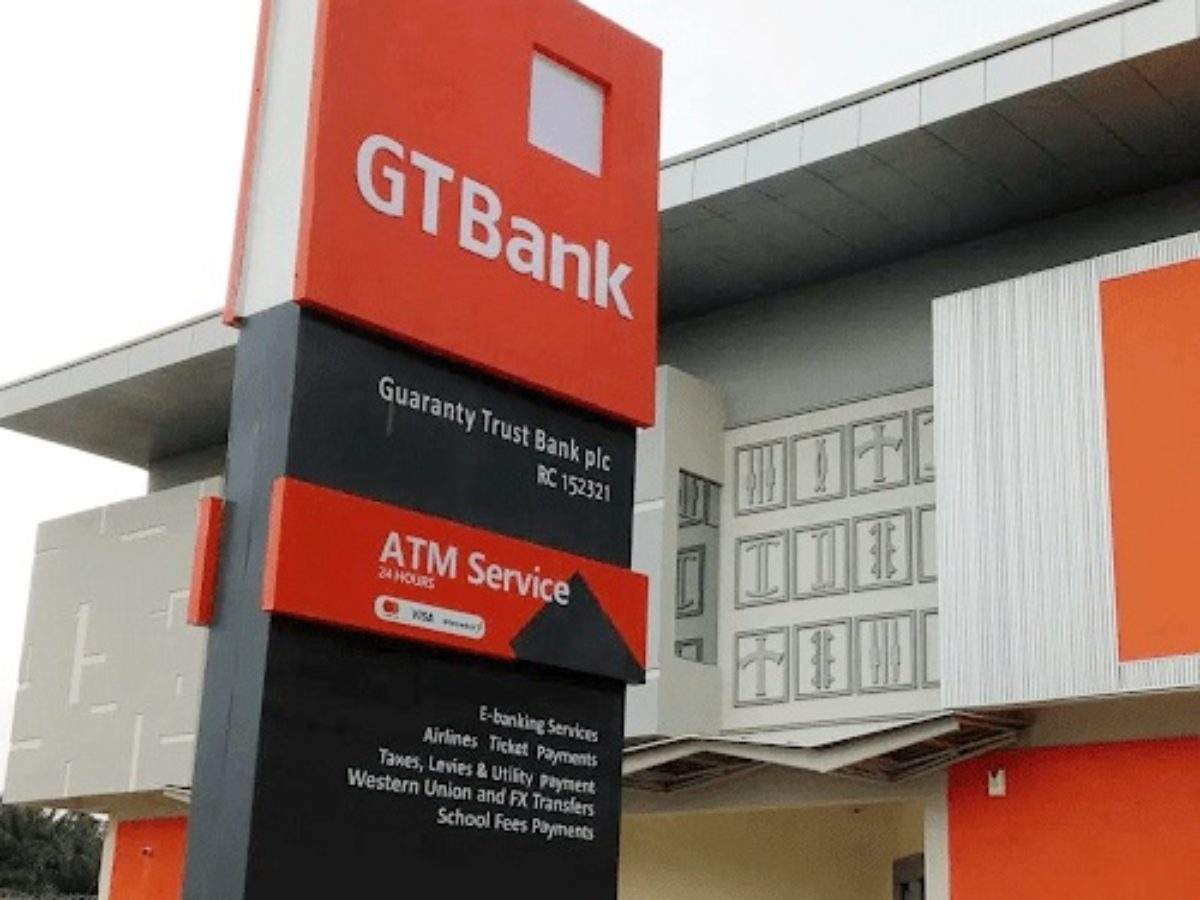
GTCO Holdings, the parent company of Guaranty Trust Bank, is set to begin trading all its ordinary shares on the London Stock Exchange (LSE) by 8:00 a.m. on July 9, becoming the first Nigerian banking group to achieve a full direct listing on the UK bourse.

This milestone marks a strategic shift from its Global Depositary Receipts (GDR) programme, as the group launches a fresh public offering to raise approximately $100 million in capital through an accelerated bookbuild managed by Citigroup.

The equity raise, which commenced on July 2 and runs through July 31, is aimed at bolstering the group’s capital base, particularly to meet the Central Bank of Nigeria’s N500 billion minimum capital requirement for banks with international licenses. With an exchange rate of about N1,540 to the dollar, the targeted sum equals roughly N154 billion.

From GDRs to Full Equity Listing

In a regulatory disclosure filed with the LSE, GTCO said it will cancel its existing GDRs and instead list its entire ordinary share capital under a secondary listing in the equity shares category for international commercial companies on the FCA’s Official List. The GDR delisting will take effect on July 30, 2025, giving existing holders over a year to convert their receipts into depositary interests (DIs).

Under the new structure, the group’s shares will initially trade in U.S. dollars under the ticker symbol “GTHC.” GTCO plans to revert to its traditional “GTCO” symbol once the GDR programme is formally wound down.

GTCO began trading GDRs on the LSE in 2007, with one GDR representing 50 ordinary shares. Now, with the dual listing, it joins a growing list of Nigerian companies such as Seplat Energy and Airtel Africa that have shifted to direct listings to improve visibility and attract a wider investor base.

Offer Details and Investor Strategy

The $100 million capital raise is being executed via an accelerated bookbuild—a fast-track equity offering mechanism that targets qualified and institutional investors in the UK, U.S., and other jurisdictions. Citigroup is acting as the sole global coordinator and bookrunner for the transaction. GTCO is aiming for a free float of 99% of its issued and to-be-issued shares following the listing.

The final offer price and number of shares to be issued will be announced following the bookbuild close, which occurred on July 3. The company’s prospectus is expected to be published on July 4. CREST accounts will be credited with the corresponding DIs, and applicable share certificates will be dispatched the same day trading begins—July 9.

GTCO is allowing GDR holders to exchange their receipts for DIs starting July 9, with a submission deadline of July 23. By July 30, the group will complete the delisting process and issue any outstanding DIs to valid requesters.

Local Listing and Market Implications

GTCO emphasized that its domestic listing remains unaffected. The group’s shares will continue to trade in Nigerian Naira on the Nigerian Exchange Limited (NGX) under the symbol “GTCO.” Following the London listing, shares are expected to be transferable between the NGX and LSE, provided regulatory and procedural requirements are met.

The move comes as Nigerian banks race to meet new capital thresholds set by the Central Bank of Nigeria (CBN). Zenith Bank and Access Holdings have already exceeded the N500 billion requirement. For GTCO, the fresh capital injection will primarily recapitalize GTBank Nigeria, enabling it to retain its international banking license.

Industry analysts say the listing aligns with GTCO’s broader efforts to diversify its investor base, enhance liquidity, and signal global readiness. It also marks a turning point for Nigerian financial institutions seeking stronger global footprints amid rising regulatory standards and competitive pressures in the domestic market.

GTCO’s decision to bypass its GDR framework in favor of full ordinary share admission mirrors trends seen in other emerging markets, where dual listings and cross-border capital raising are becoming more vital as firms pursue deeper integration with international markets.