DD
MM
YYYY

PAGES

DD
MM
YYYY

spot_img

PAGES

Home Blog Page 943

Ethiopia Secures $1bn World Bank Support to Boost Economic Reforms and Stabilize Financial Sector

0

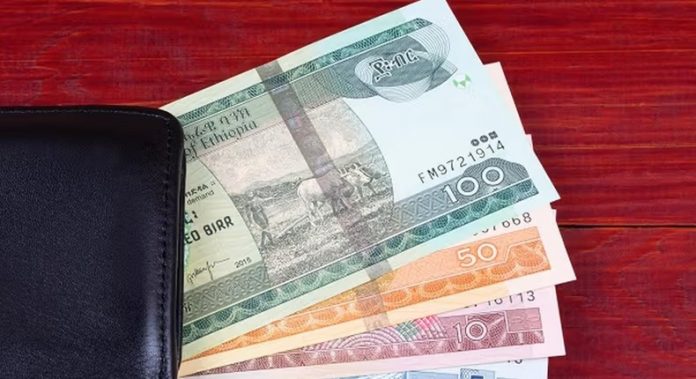
Ethiopia has secured a fresh $1 billion funding package from the World Bank to bolster its wide-ranging economic reform agenda and address mounting financial sector vulnerabilities, the country’s Ministry of Finance disclosed over the weekend.

The agreement, made under the Second Sustainable and Inclusive Growth Development Policy Operation, was signed by Ethiopia’s Finance Minister Ahmed Shide, and Maryam Salim, the World Bank Country Director for Ethiopia, Eritrea, Sudan, and South Sudan. The financing comes in the form of both a grant and a concessional loan, marking a significant injection of international support as the government struggles to navigate post-conflict reconstruction, inflation, and foreign exchange shortages.

According to the ministry, the World Bank’s support will be channeled toward key areas of economic governance and development: stabilizing the financial sector, enhancing trade competitiveness, improving domestic revenue mobilization, and promoting transparency and effective governance. The funding will also help sustain social services delivery as the government works to maintain its fragile recovery.

“These are integral pillars of Ethiopia’s macroeconomic and structural transformation,” the ministry said in a statement. “The financing reflects the Bank’s continued commitment to supporting Ethiopia’s bold and far-reaching reform agenda.”

A Vote of Confidence — But with High Expectations

The fresh support from the World Bank is being interpreted by some observers as a vote of confidence in Prime Minister Abiy Ahmed’s economic team, despite a challenging fiscal environment. Ethiopia, still recovering from a brutal civil conflict in Tigray and facing high inflation, has been working to liberalize parts of its economy, modernize the financial sector, and attract foreign direct investment.

The World Bank’s support is expected to reinforce the government’s push to open up the banking and telecom sectors, overhaul tax administration, and introduce broader fiscal and monetary discipline — reforms that have drawn both praise and concern from citizens and development economists.

Ethiopia is facing significant external financing gaps. The local currency, the birr, has come under pressure from growing import demand and limited export earnings, while the country’s foreign reserves remain critically low. The public debt burden also remains a major concern, especially after the country missed a Eurobond repayment earlier this year, leading to a downgrade in its credit ratings.

The World Bank aims to help Ethiopia expand its tax base and reduce reliance on external borrowing by supporting domestic resource mobilization, a key concern raised by international lenders and credit agencies. The program also targets better oversight of public finances and efforts to restore fiscal credibility through transparency and efficiency.

The Ethiopian Ministry of Finance described the deal as a reaffirmation of the “strong and enduring collaboration” between Ethiopia and the World Bank — one that will be critical in helping the country navigate its macroeconomic pressures, rebuild trust in financial institutions, and lay the groundwork for inclusive growth.

This support comes at a time when the international development community is cautiously optimistic about Ethiopia’s reform efforts but remains watchful of risks. The World Bank itself has stressed the importance of continued implementation and political stability to ensure the reforms lead to measurable improvements in the lives of ordinary Ethiopians.

With this new injection of funds, the government will be expected to show tangible progress in cleaning up the financial sector, reining in fiscal deficits, and improving the effectiveness of public service delivery. But with inflation still hovering in double digits and millions of people facing food insecurity, the road remains fraught with challenges — even with international backing.
Trump Says U.S. to Begin Talks With China This Week on TikTok Deal, Claims “We Pretty Much Have a Deal”

0

President Donald Trump said Friday that the United States will begin formal talks with China this week over a potential agreement involving TikTok, the popular short-form video platform owned by China-based ByteDance.

The president, speaking aboard Air Force One, said discussions could begin as early as Monday or Tuesday, and may involve Chinese President Xi Jinping directly or one of his representatives.

“I think we’re gonna start Monday or Tuesday … talking to China – perhaps President Xi or one of his representatives – but we pretty much have a deal,” Trump said, suggesting that a framework for resolving the long-standing standoff over TikTok’s U.S. operations is already in place.

The president also floated the possibility of a diplomatic visit between the two leaders. “I might go there, or Xi might come here,” Trump added.

Last month, Trump and Xi formally invited each other for official visits amid efforts to manage growing tensions over trade and technology.

Trump’s remarks come after he issued a third executive order extending ByteDance’s deadline to sell or divest TikTok’s U.S. business to September 17, offering a temporary reprieve that avoids an outright ban on the platform. That order followed an earlier June 19 deadline, which itself had replaced a previous timeline set in April.

ByteDance’s failure to meet those earlier deadlines had put TikTok on the brink of being shut down in the U.S., where the app has amassed a user base of over 170 million people and plays a prominent role in American pop culture and political discourse. The White House’s stated concern has centered on the app’s potential to expose Americans’ data to the Chinese government, a claim TikTok has repeatedly denied.

Previously, during Trump’s first tenure, negotiations were underway to spin off TikTok’s U.S. operations into a U.S.-controlled firm, with ownership split among American investors. But progress stalled after Beijing signaled it would not approve such a deal. The current negotiation has spilled into a sweeping package of tariffs on Chinese goods — announced by Trump, which is widely interpreted as re-escalating economic tensions between the two powers.

Beijing’s Silence — and a Tense Backdrop

Notably, China has remained largely silent on TikTok in recent weeks, even as discussions over its fate have intensified in Washington. While that quietude might appear strategic, observers say it also reflects the broader tariff standoff between Beijing and the Trump administration. With trade friction escalating and TikTok’s ownership now entangled in a larger geopolitical contest, the upcoming talks are not expected to be smooth.

China’s position, however unstated recently, was more transparent earlier in the year. In the spring, officials made clear that any forced sale of TikTok’s U.S. operations would be viewed as a violation of its sovereignty and intellectual property rights. The Chinese Commerce Ministry added TikTok’s algorithm to its list of restricted technologies, signaling it would use its export controls to block any sale that included core software or recommendation systems.

Given this backdrop, analysts say that while Trump’s optimism is politically useful, the road to a final agreement remains rocky. The White House may need to negotiate not just a commercial transaction, but a face-saving arrangement that Beijing can accept without appearing to yield under pressure.

TikTok Thanks Trump and Vance, as Congress Watches Closely

Shortly after Trump’s comments, TikTok issued a statement thanking the president and Vice President J.D. Vance.

“We are grateful for President Trump’s leadership,” the statement read, adding that TikTok “will continue to work with Vice President Vance’s office to come to an agreement.”

Vance has emerged as a key intermediary in the process and has advocated for an approach that secures U.S. national security concerns without banning the platform outright — a move that could draw backlash from millions of users, particularly young voters.

But not everyone in Washington is pleased. Democratic Senator Mark Warner, vice chair of the Senate Intelligence Committee, slammed the executive order approach as circumventing Congress.

“The Supreme Court ruled the ban lawful. Yet the administration keeps issuing delays. This sets a troubling precedent,” Warner said in a statement.

He added that any future agreement must include enforceable safeguards on data privacy and content moderation, warning that a “cosmetic ownership change” would not suffice.

Though Trump suggested a deal is within reach, he admitted that China’s approval is still a key hurdle.

“I’m not confident, but I think so,” he said of Beijing’s willingness to sign off. “President Xi and I have a great relationship, and I think it’s good for them. I think the deal is good for China and it’s good for us.”

Behind the scenes, officials on both sides are reportedly exploring alternative structures, such as creating a U.S.-governed data firewall, licensing agreements, or partial ownership swaps to sidestep full divestment — any of which would require delicate diplomatic choreography.

Currently, TikTok remains online and under scrutiny, with its future hinging on complex negotiations that blend global politics with technology regulation. The countdown to September has started, and so has the next round of U.S.-China bargaining. Whether a deal can bridge the divide between tech sovereignty and security concerns remains an open — and consequential — question.

ADC Coalition: Is it a New Kind of Politics for a New Nigeria?

0

Nigeria’s political space has long been shaped by two dominant forces, the All Progressives Congress (APC) and the Peoples Democratic Party (PDP). Between them, power has changed hands, but for many citizens, meaningful change remains out of reach. In recent months, however, a new political conversation has begun, centered around the African Democratic Congress (ADC) and its growing coalition. The question many Nigerians are now asking is simple: is this just another alliance, or the beginning of a new kind of politics for a new Nigeria?

The ADC coalition is forming at a time when public frustration is at an all-time high. Across the country, the cost of living has soared. Basic necessities such as food, fuel, and housing are slipping out of reach for millions. A bag of rice now sells for ?70,000. A litre of petrol costs around ?935. Incomes have not kept pace, and for many, daily survival has become a struggle. This crisis has exposed deep failures in governance and weakened public trust in the political system.

In response, the ADC is presenting itself as a fresh alternative — not just a party, but a movement for rebuilding Nigeria from the ground up. Unlike many past coalitions, which were often centered on power-sharing deals or short-term political gains, this one is being pitched as a gathering of like-minded people who want to lead with purpose. Social media, especially Twitter, has become the primary space for mobilizing and shaping this message. Hashtags like #ItsADC and #CoalitionForChange are gaining attention, and many supporters are describing the movement as a “hurricane of hope.”

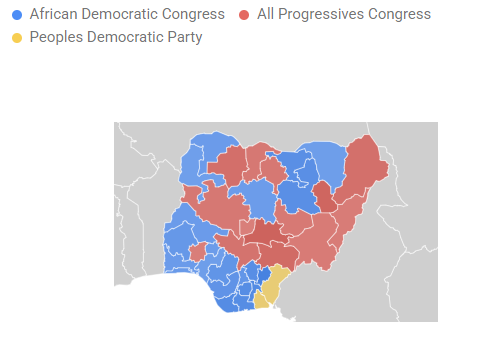
Exhibit 1: Public interest between July 1 and July 6, 2025

Source: Google Trends, July 1-July 6, 2025

One of the most notable aspects of this coalition is the diversity of those joining. Former PDP leaders like Atiku Abubakar, respected figures from APC like El-Rufai, and reform-driven personalities such as Peter Obi are all being associated with this movement. Youth leaders and civil society voices are also showing support. The idea is not simply to merge old names under a new party but to bring fresh thinking and shared values into one platform.

This coming together of past political rivals may raise eyebrows, and rightly so. Many Nigerians are wary of recycled politicians changing parties without changing their approach. But the ADC coalition seems to be trying to turn this skepticism into an opportunity. Its message consistently highlights unity, respect, and shared responsibility. In one widely shared tweet, a member urged followers: “We do not need to fight, insult, or attack anyone. When others resort to abuse or threats, we will respond with ideas.” That kind of language, focused on decency and solutions, is rare in Nigeria’s often aggressive political culture.

The coalition also places strong emphasis on real-life issues rather than political theatre. It speaks directly to the pain Nigerians are feeling. It acknowledges that citizens are tired of promises and are looking for honest leadership that actually listens and delivers. The message is not about one man or woman fixing everything, but about many people coming together to take responsibility for their country.

So, is this truly a new kind of politics?

The answer will depend on whether the coalition can stay focused and united. Nigeria has seen political partnerships rise quickly and collapse just as fast when egos and interests take over. The ADC will need to avoid those pitfalls if it hopes to earn the trust of a skeptical public. It will need to show that it is not just a reaction to APC or PDP, but a well-thought-out path to something better.

Politically, the ADC is gaining ground in areas like the South-West and the Middle Belt, regions known for their political engagement and appetite for reform. While the APC and PDP still have strongholds, the rise of a credible third force could reshape the way Nigerians vote — especially if younger and first-time voters get involved.

In the end, the ADC coalition is tapping into something real. It reflects a growing hunger for a different kind of leadership. Whether or not it succeeds in 2027 or beyond, it is already reshaping the political conversation. It is reminding Nigerians that change doesn’t have to come from the same familiar places. It can come from unity, bold ideas, and a renewed belief that a better Nigeria is not just possible, it is necessary.

Black Boxes That Shape Local Government Autonomy in Nigeria

0

Local government autonomy in Nigeria has long been a subject of constitutional debate and institutional contestation. While it is often discussed as a technical issue of administration or legislation, the reality is far more complex. Beneath the surface lies a web of power relations, institutional practices, and legal ambiguities that have become deeply entrenched.

Drawing from national newspaper reports spanning from 2010 to 2025, a close reading of Nigeria’s local government governance reveals how several black boxes continue to shape, and in some cases obstruct, the realization of true autonomy at the local level. These black boxes function by stabilizing certain governance practices, obscuring internal contradictions, and masking networks of influence and control.

One of the most enduring black boxes is the caretaker committee system. On the surface, it appears to be a temporary and lawful solution used by state governors when local government elections are delayed. In practice, however, it represents a politically expedient mechanism that circumvents democratic accountability. State governors routinely appoint political loyalists to head these committees. State Houses of Assembly often legitimize these appointments through tailored legislation. State Independent Electoral Commissions (SIECs), which should conduct local polls, frequently remain inactive or offer tacit support. The caretaker system, therefore, functions not through legality alone but through a network of actors who mutually reinforce each other’s authority and decisions. Over time, this network becomes taken for granted. It is rarely questioned except when civil society groups or legal advocates challenge it publicly or in court.

Closely tied to this is the black box of the State Independent Electoral Commissions. These bodies were established to manage local government elections and protect democratic integrity. In many states, however, SIECs have been compromised by political interference. Their budgets and leadership are controlled by the state executive, which limits their ability to act independently. Yet in public discourse, they are still referred to as electoral management bodies. This label conceals the political vulnerabilities and operational weaknesses they carry. As a result, their performance rarely comes under scrutiny unless their failures become too glaring to ignore.

There is also an emerging black box that represents a reformist ideal. This is the proposal to transfer the responsibility of conducting local government elections from SIECs to the Independent National Electoral Commission (INEC). Advocates argue that INEC, with its national reach and relative credibility, is better positioned to oversee impartial and regular elections. This proposal has gained traction among civil society organizations, youth movements, legal experts, and members of the National Assembly. However, even this solution depends on a broader network of support. It requires constitutional amendments, political agreement across federal and state levels, and consistent funding. Until these elements align, the model remains fragile and easily contested.

Another critical but often invisible black box is fiscal federalism. Although the constitution mandates financial independence for local governments, most states continue to operate joint accounts that allow governors to control local funds. This arrangement blackboxes the illusion of autonomy. Local governments are described as independent in law, yet they function within a structure that undermines their financial capacity. Reform efforts have been proposed, including direct allocation and increased financial transparency. These efforts, however, face resistance from those who benefit from the existing structure.

Our analyst notes that understanding local government autonomy in Nigeria requires more than legal analysis or administrative reform. It calls for a deeper look into the black boxes that obscure the true dynamics of governance. Caretaker committees, compromised electoral bodies, fragile reforms, and financial dependence are all part of a larger ecosystem that determines how power is exercised at the grassroots level. Actor-Network Theory offers a valuable lens for uncovering these hidden networks. For Nigeria to achieve genuine local government autonomy, it must not only design better systems but also confront and dismantle the entrenched practices that have been blackboxed for far too long.

China’s DeepSeek Predicts Cardano (ADA), Ripple (XRP), and Little Pepe (LILPEPE) All-Time High Prices for the 2025 Bull Run

0

With the 2025 crypto bull run approaching, more crypto enthusiasts and investors will utilize the most advanced types of AI, including DeepSeek, to identify further performance of the most famous cryptocurrencies. Among the tokens with the most significant activity in the market, the AI algorithm DeepSeek has identified notable tokens such as Cardano (ADA), Ripple (XRP), and the currently booming Little Pepe (LILPEPE).  DeepSeek believes that these three cryptocurrencies will achieve new all-time highs in the upcoming bull market due to their distinctive infrastructure, high adoption ratio, and expanding utilization.

Cardano (ADA): The Rock Solid Climber that is to Surge Higher

Among the most innovative blockchain platforms, Cardano (ADA) is recognized as a sustainable and scalable technology for smart contracts and decentralized applications (dApps), currently trading at $0.55.  Despite the rising value and capitalization being slow and steady, Cardano (ADA) has not been able to compete alongside other blockchain projects, such as Ethereum (ETH) or Solana (SOL), which appear to be improving over time. The DeepSeek, however, predicts that Cardano is poised for a significant breakout, as its next upgrade, Hydra, is likely to drive the price significantly higher. The DeepSeek Prediction on Cardano (ADA): Target Price: 5.00 at the year-end of 2025. What makes it Bullish: The Hydra update will eliminate bugs related to scalability, and this issue will propel Cardano (ADA) to be one of the most popular options in DeFi and NFT projects. Moreover, the fact that Cardano is environment-friendly, using very little energy, appeals to institutional investors.

Ripple (XRP): Regulatory Clarity would Launch XRP to $10

Based on the DeepSeek prediction, the cost of XRP is expected to rise significantly if Ripple emerges victorious in the dispute with the SEC, as the prediction indicates that the XRP price will increase to beyond $2.19. XRP is already considered one of the oldest cryptocurrencies in the world, offering borderless payments as well as cross-border transaction solutions to the financial industry.  As soon as the legal aspect of Ripple is addressed, Deepseek expects a significant price jump, particularly given that XRP is still establishing a foothold in the global payment network. Prediction of Ripple (XRP) by DeepSeek: Price Target: $10.00 by year-end 2025. Reason why it is Bullish: Due to the precise legal understanding once it is provided, the potential of cross-border payments and DeFi applications of XRP is going to increase exponentially. An institutional demand for XRP, especially in emerging markets, is expected to rise, as Ripple becomes the preferred choice for sending remittances worldwide.

Little Pepe (LILPEPE): The Real Utility Meme Coin that is about to Go Crazy

The token has already shown that it can be a meme coin with some use. It is unlikely to compete with other meme coins, such as Dogecoin (DOGE) or Shiba Inu (SHIB), because Little Pepe (LILPEPE) offers a Layer-2 blockchain, which eliminates taxes, and provides the ability to block snipers using bots.  The transactions can be completed in a few seconds. This means that LILPEPE will have real-world value that other meme coins lack, as they only ride the hype waves, whereas LILPEPE will utilize the Pepe Pump Pad, a liquidity-locking and anti-rug pull meme token launching pad. As its community already consists of more than 5,000 people, and its presale has already received an enormous boost due to the raised amount of over $ 3 million, LILPEPE is destined to be one of the most influential meme coins in 2025. Prediction of DeepSeek on little pepe (LILPEPE): Price Target: $0.45 at the end of 2025. Why Bullish: LILPEPE is the meme coin that is unlike the typical meme coin, and it doesn’t want to be, because it’s all about real infrastructure and valuable applications. AI-powered forecasts indicate that LILPEPE has a 3,500x upside potential by 2026, so the meme token is all set to explode with the expansion of the meme coin market. The viral ad, along with the $777K giveaway, will simply increase it, causing the FOMO phenomenon and further increasing the price. The reason these tokens will explode in 2025 is.

Real World Applications:

Not speculative, community-based hype, like many other meme coins and blockchain projects, Cardano, Ripple, and LILPEPE all provide practical use cases in the form of DeFi, worldwide payments, and token launching services, which is why they are being viewed as long-term value projects.

Good Developer Ecosystem:

There is an expanding developer ecosystems that auger these projects. Cardano is still experiencing an inflow of developers who are keen on creating scalable and sustainable applications, and Ripple and LILPEPE are catching up with their new possibilities in the sphere of cross-border payments and meme coin ecosystems.

Regulatory Clarity:

Once clear on regulations, Ripple (XRP) will be among the major global remittance and cross-border payment providers.

Community and Marketing:

Having already generated tremendous community hype through its viral marketing efforts and 777K giveaway, LILPEPE not only features a Layer-2 blockchain, which means it was not created to scratch an itch, but also has genuine utility and safety features that distinguish it among other meme-driven coins, such as Dogecoin.

Institutional Adoption:

The growth of DeFi and NFTs leads to institutional adoption, and Cardano and Ripple may eventually be able to capitalize fully on their exceptional fundamentals. Due to its institutional potential, LILPEPE could reach new heights as it becomes more well-known in the meme coin environment.

A Good Way to Get These Tokens

Cardano (ADA): Cardano investors will want to monitor the rollout of Hydra and the growing institutional backing. As it continues to develop steadily and gain popularity, Cardano is expected to increase in value in 2025. Ripple (XRP): Ripple is about to end the legal war shortly, which would result in a substantial increase in the price of XRP. An investor targeting the early purchase of this currency should remember the growing popularity of Ripple in international money transfer. Little Pepe (LILPEPE): LILPEPE, with its presale price at $0.0013, is among the most underrated in the market. It has a real utility with its Layer-2 blockchain, and the fact that it boasts a tremendous community support makes it one of the best bets for early investors in terms of explosive growth.

Conclusion: Ripple, Cardano, and LILPEPE—The Future of Crypto

All of them, including Cardano (ADA), Ripple (XRP), and Little Pepe (LILPEPE), are expected to experience a massive boom in 2025. It may be the Scalability factors of Cardano, the legal status of Ripple, or the practical use of LILPEPE, but these tokens are becoming the big guns of the crypto-realm. With AI-powered insights still indicating high returns on such projects, those who have bought at the early stage will be the beneficiaries of the enormous potential such tokens have in 2025. Cardano and Ripple have stable and institutional-ready products, and LILPEPE is a coin that is undoubtedly going to take off, making it evident that these are among the best tokens to watch.


For more information about Little Pepe (LILPEPE) visit the links below:

Website: https://littlepepe.com

Whitepaper: https://littlepepe.com/whitepaper.pdf

Telegram: https://t.me/littlepepetoken

Twitter/X: https://x.com/littlepepetoken