DD
MM
YYYY

PAGES

DD
MM
YYYY

spot_img

PAGES

Home Blog Page 95

The Importance of Legal Representation in Car Accident Cases

0

Suffering a car accident can be overwhelming without the added stress of figuring out the legal process alone.

Millions of Americans face this situation every year. But the unfortunate truth is…

The choices you make in the weeks and months after an accident can make or break a case.

In this guide, we will walk you through…

  • Why legal representation matters in a car accident case
  • The statistics surrounding accident victims and legal help
  • How a car accident lawyer can help with a case
  • How and when to fight the insurance company

Why Legal Representation Matters in a Car Accident Case

Car accident lawsuits are more complicated than filling out some paperwork and moving on.

When you have a crash, there’s medical bills, lost wages, pain and suffering, and on top of that, there’s the insurance company trying to save money at your expense.

The insurance companies are not going to fight for your interests.

Insurance companies have whole legal teams working 24/7 to pay out the lowest amounts possible. Going against them by yourself is a recipe for disaster.

Working with a car accident lawyer helps level the playing field. Qualified legal representation helps accident victims navigate the claims process, answer their questions, and makes sure they’re not taken advantage of during a vulnerable time in their lives.

That’s a pretty big deal, wouldn’t you agree?

The Statistics Surrounding Accident Victims and Legal Help

But what actually happens when people try to handle their own car accident claims?

The statistics paint a clear picture. A study published by Nolo showed that those with an experienced personal injury attorney had a payout settlement of about 91% compared to only 51% of those without representation.

This means that accident victims have almost a 50% chance of walking away without compensation if they choose to forgo a lawyer.

But it doesn’t stop there…

The same study found that people with a personal injury lawyer received payouts nearly three times higher than those without a lawyer.

Let’s stop and think about this for a second.

Car accidents are a huge problem in America. The NHTSA estimates that 39,345 people lost their lives in traffic crashes in 2024. While the numbers are trending down, many more millions face injuries that require medical care and legal action.

The stakes in these cases are too high to leave money on the table.

How a Car Accident Lawyer Can Help With a Case

There’s more to a car accident lawyer’s role than just filing legal paperwork and making an occasional court appearance.

A good accident attorney takes care of the legwork so the client can focus on recovery. This can include:

  • Investigation of the accident. This can include gathering a police report, witness testimonies, and evidence from the scene of the accident.
  • Dealing with insurance companies. This includes communication with insurance companies and negotiating on the accident victim’s behalf.
  • Calculating damages. An attorney will determine the total value of medical bills, lost wages, pain and suffering, and other future expenses.
  • Building a strong case. Gathering documentation to prove liability and increase compensation amounts.
  • In some cases, a lawyer will have to represent a client in front of a jury.

While most car accidents settle before a trial, having a lawyer who is ready to go to court can give a client serious leverage in negotiations.

Insurance adjusters know when someone is serious about their claim.

When and How to Fight the Insurance Company

Insurance companies are in the business of reducing payouts.

They use a variety of tactics to achieve that goal. Some of the most common are:

  • Quick settlement offers. By making a lowball offer before an accident victim understands the extent of their injuries, insurance companies hope to capitalize on panic and lowball settlement amounts.
  • Recorded statements. Insurance companies will ask accident victims to provide a recorded statement about their injuries and the crash. The insurance company will then comb over those statements and find anything they can use to devalue a claim.
  • Medical record fishing. Insurance adjusters will often look for pre-existing medical conditions in a client’s medical records and blame current injuries on past conditions.
  • Delay tactics. Insurance companies will often use the time factor against an accident victim. From trying to make paperwork submissions more difficult to simply taking a long time to respond to an accident victim, insurance companies employ all these tricks to get a victim to give up or take a lower settlement offer.
  • Insurance companies will monitor a client’s social media and other activities to dispute a victim’s injury claims. For example, if an insurance adjuster sees a victim taking a walk, they may use that as evidence against a pain and suffering claim.

Thankfully, car accident lawyers know all these tricks. They are familiar with the insurance company playbook and can counteract most of these tactics. By thoroughly documenting their client’s situation, talking to medical experts, and having airtight cases, a lawyer puts up enough of a fight to get insurance adjusters to take a claim seriously.

Insurance companies know that going to trial is expensive for them and can create unpredictable results.

Insurance companies also have lawyers working on their behalf day one after a crash.

These lawyers are hard at work analyzing the claim, trying to find things to lower the payout, and protecting the company’s bottom line.

Shouldn’t accident victims have a professional on their side as well?

The “Cost” of Not Hiring a Lawyer

The reason many accident victims try to go it alone is because they’re worried about the cost of hiring a lawyer.

Instead, they should be considering…

Personal injury lawyers often work on a contingency fee. This means the client pays no upfront fees and the lawyer only gets paid if they win the case. Most attorneys charge between 30% and 40% of a settlement.

Even after paying legal fees, car accident clients with legal representation still end up with more money in their pockets than accident victims who choose to file a claim alone.

The math adds up. The settlements from legal representation minus lawyer fees are still more than lower settlements with no fees.

Wrapping Up

Car accident claims are complex.

Insurance companies are formidable opponents.

The consequences of making a misstep in the process can be life-altering.

Legal representation gives accident victims access to:

  • Expert advice and assistance with the claims process
  • Someone to help communicate with insurance companies
  • The ability to maximize compensation
  • Peace of mind during a stressful recovery.

The statistics on accident victims and legal help are not encouraging. The chances of receiving a payout are almost double for those with an attorney. And the amount of that settlement is also higher.

Fighting a billion-dollar insurance company without an army of lawyers on your side is a risk most Americans cannot afford to take.

Qualifying for legal help is not just smart after a car accident. It might be the most important decision an accident victim can make.


Investors Predict $5,000 Gold as a Frenzied Rally Redraws the Global Market

0

Gold is having the kind of year that has left even the most seasoned traders blinking at their screens. The metal has surged 58.6% so far, tearing through record after record and finally punching above the once-unthinkable $4,000 threshold on Oct. 8.

That milestone now looks almost small in the rearview mirror, because a new Goldman Sachs survey, published by CNBC, shows many investors think the rally’s not only alive but barreling toward another all-time high: $5,000 by the end of 2026.

The latest sentiment check from Goldman Sachs’ Marquee platform, which polled more than 900 institutional investors between Nov. 12 and 14, captures the mood. The largest bloc, 36%, predicted that gold will extend its climb and top $5,000 per troy ounce by the close of next year. Another 33% think it will trade between $4,500 and $5,000. In total, more than 70% of institutional investors expect gold to keep rising through 2025, showing how broad the bullishness has become. Only a little over 5% see any room for a pullback toward the $3,500 to $4,000 range.

This bullish wave was already visible in live market action. Spot gold rose to a two-week high on Friday, gaining 0.45% to settle at $4,175.50. Futures rose 0.53% to $4,187.40. Traders tied the move to growing expectations that the Federal Reserve may lean toward rate cuts, a shift that tends to weaken the dollar and enhance gold’s appeal.

Why the Market Is So Buoyant

The survey shows consensus around the main forces powering gold’s surge. A hefty 38% of respondents pointed to central bank accumulation as the biggest driver, while 27% cited rising fiscal concerns. And it’s hard to ignore how synchronized this buying has been. Global central banks have snapped up gold this year at a pace that underscores its role as a reserve asset with unique qualities: deep liquidity, no default risk, and a politically neutral profile that neither aligns nor antagonizes major blocs.

This central bank appetite sits alongside a broad wave of private-sector demand that stretches from retail investors trying to shelter savings from inflation to hedge funds positioning for geopolitical uncertainty and a weakening dollar. Gold’s traditional status as a crisis hedge has been pulled into service again, and the backdrop of overlapping global tensions has made the metal feel almost like a compulsory holding.

Phil Streible, chief market strategist at Blue Line Futures, said on CNBC’s “Power Lunch” on Nov. 20 that the trend still has room to run. He pointed out that many countries are wrestling with slowing growth while inflation remains stubborn. In his words, “The global economic outlook continues to support gold.”

The Rush Into Mining Stocks

Investors who don’t want to buy the metal directly are looking at miners as a leveraged bet on the rally. Blue Whale Capital’s Stephen Yiu told CNBC’s “Europe Early Edition” earlier this month that he is backing Newmont, the world’s largest gold miner, as part of his strategy.

Even in corners of the market where skepticism normally dominates, the mood is shifting. Muddy Waters founder Carson Block, known for his short-selling campaigns, surprised the Sohn London investment conference crowd with a rare long call — a public endorsement of Canadian junior miner Snowline Gold. Block argued that Snowline was emerging as an attractive takeover target at a time when consolidation in the sector was picking up.

What a $5,000 Outlook Really Says

A price target like $5,000 is bold, but the conviction behind it has grown out of a multi-layered global environment: jittery fiscal positions in major economies, expectations of easier monetary policy, cross-border tensions that have reshaped commodity flows, and a renewed appetite from central banks that are treating gold as insurance rather than an optional reserve.

The metal’s rise has drawn in a wider mix of investors than at any point since the early 2010s. Hedge funds are positioning around macro risk. Middle-class savers are buying small quantities as a store of value. Governments are adding to vaults as they balance currency exposure. And miners are back in the headlines.

The rally is not just about price action. It is becoming a story about confidence, caution, and the shifting architecture of the global economy. And judging by the survey numbers, investors believe the story will continue into 2026, possibly all the way up to that $5,000 mark now hanging in the distance like an inevitability rather than a long shot.

Global Monetary Easing Hits 35-Year High—So Why Is Bitcoin Still Flat?

0

Central banks worldwide have unleashed an unprecedented wave of monetary easing, the most aggressive in 35 years.

Over 90% of global central banks have either cut rates or held them steady for 12 consecutive months, resulting in 316 rate cuts from 2023 through early 2025—surpassing the 313 cuts during the 2008–2010 financial crisis.

This liquidity injection has expanded the global M2 money supply by about 8% year-to-date, reaching nearly $140 trillion, with the U.S. M2 alone hitting a record $22.21 trillion.

Factors driving this include cooling inflation now slowing in 17 G20 countries, resilient growth projections, and policy pivots like the Fed ending quantitative tightening (QT) on December 1, injecting $50 billion into repo markets last week alone. Additional boosts come from China’s $900 billion yuan stimulus, Japan’s $100 billion yen package, and Europe’s easing via the ECB.

Historically, such coordinated easing floods risk assets like stocks and cryptocurrencies, with Bitcoin showing a 0.94 correlation to global M2 growth from 2013–2024.

Yet, as of November 29, 2025, Bitcoin trades flat around $91,000–$92,000, up just 1% year-to-date—its least volatile year ever, with compressed price action and a four-year CAGR at an all-time low.

Why Bitcoin Remains Flat Amid the Liquidity Boom

This apparent disconnect isn’t a sign of weakness but a structural evolution in Bitcoin’s market dynamics. Bitcoin doesn’t react instantly to liquidity surges; it typically trails global M2 increases by 60–70 days as capital filters through traditional systems before reaching high-risk assets like crypto.

In 2020, M2 surged in March, but Bitcoin’s breakout came in December. Current decoupling began mid-2025, suggesting a rally could materialize by late 2025 or early 2026. Analysts like those at CryptoQuant note this lag aligns with past cycles.

Overbuilt leverage $94 billion in futures open interest amplified a narrative-driven selloff when Fed expectations shifted from aggressive cuts 90% probability for December to caution now ~40%. This triggered $20 billion in liquidations, cascading into ETF outflows and long-term holder (LTH) distributions.

$1.8 billion in Bitcoin ETF outflows since November 12; LTHs offloaded 815,000 BTC in 30 days profits from $40K–$80K buys. Open interest dropped to $68 billion, but more needs to clear for stabilization. With real yields positive short-term Treasuries at 4–5%, capital prefers “safe” yields over Bitcoin’s zero-yield profile. Government debt rollovers U.S. trillions due and regulatory nudges toward safe assets act as a liquidity “tax,” soaking up marginal dollars.

U.S. debt exceeds $35 trillion; institutions 71% owning crypto treat BTC lending yields as riskier than T-bills post-FTX/Celsius. This shifts Bitcoin from “leveraged liquidity bet” to macro hedge correlation to SOFR: 0.52; to global M2: -0.046.

ETFs brought $61.9 billion in inflows YTD, but they enable quick exits during uncertainty like U.S.-China tensions, government shutdown draining $85 billion from GDP. This creates “institutional-scale sell liquidity,” but also absorption—preventing 80% crashes like 2018/2022.

Bitcoin’s ETF era killed the boom/bust cycle; volatility is structurally lower as retail speculation yields to global institutions. On-chain HODL waves at ATH, illiquid supply up, hashrate robust. Pi Cycle and MVRV indicators show mid-cycle, not top.

Macro Narrative Repricing

Bitcoin’s 215% rally to $126K in 2025 was fueled by easing + ETF hype, but stubborn inflation September CPI at 3.0% and a strong dollar environment repriced it downward. Geopolitics adds risk-off sentiment.

November’s 20% drop erased YTD gains, mirroring growth-sensitive assets. Yet, shutdown correlation to BTC is -0.4; resolution could spark $112K rebound if CPI stays below 3.2%.

In essence, this isn’t a “systems failure” but a healthy reset: leverage unwinds, weak hands exit, and Bitcoin consolidates in a maturing market. Sentiment is at “extreme fear,” but fundamentals scream strength—Bitcoin now acts as a liquidity exhaust valve, decoupled from equities and primed for when easing truly flows into risk assets.

The four-year halving cycle is obsolete; this is now a liquidity-driven regime. With QT ending, stablecoin supply poised to expand, and tokenized assets drawing institutional flows, 2026 could see a “melt-up” as macro expansion unleashes parabolic moves.

Favorable setups include: CPI <3.0% + shutdown resolution ? $112K by December. Neutral (50%): Consensus 3.1% CPI ? $100K–$105K range. Bear (15%): CPI >3.2% + extension ? $95K test.

Bitcoin’s “boring” phase is the calm before the storm—institutional plumbing is built, liquidity is turning, and history shows it always wins. As one analyst put it: “Bear markets don’t start on the precipice of global liquidity expansion.” Position for the expansion, not the noise.

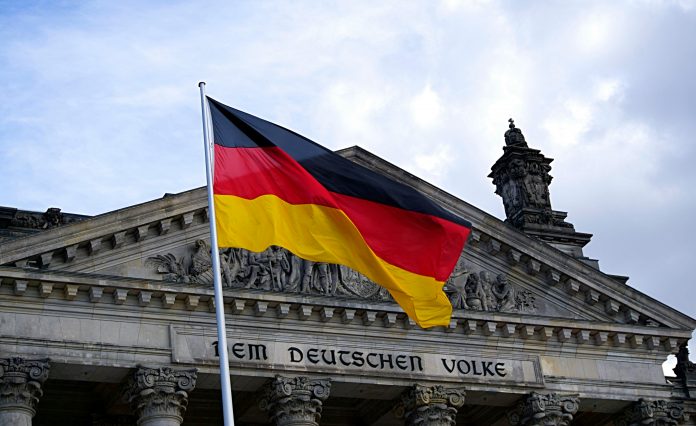
German Parliament Approves Record-Breaking 2026 Budget Amid Economic Challenges

0

Germany’s Bundestag, lower house of parliament voted to pass the federal budget for 2026, marking a significant departure from the country’s long-standing fiscal conservatism.

The budget totals €524.5 billion ~$607.5 billion in spending, financed in part by substantial new borrowing that exceeds all but one prior year in post-war history. The vote passed narrowly with 322 in favor and 252 against, reflecting ongoing political tensions within Chancellor Friedrich Merz’s coalition of the Christian Democrats (CDU), Christian Social Union (CSU), and Social Democrats (SPD).

€524.5 billion, including €58.3 billion in core investments. Core budget borrowing: €97.9–98 billion in net new debt, adhering to the constitutional “debt brake” limit of 0.35% of GDP.

Over €180 billion when including special funds exempt from debt rules—the second-highest level ever, surpassed only by €215 billion during the 2021 COVID-19 crisis.

Total Investments: €126.7 billion, a 10% increase from 2025, boosted by off-budget funds via €500 billion infrastructure fund and defense exemptions. This budget emerges against a backdrop of economic stagnation, with Germany’s GDP contracting for two consecutive years—the first such downturn since the 2008 financial crisis.

Chancellor Merz’s government, formed after the 2025 elections, has prioritized revival through massive public investment, breaking from the “black zero” era of balanced budgets under predecessors like Angela Merkel.

An exemption from debt rules allows unlimited borrowing for the Bundeswehr, responding to Russia’s invasion of Ukraine and NATO commitments. This draws from a €500 billion special defense fund. A parallel €500 billion fund targets decaying roads, railways, and climate protection projects, addressing long-term underinvestment.

Finance Minister Lars Klingbeil (SPD) emphasized the need to counter global challenges, including energy costs and trade disruptions, with investments expected to create jobs and spur growth.

The International Monetary Fund (IMF) forecasts Germany’s deficit rising to 4% of GDP by 2027, with public debt climbing to 68%—still the lowest in the G7. Merz hailed it as a “warm-up” for bolder reforms, while Klingbeil warned of a €30 billion shortfall in 2027.

The Greens decried it as “shunting expenditures” via funds, the far-right AfD called it a “financial coup d’état” burdening future generations, and the Left Party opposed debt-financed rearmament.

In the context of Germany’s newly approved 2026 federal budget, the “defense fund” primarily refers to the Sondervermögen Bundeswehr, a €100 billion one-time allocation established in 2022 following Russia’s invasion of Ukraine.

This fund is exempt from the constitutional “debt brake” rules, allowing debt-financed spending on military modernization. It is distinct from the separate €500 billion Sondervermögen Infrastruktur und Klimaneutralität which focuses on civilian projects like roads, railways, and renewable energy but can indirectly support defense-related infrastructure.

The fund has enabled a historic surge in defense spending, with total outlays reaching €108.2 billion in 2026—more than double the 2025 level and equivalent to about 2.8% of GDP, exceeding NATO’s interim target for the year.

This positions Germany as Europe’s largest defense spender, surpassing France and the UK combined in absolute terms. Created under Chancellor Olaf Scholz’s “Zeitenwende” policy to bolster alliance and national defense capabilities.

It finances complex, multi-year procurement projects for the Bundeswehr, addressing decades of underinvestment. The fund is fully committed by 2027, with €28 billion already spent by mid-2025.

For 2026, €25.5 billion flows from the fund, complementing €82.7 billion from the core defense budget. This brings total defense spending to €108.2 billion, with a focus on procurement, €47.88 billion total, including €25.51 billion from the fund. Up 32% from 2025 (€62.3 billion); covers personnel (10,000 new soldiers + 2,000 civilians), operations, and readiness.

Total defense spending ~2.8% of GDP; enables NATO commitments and Ukraine aid €11.5 billion total, including €1 billion/month. Includes tanks, ships, aircraft; €325 billion in long-term commitments through 2041. Critical for restocking after Ukraine support; €12.67 billion from core budget.

The fund’s spending contributes to Germany’s overall €180+ billion in new debt for 2026 second-highest post-war, driven by economic stagnation and geopolitical threats. Mid-term plans project defense outlays rising to €117.2 billion in 2026 and €161.8 billion by 2029 with €380 billion borrowable for defense through 2029.

Chancellor Friedrich Merz and Finance Minister Lars Klingbeil hail it as essential for deterrence against Russia and NATO leadership. Defense Minister Boris Pistorius emphasized closing capability gaps. Opposition calls it a “shadow budget” risking future fiscal burdens; Greens decry bypassing debt rules.

Expected to spur 1.3% GDP growth in 2026 via jobs in defense industry (e.g., Rheinmetall) and supply chains, though IMF warns of rising deficits 4% of GDP by 2027. This fund marks a pivotal shift from Germany’s post-Cold War restraint, aiming to make the Bundeswehr Europe’s strongest conventional force by 2030.

The Bundesrat review is pending but expected to pass. The budget now heads to the Bundesrat— upper house for review, but passage is expected. This move signals a potential shift in Europe’s fiscal landscape, with implications for the EU’s stability pact and Germany’s role as the bloc’s economic anchor.

Germany’s Inflation Rate Stuck at 2.3%

Germany’s latest economic indicators for November 2025 paint a picture of stability with underlying pressures. Inflation held steady, while the labor market showed a modest improvement.

The year-on-year inflation rate, measured by the Consumer Price Index (CPI), remained unchanged at 2.3% in November 2025 compared to November 2024. This is based on preliminary data from the Federal Statistical Office, with final figures due on December 12.

Services prices rose by 3.7%, exerting upward pressure. Energy prices fell 0.1% year-on-year, providing some offset. Food prices increased by 1.8%. Excluding volatile food and energy, the rate ticked down slightly to 2.7% from 2.8% in October, signaling persistent underlying pressures.

For EU comparability, this stood at 2.6% year-on-year, up from 2.3% in October—driven partly by package holidays and fuel costs. Inflation has hovered around the ECB’s 2% target but shows signs of stickiness, influenced by wage growth and global energy dynamics.

Economists note this could delay ECB rate cuts. The seasonally adjusted unemployment rate dipped to 6.1% in November 2025, down from 6.2% in October. This marks a slight improvement, with the number of unemployed rising by just 1,000 far below the expected 5,000 increase.

Approximately 2.7 million employment stagnated, with virtually no net change +2,000 jobs, or 0.0%. Job vacancies fell to 624,000, down 44,000 from a year ago, reflecting subdued labor demand.

Despite the dip, the labor market remains soft amid economic slowdown. The German Labor Agency highlights ongoing challenges for companies, with forecasts pointing to over 3 million unemployed by early 2026 if growth doesn’t accelerate.

Steady inflation above the ECB target contrasts with a cooling labor market, potentially supporting a cautious monetary policy stance. Retail sales fell 0.3% month-on-month in October, underscoring weak consumer momentum.

Germany’s economy is projected to grow by just 0.2% in 2025, with 1.3% expected in 2026—bolstered by planned infrastructure and defense spending under Chancellor Friedrich Merz. However, global trade tensions and energy costs remain risks.

For Households/Businesses: Lower energy bills offer relief, but rising service costs (e.g., rents, travel) could squeeze budgets. Job seekers may face a tougher market in manufacturing and construction.

Rate cuts become less likely in December 2025 or Q1 2026. Markets now price only ~60 bps of cuts until mid-2026 down from 100 bps a few weeks ago. German 10-year Bund yields already rose ~15 bps since the data.

Sticky services inflation + strong wage settlements 2025 collective agreements ~4–5% keep core inflation above 2% well into 2026 ? ECB likely stays at 2–2.25% terminal rate longer than expected. Real wages continue to rise, but high services inflation eats ~60% of the gain. Private consumption stays weak.

If wage growth moderates only slowly, purchasing power improves from mid-2026 onward, supporting the expected consumption-led recovery. Higher-than-expected interest costs on new debt + weaker growth reduce fiscal space.

The new Merz government will struggle to finance both the €100 bn special funds and promised tax relief without breaching the debt brake in 2026. Risk of political friction inside the CDU/CSU-SPD coalition over spending priorities; possible mini-budget crisis in autumn 2026.

Profit margins remain under pressure unit labour costs +4% yoy. Companies continue to freeze hiring and cut investment. Manufacturing recession likely extends into H1 2026; only defense-related and green-tech sectors show robust order books.

Unemployment will keep drifting higher in absolute terms during the winter, but the rate stays in the 6.0–6.4% range. Underemployment and short-time work rise again. Structural mismatch worsens. Risk of 3+ million unemployed by early 2027 if no growth impulse materialises.

Rents rise 5–6% in 2025 ? keeps core inflation elevated. Construction activity remains in depression –30% vs 2021; new housing supply falls far short of demand. Continued strong upward pressure on rents in cities; home-price correction slows but does not reverse.

Weak eurozone demand + potential new U.S. tariffs under a possible second Trump administration in 2025 hit the export engine. China slowdown adds to the drag. Germany’s current-account surplus shrinks further from 8% to ~4–5% of GDP by 2027, reducing the traditional growth buffer.

The hoped-for strong rebound in 2026 now hinges almost entirely on (1) fiscal stimulus actually being spent quickly and (2) the ECB eventually cutting rates more aggressively once services inflation finally cracks. Both are uncertain.

Most forecasters have therefore downgraded 2025 GDP growth to 0.0–0.3% and only a modest 1.0–1.3% in 2026. Recessions risks remain elevated. These figures align with a broader eurozone trend, where inflation is expected at 2.1% for November.

Post-Thanksgiving Market Pattern Returns as RSI and MACD Flip Green

0

The phrase “Post-Thanksgiving market pattern returns as RSI and MACD flip green” captures a timely observation from the crypto and broader stock markets as of November 29, 2025.

This refers to a recurring seasonal bullish trend observed in late November and December, where reduced trading volumes around the U.S. Thanksgiving holiday often coincide with momentum recoveries.

In 2025, this pattern has materialized prominently in the cryptocurrency sector, with the Relative Strength Index (RSI) rebounding from oversold levels and the Moving Average Convergence Divergence (MACD) crossing into positive territory—key “green” signals for traders indicating potential upward continuation.

While the pattern has historical precedents in both crypto and equities, this year’s iteration is amplified by dovish Federal Reserve expectations and year-end optimism. Historically, U.S. stock markets exhibit modest gains during Thanksgiving week averaging ~0.5% for major indices since 2000, driven by light volumes, holiday sentiment, and portfolio rebalancing.

This often extends into the “Santa Claus rally” last week of December and first week of January, with S&P 500 returns averaging 1.4–1.5% and positive outcomes ~75% of the time dating back to 1928. In crypto, a similar “hidden” pattern emerged in 2022 and 2023.

Post-Thanksgiving exhaustion of sellers led to sharp reversals, with RSI normalizing and MACD turning bullish after November lows. In 2025, Bitcoin and major altcoins bottomed earlier in November amid forced selling. By Thanksgiving, the average RSI across top assets rose from extreme lows <30, oversold into neutral/bullish territory >50.

Simultaneously, the normalized MACD flipped positive for the first time since early November, signaling momentum recovery. This mirrors 2022–2023 conditions, where taker CVD cumulative volume delta neutralized, ending liquidation cascades.

Equities posted their strongest Thanksgiving week in 13 years, with the S&P 500 up ~1.5% mid-week and Nasdaq gaining 4.2%. All major indices closed green for the full holiday week—the first time in 9 years—fueled by tech/AI outperformance and small-cap rotation. VIX volatility normalized to 17.2% below its 12-month average, unwinding prior hedges.

Bullish shift from oversold; room for upside without overbought (>70). 2022/2023: Rebounded post-seller exhaustion, leading to 20–30% BTC gains into December. Histogram +7.29; line crossed above signal. Positive momentum flip; bullish divergence emerging.

2022/2023: Turned green after November lows, correlating with neutral CVD and risk-on flows. Holiday retail spending hit records $6.4B online on Thanksgiving, +5.3% YoY, boosting consumer cyclicals. Fed rate-cut odds surged to 80–85% for December from 30% last week, easing macro fears.

In stocks, S&P 500 futures broke above the 50-day MA ~6,801 resistance, with 72% breadth advancers vs. decliners. Crypto’s flip aligns with Bitcoin dominance during liquidity crunches, per CryptoQuant data.

Low holiday volumes ~50–70% of normal amplify drifts but reduce conviction—Monday opens could see a -0.26% “Cyber Monday drawdown” before Santa rally resumption. Broader factors like upcoming jobs data in December 6 or FOMC in December 10 could disrupt.

This pattern suggests a “platform” for risk assets into year-end, with crypto potentially targeting 20–30% upside echoing prior years and stocks eyeing S&P 6,953 ATH resistance.

Traders should monitor for sustained volume post-holiday; a close above key MAs would confirm. For conservative plays, use MACD/RSI confluence with stops below recent lows like BTC $85K support.

As crypto analysts on X noted, “Positioning is now clean… entering the strongest seasonal window.” Year-end flows favor longs, but scale in gradually amid chop. This setup underscores why holidays aren’t just for turkey—they’re for spotting momentum flips.