DD
MM
YYYY

PAGES

DD
MM
YYYY

spot_img

PAGES

Home Blog Page 96

Meesho Targets Valuation of Up to $5.6bn in IPO as India’s Listing Boom Accelerates

0

Meesho, the Indian e-commerce platform that built its brand by targeting value-conscious shoppers in smaller cities, is aiming for a valuation of up to 501 billion rupees ($5.6 billion) as it prepares to go public next week.

The listing marks one of the most anticipated tech market debuts of the year and reflects the momentum building in India’s public markets, where investors have been snapping up consumer-tech offerings at a pace not seen in years.

The company has set a price band of 105 to 111 rupees per share ($1.18 to $1.24) for its three-day initial public offering that opens on December 3. Anchor investors can place bids starting December 2. According to Meesho’s prospectus, shares are expected to begin trading on India’s main exchanges on December 10.

Based on Reuters calculations, the IPO could raise roughly 54 billion rupees ($604 million) at the top of the price range. Meesho plans to issue new shares worth 42.5 billion rupees, while existing shareholders Elevation Capital and Peak XV Partners will sell a combined 105.5 million shares. That is lower than the 175.7 million shares they initially planned to sell. SoftBank, one of Meesho’s largest backers, is not selling its stake in the offering.

The company intends to use proceeds from the share sale to invest in cloud infrastructure, expand its technology operations, and cover general corporate expenses.

Meesho’s listing comes during one of India’s busiest IPO cycles on record. The domestic market is widely expected to surpass the $20.5 billion raised last year, with as much as $8 billion still anticipated in the final quarter of 2025 alone. The platform now joins a growing cohort of technology-driven companies that have already tested investor appetite this year, including Groww, Lenskart, and PhysicsWallah.

The rush of listings has been supported by stable macroeconomic conditions, strong domestic liquidity, and renewed enthusiasm for consumer-facing digital businesses. The government’s decision to cut consumption and income taxes in an effort to boost household demand has also provided companies like Meesho with a more supportive environment heading into 2026.

Meesho’s bet on India’s next wave of online consumers

Founded as a platform that enables small sellers and micro-entrepreneurs to reach online shoppers, Meesho grew by focusing on middle and lower-income consumers outside major metros. This market has been largely underserved by Amazon and Walmart-owned Flipkart, which command a significant share of India’s premium online retail segment but have had a tougher time building deep penetration in the country’s smaller towns.

Meesho built its business around low prices, minimal commissions, rapid seller onboarding, and tight cost controls. That formula resonated strongly in Tier 2 and Tier 3 cities, where shoppers are sensitive to price and lean toward unbranded or lightly branded products. Market analysts say the company’s ability to convert these customers into repeat online buyers has been a key advantage.

By going public now, Meesho is attempting to cement its position in a segment of the e-commerce market that is expanding faster than premium online retail. Investors who have followed the company’s growth believe its lighter operating model could help it maintain margins in a market where scale is often expensive to achieve.

Why the valuation matters

The targeted valuation of 501 billion rupees is significant not only for Meesho but for India’s broader tech ecosystem. During the post-pandemic funding boom, several private companies were assigned valuations that later became difficult to justify. The market has since become far more disciplined.

A successful debut for Meesho would signal that investors are willing to reward sustainable growth, profitability, and differentiated market positioning rather than just sheer user numbers. It also reinforces the idea that Indian investors are increasingly ready to back homegrown consumer-tech platforms with large domestic user bases.

One notable feature of the offering is that Elevation Capital and Peak XV Partners are selling fewer shares than originally planned, cutting the offer from 175.7 million shares to 105.5 million. Their decision suggests confidence in Meesho’s long-term story and reduces selling pressure at the time of listing. SoftBank’s choice to hold onto its stake instead of trimming its position further strengthens that narrative.

Analysts say the combination of reduced selling and fresh capital for cloud and tech infrastructure is likely to reassure prospective investors, particularly those concerned about cash burn in Indian e-commerce.

Meesho’s challenge in a market ruled by giants

Despite its gains, Meesho continues to operate in a fiercely competitive market. Amazon and Flipkart remain deeply entrenched, and competition is intensifying across categories like fashion, personal care, and household goods. Tax cuts may be boosting consumption, but margins remain thin across the sector, and logistics costs in India have not fallen as quickly as platforms had hoped.

Even so, Meesho’s early advantage among price-driven consumers gives it a foothold that is not easy to replicate. The company’s rapid expansion into smaller markets, along with its push into cloud efficiency and tech optimization, will be key to maintaining its edge after the IPO.

Meesho’s public listing will test whether a business built on affordability, low-friction selling, and deep penetration outside India’s major metros can achieve long-term investor confidence. If the offering succeeds, it could shift how Indian e-commerce companies are valued and open the door for similar platforms to consider public markets.

The West’s Climate Double Standards, and Africa’s Need for Pragmatism

0

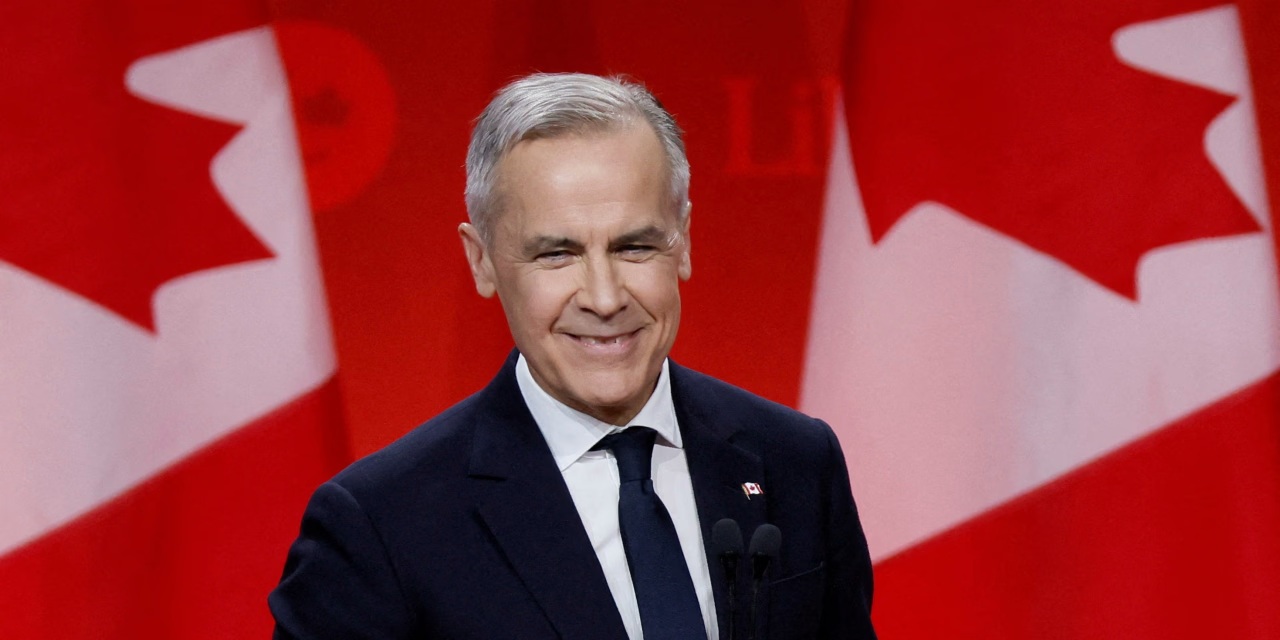
To my African leaders, I hope you are paying attention to the latest global developments: “Canada’s Prime Minister Mark Carney has sealed a sweeping agreement with Alberta that removes two major federal climate rules, clears the path for a West Coast oil pipeline, and exposes what many see as deep hypocrisy in the country’s energy politics.”

The move is echoing far beyond Ottawa and Edmonton as it is also being read internationally as another example of how Western governments push tough climate measures on developing nations while choosing flexibility for themselves when economic pressure rises.

Carney and Alberta Premier Danielle Smith signed the deal on Thursday, scrapping Ottawa’s planned emissions cap on the oil and gas sector and dropping nationwide clean electricity rules. Alberta, in exchange, will strengthen industrial carbon pricing and endorse the massive Pathways Plus carbon capture-and-storage project, which aims to capture emissions from the oil sands and funnel them into a shared storage network.

Yes, Prime Minister Mark Carney and Alberta Premier Danielle Smith have agreed to scrap key federal climate policies in the name of energy security. The deal eliminates the federal emissions cap on the oil and gas sector, suspends national clean electricity regulations in Alberta, and even supports a new oil pipeline to the West Coast. In short, the agreement is designed to boost energy production, not restrict it.

When Russia invaded Ukraine and Europe cut back on Russian energy, Germany reopened coal mines instead of holding the climate line. As we know, the United States is out of the Paris Agreement at the moment. But for many observers, Canada’s latest move is especially surprising, given its loud and moralistic position in the global climate crusade.

I remain an advocate for protecting our planet. Climate change is real, and Africa will bear disproportionate consequences since we do not have the insurance systems and resources to build more resilient-infrastructures. But I want African leaders to see clearly the double standards of the very nations that caused most of the environmental damage in the first place. They are not fully honest about their commitments when their national interests are at stake.

And that means Africa must therefore be pragmatic, not naïve. In climate geopolitics, there is no absolute climate “right” or “wrong”, only national interest. Let us protect our environment, but let us also protect our development, understanding that global players will always choose themselves first.

Canadian PM Strikes Deal With Alberta to Scrap Key Climate Rules for Energy Security

0

Canada’s Prime Minister Mark Carney has sealed a sweeping agreement with Alberta that strips away two major federal climate rules, clears the path for a West Coast oil pipeline, and underlines what many see as hypocrisy in the country’s energy politics.

The move is echoing far beyond Ottawa and Edmonton as it is also being read internationally as another example of how Western governments push tough climate measures on developing nations while choosing flexibility for themselves when economic pressure rises.

Carney and Alberta Premier Danielle Smith signed the deal on Thursday, scrapping Ottawa’s planned emissions cap on the oil and gas sector and dropping nationwide clean electricity rules. Alberta, in exchange, will strengthen industrial carbon pricing and endorse the massive Pathways Plus carbon capture-and-storage project, which aims to capture emissions from the oil sands and funnel them into a shared storage network.

The agreement instantly triggered political ripples inside Carney’s minority government. Steven Guilbeault, who served as environment minister under Justin Trudeau, resigned from cabinet hours after the announcement, arguing that key parts of Canada’s climate architecture were being taken apart.

For Carney, the shift is tied to economic survival. Speaking at an industry event in Calgary, he said President Donald Trump’s tariffs and the uncertainty around them will remove about $50 billion from Canada’s economy, an amount he likened to $1,300 per Canadian. With ninety percent of the country’s oil exports heading to the United States, Carney said it is no longer feasible to let one market determine the fate of such a central industry. He reaffirmed Canada’s goal of net-zero emissions by 2050 while acknowledging the need to adjust Trudeau-era environmental restrictions.

Industry players welcomed the deal, calling it overdue. The Canadian Association of Petroleum Producers said the end of the emissions cap, the planned changes to the Competition Act, and the commitment to open new markets amount to an important policy reset. Environmental organizations expressed alarm, warning that the move weakens national standards at a time when climate action requires stronger coordination, not fragmentation.

A Pipeline Alberta Has Wanted For Years

Alberta is exploring a new crude oil pipeline to British Columbia’s northwest coast that would finally offer direct access to Asian markets. No private company has taken on the project, largely due to federal rules that operators say made approvals nearly impossible. Companies and the Alberta government have said repeatedly that Ottawa would need to remove the emissions cap and reconsider the Oil Tanker Moratorium Act before anyone in the private sector would take on such a high-risk infrastructure plan.

Carney has now stepped in, promising a “clear and efficient” approval pathway and confirming that the marquee piece of the project — a pipeline carrying one million barrels of low-emission Alberta bitumen a day — would be financed and built by private operators. The federal government will amend tanker legislation so that Canadian crude can reach Asian buyers.

That promise lands in a province where opposition is already entrenched. British Columbia Premier David Eby said the tanker law should remain untouched. Several Indigenous groups along the northwest coast issued their own statement saying they will not accept oil tankers in their waters and that the proposed pipeline “will never happen.”

Even with the C$34 billion expansion of the federally owned Trans Mountain pipeline, which tripled its capacity last year, analysts expect existing routes to hit their limit by the end of the decade, especially as Alberta increases output.

What This Means for the West’s Climate Posture

In global energy circles, the Carney-Alberta deal is being watched closely for what it says about Western climate diplomacy. For years, wealthy governments in Europe and North America have pushed African nations to move rapidly toward clean energy and scale back fossil fuels, often tying funding and international support to those commitments.

Canada, the United States, and the European Union have repeatedly urged African oil-producing nations such as Nigeria, Angola, and Mozambique to drop new oil and gas projects and pivot toward renewables, arguing that the world cannot meet its climate goals without such transitions. At the same time, African leaders have countered that Western economies continue to rely heavily on fossil fuels, build new LNG projects, and relax emissions rules whenever national interests are at risk.

This new Canadian deal is now being cited as a fresh example of that imbalance. It shows how Western governments can lean toward energy security during moments of economic risk while expecting developing nations to move faster and with fewer options. Carney’s decision to roll back domestic climate restrictions illustrates the kind of concessions major economies are willing to make when their own industries face pressure.

African officials and analysts who follow global climate negotiations have long argued that Western expectations should not shape the continent’s economic future. Carney’s agreement with Alberta reinforces that view, making it harder for Western countries to demand strict fossil-fuel cuts abroad when they are publicly loosening their own rules at home.

Carbon Pricing, Power Infrastructure, and a New National Electricity Strategy

Along with the major reversals, the federal government and Alberta plan to finalize a new industrial carbon pricing deal by April 1 next year. They will also collaborate on building the Pathways Plus carbon capture system, promoted as the world’s largest planned CCS project.

Ottawa will support Alberta’s push into nuclear power, help strengthen its electricity grid to accommodate the needs of AI data centers, and back the construction of transmission lines linking the province with neighboring regions. Carney said the federal government will unveil a new electricity strategy aimed at doubling Canada’s clean-grid capacity.

BIS Head Warns of Looming Financial Stability Crisis from Highly Leveraged Hedge Fund Bets

0

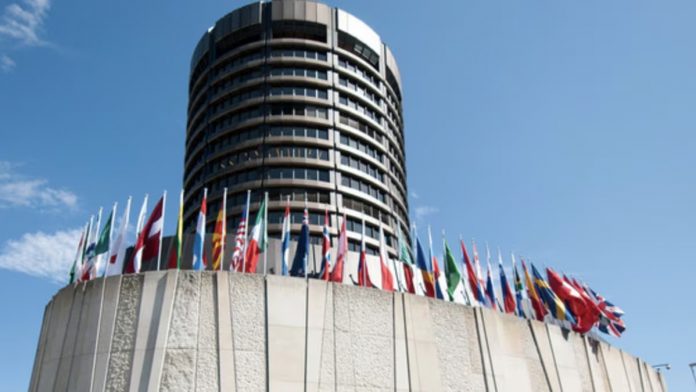
The global financial system faces significant new stability challenges as massive public debt levels collide with the increasing reliance on highly leveraged non-bank financial institutions (NBFIs), according to Pablo Hernández de Cos, the new General Manager of the Bank for International Settlements (BIS).

De Cos, who took over in July, has issued a dire warning, stating that curbing hedge funds’ ability to make highly leveraged bets in government bond markets must be a “key policy priority” for policymakers worldwide.

The central source of risk, according to the BIS chief, is the explosive growth of cash-futures basis trades, a form of “relative value” arbitrage that underpins much of the high-frequency trading in the world’s largest government bond markets, including U.S. Treasuries.

This strategy seeks to exploit tiny, temporary price differences—the “basis”—between a cash government bond (the underlying security) and its corresponding futures contract. Since arbitrage dictates that the prices of the two instruments must converge as the futures contract approaches expiration, hedge funds execute the trade by simultaneously buying the relatively cheaper security and selling the relatively more expensive one.

A typical trade involves three highly interconnected steps:

  1. The Position: The hedge fund buys the physical bond in the cash market (a long position) while simultaneously selling the corresponding futures contract (a short position). The aim is to lock in the small price differential.
  2. The Leverage: Because the profit margin on the basis is minuscule, hedge funds must employ massive leverage—often 30- to 60-times capital—to make the trade worthwhile. The cash purchase of the bond is financed by borrowing funds in the repurchase agreement (repo) market, using the purchased Treasury as collateral.
  3. The Margin: The short position in the futures market requires the posting of margin (collateral) with a central clearing counterparty. This leverage is synthetic but exposes the fund to futures market volatility.

The Systemic Risk: When Convergence Fails

While basis trades are essential for market efficiency and ensuring accurate price discovery, their highly leveraged nature transforms them into a critical source of systemic fragility during periods of market stress.

The peril lies in the dependence on the repo market and the constant possibility of margin calls. If bond prices drop sharply or volatility spikes, the central counterparty (clearinghouse) requires the hedge fund to post immediate additional cash (margin call) to cover potential losses. Simultaneously, the counterparty lending cash in the repo market may demand a larger haircut, effectively increasing the cost of financing and constricting liquidity.

This precise mechanism was highlighted after margin calls on U.S. Treasury future trades in 2021 fueled a bout of turmoil in the world’s biggest government bond market. When volatility spiked, many hedge funds were forced into a disorderly, rapid unwinding of their massive, leveraged positions.

To meet the margin calls, they had to quickly sell the underlying cash bonds, flooding the market and exacerbating the price decline, which, in turn, triggered more margin calls in a dangerous feedback loop known as a margin spiral. The selling pressure distorted prices and severely impaired market liquidity.

De Cos provided striking evidence of the unrestrained leverage currently employed, stating that approximately 70% of bilateral repurchase agreements (repos) taken out by hedge funds in U.S. dollars and 50% of those in euros are offered at zero haircut, meaning creditors are not imposing any meaningful constraint on leverage using sovereign debt as collateral.

Against the backdrop of alarming projections that the debt-to-GDP ratio of advanced economies could soar to 170% by 2050, absent fiscal consolidation, de Cos stated that reining in NBFI leverage was a “key policy priority.” He specifically called for a “carefully selected combination of tools,” prioritizing two measures:

  • Central Clearing: Implementing the greater use of central clearing so that government bond market players are treated more equally, reducing counterparty credit risk and increasing market transparency.
  • Minimum Haircuts: The application of “minimum haircuts”—or required discounts—to the value of the bonds hedge funds use as collateral, thereby directly limiting the extent of their leveraged plays in a targeted manner.

De Cos concluded with a reiteration of the non-negotiable role of central banks, noting that keeping inflation in check will remain the most effective way to support debt sustainability and that, given the rapidly deteriorating sovereign creditworthiness, the need for credible monetary policy and central bank independence is stronger than ever.

Bill Ackman Aims to Raise $5bn for U.S.-Listed Closed-End Fund as Pershing Square Prepares IPO

0

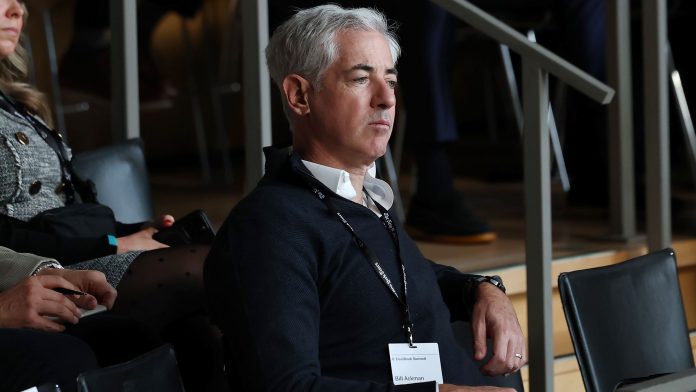
Bill Ackman is plotting a major two-pronged move: raise $5 billion for a new U.S.-listed closed-end fund while taking his hedge-fund firm, Pershing Square Capital Management, public.

People familiar with the plan told Reuters the two listings are intended to launch together, a synchronization meant to give investors simultaneous exposure to the new vehicle and to the firm itself.

The closed-end fund is being structured to mirror Ackman’s hedge-fund strategy but with two important differences designed to broaden its appeal: lower fees and faster access to capital than traditional hedge funds typically allow. That combination is intended to attract a wider array of investors — from large pensions and endowments to retail buyers who normally cannot get into hedge funds. Pershing’s people have discussed offering existing investors a sweetener: recipients of shares in the closed-end vehicle would also receive free shares of Pershing Square itself as part of the launch package.

Pershing Square’s management first contemplated a U.S. closed-end listing in 2024 and even moved to list Pershing Square USA, only to pull the IPO days before it was due to begin trading in July of that year. Ackman pared back earlier, much larger ambitions, plans that once targeted as much as $25 billion in capital, and the relaunch appears to be more modest and surgical by comparison. The earlier withdrawal remains a cautionary backdrop: the new effort is smaller, more targeted, and tied to an IPO of the management firm itself.

Pershing Square manages roughly $21 billion in assets today, largely through Pershing Square Holdings, the London-listed closed-end fund that has been the public bellwether for Ackman’s strategy. That vehicle has delivered double-digit returns in recent years, performance that underpins the pitch to U.S. investors who might otherwise be wary of a hedge-fund-style product.

Pershing’s recent balance-sheet moves, including a series of high-profile equity stakes and an expanded footprint in publicly traded and private assets, feed into the narrative that the firm has scale and an investable track record.

People briefed on the plan say the new closed-end fund will aim to bring in cornerstone institutional investors to anchor the deal; Bloomberg reported that about $2 billion could come from well-known institutional backers. That anchor demand would be intended to provide confidence to broader retail and wealth-management distribution at launch, and to help the new vehicle hit scale quickly — a critical factor for a fund that seeks to replicate the concentrated, activist style of a flagship hedge fund while still offering daily navigability.

Ackman has repeatedly said he wants to convert parts of his business to more permanent, institutionally accessible formats. The rationale is straightforward: converting a large, closed investor base into publicly tradable instruments can lower funding friction, reduce redemptions, and monetize the firm’s brand and investment track record. For investors, the pitch is also mechanical and attractive — easier liquidity than private hedge funds, lower headline fees than bespoke hedge funds, and a direct line to Ackman’s concentrated investing playbook.

The plan still faces material hurdles. Market windows matter for IPOs, and people familiar with the offering warned that the structure and timing could change with market conditions. The dual-listing strategy raises complex regulatory and governance questions: how to price the incentive shares, how to align the interests of public shareholders with those who will remain in the firm’s private partnerships, and how to manage conflicts that can arise when an activist manager runs both a public vehicle and a firm with separate private clients.

Pershing has been testing many of these ideas in the London market through Pershing Square Holdings, but the U.S. listing will invite a different set of investor expectations and regulatory scrutiny.

Corporate moves earlier this year show the firm’s appetite for large, concentrated wagers. Pershing Square has pushed heavily into Howard Hughes — increasing its stake substantially via cash investments and proposals to reshape the company — a reminder that Ackman still prefers to run big, concentrated positions and, when necessary, to assume active roles in management. Those deals demonstrate the kind of assets the closed-end fund might hold, and they also explain why some investors see Pershing as a hybrid between a public investment trust and an activist merchant bank.

The public reaction to the revived IPO idea will likely hinge on three things. First, the credibility of Pershing’s track record: the London vehicle has produced strong returns in recent years, and Pershing’s managers will lean on that performance to win investor commitment. Second, fee structure and governance: investors will scrutinize whether the “lower fees” pitch is genuinely meaningful after carried interest and performance fees are baked in. And third, the optics of selling free shares of the management company: regulators and long-term investors will want to see clear disclosure on dilution, voting rights, and how management incentives align with outside shareholders.

Ackman’s public personality is also part of the calculus. He is as well known for his activist campaigns as for his social media presence, a platform he uses regularly to shape market narratives and to spotlight investments. That visibility can help distribution — he has a large following on X and other platforms — but it also brings scrutiny and magnifies reputational risk if an investment goes wrong.

If the plan proceeds, it would represent one of the higher-profile attempts in recent years to bring hedge-fund alpha to a broader investor base without the classic liquidity and fee constraints. It would also mark a rare simultaneous public offering of both a fund vehicle and the management company — an arrangement that, if successful, could reset how prominent activist managers package and monetize their businesses.

For now, Pershing Square’s spokesperson declined to comment publicly, and those familiar with the plans cautioned that the numbers and timing could shift. Sources told reporters that early-2026 remains the target window for both the closed-end fund IPO and a listing of Pershing Square Capital — provided market conditions remain favorable.