DD
MM
YYYY

PAGES

DD
MM
YYYY

spot_img

PAGES

Home Blog Page 964

Canary PENGU and Invesco Solana ETF Filings Underscore Crypto’s Growing Integration

0

Cboe BZX Exchange filed a 19b-4 form with the SEC on June 25, 2025, to list the Canary PENGU ETF, which will invest 80-95% in PENGU tokens (a Solana-based meme coin) and 5-15% in Pudgy Penguin NFTs, with minimal SOL and ETH holdings for transaction purposes. This marks a significant step for institutional exposure to meme coins and NFTs.

Meanwhile, Invesco, in partnership with Galaxy Digital, filed an S-1 registration statement with the SEC on the same date for the Invesco Galaxy Solana ETF (ticker: QSOL), aiming to track Solana’s spot price. This is the ninth Solana ETF filing, joining others from firms like VanEck, Bitwise, and Fidelity. The fund will use Coinbase for custody and Galaxy Digital for SOL acquisition, with provisions for staking.

Both filings reflect growing institutional interest in altcoins and innovative crypto assets, with analysts estimating a 95% chance of Solana ETF approval by late 2025. The filings for the Canary PENGU ETF and Invesco Galaxy Solana ETF signal a growing institutional embrace of crypto assets, but they highlight a divide in the crypto market’s evolution and investor landscape.

The Canary PENGU ETF, focusing on a Solana-based meme coin (PENGU) and Pudgy Penguin NFTs, shows institutions are willing to venture beyond Bitcoin and Ethereum into speculative, community-driven assets. This could legitimize meme coins and NFTs as investable assets, attracting capital from traditional investors. The Invesco Galaxy Solana ETF, the ninth Solana ETF filing, reflects confidence in Solana’s ecosystem as a scalable blockchain rivaling Ethereum. Approval could drive significant capital inflows, given Solana’s $75 billion market cap and its use in DeFi and NFT projects.

These ETFs broaden crypto’s accessibility through regulated vehicles, appealing to retail and institutional investors who prefer traditional brokerage accounts over crypto exchanges. This could increase liquidity and stabilize prices for SOL and PENGU. The inclusion of staking in the Solana ETF filing suggests a push to maximize returns, potentially setting a precedent for future crypto ETFs to incorporate yield-generating strategies.

The SEC’s response to these filings will be pivotal. The Canary PENGU ETF’s focus on meme coins and NFTs may face scrutiny due to their volatility and perceived lack of “fundamental value.” However, approval could signal a more permissive regulatory stance on exotic crypto assets. Solana ETF filings, backed by major players like Invesco and Galaxy, have a high approval probability (analysts estimate 95% by late 2025). This could pressure the SEC to clarify rules around altcoin ETFs, especially after approving Bitcoin and Ethereum spot ETFs.

The PENGU ETF could fuel speculative fervor in meme coins and NFTs, potentially inflating their prices short-term but risking bubbles due to their sentiment-driven nature. Solana’s ETF filings may boost its price (currently ~$160) and ecosystem projects, reinforcing its position as a top-tier blockchain.

Solana ETFs represent a mainstreaming of established altcoins with robust ecosystems, appealing to institutional investors seeking exposure to scalable blockchains with real-world use cases (e.g., DeFi, NFTs). Canary PENGU ETF caters to a niche, speculative market, targeting retail investors and crypto enthusiasts drawn to meme coins and NFTs. This divide highlights a split between “serious” institutional capital and the playful, community-driven crypto subculture.

Solana, with its $75 billion market cap and established DeFi/NFT ecosystem, is seen as a lower-risk bet compared to PENGU, a meme coin, and Pudgy Penguin NFTs, which are highly volatile and sentiment-driven. The ETFs reflect a divide between stable, long-term investment strategies and high-risk, high-reward speculation. Solana ETFs are more likely to gain SEC approval due to their alignment with established crypto assets like Bitcoin and Ethereum. The PENGU ETF, however, faces a tougher path due to meme coins’ and NFTs’ speculative nature, highlighting a regulatory divide between “legitimate” and “fringe” crypto assets.

Solana ETFs target institutional and conservative retail investors seeking diversified crypto exposure. The PENGU ETF appeals to younger, risk-tolerant retail investors active in crypto communities on platforms like X. This creates a divide between traditional finance (TradFi) and decentralized finance (DeFi) mindsets. The Canary PENGU and Invesco Solana ETF filings underscore crypto’s growing integration into traditional finance but also highlight a divide between mainstream, institution-friendly assets (Solana) and speculative, community-driven ones (PENGU/NFTs).

Approval of either could accelerate crypto adoption, but their success will depend on regulatory outcomes, market sentiment, and investor appetite for risk. The Solana ETF has a clearer path to approval, potentially boosting SOL’s price and ecosystem, while the PENGU ETF’s fate will test the market’s tolerance for meme-driven investments.

U.S.-Africa Business Summit Yields Over $2.5bn in Trade Deals, Underlining Shift Toward Investment-Led Growth

0

The 17th U.S.–Africa Business Summit, held in Luanda, Angola, from June 22 to 25, 2025, closed with more than $2.5 billion in new deals and commercial commitments, setting a new record for U.S.–Africa trade and investment engagement.

The event, hosted by the Corporate Council on Africa in partnership with the President of Angola, drew over 2,700 delegates, including 12 African heads of state and senior U.S. government officials, solidifying the summit’s status as a landmark gathering.

According to the U.S. Department of State, the summit embodied the American government’s commitment to deepening investment ties with African countries through private sector-led growth. The latest edition placed less emphasis on foreign aid and more on mobilizing commercial capital to build infrastructure, drive industrialization, and boost regional connectivity.

“This engagement reflects the United States’ commitment to treating African nations as peers and partners in achieving mutual prosperity through investment-led growth,” the Department said.

Several headline-grabbing announcements defined the summit’s outcomes. Florida-based Amer-Con Corporation signed a strategic partnership with Angola’s Cargo and Logistics Certification Regulatory Agency to construct and operate 22 grain silo terminals along the Lobito Corridor. The project, backed by the U.S. Export-Import Bank, is expected to significantly boost Angola’s food security and agricultural logistics capacity.

Another major deal came from Cybastion, a U.S. cybersecurity firm, which partnered with Angola Telecom to launch a $170 million infrastructure project aimed at expanding Angola’s digital backbone. The investment includes cybersecurity upgrades, digital literacy programs, and high-speed connectivity across underserved regions.

In Sierra Leone, CEC Africa signed a memorandum of understanding with American partners and the U.S. International Development Finance Corporation to build West Africa’s first U.S.-sourced liquefied natural gas (LNG) terminal. The facility will support the 108-megawatt Nant Power Project, enabling the delivery of affordable electricity for industrial and household use.

Another key announcement came from the Ruzizi III Holding Power Company, which confirmed a partnership with U.S.-based Anzana Electric Group to secure a 10 percent equity stake in a $760 million hydropower project spanning Rwanda and the Democratic Republic of Congo. The project is expected to provide electricity to over 30 million people across the region, marking a major step forward in energy access and cross-border economic cooperation.

In Ethiopia, Ethiopia Investment Holdings signed an agreement with U.S. International Finance Partners to invest more than $200 million in tourism infrastructure, including luxury hotels and branded residences. The initiative reflects growing interest in Ethiopia’s economic diversification and tourism potential.

Meanwhile, energy infrastructure was a focal point of U.S.–Africa cooperation. A $1.5 billion agreement was reached between Hydro-Link and the Angolan government to construct a 1,150-kilometer electricity transmission line connecting hydropower plants in Angola to the mineral-rich Kolwezi region of the DRC. The project will enable the delivery of up to 1.2 gigawatts of power to support critical mining operations, helping to bridge the energy gap in one of the world’s most vital sources of cobalt and copper.

U.S. officials, led by Ambassador Troy Fitrell and senior representatives from the U.S. International Development Finance Corporation, the Export-Import Bank, and the U.S. Trade and Development Agency, emphasized that these agreements are designed not only to increase exports but also to facilitate mutual prosperity. The delegation reaffirmed President Trump’s Commercial Diplomacy Strategy for Africa, which aims to advance trade relationships rooted in shared interests.

What distinguishes this summit from past editions is the scale of private sector mobilization and the broad geographic distribution of deals across multiple African sub-regions. From energy and infrastructure to agriculture, digital technology, and tourism, the summit illustrated a shift in U.S. policy toward Africa—from donor-recipient dynamics to equal investment partnerships.

“The record turnout underscores a shared determination by U.S. and African leaders to dramatically scale trade and investment. The goal is not only to promote U.S. exports but also to create long-term economic partnerships across the continent,” the Department added.

The summit’s focus also aligned with the goals of the African Continental Free Trade Area (AfCFTA), which seeks to create a single market for goods and services across the continent. By improving logistics and digital infrastructure, and creating cross-border energy systems, many of the announced projects are expected to support the operationalization of AfCFTA and accelerate regional integration.

Beyond the headline deals, the summit underscored growing consensus among African leaders and U.S. investors that a collaborative, investment-driven approach is the key to unlocking Africa’s long-term potential. It also highlighted America’s intention to counter the influence of China and other global powers by offering more transparent, commercially viable investment alternatives.

In all, the 17th U.S.–Africa Business Summit delivered not only billions in investment pledges but also a blueprint for a more equitable economic relationship—anchored in trade, enterprise, and shared development. The challenge going forward will be turning memoranda of understanding into tangible projects that transform sectors and uplift communities across the continent.

Amazon Deploys One Million Robots to Its Warehouse, Redefining Work With AI-powered DeepFleet

0
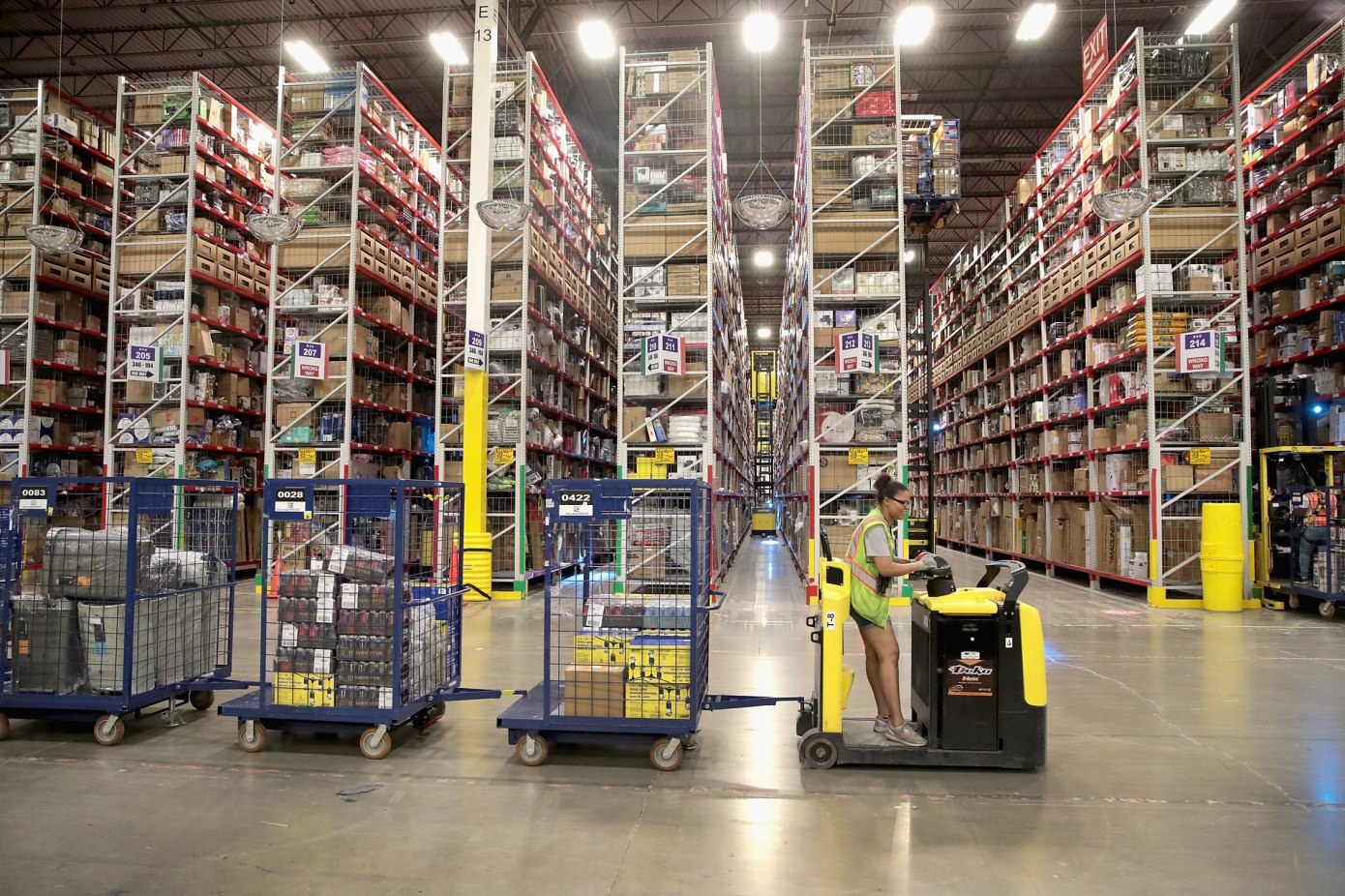
ROMEOVILLE, IL - AUGUST 01: Workers pack and ship customer orders at the 750,000-square-foot Amazon fulfillment center on August 1, 2017 in Romeoville, Illinois. On August 2, Amazon will be holding job fairs at several fulfillment centers around the country, including the Romeoville facility, in an attempt to hire more than 50,000 workers. (Photo by Scott Olson/Getty Images)

E-commerce giant Amazon has deployed its one millionth robot across its global network of over 300 fulfillment centers, with the landmark robot recently introduced in Japan.

For employees, the robots save physical labor and repetitive tasks, plus those who have been trained to manage the machines can make a lot more money.

This achievement underscores Amazon’s position as the world’s largest manufacturer and operator of mobile robotics. Alongside this, Amazon unveiled DeepFleet, a new generative AI foundation model designed to enhance the efficiency of its robotic fleet.

Announcing the deployment of Robots, Amazon wrote via a blog post,

“We’ve just deployed our 1 millionth robot, building on our position as the world’s largest manufacturer and operator of mobile robotics. This milestone robot was recently delivered to a fulfillment center in Japan, joining our global network that now spans more than 300 facilities worldwide. But that’s only part of the story.

“We’re also introducing a new generative AI foundation model we’ve designed to make our entire fleet of robots smarter and more efficient. Called DeepFleet, this AI technology will coordinate the movement of robots across our fulfillment network, improving the travel time of our robotic fleet by 10% and enabling us to deliver packages to customers faster and at lower costs.”

Built using Amazon’s extensive inventory movement data and AWS tools like Amazon SageMaker, DeepFleet minimizes congestion and streamlines robot paths in fulfillment centers, allowing Amazon to store products closer to customers.

This results in faster deliveries, lower operational costs, and reduced energy usage. The AI model’s ability to learn and improve over time ensures ongoing efficiency gains, reflecting Amazon’s practical approach to AI innovation focused on solving real-world challenges.

Amazon’s deployment of one million robots and the introduction of DeepFleet will have several significant impacts on the company which include:

1. Operational Efficiency: DeepFleet’s AI-driven coordination reduces robot travel time by 10%, minimizes congestion, and optimizes inventory placement. This leads to faster order processing (up to 25% quicker with systems like Sequoia) and lower operational costs, boosting Amazon’s ability to handle high order volumes, especially during peak seasons.

2. Cost Savings: By automating repetitive tasks like sorting and moving inventory, Amazon reduces labor costs and energy usage. Localized inventory storage enabled by DeepFleet further cuts shipping costs, improving profit margins.

3. Scalability: With robots now nearly equaling its 1.56 million human workforce, Amazon can scale operations across its 300+ global facilities more effectively, meeting growing e-commerce demand without proportional increases in labor costs.

For employees, the rise of automation has shifted job roles from repetitive tasks like lifting and sorting to higher-skilled positions managing robots, often with significantly higher pay. However, this transformation comes with workforce reductions. CEO Andy Jassy has been on a mission to trim costs across the company, laying off 27,000 employees since the beginning of 2022. He noted that while Amazon will continue to need human workers. The company averaged 670 employees per facility last year, the lowest in 16 years, according to a Wall Street Journal analysis.

Meanwhile, concerns about job displacement persist, as automation may reduce the need for manual labor, with CEO Jassy acknowledging that generative AI could shrink certain job categories while creating others. Recall that he recently indicated plans to further reduce the total workforce in the coming years. In May this year, the company laid off roughly 100 employees in its devices and services division.

As Amazon integrates advanced robotics and AI into its operations, it is reshaping labor, boosting productivity, and reducing turnover. Yet, the increasing automation raises questions about the long-term impact on jobs, even as it creates new opportunities in tech-driven roles.

Nigeria’s Dollar-Denominated Bond Drains N611.71bn in March, Raising Alarms Over FX-Linked Debt Exposure

0

The Federal Government of Nigeria spent a staggering N611.71 billion in March 2025 servicing its first-ever dollar-denominated bond issued within the domestic market, making it the largest single domestic debt service item for the month and highlighting the increasing strain foreign exchange-linked obligations are placing on the nation’s finances.

This was revealed in the Debt Management Office (DMO)’s report on actual domestic debt servicing for the first quarter of 2025. The report shows that the March payment alone accounted for 47.05% of the total N1.3 trillion spent servicing domestic debt that month, and 23.44% of the total N2.61 trillion spent during the entire quarter.

The bond in question was introduced in August 2024 under the $2 billion Domestic FGN USD Bond Programme. It attracted significant interest from local investors, raising over $900 million and becoming the first-ever foreign currency bond issued entirely within Nigeria’s borders.

Despite its domestic issuance, the instrument is dollar-denominated, meaning both interest and principal repayments are made in U.S. dollars or naira equivalents at prevailing exchange rates. This has become a key point of concern, particularly with the naira trading above N1,500 to the dollar.

The bond was 180% oversubscribed, later listed on the Nigerian Exchange (NGX) and FMDQ Exchange, and won the “West Africa Deal of the Year” award for its innovation and investor reception.

But the March payment paints a less celebratory picture. While the official interest due on March 6 was $44.97 million, converted at an exchange rate of N1,511.80/$, amounting to N67.99 billion, the DMO reported a total of N611.71 billion in debt service costs for the bond that month. The significant discrepancy suggests that the government may have redeemed part of the bond’s principal—possibly N543.72 billion—in addition to the scheduled interest, signaling an unexpected early repayment just seven months after issuance.

FX Risk Deepens Debt Strain

Although praised for providing a domestic alternative to Eurobond issuance and deepening local capital markets, the bond comes with a heavy cost: it introduces significant foreign exchange risk. Unlike traditional naira-denominated instruments, its repayment burden balloons every time the local currency weakens—essentially mirroring the pressure of external debt, even though the funds were raised locally.

By September 30, 2024, the bond had added N1.47 trillion to Nigeria’s domestic debt stock of N69.22 trillion, representing 2.12% of the total. As of March 31, 2025, the outstanding amount declined to N1.41 trillion, now just 1.88% of the N74.89 trillion revised domestic debt stock. This modest reduction masks a far more worrying trend: servicing such instruments under current FX conditions significantly worsens Nigeria’s fiscal stress.

Calls for Caution Over Currency Exposure

The March debt servicing cost for this one bond eclipsed interest payments on virtually all other domestic instruments combined, reigniting debate over Nigeria’s growing exposure to foreign currency liabilities—especially those tied to volatile exchange rates.

The bond was designed to attract dollar-holding institutional investors like pension funds, sovereign wealth funds, and multinationals by offering a tax-free and relatively safe investment while allowing the government to raise foreign exchange without relying on volatile international markets. But with the naira in decline and oil revenues stagnant, that strategy now looks increasingly fragile.

According to debt experts, such instruments may have long-term appeal but require careful calibration against exchange rate movements, inflation, and revenue shortfalls. Servicing a dollar-denominated bond from naira-based revenue, especially in an environment of FX scarcity and monetary tightening, can significantly distort the government’s balance sheet.

Additionally, the dollar bond experiment underscores a bigger dilemma: while Nigeria seeks alternative funding sources, its structural dependence on FX-pegged debt—both external and now domestic—may be undermining its efforts to stabilize public finance.

Analysts warn that even if no new external borrowing is undertaken, dollar-denominated instruments issued locally carry nearly identical fiscal pressures as foreign debt. With Nigeria already facing record debt service-to-revenue ratios and external reserves under pressure, any FX-linked obligation—whether domestic or foreign—should be treated with extreme caution.

Furthermore, the bond’s servicing cost has overshadowed the government’s broader domestic debt servicing strategy for the quarter, which has typically relied on less volatile instruments such as FGN bonds, T-bills, and Sukuk.

This Month’s Best Crypto Meme Coins Include Neo Pepe Coin ($NEOP), Bitcoin Hyper, & BTC Bull (July 2025)

0

Bitcoin Hyper Gains Momentum Amid July Crypto Frenzy

In the midst of July 2025, the crypto presale landscape is thriving, capturing investor enthusiasm across diverse projects. Bitcoin Hyper has notably surged to the forefront, generating significant attention due to its ambitious roadmap and user-focused decentralized finance (DeFi) protocols. Crypto influencer Ivan on Tech recently highlighted Bitcoin Hyper as a presale opportunity with exceptional technical robustness and potential for rapid community adoption.

Bitcoin Hyper’s recent announcements emphasize strategic partnerships, blockchain interoperability, and user-driven features to ensure scalability and mass-market appeal. The project’s presale is structured with escalating token values to reward early adopters and generate sustained engagement. Notably, it incorporates a transparent token release mechanism aimed at stabilizing market dynamics post-launch.

Bitcoin Hyper ($HYPER) continues to build impressive momentum, having surpassed $1.6 million in its presale, moving toward a $1.9 million cap with a token price around $0.01205. It serves as a Layer-2 solution for Bitcoin, providing near-instant transactions, smart contract capabilities via Solana Virtual Machine (SVM) integration, and staking with APYs nearing 467%. Launch timing remains flexible but potentially earlier due to high demand.

BTC Bull Emerges as Crypto Enthusiast Favorite

Alongside Bitcoin Hyper, BTC Bull is capturing headlines with its innovative platform designed specifically for bullish market conditions. Aimed at crypto traders and holders expecting significant gains, BTC Bull offers tools and incentives designed to maximize profitability during market uptrends.

Recent coverage from decentralized exchange Uniswap emphasizes BTC Bull’s unique liquidity strategies, where token holders benefit directly from platform-generated profits. Such mechanisms have increased investor trust, resulting in notable demand during presale stages. As July progresses, anticipation around BTC Bull continues to climb, signaling robust investor confidence.

BTC Bull Token ($BTCBULL) has amassed over $7.5 million with less than 72 hours remaining in its presale. Priced approximately at $0.00258, it features a 55% staking APY. BTC Bull implements Bitcoin milestone-triggered token burns at key price points and BTC airdrops to token holders at even higher BTC price thresholds, aligning rewards closely with Bitcoin market performance.

Top 5 Crypto Presale Picks in July 2025

  1. Neo Pepe Coin ($NEOP) – Neo Pepe is rapidly gaining prominence with its sophisticated DeFi integration, community-driven governance, auto-liquidity mechanisms, and innovative tokenomics. Priced currently at around $0.07, this presale is nearing stage four, projected at $0.08, solidifying its status as the best crypto presale and top pepe coin.
  2. Bitcoin Hyper ($HYPER) – As a revolutionary Layer-2 solution for Bitcoin, Bitcoin Hyper offers near-instant transactions, smart contracts through Solana Virtual Machine integration, and impressive staking rewards with APYs nearing 467%. Its presale currently stands above $1.6 million.
  3. BTC Bull ($BTCBULL) – With a presale fund exceeding $7.5 million, BTC Bull delivers an innovative platform tailored for bullish markets. It incentivizes holders through milestone-triggered Bitcoin burns and BTC airdrops, promising significant returns.
  4. Kaanch – This blockchain infrastructure project is creating significant buzz through robust investor support. It focuses on scalable, secure blockchain solutions, attracting attention with its potential for considerable long-term gains.
  5. Best Wallet – A revolutionary decentralized asset management platform, Best Wallet promises unmatched security and user-centric features, significantly transforming decentralized asset management.

Unanticipated Contender: Neo Pepe Makes Major Waves

Speaking of strong presale performers, Neo Pepe Coin ($NEOP) has rapidly distinguished itself as a standout among July’s leading crypto presales. Often mentioned in the same breath as Bitcoin Hyper and BTC Bull, Neo Pepe is not just another meme token—it integrates a sophisticated DeFi and governance ecosystem, promising users genuine community control.

Governance at Its Finest—Why Investors Favor Neo Pepe

Neo Pepe’s governance structure, powered by the NEOPGovernor contract, offers token holders unparalleled democratic influence over critical decisions, including treasury allocations and protocol changes. Community-driven voting ensures each decision is transparent and fair, executed via a secure Timelock mechanism to prevent impulsive or harmful actions.

Strategic Pricing Structure Fuels Investor Urgency

Currently at approximately $0.07 per token, Neo Pepe is on the verge of entering its fourth presale stage, where the price is set to rise to $0.08. Investors keenly aware of this price structure have rushed to secure tokens, knowing that early participation could potentially enhance their holdings’ value significantly. If you’ve been watching the market carefully, you might want to get a little Neo Pepe before the price increase takes effect.

Auto-Liquidity and Community-First Tokenomics

Beyond governance, Neo Pepe introduces a 2.5% auto-liquidity mechanism, automatically adding liquidity to Uniswap and burning liquidity provider (LP) tokens, permanently locking funds and stabilizing token price. This innovative mechanism further boosts investor confidence, aligning Neo Pepe’s interests squarely with its community.

Top Crypto Influencer Sees Promise

Crypto influencer Lark Davis recently highlighted Neo Pepe as “not just a meme coin but a serious DeFi contender.” This endorsement has significantly bolstered investor sentiment, proving influential in driving presale momentum.

Crypto Exchanges & Future Potential

The anticipation around Neo Pepe extends beyond presale stages, with discussions already underway for strategic decentralized exchange (DEX) listings. Platforms like Uniswap are likely early adopters, reflecting Neo Pepe’s community-driven ethos and robust technical underpinnings.

Crypto Royal Spots Neo Pepe’s Winning Moves

Crypto Royal digs into what makes Neo Pepe Coin different in an increasingly crowded crypto market. His take zeroes in on Neo Pepe’s smart liquidity setup, structured community-led decision-making, and presale design crafted for maximum impact—all elements positioning this coin to potentially outperform its peers.

Choose Your Reality—Join the Memetrix Now!

Break free from centralized control—unplug from the traditional financial system and dive into the Memetrix. Neo Pepe is your gateway to true decentralized freedom, empowering each holder to shape reality with every token. Are you ready to defy convention, embrace the meme-powered DeFi movement, and write the future alongside visionary rebels and financial revolutionaries? Take the green pill, choose $NEOP, and redefine what’s possible. Welcome to the Memetrix—the future is decentralized, and it begins with you.

Get Started with $NEOP

  • Website: Neo Pepe Coin Official
  • Whitepaper: Neo Pepe Coin Whitepaper
  • Telegram: Neo Pepe Coin Telegram
  • Twitter/X: Neo Pepe Coin Twitter