DD
MM
YYYY

PAGES

DD
MM
YYYY

spot_img

PAGES

Home Blog Page 99

J.P. Morgan Upgrades Atmus Filtration to Overweight Following $450m Koch Filter Acquisition Deal

0

Atmus Filtration Technologies (ATMU) surged 7.3% in Wednesday trading, capturing Wall Street’s attention after a pivotal upgrade from J.P. Morgan signaled that the company is shedding its image as a purely cyclical truck parts supplier.

Analyst Tami Zakaria raised the firm’s rating to Overweight from Neutral and hiked the price target to $60 (up from $53), arguing that the proposed $450 million acquisition of Koch Filter is a transformative event that unlocks high-growth industrial exposure, specifically in the booming data center market.

The upgrade is built on the premise that Atmus is fundamentally altering its growth algorithm. While commercial vehicle filtration remains the core business, the addition of Koch Filter introduces a faster-growing industrial vertical that commands higher valuations.

Zakaria highlighted that 8% of Koch Filter’s current revenue is tied to data centers—a vertical projected to grow by double digits for the foreseeable future as AI infrastructure demands escalate.

Based on conversations with management, J.P. Morgan calculated that Koch Filter has achieved a 10-year compound annual growth rate (CAGR) of approximately 9%, significantly outpacing Atmus’ legacy CAGR of mid-single digits since 2019.

The analyst believes this deal could elevate Atmus’ core organic growth rate to a “high single-digit percentage” over the long run, driven by ongoing share gains, the superior growth profile of the new industrial assets, and potential revenue synergies that have not yet been factored into current estimates.

The Koch Filter acquisition, valued at $450 million, reshapes the company’s revenue mix. Post-close, commercial vehicle filtration will account for roughly 88% of revenue, with industrial air filtration making up the remaining 8%. Importantly, 95% of Koch’s revenue is derived from the aftermarket, which boasts a shorter replacement cycle than Atmus’ traditional heavy-duty truck filters. This shift creates a more frequent, recurring revenue stream that is less susceptible to the boom-and-bust cycles of new truck manufacturing.

The bullish sentiment was further reinforced by the company’s third-quarter performance, which marked the completion of its full operational separation from its former parent, Cummins. In the earnings call, CEO Stephanie Disher described this as a “significant milestone” that frees the company to pursue its own destiny.

“Completing the separation enables us to redeploy resources, time and energy to focus on growth,” Disher said. She also emphasized the cultural transformation underway, dubbed the “Atmus Way,” citing a safety milestone of two years without a serious injury as proof of the organization’s discipline.

Q3 Financials

Despite a challenging global freight environment, Atmus delivered strong financial results for the third quarter:

  • Revenue: Sales climbed 10.9% year-over-year to $448 million, driven by a 6% increase in volume and 4% from pricing actions.
  • Profitability: Adjusted EBITDA rose to $92 million, expanding margins to 20.4% compared to 19.6% a year prior.
  • Cash Flow: Adjusted free cash flow hit $72 million, fueling an accelerated capital return strategy. Ideally positioned to return value, the company repurchased $30 million of stock in the quarter (bringing the total to $81 million since launch) and hiked its quarterly dividend by 10%.

The company’s ability to execute was underscored by its decision to raise full-year 2025 guidance, even as it forecasts U.S. medium and heavy-duty truck markets to be down 20-25%.

  • New Revenue Target: $1.72 billion to $1.745 billion (up 3-4.5% year-over-year).
  • Profit Outlook: Adjusted EBITDA margin is now expected between 19.5% and 20%, with adjusted EPS forecast at $2.50 to $2.65.

CFO Jack Kienzler noted that the company’s strong liquidity—$618 million in available funds—provides the flexibility to continue aggressive M&A while weathering market volatility.

“We ended the quarter with $218 million of cash on hand. Combined with the full availability of our $400 million revolving credit facility, we have $618 million of available liquidity. Our strong liquidity provides us with operational flexibility in the current dynamic market to effectively manage our business and execute on our growth opportunities,” he said.

With a net debt-to-adjusted EBITDA ratio of just 1.0x, the balance sheet remains pristine even as the company gears up for the Koch integration.

Investors are betting that the Koch acquisition is the first step in a broader re-rating of Atmus. By successfully layering a high-growth industrial acquisition on top of a cash-generative legacy business, Atmus is signaling that it intends to be a compounder rather than just a cyclical stock. As J.P. Morgan noted, the combination of share gains, M&A, and exposure to the AI infrastructure build-out provides a clear path to a higher valuation multiple.

Yen Slips Despite Rising Expectations of December BOJ Hike

0

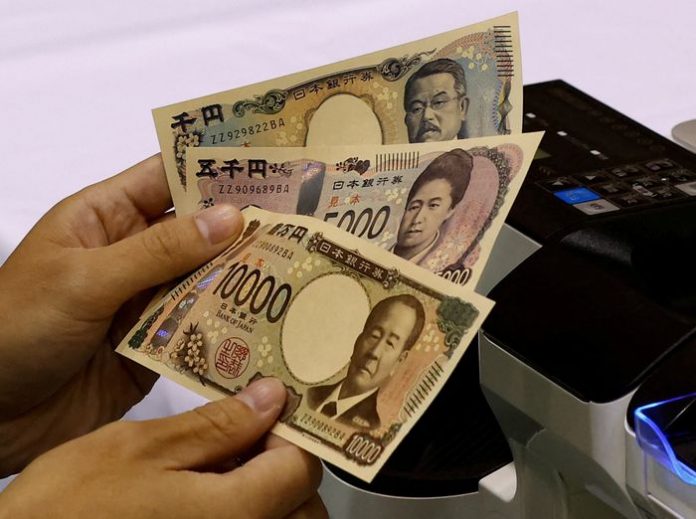
The yen weakened on Wednesday even as expectations firmed that the Bank of Japan could raise interest rates next month, underscoring the unusual volatility gripping global currency markets.

Investors initially pushed the yen higher after Reuters reported that the BOJ is preparing markets for a possible hike as soon as December, but the currency later reversed sharply, becoming the weakest performer against a broadly softer dollar.

According to sources familiar with internal discussions, who spoke to Reuters, the BOJ has revived earlier hawkish language as concerns grow over rapid yen depreciation and as political pressure to keep rates near zero begins to ease. The yen hit an intraday high of 155.66 per dollar before sliding 0.3% to 156.51, a notable move given the dollar’s weakness on the day.

The currency has been under sustained pressure in recent months, weighed down by doubts about Japan’s deteriorating fiscal position. Traders remain acutely sensitive to signals that the Ministry of Finance could step in to defend the yen — especially during periods of thin liquidity.

“There is a possibility of intervention over Thanksgiving, but if the market’s fear of intervention is sufficient to stop dollar/yen from rising, it sort of reduces the possibility,” said Jane Foley, head of FX strategy at Rabobank London.

She added that Tokyo has a history of intervening during exceptionally light trading sessions because such conditions allow authorities to “get more bang for their buck,” a dynamic that explains why markets are on alert for action toward the end of the week.

Dollar Softens as Traders Bet on a Dovish Fed and Potential Policy Shift

Beyond Japan, the dollar struggled across major currencies after benign U.S. economic data strengthened expectations of a Federal Reserve rate cut in December. Markets are also reacting to political developments in Washington, where momentum is building around the selection of a new Fed chair.

Bloomberg News reported that White House economic adviser Kevin Hassett has emerged as the frontrunner to replace Jerome Powell. Hassett has previously argued — like Trump — that U.S. interest rates are too high. U.S. Treasury Secretary Scott Bessent said on Tuesday there was a strong chance the president would announce his pick before Christmas.

“(Hassett) would be on the dovish side definitely, when you compare with some of the other members that were discussed,” said Ales Koutny, head of international rates at Vanguard in London.

But he noted that markets are about to receive a flood of long-delayed U.S. economic data.

“At the end of the day, we have had three months without economic data from the U.S. and we’re going to get a lot … markets will be much more driven by actual fundamental data rather than an appointment for the Fed chair.”

The CME FedWatch tool now shows traders pricing in an 85% chance of a 25-basis-point cut in December, a sharp shift from expectations earlier in the quarter.

The euro, which rose 0.4% against the dollar on Tuesday, held steady at $1.1570.

Sterling Swings Ahead of British Budget After Surprise OBR Forecast Release

The pound also saw sharp intraday moves as investors digested a surprise release of updated forecasts from Britain’s Office for Budget Responsibility (OBR). The figures offered a brighter view of the country’s economic trajectory, prompting an initial rally in sterling before the currency fell back.

The UK budget announcement was made at 1230 GMT, with investors beginning to make fiscal plans for 2025.

Sterling was last down 0.24% at $1.3139 and softer against the euro at 88.06 pence.

Kiwi and Aussie Dollars Firm as Policy Paths Diverge in Asia-Pacific

The New Zealand dollar strengthened after the Reserve Bank of New Zealand cut interest rates to 2.25% — a move widely expected — but signaled that its easing cycle is likely over. Signs of early economic recovery helped lift the kiwi nearly 1% to $0.5669, marking its strongest level in more than two weeks as traders scaled back expectations for additional cuts.

Across the Tasman Sea, the Australian dollar rose 0.4% to $0.6490 following data showing inflation accelerated for a fourth consecutive month in October. The pickup in price pressures has effectively shut the door on further policy easing by the Reserve Bank of Australia.

Rabobank’s Jane Foley said the broader global picture is shifting: “We’re getting to the point where a significant number in G10 countries have already potentially completed their rate cutting cycles, and where their next move could be interest rate hikes.”

A Market on Edge

Taken together, the day’s currency movements paint a picture of markets caught between evolving political signals, shifting inflation trends, and diverging central bank strategies. The yen’s reversal stands out as a pointer that even as the BOJ hints at tightening, doubts linger over Japan’s fiscal trajectory and the potential for official intervention.

And with the U.S. Federal Reserve, the UK Treasury, and Asia-Pacific policymakers all pulling markets in different directions, traders are bracing for a volatile end to the year.

ECB Warns Euro Zone Banks to Fortify Dollar Buffers as U.S. Currency Volatility Rises Under Trump

0

Euro zone lenders with large dollar operations have been urged to strengthen their liquidity and capital positions to guard against instability in the U.S. currency, according to a fresh warning from the European Central Bank on Wednesday, reported by Reuters.

The emphasis comes as President Donald Trump’s actions continue to unsettle global markets, particularly through tariffs and repeated public pressure on the Federal Reserve, which earlier this year weakened confidence in the world’s reserve currency.

The guidance appears in the ECB’s latest Financial Stability Review, a twice-yearly assessment that, while not binding, reflects the deepest concerns of policymakers monitoring cross-border financial risk. The review sharpened earlier signals sent to banks this spring, when officials first warned institutions to monitor their exposure to dollar funding strains. This time, the central bank named the high-exposure lenders and urged a more concrete response.

The ECB said in the report that major eurozone banks operating heavily in dollars should expect greater currency swings and counterparty concerns. It advised that “capital headroom could be needed to absorb … higher currency volatility and counterparty credit risk,” adding that banks should hold enough liquid U.S. dollar assets to steady their balance sheets and meet possible outflows.

The warning sits alongside broader concerns outlined in the review, including elevated equity-market valuations, global debt burdens, tariff disputes, and the growing footprint of stablecoins, which regulators fear could trigger risks across payment systems.

While the publication is not a list of mandatory rules, its tone highlights the scale of anxiety inside the ECB over dollar liquidity. Euro zone banks rely heavily on repurchase agreements and foreign-exchange swaps to obtain short-term dollar funding. In an extreme stress event, the ECB cautioned that lenders could run through their access to repos, FX swaps, and asset sales.

The review stopped short of describing the worst case, but one scenario — though not mentioned directly — would be the Federal Reserve withdrawing access to its emergency swap line with the ECB, a backstop that banks have leaned on since the global financial crisis.

Officials speaking privately have even discussed, according to Reuters sources, the idea of pooling dollar and gold reserves outside the United States as a protective measure, though this has not moved beyond preliminary thinking.

Presenting the review in Frankfurt, ECB Vice President Luis de Guindos dismissed speculation that swap lines might be cut off. He underscored their value in calming markets on both sides of the Atlantic, saying: “We do not have any sort of information with respect to the modification of the present situation, with respect to swap lines. These bilateral swap lines are very important factors to keep financial stability in place on both sides of the Atlantic.”

New York Fed President John Williams earlier this month also voiced strong support for maintaining those channels, noting they benefit both the United States and its partners.

The ECB identified the bloc’s primary dollar-heavy institutions as BNP Paribas, Deutsche Bank, Credit Agricole, Groupe BPCE, ING, Banco Santander, and Société Générale. Their dollar operations often involve borrowing in U.S. money markets to finance hedge funds or issuing FX swaps to European insurers, funds, and corporates seeking to hedge their exposure. To cushion their own exposure, these banks typically take opposite positions with global lenders through swaps that remain largely off-balance sheet.

Those rollover positions, the ECB said, can become difficult to maintain whenever the FX swap market is under stress. The central bank noted that while it sees only a limited mismatch between dollar assets and liabilities for now, banks are increasingly using repos to align maturities. That strategy, the report stressed, “does not fully eliminate liquidity risk.”

ECB data shows euro zone banks held €681 billion in dollar-denominated securities at the end of last year, while extending loans worth the equivalent of €712 billion in U.S. currency.

Taken together, the review signals that eurozone lenders with deep exposure to dollar markets need to tighten their cushions at a time when global uncertainty is being amplified by policy shifts in Washington. While market conditions remain calm for now, the ECB’s tone suggests an expectation that volatility in the dollar could flare again — and that the banks most reliant on it should be ready.

ChatGPT and Microsoft Copilot Set to Leave WhatsApp as Meta Enforces New Ban on Third-Party AI Assistants

0

OpenAI’s ChatGPT and Microsoft’s Copilot are preparing to leave WhatsApp, one of their largest global distribution channels, as Meta moves ahead with sweeping policy changes that will bar AI companies from using the platform to deliver chatbots not built by Meta.

The withdrawal follows upcoming updates to WhatsApp’s Business Solution terms of service, which come into force on January 15th, 2026. Both OpenAI and Microsoft confirmed that their chatbots will remain functional inside WhatsApp until that date, after which the service will be shut down.

OpenAI first announced its departure several weeks ago. Microsoft followed this week with a similar announcement. Each company pointed directly to Meta’s revised terms as the reason the chatbots must exit. The changes target business API usage, limiting it strictly to customer support and informational messaging rather than the distribution of standalone AI assistants.

The policy was first signaled in October, when WhatsApp outlined updated rules that specifically prevent external AI firms from delivering consumer-facing chatbot experiences. Meta has argued that the business API was never designed to serve as a launchpad for rival AI companies and is instead intended for businesses to interact with their customers, send updates, and provide support.

A Meta spokesperson, speaking anonymously to TechCrunch at the time, said: “The purpose of the WhatsApp Business API is to help businesses provide customer support and send relevant updates. Our focus is on supporting the tens of thousands of businesses who are building these experiences on WhatsApp.”

The change leaves little room for interpretation. External companies can still deploy automated systems for customer service, but any product that uses WhatsApp as the core channel for AI interaction will no longer be allowed. This directly affects ChatGPT and Copilot, which operate inside WhatsApp as complete AI assistants rather than backend tools.

Users will have different experiences when the transition begins. ChatGPT users will be able to link their accounts to WhatsApp before the shutdown so their chat history remains accessible outside the messaging app. Copilot users do not have access to any such option. Once Copilot leaves WhatsApp in January 2026, conversations held inside the app will not carry over unless users export them manually.

The decision is expected to trigger further departures. Other chatbot makers, including Perplexity, fall under the same restrictions and are likely to announce their exit in the coming weeks. By next January, Meta AI will stand as the only general-purpose conversational assistant officially accessible within WhatsApp.

For Meta, the policy marks a strategic tightening of its ecosystem. WhatsApp, with more than two billion users, has become an important gateway for consumer-facing automation. By limiting access, Meta not only reshapes the competitive landscape for AI assistants but also secures exclusive control over how conversational AI lives inside its most widely used platform.

The adjustment also underlines the increasing tension around distribution channels in the AI industry. Messaging apps have become critical real estate. With WhatsApp now closing its doors to external AI tools, ChatGPT, Copilot, and other companies must rely more heavily on their own mobile apps, web platforms, and integration deals to reach users.

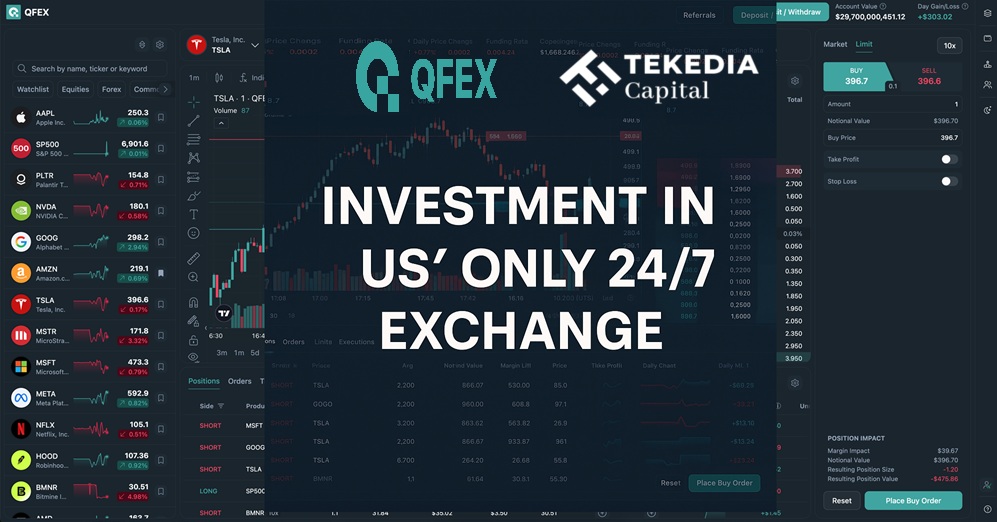
Tekedia Capital Invests In QFEX, the World’s Only 24/7 Exchange for Equities, Commodities, and FX

0

Tekedia Capital is excited to announce our investment in QFEX, the world’s first and only 24/7 exchange for U.S. equities, commodities, and FX: “QFEX is the first exchange and trading platform to allow round the clock, seven-day trading on a range of assets, letting people invest and trade whenever they like, providing flexibility to trade around their day job and other commitments.”

Over time, QFEX plans to expand its market offerings, enabling investors to trade equities, commodities, and FX the same way they trade Bitcoin, Ethereum, and other digital assets, with no opening bell, no closing bell, and no downtime.

QFEX is engineered by founders who believe markets should operate the way modern technology allows them to. The founders met at Cambridge, studying Mathematics, before moving into the temples of global finance, one as a high-frequency trader at Tower Research Capital, and the other as an engineer at Citadel. Today, they have converged to build QFEX, and Tekedia Capital is proud to support their mission to reinvent how global markets operate.

In the Igbo Nation, we say “uwa bu ahia” [literally the world is a marketplace]. And if the world is truly a marketplace, then markets should never close. With QFEX, U.S. exchanges will now remain open 24/7, giving investors round-the-clock access to trade whenever opportunity calls.