

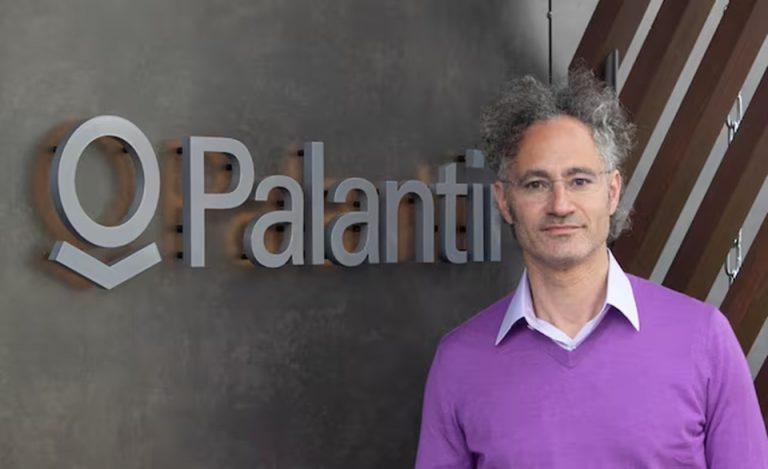
Palantir Technologies CEO Alex Karp has warned that the global artificial intelligence (AI) arms race between the United States and China will culminate with one country decisively outpacing the other.
Speaking on CNBC’s Squawk on the Street on Thursday, Karp said, “My general bias on AI is it is dangerous. There are positive and negative consequences, and either we win or China will win.”
Karp, a vocal proponent of U.S. technological superiority, has repeatedly stressed the need for an “all-country effort” to develop more advanced AI systems.
Register for Tekedia Mini-MBA edition 20 (June 8 – Sept 5, 2026).
Register for Tekedia AI in Business Masterclass.
Join Tekedia Capital Syndicate and co-invest in great global startups.
Register for Tekedia AI Lab.
“We need to run harder, run faster,” he said earlier in January, emphasizing that U.S. dominance in AI is vital for both economic and national security interests. In a recent letter to shareholders, Karp highlighted Palantir’s role in strengthening U.S. defense capabilities, portraying the company as central to the country’s efforts to stay ahead in the race for next-generation technologies.
Palantir, based in Denver, has become a key player in AI and national security. Its government contracts have fueled investor confidence, driving the company’s stock up by 74% in 2025. Karp credits this to Palantir’s unique approach—one that combines deep domain expertise with fast adaptation to emerging technologies.
“There is no economy in the world with this kind of corporate leadership,” he said. “Our allies in the West, in Europe, are going to have to learn from us.”

But the company’s rise hasn’t been without scrutiny. A recent New York Times report claimed Palantir was aiding the Trump administration in domestic surveillance efforts. Karp denied the allegations, saying, “We are not surveilling Americans.”
Karp’s warnings come amid rising concern among American officials and industry leaders about China’s rapid progress in AI, quantum computing, and semiconductor technology. In response, the U.S. government has imposed a series of export controls and sanctions aimed at slowing Beijing’s momentum.
In 2022, Washington tightened restrictions on the sale of advanced AI chips and semiconductor manufacturing tools to China, blocking companies like Nvidia from exporting their most powerful chips to Chinese firms. The Biden-era rules—which the Trump administration has since expanded—also bar U.S. citizens from working with Chinese firms involved in AI and chip development without special approval.

But China has been actively defying these restrictions. Despite the embargoes, Huawei in 2023, unveiled a smartphone powered by a 7-nanometer chip developed domestically, shocking analysts and signaling that China’s semiconductor ambitions remain very much alive. Beijing has also ramped up investment in homegrown AI startups and accelerated efforts to localize its tech stack to reduce dependence on U.S. technologies.
A key concern in Washington is China’s integration of AI into military systems and its use of surveillance technologies in ways deemed authoritarian. In 2021, the U.S. blacklisted several Chinese firms linked to military AI development, including SenseTime and iFlytek, citing human rights abuses and security risks.
Industry Leaders Voice Similar Warnings
Karp’s outlook mirrors the sentiments of other influential tech leaders who see China’s technological ambitions as a direct threat to U.S. global influence.
Nvidia CEO Jensen Huang has warned that the Chinese AI ecosystem is advancing at a rapid pace and cannot be underestimated.
“Like everybody else, they are doubling, quadrupling capabilities every year,” Huang said earlier this year. He believed that will continue.
Former Google CEO Eric Schmidt, who chaired the U.S. National Security Commission on Artificial Intelligence, has consistently cautioned that the U.S. risks falling behind without a more coherent strategy.
Schmidt initially stated that the U.S. was two to three years ahead of China in AI, but he now recognizes that DeepSeek’s rapid development and cost-effectiveness challenge that assumption. He views the emergence of DeepSeek as a “turning point” in the global AI landscape, highlighting China’s growing capabilities.
As both nations continue to pour billions into AI development, the divide grows deeper—and more dangerous. Karp’s assertion that the contest will have a clear winner reflects mounting fears that the AI rivalry may shape not only economic power but global political order for decades to come.