

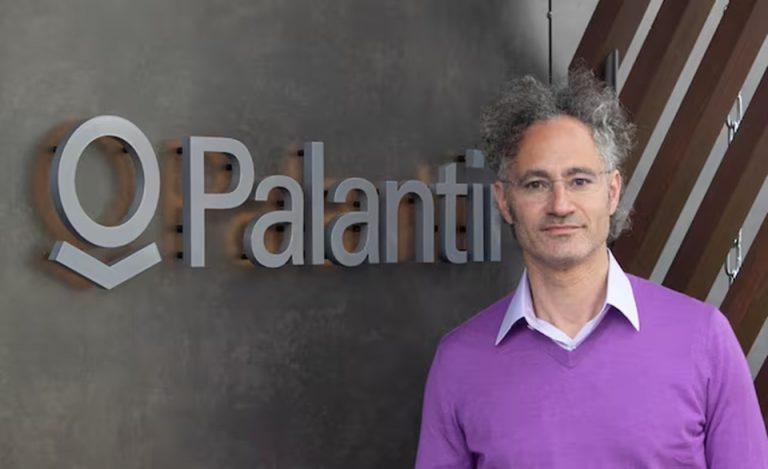
Palantir Technologies has secured a $300 million contract with the United States Department of Agriculture, deepening its reach inside the federal government as Washington turns to artificial intelligence and data integration to manage agricultural risks increasingly shaped by geopolitics.
The agreement builds on existing collaboration and reflects a broader policy shift: farmland, crop output, and agricultural logistics are now being treated as components of national security infrastructure. The USDA is expected to deploy Palantir’s platforms to consolidate fragmented datasets across land ownership, crop production, and supply chains into a centralized system designed to improve oversight and decision-making.
This pivot comes at a time when U.S. agriculture is navigating overlapping shocks. Farmers are facing elevated input costs, unstable export demand, and growing uncertainty tied to geopolitical tensions. The trade dispute with China, a major buyer of U.S. soybeans, has already demonstrated how quickly demand can collapse. Late last year, Chinese pullbacks disrupted pricing and left producers with excess supply, forcing many to reconsider planting strategies.
Register for the next Tekedia Mini-MBA.
Register for Tekedia AI in Business Masterclass.
Join Tekedia Capital Syndicate and co-invest in great global startups.
The pressure has intensified with the Middle East conflict. Higher energy prices, linked to shipping disruptions and instability in key oil transit routes, have fed directly into fertilizer costs, a critical input for large-scale farming. Because fertilizer production relies heavily on natural gas and global transport networks, even marginal disruptions can cascade into sharp cost increases. For farmers, that translates into tighter margins and difficult decisions over crop selection, acreage, and investment.
The Trump administration has attempted to cushion the blow. In December, Donald Trump announced a $12 billion bailout for farmers affected by the trade war. But industry analysts say such measures offer only temporary relief, particularly when global factors beyond domestic policy control are driving cost pressures.
Within this context, the USDA’s partnership with Palantir is aimed at improving situational awareness. By integrating real-time data on inputs, yields, logistics, and market conditions, policymakers hope to better anticipate disruptions and respond more effectively. The system could also support scenario modelling, allowing officials to assess how shocks—such as export restrictions or fuel price spikes—would ripple through supply chains.

Another driver behind the deal is growing concern over foreign ownership of U.S. farmland. Lawmakers and policy analysts have warned that acquisitions linked to Chinese entities could carry implications, particularly if they provide visibility into or influence over food production. A report from the Foundation for Defense of Democracies recommended reforms to the Agricultural Foreign Investment Disclosure Act, urging tighter reporting rules “to prevent China and other adversarial countries from exploiting commercial land transactions to gain a strategic edge over the United States.”
Palantir’s tools are expected to play a role in closing those gaps by improving transparency around land transactions and ownership structures. This aligns with a broader effort in Washington to strengthen oversight of critical assets, from semiconductors to energy infrastructure, as geopolitical competition intensifies.
However, the deal means that Palantir will continue expansion beyond traditional defense work. Founded in the aftermath of the September 11 attacks, the company built its reputation on intelligence and counterterrorism applications. It has since evolved into a key provider of AI-driven analytics for both military and civilian agencies.

Its Maven Smart System, used by U.S. forces in Iran, highlights the convergence between battlefield and data-driven decision-making. Chief executive Alex Karp has framed this shift in stark terms, telling CNBC: “The fact that you can now target more precisely … has shifted the way in which war is fought.”
That same analytical capability is now being applied to agriculture, where precision, whether in targeting threats or optimizing production, is increasingly valuable.
But the company’s growing influence has not come without controversy. Palantir has faced sustained criticism over its work with U.S. Immigration and Customs Enforcement and the Department of Homeland Security, amid reports that its platforms have been used for surveillance. Civil liberties advocates argue that the expansion of such technologies into domestic sectors raises questions about data privacy and government overreach.
Those concerns are likely to follow the USDA deployment, particularly as it involves large-scale aggregation of sensitive data related to land ownership and agricultural activity. How that data is governed, who has access, and how it is used will be closely scrutinized.
On the market side, Palantir’s trajectory underlines both enthusiasm and skepticism around AI-driven business models. The company’s stock surged more than 25-fold between 2022 and the end of 2025, propelled by strong demand for its platforms. This year, shares have declined about 18%, as investors reassess valuations and growth expectations.
Short sellers remain vocal. Michael Burry has described the stock as “wildly overvalued,” a view that underscores broader concerns about whether current AI-driven gains can be sustained. Karp has responded forcefully to such criticism, saying: “I do think this behavior is egregious and I’m going to be dancing around when it’s proven wrong.”
The USDA contract adds a new dimension to that debate. It positions Palantir not just as a technology vendor, but as a partner in managing one of the most fundamental components of economic stability: food supply. It also illustrates how the boundaries between defense, economic policy, and domestic infrastructure are becoming increasingly blurred. In effect, Washington is applying a national security framework to agriculture, using advanced analytics to monitor, predict, and respond to risks that extend well beyond farm boundaries.