

The postponement of Palestine’s legislative elections, scheduled for November 28, 2026, has exposed the political crisis facing Palestinians.
President Mahmoud Abbas has set September 11, 2027, for simultaneous presidential and legislative elections. The delay may be presented as a practical response to extraordinary conditions, but it extends a democratic vacuum that has weakened confidence in Palestinian leadership.
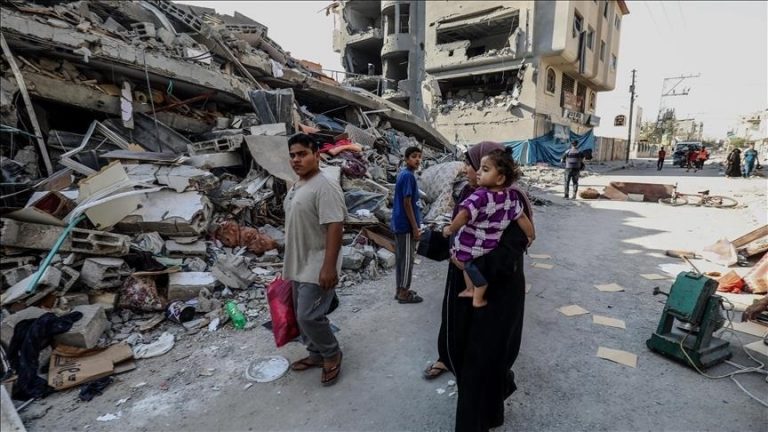
Palestinian officials cite deteriorating security, political and economic conditions. In the West Bank, Israeli military operations, settlement expansion, settler violence and movement restrictions make campaigning and voting difficult.
Register for the next Tekedia Mini-MBA.
Register for Tekedia AI in Business Masterclass.
Join Tekedia Capital Syndicate and co-invest in great global startups.
Israel’s withholding of Palestinian tax revenues has further constrained the Palestinian Authority’s finances. In Gaza, destruction, displacement, incomplete Israeli withdrawal and the absence of reliable security arrangements complicate preparations.
Restrictions on election officials and observers in Gaza and East Jerusalem also threaten an inclusive vote. Officials say postponement will allow dialogue and better conditions. Yet repeated delays risk turning exceptional circumstances into a permanent justification for avoiding accountability.
Over the coming year, representation must be strengthened through an inclusive roadmap. Fatah, Hamas and other movements should engage in dialogue, while independent candidates, women, young people and civil society receive meaningful opportunities to shape the process.

Voter registration should be updated, displaced people helped to replace lost identity documents, and accessible voting arrangements developed across Gaza, the West Bank and East Jerusalem.
The Central Elections Commission must be protected from interference, adequately funded and given access to all areas. Independent observers should monitor campaigning, polling and counting. Freedoms of assembly, association and expression must be protected.
Institutional reform is equally urgent. The Palestinian Authority needs stronger legislative oversight, an independent judiciary, transparent procurement, access to information and effective anti-corruption mechanisms.

Security institutions should operate under civilian accountability. Limits on executive authority, regular elections and peaceful transfers of power would help prevent governance by decree.
The Palestine Liberation Organization should broaden representation to include political forces and Palestinians beyond the occupied territories. Reforms will lack credibility unless implemented transparently and improve daily life.
Israel’s October 2026 election adds uncertainty. No bloc secured a parliamentary majority, leaving coalition negotiations unresolved and Benjamin Netanyahu in a caretaker role.
A government dependent on hard-line parties could intensify settlement expansion and opposition to Palestinian statehood, making political renewal harder. A different coalition might create diplomatic openings, but Israel’s internal politics cannot guarantee Palestinian democratic rights. International pressure and practical guarantees remain essential.
Recent polling reveals demand for renewal alongside distrust. An October survey by the Palestinian Center for Policy and Survey Research found 53% supported elections on schedule, while 21% accepted a delay of less than six months.
Only 55% expressed definite or likely voting intention, and just 31% of young people aged 18–22 said they were registered. The poll also found growing interest in independent lists and technocratic competence as traditional factions lose support.
Palestinians appear to want accountable leadership, not simply another contest between established parties. The authorities should publish quarterly progress reports and invite public scrutiny.
The 2027 election date must become a firm commitment, not another postponable promise. Democratic renewal requires inclusive participation, credible institutions and freedom from coercion.
Without measurable progress, another delay could deepen fragmentation and further erode the legitimacy elections are meant to restore.