


For more than two decades, Nigeria’s political scene has been shaped as much by the movement of people as by the parties themselves. When we step back and look at who moved, when, and with whom, a striking picture emerges about loyalty, opportunity, and the search for political survival. By watching who stands with whom over time, we see that politics is as much about relationships as manifestos.
Shifting Allegiances in Nigerian Politics
For more than two decades, Nigeria’s political scene has been shaped by the movement of leaders across party lines. The decisions of prominent figures to leave one platform for another tell us a great deal about loyalty, opportunity and survival. Atiku Abubakar alone moved between the People’s Democratic Party (PDP) and the All Progressives Congress (APC) several times. Rabiu Kwankwaso travelled from PDP to APC and later to the New Nigeria Peoples Party (NNPP). Aminu Tambuwal, Bukola Saraki and Dino Melaye also appear repeatedly in the record of defections. Governors such as Godwin Obaseki, David Umahi, Ben Ayade and Bello Matawalle switched sides at critical moments during their state careers.
PDP and APC at the Centre
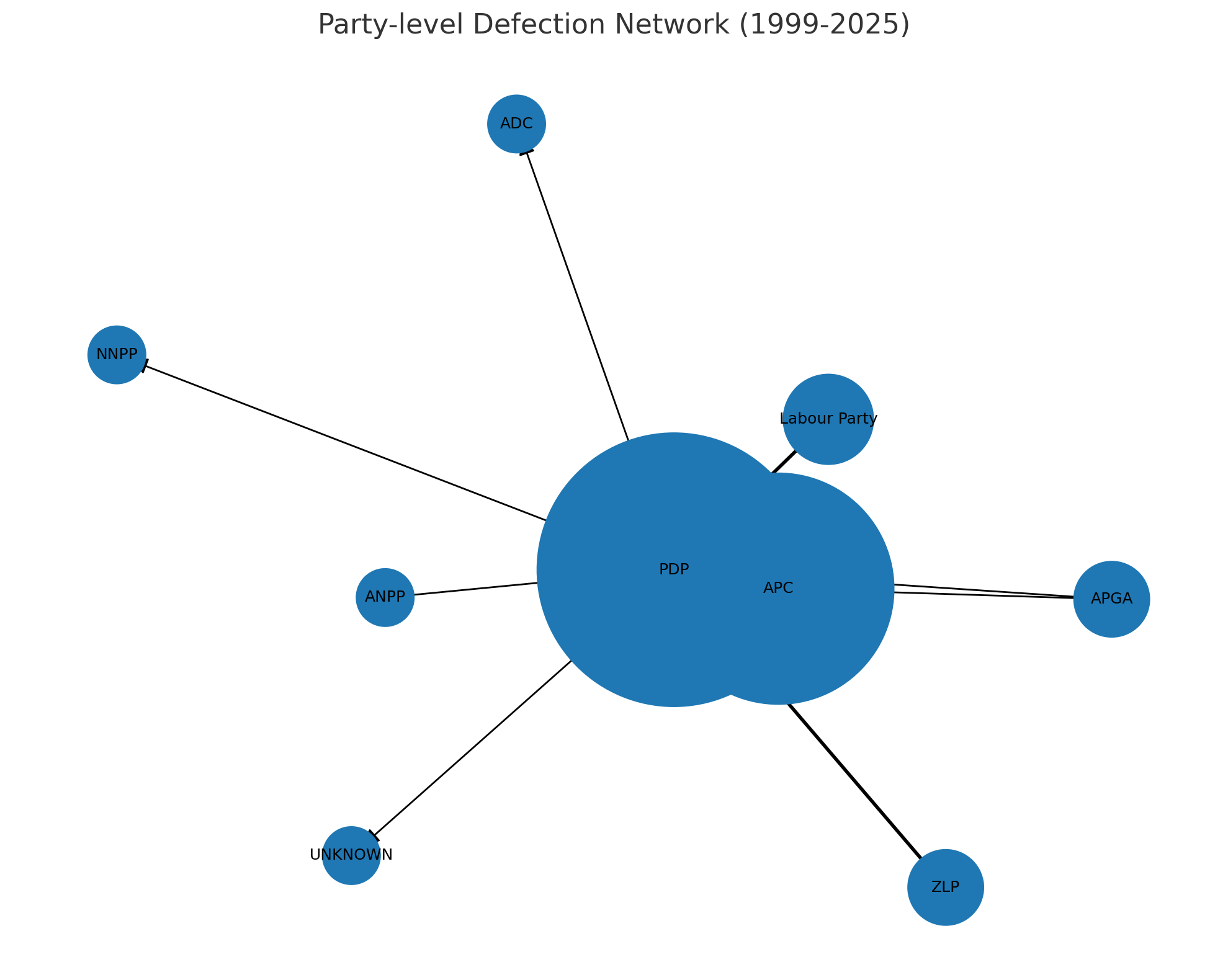
A clear pattern emerges when the full picture from 1999 to 2025 is reviewed. Two parties dominate every major shift. Almost every political figure who moves either leaves from or joins PDP or APC. This reflects a reality that ordinary voters have long understood. Despite many new names appearing on ballots, the real contest for power has remained around PDP and APC. They act as central magnets, drawing in ambitious politicians while also pushing some out when internal conflicts grow too intense.
Register for Tekedia Mini-MBA edition 20 (June 8 – Sept 5, 2026).
Register for Tekedia AI in Business Masterclass.
Join Tekedia Capital Syndicate and co-invest in great global startups.
Register for Tekedia AI Lab.
Space for Smaller Platforms
The data also shows moments when smaller parties provide temporary shelter or fresh opportunity. Labour Party, NNPP and Zenith Labour Party sometimes attract politicians who are dissatisfied with the big two. Peter Obi’s departure from PDP to Labour in 2022 allowed him to build a movement that captured national attention. Olusegun Mimiko’s journey through Labour and later ZLP shows how a strong local base can sustain a leader outside the mainstream. These examples reveal that while PDP and APC dominate, there is still room for alternative voices when public sentiment demands change.
What the Patterns Reveal
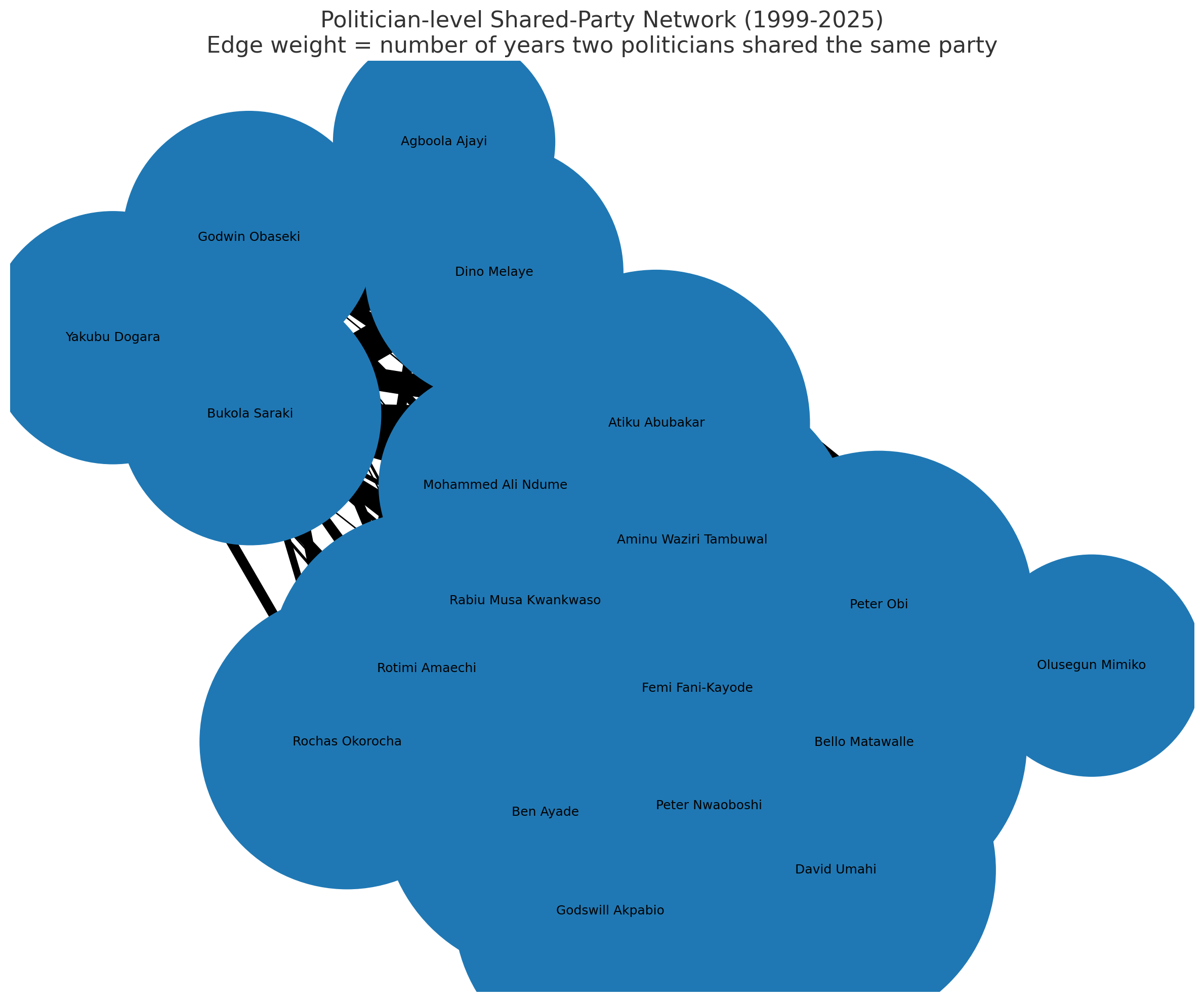
Connections between politicians become clear when we look at who has shared party membership over the years. Figures like Atiku, Kwankwaso and Tambuwal are linked to many colleagues because of their long careers and frequent switches. This history gives them influence, as they have worked alongside rivals and allies in different settings. Politicians justify their moves by citing unfair primaries, broken promises or a desire for stronger internal democracy. Beneath these statements lies a consistent calculation of where ambition and agenda can advance. For voters the lesson is to focus on records of service rather than party slogans. Party labels may shift, but personal networks and governing style often remain constant. Strengthening institutions, ensuring transparent primaries and encouraging issue-based campaigns remain the surest way to reduce the tide of defections in the years ahead.