

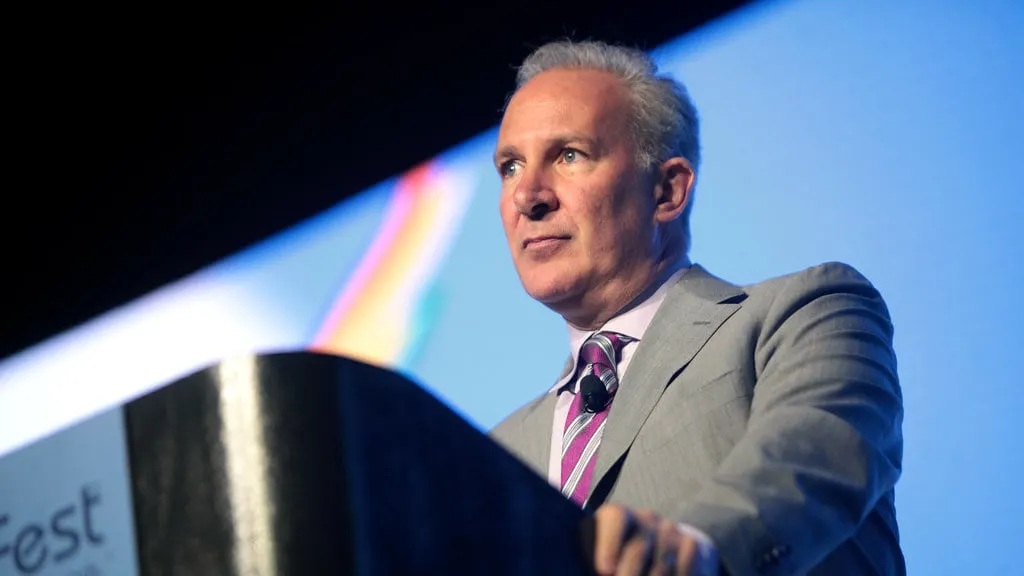
American stockbroker and financial commentator Peter Schiff, has issued a stark warning that the United States has reached a point where its mounting debt crisis can no longer be resolved through conventional means.
He notes that with the national debt approaching $40 trillion, exploding interest payments, and persistent budget deficits, the country faces a dilemma.
In a widely shared post, Schiff, echoing comments highlighted by Lebanese-Australian entrepreneur Mario Nawfal, explained that genuine solutions would inflict too much economic and political pain. Deep spending cuts could trigger a severe recession or depression.
Register for the next Tekedia Mini-MBA.
Register for Tekedia AI in Business Masterclass.
Join Tekedia Capital Syndicate and co-invest in great global startups.
Significant tax increases would likely spark public backlash and slow growth. Allowing interest rates to rise to levels that truly reflect the risk of holding US Treasuries might cause a systemic financial collapse.
Instead of confronting these hard choices, he noted that policymakers have opted for the path of least immediate resistance with continued borrowing paired with inflation.
This approach, according to erodes the dollar’s purchasing power and accumulating even more debt. Recall that in April this year, the federal government’s debt held by the public reached $31.3 trillion, roughly equal to the size of the U.S. economy.

Schiff likened the US Treasury’s operations to a giant Ponzi scheme. He says, the government relies on issuing new debt to service existing obligations and fund ongoing deficits.
As long as investors both domestic and foreign maintain confidence and continue buying Treasuries, the system functions. However, Schiff cautions that this confidence is not infinite.
Eventually, creditors may lose faith, especially as debt levels climb higher and interest costs consume a growing share of the federal budget.

Public attention remains distracted by other headlines wars, tariffs, elections, and cultural debates while the fiscal time bomb ticks in the background. Schiff believes the eventual reckoning will arrive when markets force the issue, potentially through higher yields, a weaker dollar, or a broader loss of reserve currency status.
His message is clear. Without dramatic changes that politicians seem unwilling or unable to deliver, the trajectory points toward higher inflation, currency devaluation, and an eventual crisis. Gold, long a favorite of Schiff’s, continues to benefit as investors seek protection from these risks.
While some economists debate the exact timeline or argue the US can sustain high debt levels due to its unique position as issuer of the world’s reserve currency, Schiff maintains the current course is unsustainable.
The debt problem has grown too large, and the window for orderly correction has closed.
Outlook
The trajectory of the U.S. debt burden is expected to remain a major concern for investors and policymakers alike. With federal deficits projected to persist and interest costs continuing to rise, pressure on the government’s finances could intensify in the coming years.
While supporters of the current fiscal framework argue that the United States retains significant flexibility due to the dollar’s role as the world’s primary reserve currency, critics such as Peter Schiff warn that this advantage may not last indefinitely.
Any sustained decline in investor confidence could result in higher borrowing costs, increased market volatility, and renewed scrutiny of America’s long-term fiscal sustainability.
For investors, the uncertainty surrounding the debt outlook is likely to keep safe-haven assets such as gold in focus, while also fueling debates about inflation, monetary policy, and the future strength of the U.S. dollar.