

Introduction
Africa and China have a long history of economic and political relations, dating back to the 1960’s when many African countries were gaining their independence from colonial powers. While establishing their first diplomatic relations, China has supported newly formed African states through foreign aid and investment, signaling China-Africa shared future, whether it is economically or politically. Since 2009, China has become Africa’s largest trading partner, a major source of infrastructure financing, and key player in regional and global affairs, and China’s modernization has been a source of inspiration to many countries from the Global South, especially African countries. However, in recent years, many critics have raised concerns about the nature and impact of China’s engagements in Africa, derailing China-Africa shared future willingness. Some suggest that China’s presence in Africa is mainly motivated by economic and political factors, considering that loans, grants, and infrastructure-for-resources are the main strategies for wooing Africans. Some other argue that China is exploiting remaining natural resources on the continent, others go beyond by imploring that China is creating debt traps, or undermining governance and human rights standards. Why such connotations? Is it because China has threatened colonial powers interests in Africa or is it about the over-hyped debate about African countries’ high external debt problem? It is impertinent for African youth to understand those critics and take responsibility in addressing well China-Africa relations in the new era.
Brief History of China-Africa Relations: Background
China has had a long relationship with the continent since the early 1850s, before the colonial powers created modern African countries. [1] Back in the 1850s, especially in the area of trade, China interacted mostly with Northeastern countries. China has since then broadened its relationships from Northern to Eastern countries. China-Africa relationships has grown stronger since the 1950s as it embraced many African countries, beginning by the newly independent countries. China’s expanding relationships with African countries have become the most important dynamic in the foreign relations and politics of the continent since the end of the Cold War. The nature and implications of China’s engagements with Africa are beginning to be appreciated, but it is clear that this is a process of profound significance.
From modest beginnings back in the 1960’s, China started to expand its foreign assistance with Egypt being Africa’s first country to receive China’s foreign aid back in 1956, and China’s investments in Africa and has recently become a highly visible player in Africa’s lending landscape. With China’s financial support, African countries are transitioning from “poor countries” to “developing countries”, and China’s investments in Africa have made the continent more attractive to other external investors, mostly from the BRICS economic block. With its foreign assistance, China has offered a different path from the Western in providing development assistance to Africa. China’s foreign assistance influence is further extended by programs with a more faster delivery mechanisms, and China’s disregard for adding political conditions has also made its foreign assistance more attractive. Debates around Chinese official development assistance are based on the perception of it being a donor that is less altruistic and with no conditions attached when giving aid. It is being perpetuated on the medias that China deliver its assistance with no conditions to corrupt regimes on the continent, and that China has no obligation to report its official development assistance since it is not a member of the Organization for Economic Co-operation and Development (OECD) and Development Assistance Committee (DAC). However, one is left to wonder if this breaking of established international norms regarding aid is not the core reason of doubting China’s true intentions in Africa.
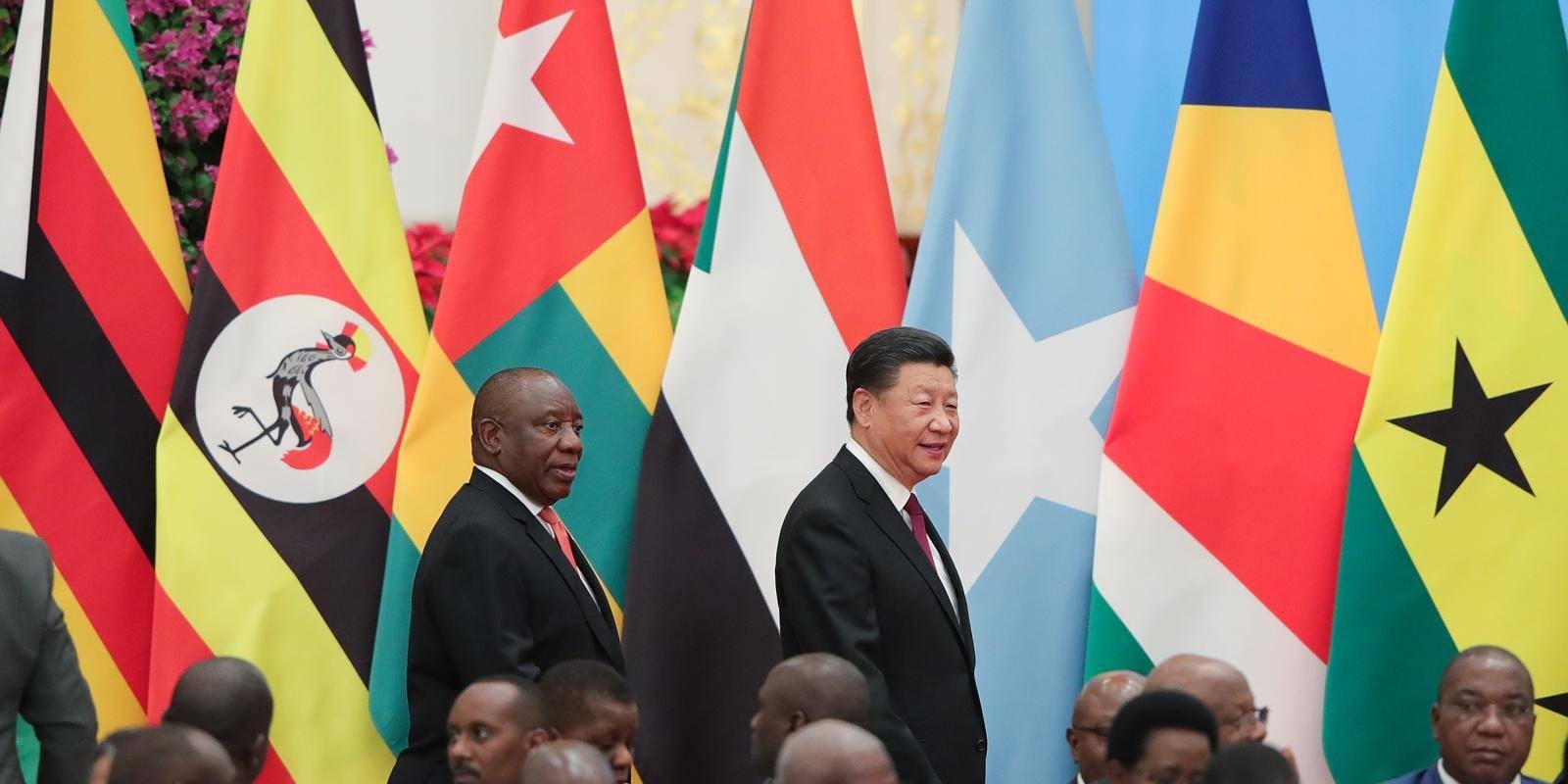
China’s official development assistance to Africa has significantly increased since 2000 with the creating of the FOCAC (Forum on China-Africa Cooperation). At the recent FOCAC Summit in Beijing in September 2024, China’s President Xi Jinping pledged to deliver $51 billion in loans, investment and aid to the continent, upgrading China-Africa diplomatic ties, and helping Africa’s development by realizing the African Union blueprint Agenda 2063. From a purely economic perspective, Africa is a potentially lucrative market for China. With Africa’s booming population and its under-served market offers China and its companies a huge potential. For instance, Africa’s newly established African Continental Free Trade Area (AfCFTA) opens many possibilities for growing even stronger economic ties with China. Launched in 2018, the AfCFTA represents a historic and ambitious undertaking, aiming to create a single internal market for goods and services across the continent. With a combined GDP of over $3 trillion and a population projected to reach $2.5 billion by 2050, the AfCFTA promise is immense: to dismantle colonial-era barriers, stimulate intra-African trade, and drive industrialization. This continent-wide agreement is designed to be a catalyst for sustained, inclusive economic growth, allowing African nations to leverage their collective strength and compete more effectively on the global stage. China seems to be involved in this and eager to link it with the BRI (Belt and Road Initiative).
China-Africa relations kept growing stronger as it seems to have threatened colonial powers’ interests on the continent. Economically, China has grown faster and helped many African countries achieve many development programs. In fact, China-Africa economic relations has grown stronger to the point that since 2009, China displaced the US as Africa’s biggest trading partner, and it is with no doubt that China’s position in Africa will remain dominantly strong. China is now being described as the “Asian power”, and it is fair to admit that China has woken up, and is likely to change its narrative on the continent. China has demonstrated that, despite its economic progress and powerful military, she has never abused its power in Africa, nor bullying any African country that host China’s military camps. China has in fact demonstrated its peaceful rise as an emerging and powerful country, reasoning many Western critics about China seizing funded infrastructures on the continent. Many African leaders are backing up China by addressing well the narratives, refusing any biased claims about China’s “taking over” gossips. The notion of taking over is particularly related to the case of Sri Lanka’s port of Hambantota back in 2017, which claimed to be under Chinese seizure for no payment, but all this was just a misleading information as the port was leased by the Sri Lankan Government to a Chinese company to raise liquidity, and it has been debunked several times. Concerning Africa, China has funded many significant infrastructure such as the Nairobi-Mombasa Railway, but China has never nor shown any intention of seizing it. Politically, China has offered African countries a choice, as it posed itself as more pragmatic and results-oriented. China’s non interference in Africa’s political affairs is attractive to many African nations who have grown tired of Western demands for governance reforms in return for development assistance.
In the last few years, China is upgrading its relationships with Africa by introducing its currency, the Renminbi to its Africa’s counterparts. As many African countries are faced with lack of foreign currency, especially the US dollar, China is trying to give African countries another alternative by challenging the dominance of the US dollar in Africa’s international transactions. Since 2000’s, the People’s Bank of China has signed bilateral swap agreements with Morocco, Egypt, Nigeria and South Africa to conduct transactions in Renminbi on a much broader scale. Countries like Kenya, Uganda and even Burundi are following suit. This move is still on its early age, but it is undoubtedly going to challenge America’s control in Africa’s transactions with China or even anywhere else in the world.
China-Africa Relations turned into critics: Its foundations
Ever since academics, policy makers and diplomats have been on hand to report China’s arrival on the African continent, its implications or engagements on the continent has been greeted with extremes of approval and dismay. Over the past few decades alone, there has been a spate of books, articles, studies, and commentaries, mostly in the West regarding China’s engagements in Africa. They reflect both fascination and apprehension, as they criticize China’s intake in many African countries resources share. Over the last century, many European empire-builders present on the African continent at the time applauded the import of Chinese contract laborers, who they believed would open up the continent by shouldering work on the new infrastructure such as roads and railways and in the Rand goldfields of South Africa, which their African counterparts were unwilling to perform. Others saw China’s presence as a lethal threat. They believed that Chinese laborers would slip out of their compounds, subvert the morality of the unspoilt natives, steal European jobs and businesses. In recent years, the critics practically remained the same, as China is still being seen as a threat to Europeans or post-colonial powers’ interests on the continent.
In recent years, many critics about the nature and impact of China’s engagement with Africa keep raising, arguing that China is exploiting the continent’s natural resources, creating debt traps, undermining governance and human rights standards, to the point of confirming that China is responsible for encouraging corruption on the continent, eroding Africa’s sovereignty and agency. They are also claiming that China is pursuing its own agenda on the continent, such as securing access to future markets, extracting raw materials, expanding its political influence at the expense of Africa’s development and security.[2] With China’s growing presence on the continent, these criticisms and concerns are not entirely unfounded, but they also overlook benefits and opportunities that China’s presence in Africa has to offer. China is contributing in poverty reduction on the continent, child mortality has decreased, many African countries are hosting international meetings in infrastructures delivered by China, and with China’s presence on the continent, some of African countries are transitioning from 4G to 5G internet connection and are expanding cooperation with China on Artificial Intelligence. China is also supporting African countries through BRI development projects, China is as well expanding its cooperation with Africa on various issues of common concern such as climate change, public health, peace and security, digital transformation, etc. However, all of those engagements turned into criticisms and concerns. Biased media often reports that some of China’s infrastructure on the continent has done little to improve trade or economic development.
Another growing chorus of critics argue that China’s non-interference in Africa’s political affairs has done little to improve governance or uplift the lives of ordinary Africans, that somehow China is indirectly encouraging cycles of corruption, dependency, and stagnation. Apart from those critics, other argue that the growing influence of China in Africa raised concerns of Africa’s debt sustainability, environmental impact, and on top of that, support of authoritarian regimes. All these claims have overlooked China’s contribution to Africa’s recent development. A simple example is China’s willingness to fund Africa’s prestigious infrastructure such as costly expressways, railways, dams, etc. which many Western powers would not consider investing in. Many China’s funded infrastructure on the continent such as the expressway that connect Nairobi in Kenya and Kampala in Uganda; Bujumbura in Burundi to Kinshasa in DRC, etc. have actually made life easier for African elites and simple citizens. China has even moved to re-calibrate its infrastructure finance by introducing the concept of “small and beautiful (???)” projects. These projects are being seen implemented on a large scale in many African countries, and no African host country can deny the huge impact of them, especially on simple African citizens. This is where African youth need to step up and bring a new light into this matter and address well China’s engagements in Africa. It is important for African youth to be good examples in painting well this picture and not be led astray by western media propaganda.
How to better address China-Africa relations critics
It is impertinent for the youth, especially African youth to master the know-how in addressing China-Africa relations critics. We are living in a digital era, when it is easy to get access to information, and even more easy to be led astray by what is being perpetuated on different internet platforms. As African youth, I believe it is our responsibility to know how to get true information regarding China’s presence on the continent.
Firstly, it is important for African youth to be aware that it is not a question whether Africa is losing by engaging with China. On the contrary, Africa is actually also a winner, but it is up to Africa to know how to engage with China in a way that maximizes its benefits and minimize risks.
Secondly, it is our responsibility as African youth to address well China-Africa relations. China and Africa relations are being criticized not only by few Western media, but also by a handful of African media. African youth need to have a nuanced understanding of the opportunities and challenges that China’s growing presence on the continent bring. For instance, in trade and investment, African youth should step up and guide the narrative by supporting our African country leaders while refuting critics over China’s dept-trap allegations by addressing solutions rather than joining the unbalanced opinions perpetuated on different platforms.
Thirdly, the future of China-African relations, or even the turn of China-Africa critics narratives relies in our hand. It is up to China-Africa youth to find another way, a better way of addressing them. China-African youth connections, China-Africa youth collective efforts in handling China-Africa relations critics, whether using in a responsible way available platforms to spread well balanced China-Africa relations histories, build a more healthy and safe platforms to present our collective efforts in addressing those critics, either through academic think-tanks, or meetings or dialogues, will determine whether China-Africa relations will continue to grow even stronger.
Conclusion
China is considered as the “Asian Power”, and is likely to change its status from an emerging and developing country to a developed one. China despite being an emerging power, it is the biggest economy among all Global South, but it has never abused its power over its African counterparts, in a way, signaling its global power status, far different than what the US is showing to the African continent, for instance by bailing on the 2025 G20 meeting hosted by South Africa, imposing unbearable tariffs on African countries, or even the decision to freeze foreign aid on the continent. This should be a signal to African youth to better follow and understand where the biased China-Africa relations critics are headed. It is our responsibility as China-Africa youth to be able to distinguish what Western powers controlled media are feeding the youth on several platforms. As we live in a digital era, it is easy to be misguided by those critics, and if we are not careful, could lead us into an anti-China propaganda. China and Africa share the same values, as it is being witnessed in China’s many engagements on the continent. Even at the 2024 Beijing Forum on China-Africa Cooperation, Chinese President Xi Jinping repeatedly emphasized that China and Africa relations are now being elevated to an all-weather China-Africa community with a shared future for the new era. This declaration reaffirms what China-Africa youth should be engage in hands in hands in addressing China-Africa common concerns. For now, it is important for China-Africa youth to engage together and making sure that China and Africa whether faced with geopolitical shifts, or even common issues such as climate change, peace and security, etc., China and Africa will remain each other’s trustworthy true partners.
[1] Adisu, K., Sharkey, T., Okoroafo, S. C. (2010), “The Impact of Chinese Investment in Africa”, International Journal of Business and Management, Vol. 5, Issue 9, pp. 3-9.
[2] Paul Ugbede, “Why Africa Should Review And Recalibrate Its Relationship With China”, Tekedia Media Outlet, December 28th, 2023; https://www.tekedia.com/why-africa-should-review-and-recalibrate-its-relationship-with-china/