


The generative art project Quine by Larva Labs—the duo behind CryptoPunks, Autoglyphs, and Meebits—officially went live on October 10, 2025, as the final release in Art Blocks’ flagship Curated series marking the 500th project in their foundational on-chain collection from 2020–2025.
This conceptual piece explores “quines,” self-replicating code that outputs its own source code, blending algorithmic generation with themes of code-as-art and art-as-code. It’s a fitting capstone for Art Blocks’ curated drops, emphasizing fully on-chain, unsupervised generative outputs.
Owners of multi-iteration Quines can use Art Blocks’ “post params” to dynamically select display iterations on marketplaces—fully on-chain and changeable anytime. Early signals from institutions like the Toledo Museum of Art and Christie’s indicate strong demand, positioning this as a high-profile mint.
Register for Tekedia Mini-MBA edition 20 (June 8 – Sept 5, 2026).
Register for Tekedia AI in Business Masterclass.
Join Tekedia Capital Syndicate and co-invest in great global startups.
Register for Tekedia AI Lab.
Community hype is building, with predictions of a 3 ETH floor post-auction due to Larva Labs’ legacy and the project’s historical significance. You can participate via the official Art Blocks page.
VIBESTR Launches and Good Vibes Club Adopts It as Ecosystem Token
In parallel NFT ecosystem news, VibeStrategy (VIBESTR)—the latest iteration of TokenWorks’ NFT Strategy protocol—launched on October 9, 2025, and was immediately adopted as the official utility token for the Good Vibes Club (GVC) NFT collection.
GVC, a 6,969-piece art-focused series from award-winning animation studio Toast in partnership with SuperRare, launched in March 2025 and has since built a vibrant community around “Vibetown,” emphasizing feel-good Web3 content and experiences.
NFT Strategy is an automated trading protocol that ties a project’s native token like $VIBESTR to its NFT collection’s performance: trading fees and volume accrue to buy back and burn NFTs, creating a “flywheel” that boosts scarcity and holder value. GVC’s adoption marks a bold step, with the team committing to a 69 ETH (~$300K) market buy of $VIBESTR for their treasury—half executed immediately—to align incentives and fund community activations, partnerships, and collector perks.

Launch performance has been explosive: 24-Hour Volume: $8.7M for $VIBESTR, outpacing peers like $APESTR, $PUDGYSTR, and $BIRBSTR. Already 390 ETH enough to acquire ~650 GVC NFTs at current floors.
Currently at ~0.72 ETH up from recent lows, with analysts forecasting a push above 1 ETH in 48 hours as the flywheel engages—potentially sweeping 200–300 NFTs in the first week alone. This positions $VIBESTR as a frontrunner among strategy tokens, especially with GVC’s intact royalties, single-collection focus, and ongoing OpenSea rewards quests.
Community sentiment is bullish, viewing it as a “no-brainer” play for GVC holders and new entrants. Trade $VIBESTR on DEXs like Uniswap, and explore GVC on OpenSea. These drops highlight the NFT space’s resilience: Larva Labs closing a chapter in generative art history, while GVC innovates ecosystem mechanics.

Roger Ver’s $48M Settlement with US DOJ And State Street Forecast on Crypto Adoption
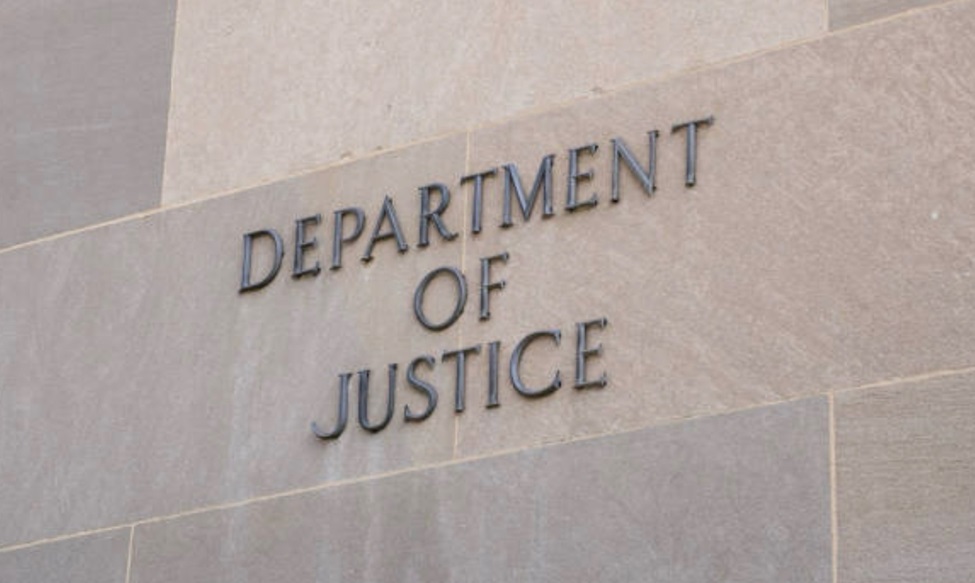
Roger Ver, the early Bitcoin investor and advocate often dubbed “Bitcoin Jesus” for his role in promoting the cryptocurrency, has reportedly reached a tentative deferred-prosecution agreement with the U.S. Department of Justice (DOJ) to resolve charges of tax evasion, mail fraud, and filing false tax returns.
Under the deal, Ver would pay approximately $48 million in back taxes and penalties to the IRS, rather than the $40 million figure circulating in some initial reports. If he fully complies with the terms—including the payment and other conditions—the charges would be dropped, allowing him to avoid a full criminal trial and potential extradition from Spain, where he was arrested in April 2024.
The charges stemmed from Ver’s alleged failure to report and pay taxes on capital gains from selling tens of thousands of Bitcoins in 2017, valued at around $240 million at the time. Despite renouncing his U.S. citizenship in 2014 which triggered an “exit tax” obligation on his holdings, prosecutors claimed Ver and his companies MemoryDealers and Agilestar concealed ownership of about 131,000 BTC.
This settlement reflects a pragmatic approach by the DOJ, potentially avoiding a lengthy trial that could challenge the constitutionality of crypto-related exit taxes. Ver has not publicly commented, and the DOJ has declined to confirm details.
This case highlights ongoing U.S. enforcement scrutiny on high-profile crypto figures, even as the regulatory landscape evolves under the current administration.
State Street: 60% of Institutional Investors Eyeing Crypto Growth
A new 2025 Digital Assets Outlook report from State Street, a major global asset manager overseeing over $5 trillion in assets, reveals surging institutional interest in cryptocurrencies.
Nearly 60% of surveyed institutional investors including pension funds, endowments, and family offices plan to increase their allocations to digital assets like Bitcoin and other cryptos over the next 12 months.
Current average exposure stands at 7% of portfolios, but this is projected to double to 16% within three years (by 2028), driven by tokenized real-world assets (RWAs), stablecoins, and blockchain efficiency.
Tokenization benefits cited by respondents: improved transparency (52%), faster trading/settlement (39%), and reduced compliance costs (32%), with nearly half expecting over 40% cost savings.
40% of institutions now have dedicated digital asset teams, and one-third have integrated blockchain into broader digital strategies. By 2030, over half anticipate 10-24% of investments executed via tokenized instruments, starting with private equity and fixed income.
Joerg Ambrosius, President of Investment Services at State Street, noted: “Institutional investors are moving beyond experimentation—digital assets are now a strategic lever for growth, efficiency, and innovation.”
This trend aligns with broader data, such as North America’s $2.3 trillion in institutional crypto transaction volume over the past year, signaling crypto’s maturation as a mainstream asset class.
Cryptocurrency adoption has accelerated dramatically, transitioning from niche speculation to mainstream financial integration. Global user numbers have surged past 650 million, with institutional involvement, regulatory clarity, and demographic shifts fueling this momentum.
Bitcoin and stablecoins lead the charge, while emerging trends like tokenization and AI-blockchain intersections promise further growth. This isn’t just hype—data shows crypto outpacing historical tech adoption rates, positioning it as a core layer of the global economy.
25% of North American CFOs expect digital currency use within two years, with firms like BlackRock and Fidelity adding Bitcoin to reserves. The U.S. Strategic Bitcoin Reserve established March 2025 has increased non-owner confidence by 23% in the U.S. and 19-21% globally.
Volumes for euro-pegged (EURC) and regulated stablecoins (USDC, PYUSD) have exploded, enabling low-cost cross-border transfers. This outdates traditional rails, with 48% of U.S. holders prioritizing security enhancements for wider payments adoption.