

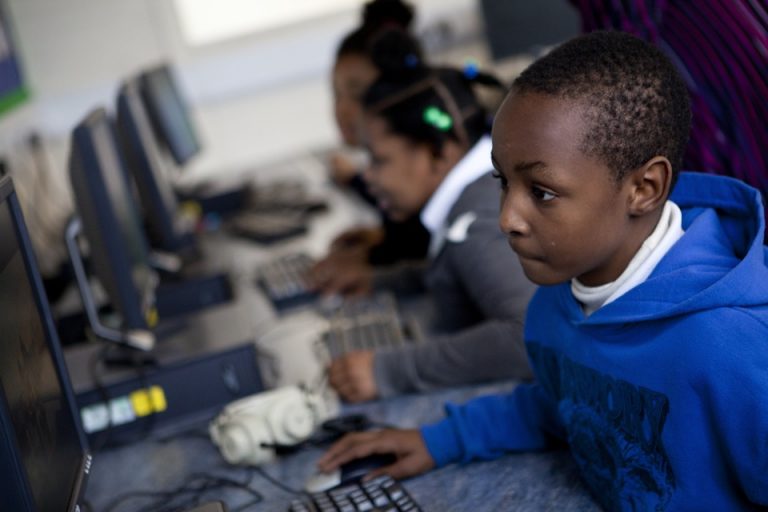
Question: “I want my child to become a successful coder. What should we do now while the child is still in secondary school?”
First, I should clarify that I am not a career counselor and I hold no professional license in that field. However, drawing from my personal experiences and observations of others, I believe that a child who develops a strong foundation in physics, mathematics, and chemistry during the early stages of education has a much greater chance of thriving in computing and engineering than one who is pushed too early into coding and programming languages without those fundamentals.
The best developers and creators in computer science and engineering are typically excellent students of mathematics and physics. They use computational thinking as a tool to solve complex problems. Before a problem can be translated into code, it must first be understood and resolved at the level of mathematical reasoning and physical principles. In that sense, coding is not the pinnacle of the process; mathematics and physics form the intellectual architecture upon which useful software and systems are built.
Register for Tekedia Mini-MBA edition 20 (June 8 – Sept 5, 2026).
Register for Tekedia AI in Business Masterclass.
Join Tekedia Capital Syndicate and co-invest in great global startups.
Register for Tekedia AI Lab.
I experienced this firsthand during my PhD studies at Johns Hopkins University. In a course titled Computer Integrated Surgery, my major project involved building a machine capable of controlling a needle through an endoscope / laryngoscope so that it could pass through the larynx, enabling a physician to perform minimally invasive throat surgery with the assistance of the da Vinci medical robot. It was an extremely complex engineering challenge.
The real difficulty of the project was not writing code. The challenge lay in solving the mathematical equations required to track the needle, the surgical instruments, and the human tissues involved in the procedure. Using markers and imaging systems, mathematics had to ensure precise positioning and movement within the human body. Without the math, the coding phase would not arrive.
For young people interested in computing, the message is clear. Learn to code, certainly, but build a deep foundation in mathematics, physics, and analytical thinking. Those foundations enable you to operate at the upstream layers of technology, where systems are designed, algorithms are invented, and real breakthroughs occur. Without that depth, coding risks remaining at the downstream layers, where the opportunities for differentiation and long-term impact are far more limited especially now that coding is being commoditized by AI.

---
Connect via my
LinkedIn |
Facebook |
X |
TikTok |
Instagram |
YouTube
Science tells you the ‘why’ of things, while the ‘how’ comes from technology. The why is where the fundamentals are baked, when you miss it, whatever you are doing afterwards, you are never going to fully understand what is happening. The same applies to every sphere of knowledge. Leadership becomes very challenging and chaotic when those leading have no basic understanding of why things happen.
The world is filled with noise, where experts are created after a weekend training. Being Thought Leader is not a title, it’s a lived experience from studying and doing things.