

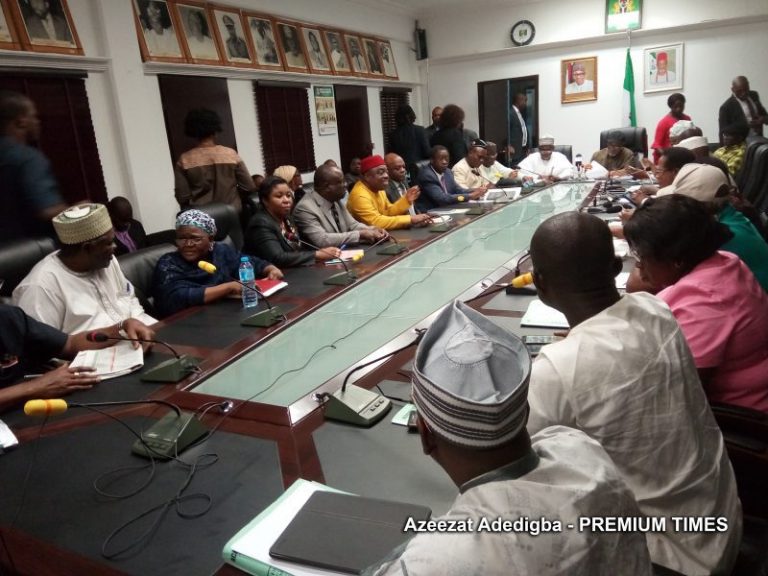
The 2013 resolutions between the Federal Government of Nigeria (FGN) and the Academic Staff Union of Universities (ASUU) represent a significant moment in addressing chronic challenges in Nigeria’s public university system. The year represents the first period one could said both parties have a clear approach to resolving various issues, rooted in perceived unfulfilled promises from an earlier 2009 agreement. Our examination of a 4-page resolution document serves as a framework for understanding the deeper structural issues facing tertiary education in Nigeria.
The immediate problem, as framed by the Federal Government in this document, is the strike action initiated in July 2013 by ASUU due to the government’s failure to implement key elements of the 2009 agreement. Specifically, this relates to funding for the revitalization of public universities and the payment of earned allowances to academic staff. However, the strike itself is a symptom rather than the root cause of a broader challenge of underfunding and fluctuating government financial capacity. The government acknowledges that unforeseen financial difficulties constrained its ability to meet the agreement’s demands but emphasizes its commitment to improving the quality of tertiary education.
The key players in this effort include the Federal Government, represented by the President and the Permanent Secretary of the Ministry of Education; ASUU, as the representative body of university academic staff; and the Nigerian Labour Congress (NLC) and Trade Union Congress (TUC), which support the labour cause. Universities themselves and their academic communities are both stakeholders and beneficiaries of any resolution. Additionally, several institutional tools and reports, such as the 2009 agreement itself, the 2012 Needs Assessment Report, the strike action as a disruptive event, and the financial mechanisms proposed, are all part of this interconnected system.
Register for Tekedia Mini-MBA edition 20 (June 8 – Sept 5, 2026).
Register for Tekedia AI in Business Masterclass.
Join Tekedia Capital Syndicate and co-invest in great global startups.
Register for Tekedia AI Lab.
The government’s proposed solutions are both financial and procedural. A phased funding plan spanning six years, totaling approximately 1.3 trillion Naira, aims to underpin the revitalization of universities. This funding is to be managed through a specially earmarked account at the Central Bank of Nigeria (CBN), ensuring that resources won’t be diverted but instead will be available quarterly for universities to draw upon. To further guarantee accountability, a central monitoring committee will oversee the proper deployment of funds and provide quarterly progress reports to the Minister of Education. Such measures serve as checks intended to build trust in the process and demonstrate a serious commitment to sustained reform.
In terms of addressing the accrued debts owed to academic staff, specifically the earned allowances, the government promises to validate payments already made using an Implementation Monitoring Committee (IMC). After this verification, the outstanding balances due from 2009 to 2012 will be settled. The plan also includes designing an affordable and practical approach for mainstreaming earned allowance payments in the future, aiming to prevent accumulation of unpaid benefits that could ignite further strikes.
Beyond financial restructuring, the government recognizes the importance of empowering universities to generate their own revenue streams. It expresses willingness to engage universities in consultancy projects in specialized fields such as solid minerals surveys, biotechnology, environmental impact assessments, and shelterbelt/mineral mapping. These initiatives are designed to boost internal revenue generation (IGR), reducing the universities’ overdependence on federal allocations and diversifying their funding base.

The final and most pressing immediate call from the government is for ASUU to call off its strike within seven days, signaling a crucial step toward restoring normal academic activities. The document emphasizes that all parties reached these resolutions in good faith, underscoring the high stakes and mutual desire to find a workable and lasting solution.
These resolutions show an attempt to rebuild trust in the university system by offering clear, measurable commitments on funding and allowances, paired with institutional mechanisms for oversight. The phased approach to funding reflects a pragmatic understanding of fiscal constraints, while the creation of ring-fenced funds and monitoring committees aims to reassure stakeholders concerned about mismanagement or diversion of resources.
However, the success of this initiative hinges heavily on sustained political will and genuine follow-through. In past experiences, similar agreements have sometimes stalled due to changes in government priorities, bureaucratic inefficiencies, or re-emergence of distrust among stakeholders. Transparency in fund management and engagement of the academic community in monitoring will be critical to ensuring that this cycle is broken. The government’s pledge to involve universities in consultancy work to strengthen their financial base is promising but also requires capacity building and strong policy support to become effective.
