

The recent announcement by the Federal Government that Mathematics is no longer a compulsory requirement for admission into Arts courses has ignited one of the most passionate debates in Nigeria’s education community. For some, this is a long-overdue correction to an outdated policy that imposed irrelevant hurdles on students whose strengths lie in language, history, and creativity. For others, it is a dangerous lowering of standards that could weaken the intellectual foundation of future graduates. The conversation reflects a deep ideological divide between those who prioritize access and inclusivity in education and those who insist on maintaining academic rigor and competence benchmarks.
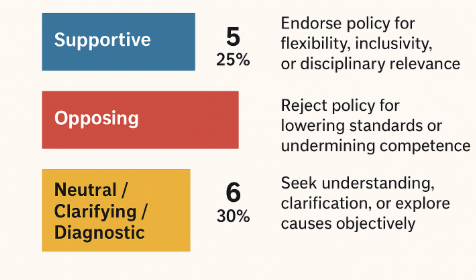
Exhibit 1: Public Reactions to Removal of Mathematics Requirement for Arts Courses in Nigeria
Across public discussions, many Nigerians have asked whether Mathematics was ever truly essential for Arts admissions. They argue that students in the Humanities typically require credits in English and other Arts subjects, not Mathematics. However, others point out that Mathematics has long served as a universal requirement for university entry, not because of its disciplinary relevance but because it signals cognitive readiness and problem-solving ability. The removal of this requirement therefore raises larger questions about the purpose of education and the kind of citizens and professionals the country hopes to produce.
Register for Tekedia Mini-MBA edition 20 (June 8 – Sept 5, 2026).
Register for Tekedia AI in Business Masterclass.
Join Tekedia Capital Syndicate and co-invest in great global startups.
Register for Tekedia AI Lab.
Balancing Access and Competence
Supporters of the policy view the change as a necessary reform to make higher education more inclusive. They argue that thousands of talented students have been denied university admission because they could not secure a credit in Mathematics despite excelling in other areas. For them, the new policy democratizes access to higher learning and aligns with global trends that value diverse academic strengths rather than rigid uniformity. In their view, numerical skills learned in primary school are sufficient for most non-technical professions. Mathematics, though valuable, should not be a barrier for those pursuing careers in creative and interpretive disciplines.
These advocates also point out that education should be about depth, not breadth. A good historian, novelist, lawyer, or artist may not require advanced mathematical reasoning to excel. They describe previous admission rules as an overreach that forced students to master a subject irrelevant to their academic path. In this interpretation, the reform restores balance by allowing students to focus on their chosen domains without unnecessary constraints.
Concerns Over Standards and National Competitiveness
Critics see the policy in a very different light. They argue that the removal of Mathematics from university entry requirements undermines decades of effort to maintain a common standard of academic readiness. To them, Mathematics is more than a subject; it is a discipline that develops logical reasoning, precision, and critical thinking. Eliminating it, they warn, will erode the intellectual foundation of the education system and weaken Nigeria’s competitiveness in a global economy increasingly driven by data and technology.

Opponents also stress that even within the Arts and Social Sciences, Mathematics has practical applications. Courses such as Economics, Accounting, Political Science, and Sociology rely on statistical and quantitative reasoning. By lowering the entry threshold, the government risks producing graduates who lack the numerical competence required for these fields. Some observers interpret the reform as a populist move that prioritizes short-term political appeal over long-term educational quality. Others fear that students will simply choose easier academic paths, avoiding challenges that build analytical resilience.
Finding Common Ground for Educational Reform
Between these two camps lies a middle ground that calls for clarity and balance. Several voices in the discussion suggest that the policy has been misunderstood. Rather than completely removing Mathematics, the intent might be to make a pass sufficient rather than a credit. In this case, Mathematics would remain part of general education but would no longer serve as a strict gatekeeping tool. This interpretation points to the need for careful communication and structured implementation to prevent confusion among students and institutions.
The debate over Mathematics in Arts education ultimately reveals a larger crisis within Nigeria’s educational philosophy. The system struggles to balance inclusivity with excellence and accessibility with quality. Whether one supports or opposes the policy, the discussion underscores the urgent need to rethink how subjects are taught, assessed, and valued.
