

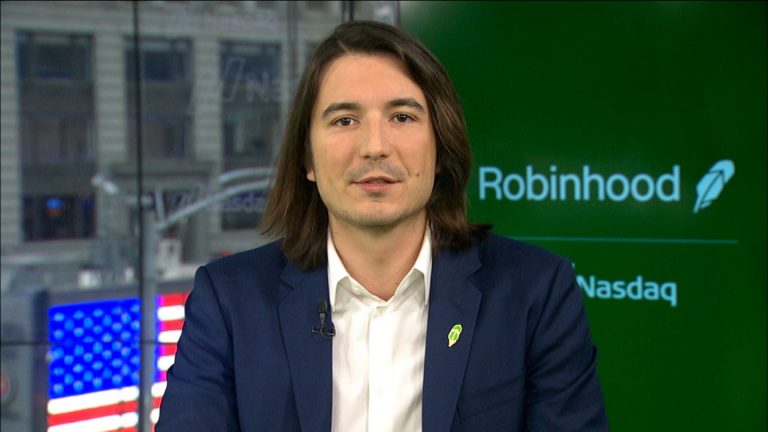
Robinhood Markets has entered a new phase of its corporate evolution as it announces a 10% reduction in its global workforce while its stock, HOOD, approaches the $100 level in premarket trading. The juxtaposition of cost-cutting and rising market valuation reflects a broader tension in fintech between profitability discipline and growth expectations.
Investors have largely interpreted the layoffs as a signal that Robinhood Markets is prioritizing operating leverage after years of rapid expansion during the pandemic-era trading boom.
The company’s pivot comes amid stabilizing retail trading volumes, renewed interest in crypto products, and pressure on online brokerages to demonstrate durable profitability rather than user growth at any cost.
Cost reductions at fintech firms often reflect a shift toward automation, with companies increasingly relying on artificial intelligence systems to handle customer service, compliance monitoring, and internal operations. The restructuring is also seen as an attempt to streamline decision-making layers and reduce overhead associated with post-IPO scaling.
Register for the next Tekedia Mini-MBA.
Register for Tekedia AI in Business Masterclass.
Join Tekedia Capital Syndicate and co-invest in great global startups.
Market sentiment around HOOD has strengthened as speculative momentum returns to high-beta technology and financial stocks, pushing valuations toward psychologically significant levels such as the $100 threshold. The rally exists alongside concerns that aggressive cost-cutting may signal slowing long-term growth or increased reliance on cyclical trading activity.
The fintech sector continues to navigate a complex macroeconomic environment shaped by fluctuating interest rates, evolving regulatory scrutiny, and shifting investor preferences between growth and profitability. Firms like Robinhood must balance user acquisition with monetization strategies that can sustain earnings beyond periods of retail trading exuberance.
The company’s trajectory will likely depend on whether it can convert episodic trading activity into a more stable, subscription-like revenue base through products such as premium accounts, margin lending, and expanded crypto services. At the same time, workforce reductions may improve near-term margins but could also introduce execution risks if institutional competition intensifies or product innovation slows.
Overall, the combination of layoffs and rising equity valuation underscores the market’s preference for leaner operating structures in the current cycle.

Yet it also highlights the volatility inherent in fintech equities, where operational restructuring can coincide with sharp upward price movements driven by sentiment rather than fundamentals. Analysts will be watching whether the current cost discipline translates into sustained free cash flow generation over multiple quarters.
Equally important will be the competitive dynamics among retail brokerages as zero-commission trading platforms continue to converge on similar product offerings. Any sustained move toward the $100 mark in HOOD would likely be interpreted as a signal of renewed confidence in the platform’s long-term monetization strategy.
This convergence of financial discipline and market enthusiasm reflects a broader narrative in technology investing where efficiency metrics increasingly matter as much as growth rates. Sustaining investor confidence will depend not only on quarterly earnings performance but also on its ability to innovate within a crowded and rapidly evolving financial services ecosystem.

The market reaction around HOOD underscores how quickly sentiment can shift in fintech, where cost restructuring, product expansion, and macroeconomic expectations intersect to produce rapid repricing of equity narratives in both bullish and cautious cycles across global markets today.
While also highlighting the ongoing tension between efficiency-driven layoffs and investor enthusiasm for growth-stage financial platforms driven by liquidity cycles and sentiment shifts in current market conditions.
The broader implication is that fintech valuations are increasingly driven by a dual narrative of operational efficiency and speculative momentum, with investors rewarding firms that can demonstrate both disciplined cost structures and credible pathways to scalable revenue diversification beyond volatile trading cycles alone.