

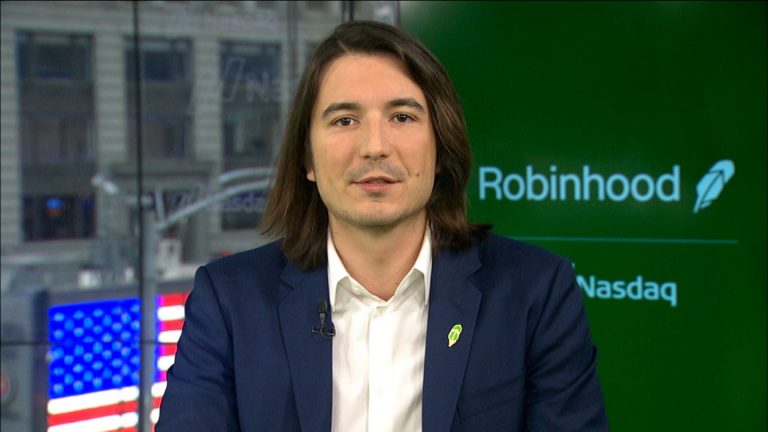
Robinhood’s shares climbed more than 10% following a series of major announcements that signaled the company’s growing ambitions in the digital asset industry. The centerpiece of the announcements was the unveiling of Robinhood’s own blockchain, a move that positions the popular trading platform as more than just a brokerage service.
At the same time, decentralized exchange platform dYdX announced that it would rebrand as Arcus and launch a decentralized exchange (DEX) product built on Robinhood’s new blockchain. Together, these developments represent a significant step toward integrating traditional fintech with decentralized finance (DeFi).
Robinhood has spent the past several years expanding beyond commission-free stock trading into cryptocurrencies, retirement accounts, and wealth management services. The introduction of its proprietary blockchain reflects a broader strategy to become a comprehensive financial ecosystem where users can trade, invest, and interact with blockchain-based applications within a single platform.
By developing its own blockchain infrastructure, Robinhood aims to improve transaction efficiency, lower costs, and create an environment that supports tokenized assets and decentralized applications.
Register for the next Tekedia Mini-MBA.
Register for Tekedia AI in Business Masterclass.
Join Tekedia Capital Syndicate and co-invest in great global startups.
Investors responded positively because owning a blockchain gives Robinhood greater control over its technology stack and opens new revenue opportunities. Instead of relying solely on external blockchain networks, the company can develop customized features that cater to retail investors while attracting developers to build financial applications on its ecosystem.
This approach mirrors the growing trend among financial technology firms seeking to combine user-friendly interfaces with blockchain innovation. Adding to the excitement was the announcement from dYdX, one of the most recognized names in decentralized trading.
The platform revealed that it would rebrand as Arcus while launching a decentralized exchange product on Robinhood’s blockchain. The rebranding signals an effort to expand beyond its original identity and embrace a broader vision for decentralized financial services.

By integrating with Robinhood’s blockchain, Arcus hopes to tap into Robinhood’s large user base while offering traders access to decentralized markets with enhanced speed and lower transaction fees. The partnership between Robinhood and Arcus highlights the increasing convergence of centralized and decentralized finance.
Traditionally, Robinhood has served millions of retail investors through a centralized platform that emphasizes simplicity and regulatory compliance. Arcus, on the other hand, represents the decentralized finance movement, where users retain greater control over their assets and execute trades without traditional intermediaries.
Bringing these models together could make decentralized finance more accessible to mainstream investors who have previously found blockchain applications too technical or complex. Despite the optimism, challenges remain. Launching a blockchain requires maintaining strong security, network reliability, and regulatory compliance.

Robinhood must also convince developers and institutions that its blockchain offers advantages over well-established networks already serving decentralized applications. Likewise, Arcus faces the challenge of preserving its decentralized ethos while collaborating closely with a publicly traded financial company operating under strict regulatory oversight.
The announcements mark an important milestone for both companies. Robinhood’s strong stock market performance reflects investor confidence that blockchain technology can become a meaningful driver of future growth.
Meanwhile, Arcus’ launch on the Robinhood blockchain demonstrates how partnerships between fintech firms and decentralized platforms could reshape the digital asset landscape.
If successfully executed, these initiatives may accelerate the adoption of blockchain-based financial services, bringing decentralized finance closer to everyday investors while creating new opportunities across the broader cryptocurrency ecosystem.