

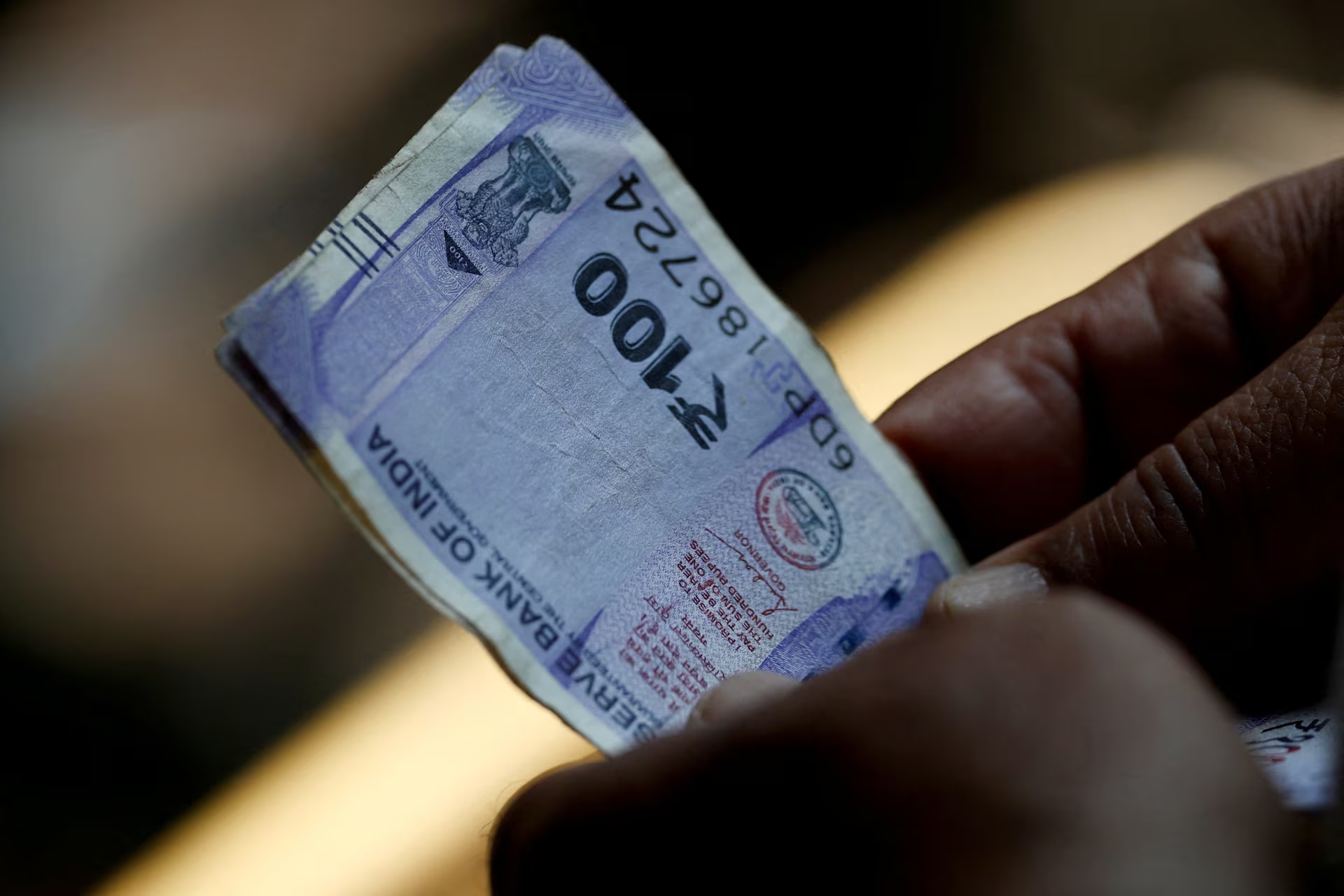
India’s rupee strengthened for an eighth consecutive session on Thursday, supported by foreign investment linked to Reliance Industries’ Jio Platforms’ record-breaking initial public offering (IPO) and recent regulatory measures aimed at stabilizing the currency.
The rally has lifted the rupee away from near-record lows earlier this month, although rising oil prices and escalating Middle East tensions continue to pose risks to the recovery.
The rupee rose to 94.35 per dollar from its previous close of 94.46, advancing despite a nearly 2% increase in Brent crude to $110.60 a barrel. Oil prices climbed as concerns over renewed hostilities in the Middle East intensified following a US order for some diplomats to leave its missions in Saudi Arabia.
Register for the next Tekedia Mini-MBA.
Register for Tekedia AI in Business Masterclass.
Join Tekedia Capital Syndicate and co-invest in great global startups.
The currency’s resilience has been noted as part of the influence of capital flows and domestic monetary policy at a time when India remains exposed to external pressures. As one of the world’s major oil importers, India is vulnerable to higher crude prices, which increase the cost of imports, widen the trade deficit, and can add to inflationary pressure. The rupee’s latest gains indicate that strong investment-related inflows and expectations of further interest-rate increases are currently helping offset those headwinds.
Foreign portfolio investment associated with Jio Platforms’ $3.2 billion IPO has provided a significant boost to the rupee. The offering, described as a record-breaking public issue, was fully subscribed within hours of opening for bids, drawing substantial investor demand and strengthening the currency’s immediate support.
Such inflows can increase demand for the rupee as foreign investors convert funds to participate in Indian equities.

The IPO has provided an important near-term catalyst for the currency’s recovery. Yet, analysts say the sustainability of the rally is largely tied to foreign investors continuing to allocate capital to Indian assets after the initial offering-related demand fades.
Recent regulatory measures have also helped support the rupee. Together, these measures and the prospect of tighter monetary policy have improved sentiment following the currency’s decline towards record-low levels earlier in October.
The recovery has been sharp enough to push the 14-day relative strength index (RSI) for the rupee-dollar pair to nearly 74. The technical indicator measures the speed and magnitude of recent price movements. A reading above 70 is commonly interpreted as an overbought signal, while a reading below 30 suggests oversold conditions.

The shift in momentum has been pronounced. On October 9, the RSI had fallen to around 27, indicating that the rupee-dollar pair was oversold after the currency’s earlier weakness. Its subsequent move into overbought territory captures the speed of the rebound and raises the possibility that some investors may begin taking profits.
An overbought reading does not, by itself, mean that the rupee must weaken. Strong capital inflows or changing expectations about interest rates can sustain a currency’s advance even when technical indicators suggest that the move has become stretched. Nevertheless, the sharp reversal shows how quickly market positioning and sentiment have changed over the past two weeks.
RBI Rate Expectations Add Support, But Growth Risks Remain
Expectations of further interest-rate increases by the Reserve Bank of India (RBI) have provided another source of support. The central bank raised interest rates for the first time in nearly four years earlier this month, signalling a shift towards tighter monetary policy as policymakers respond to changing inflation and economic conditions.
Minutes from the RBI’s October policy meeting, released after market hours on Wednesday, suggested that policymakers believe additional tightening may be necessary. However, they also expressed caution about pursuing an aggressive rate-hiking cycle because of the potential damage to economic growth.
Higher interest rates can improve the relative appeal of domestic assets and help support a currency by influencing capital flows and investor expectations. But the extent of that support depends on how India’s interest-rate outlook compares with conditions in other major economies, as well as the broader appetite for emerging-market assets.
Goldman Sachs said its assessment of the October Monetary Policy Committee minutes indicated a more hawkish tone than that of Governor Sanjay Malhotra’s October 7 statement.
“Our text-based net-hawkishness score …. suggests that the October MPC minutes were more hawkish than the Governor’s statement (on October 7),” the bank’s analysts said in a note.
Goldman Sachs continues to expect a 25-basis-point repo rate increase in December 2026, followed by another 50 basis points of tightening in the first half of calendar year 2027. If delivered, those increases would reinforce expectations that the RBI is prepared to maintain a restrictive policy stance.
However, the minutes also indicate that policymakers are weighing the benefits of tighter financial conditions against the risks to growth. That balancing act could limit the pace of future increases and make the rupee more sensitive to incoming inflation data, policy signals and changes in global market conditions.
Oil Remains a Major Test for The Rebound
The increase in crude prices presents a significant challenge to the currency’s recovery. Higher oil import costs can increase demand for dollars among Indian importers, putting pressure on the rupee. If elevated prices persist, they can also complicate the inflation outlook and influence the RBI’s policy decisions.
The latest rise in Brent crude, driven by renewed geopolitical concerns, illustrates the external risks that domestic capital inflows and monetary policy cannot fully eliminate. A prolonged escalation in the Middle East could sustain oil prices at elevated levels, placing pressure on India’s external balances even as foreign investment supports the currency.
The rupee’s eight-session advance therefore presents a mixed picture. The Jio Platforms IPO has generated a powerful source of foreign investment, recent regulatory measures have helped improve currency sentiment, and expectations of additional RBI rate increases have strengthened the case for holding rupee-denominated assets.
At the same time, the RSI reading near 74 suggests that the pace of the recovery may be difficult to maintain without continued support from capital flows or monetary policy expectations. Higher oil prices also remain a persistent vulnerability.