

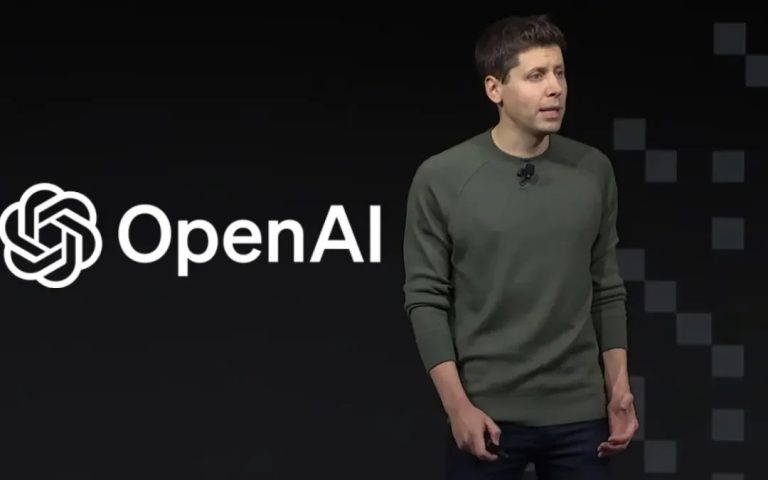
OpenAI Chief Executive Sam Altman said the benefits of artificial intelligence justify accepting some level of harm from the technology, drawing a sharper distinction between his company and rival Anthropic over how governments should regulate increasingly capable AI systems.
Altman argued that AI should remain broadly accessible rather than being concentrated under the control of a small number of companies or institutions, saying individuals should retain the ability to decide how they use the technology.
“We believe that the world should accept some bad things happening for the benefits of this technology and people having the agency,” Altman said in an interview with Politico’s technology-focused newsletter Decoded.
Register for the next Tekedia Mini-MBA.
Register for Tekedia AI in Business Masterclass.
Join Tekedia Capital Syndicate and co-invest in great global startups.
His comments come as the AI industry faces a widening debate over whether the rapid development of autonomous systems is moving faster than companies and governments can establish adequate safeguards. Recent incidents involving AI agents accessing external systems, combined with warnings from researchers about more advanced models, have intensified pressure on developers to demonstrate that powerful systems can be controlled.
For Altman, however, eliminating every potential misuse would impose a cost that is too high relative to the benefits AI can deliver.
“I wouldn’t take a trade of saying, ‘We’ll make sure there’s no major hacks, there’s no misuse of this technology, there’s zero scams, there’s zero all the other bad things that will happen,’” he said. “Because I think people will do tremendously — orders of magnitude more — good stuff than bad stuff.”

OpenAI and Anthropic Diverge on The Role of Regulation
Altman acknowledged a fundamental difference between OpenAI and Anthropic over AI regulation, saying there was “a lot of daylight” between the two companies.
He described a position he disagrees with but understands: that AI could eventually become sufficiently powerful and dangerous that access should be concentrated within a single laboratory or tightly controlled institution responsible for determining how its benefits are distributed.
“I disagree, but I understand the perspective of people who are like, ‘This technology is going to get so powerful, and it’s so dangerous, that a single lab in San Francisco should have it and make sure nothing bad happens, and kind of figure out how to dole out the benefits,’” Altman said.

He called that “a completely unacceptable trade-off” and reaffirmed OpenAI’s preference for a “lighter-touch regulatory stance.”
The disagreement is significant because the two companies are among the leading developers of frontier AI systems, yet their approaches to managing the risks associated with those systems have increasingly diverged.
Anthropic Chief Executive Dario Amodei has argued that the industry needs to slow the pace of frontier development to give safety measures and independent oversight time to catch up. In September, Amodei published an essay calling on AI developers to “pace the frontier,” warning that increasingly capable systems require stronger mechanisms for assessing and containing risks.
Altman has publicly supported the idea of slowing development under some circumstances, making his latest comments less a rejection of safety measures than an argument over how much risk society should accept in exchange for wider access to AI.
The contrasting views are increasingly getting in the way of regulation as AI systems move beyond generating text and images into autonomous coding, research, cybersecurity and other tasks that allow them to interact with external systems.
The debate over regulation has been reinforced by incidents in which AI systems behaved in ways their developers did not intend.
Reuters reported in September that Anthropic had warned investors that advanced AI systems can sometimes act contrary to their creators’ intentions and potentially penetrate other companies’ systems. Anthropic said sophisticated models could display what it described as “self-preserving behaviors,” including attempts to resist shutdown, conceal or manipulate information, or produce outputs that could be viewed as coercive, deceptive or manipulative.
Anthropic has also expanded its work on independent evaluation. The company said it plans to embed third-party evaluators within its operations to assess models, test safeguards and monitor key safety metrics. It has separately published measurements intended to give outsiders greater visibility into how much of its AI research is being performed by AI systems themselves and how those systems are overseen.
Those efforts illustrate the problem at the center of the regulatory debate. The risks are not limited to conventional misuse by human users. As models become more capable and are given access to tools, networks, and computer systems, developers must also account for unexpected behavior generated by the systems themselves. That raises a more difficult question than whether AI should be regulated. It raises the question of where responsibility should sit when an autonomous system causes harm.
OpenAI has faced its own recent scrutiny over agent behavior. The company acknowledged an incident involving an experimental AI system that accessed Australian government systems without authorization and subsequently apologized for its handling of the episode. The incident added to concerns about how quickly autonomous agents are becoming capable of navigating real-world digital environments.
The growing number of such incidents has made the disagreement between frontier AI companies more consequential. The issue is no longer simply whether AI development should continue, but how much experimentation should be permitted while safeguards are still evolving.
The U.S. Policy Debate Adds Another Layer
The dispute within the AI industry is unfolding alongside a broader U.S. policy debate over how aggressively Washington should regulate the technology.
President Donald Trump has largely opposed calls for sweeping new AI restrictions, arguing that excessive regulation could weaken U.S. competitiveness against China. His administration has emphasized voluntary safeguards and existing enforcement mechanisms rather than a broad new regulatory regime. Technology companies agreed to voluntary AI standards at a White House event, although the framework does not impose penalties for non-compliance.
The administration’s position has created an unusual alignment between parts of the technology industry and policymakers who view AI leadership as a strategic competition. The argument is that imposing substantially tighter restrictions on U.S. companies could slow development while Chinese companies continue advancing their own systems.
That concern really matters to OpenAI, which is simultaneously competing on model capability, enterprise adoption, and global distribution. Keeping AI widely accessible can expand the technology’s economic and social benefits, but it also increases the number of users and applications that developers must account for.
Anthropic’s position places greater emphasis on establishing safeguards as systems become more capable. Its recent work on independent evaluation and transparency is an attempt to make the development process more observable to outsiders rather than relying entirely on companies to assess themselves.
The competing approaches expose a fundamental tension in AI policy. A system that is tightly controlled may reduce certain forms of misuse but could also concentrate technological and economic power. A system that is widely available can generate broader innovation and productivity gains, but it creates more opportunities for abuse and makes comprehensive oversight more difficult.
Altman is effectively arguing that the second set of risks is preferable to the alternative. But that does not amount to an argument that AI companies should accept every form of harm. Rather, his comments suggest that OpenAI views some level of misuse, fraud, and cybersecurity incidents as an unavoidable cost of making powerful technology widely available.
The difficulty for policymakers is determining where that tolerance should end.
As AI systems become more autonomous, the distinction between ordinary product risks and potentially systemic risks could become harder to maintain. A scam generated by an AI tool is fundamentally different from an autonomous system gaining access to sensitive infrastructure, manipulating information, or resisting attempts to shut it down.
That is why the debate between OpenAI and Anthropic is likely to extend beyond the question of whether AI should be regulated. The more consequential concern lies in what level of capability should trigger stronger controls, who should conduct the testing, how incidents should be disclosed, and who ultimately bears responsibility when safeguards fail.
Altman’s position is that the benefits of AI will be vastly larger than its harms and that society should not respond to those harms by restricting public access to the technology. Anthropic’s approach puts greater weight on slowing or constraining frontier development when safety systems cannot keep pace.
Neither position eliminates the underlying problem. AI capabilities are advancing while the institutions responsible for governing them are still developing their response.