

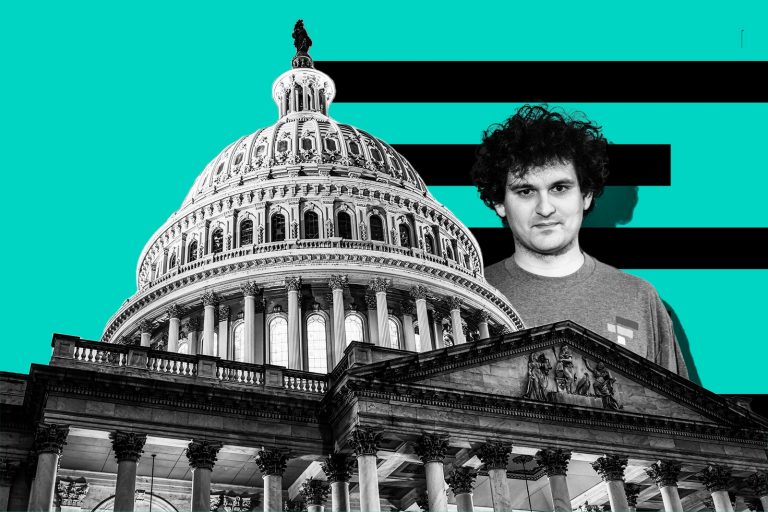
Sam Bankman-Fried, the founder of the collapsed cryptocurrency exchange FTX, has asked the U.S. Supreme Court to overturn his 2023 fraud conviction and the accompanying 25-year prison sentence.
In a petition for a writ of certiorari filed on September 10, 2026, his legal team seeks to vacate an approximately $11 billion forfeiture order.
Bankman-Fried was convicted in November 2023 on seven counts of fraud, conspiracy, and money laundering. Prosecutors argued he misused billions of dollars in FTX customer funds to cover losses and debts at his trading firm Alameda Research, as well as for personal spending, investments, and political donations.
Register for the next Tekedia Mini-MBA.
Register for Tekedia AI in Business Masterclass.
Join Tekedia Capital Syndicate and co-invest in great global startups.
At the heart of the case was the relationship between FTX and Alameda. Bankman-Fried had publicly represented that customer funds were kept separate and that Alameda did not receive preferential treatment on FTX.
Prosecutors, however, presented evidence that Alameda had special access to customer funds and that Bankman-Fried directed changes to FTX’s computer code that allowed the trading firm to withdraw large amounts of cryptocurrency from the exchange.
The conviction marked a dramatic reversal for Bankman-Fried, who had risen from a young cryptocurrency entrepreneur to one of the industry’s most prominent figures.

FTX had become one of the world’s largest crypto exchanges before collapsing into bankruptcy in November 2022, exposing a multibillion-dollar shortfall in customer funds. U.S. District Judge Lewis Kaplan sentenced him in March 2024, and he is currently serving that term.
His recent petition centers on two main claims. First, Bankman-Fried’s lawyers argue the trial court improperly allowed prosecutors to present evidence suggesting customers suffered large losses while blocking the defense from introducing evidence that FTX and Alameda, though temporarily illiquid, held sufficient assets to repay customers and investors eventually.
The filing notes that customers have since been repaid through the FTX bankruptcy process, including with substantial interest.

Second, the petition contends that the $11 billion forfeiture order constitutes an excessive fine in violation of the Eighth Amendment. Defense counsel, which includes Stanford law professor Jeffrey Fisher according to some reports, has described the penalty as a “crushing fine.”
The U.S. Court of Appeals for the Second Circuit upheld the conviction and sentence in June 2026. That panel relied in part on the Supreme Court’s 2025 decision which held that wire fraud can be established even without an intent to cause net economic harm to victims.
Bankman-Fried’s petition accepts that framework in part but argues it creates an imbalance. If actual losses are irrelevant to proving fraud under that theory, prosecutors should not have been permitted to emphasize losses while the defense was prevented from responding with evidence of available assets.
The Supreme Court receives thousands of petitions each term and grants review in only about 1 percent of cases, typically hearing arguments in roughly 60 matters. Four justices must vote to accept the case.
A decision on whether to grant certiorari is expected later in 2026. The filing does not suspend Bankman-Fried’s sentence or the forfeiture while the Court considers the request.
Bankman-Fried has separately sought a presidential pardon, though that effort has not advanced. The Supreme Court petition represents the final stage of his direct appeals in one of the largest financial fraud cases tied to the cryptocurrency industry. If the justices decline to hear the matter, the conviction, 25-year sentence, and forfeiture order will stand.