

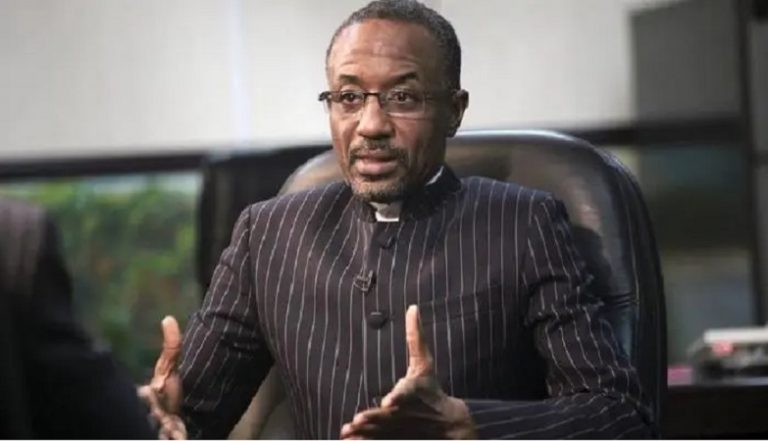
Former Central Bank of Nigeria Governor and Emir of Kano, Muhammadu Sanusi II, has once again pointed to systemic governance failures and entrenched economic mismanagement as the core reasons Nigeria is reeling under one of its worst economic crises in decades.
Speaking during a recent interview on Channels Television, Sanusi said the country’s economic downfall was predictable — a result of rent-seeking elites and leaders who ignored sound economic advice.
“Look, I’m known to have spoken for a long time on the economy and to have warned over a decade ago that this is where we’re headed. I don’t think anyone who studied Economics is surprised that Nigeria is where it is today.
Register for Tekedia Mini-MBA edition 20 (June 8 – Sept 5, 2026).
Register for Tekedia AI in Business Masterclass.
Join Tekedia Capital Syndicate and co-invest in great global startups.
Register for Tekedia AI Lab.
“We spent decades pursuing policies that were destined to bankrupt the economy,” he said.
Sanusi’s latest remarks revive lingering questions about the origins of Nigeria’s current economic woes, a crisis that has its roots in 2015, when Muhammadu Buhari assumed office as president during a collapse in global oil prices. At the time, oil, which accounted for over 70% of government revenue and 90% of foreign exchange, plunged to $50 per barrel. Coupled with poor economic policies, Nigeria, Africa’s largest economy at the time, was pushed into recession in 2016.
Rather than adopt structural reforms, Buhari’s government doubled down on heavy centralization and control. The Central Bank of Nigeria (CBN), under Godwin Emefiele, tightened forex restrictions, shut out investors, and printed trillions of naira to fund budget shortfalls. Debt soared. Inflation crept up. Investment fled. And yet, the leadership maintained that it was building a “self-sufficient economy” — a claim belied by the rising cost of food and basic necessities.

Sanusi, who had been ousted as CBN governor in 2014 for alleging a $20 billion graft in NNPC accounts, repeatedly warned that the policies under Buhari’s administration were unsustainable. His voice, however, was largely sidelined — not just by government officials, but also by powerful interests who benefited from the broken system.
By 2023, Nigeria was deeper in debt than ever before. Public debt surpassed N87 trillion, inflation stood at a 28-year high, and over 80 million Nigerians were classified as multidimensionally poor, lacking access to food, healthcare, and housing. The naira lost nearly 70% of its value following the floating of Nigeria’s foreign exchange market and the removal of fuel subsidy.
“We refuse to listen; every argument, every rational argument against the path that we were following, was met with resistance.

“Those who controlled the narrative were the beneficiaries of this system of rent seeking, and therefore, anyone who was seen as a threat to that system was a target.
He cited the late Head of State, Murtala Muhammed, as a leader who had a vision for economic sovereignty. According to Sanusi, Murtala’s nationalization efforts aimed to break foreign control of key sectors and empower Nigerian entrepreneurs, not perpetuate rentier elites.
“He was not a socialist. He was not a communist. He was a bourgeois nationalist to the extent that he pursued policies that did not really confront capitalism, but tried to ensure that the capital in the country was transferred to the hands of Nigerians.
“It was part of his anti-colonial struggle. So when you look at the indigenous decrees, when you look at opening up the economy to Nigerians, the idea was to create a Nigerian capitalist class that would take over from imperialism,” he said.
“And, and I think this was his major ideological shift from a neo-colonial system to a bourgeois nationalist system.”
The former emir’s comments come amid growing unrest and frustration across the country. Protests have broken out across the country over the rising cost of living. Food inflation reached 40%, amid the squeezed spending power of Nigerians, not eased by the newly negotiated minimum wage of N70,000 per month, which is considered too meager to change the trajectory.
President Bola Tinubu, who came into power in 2023, has tried to introduce reforms, including floating the naira and removing petrol subsidies, but Nigerians say his measures have worsened the hardship without delivering results. While Tinubu’s government blames the past administration for the economic chaos, Sanusi’s position is that nothing has changed, as the rot is systemic and deeply entrenched.