

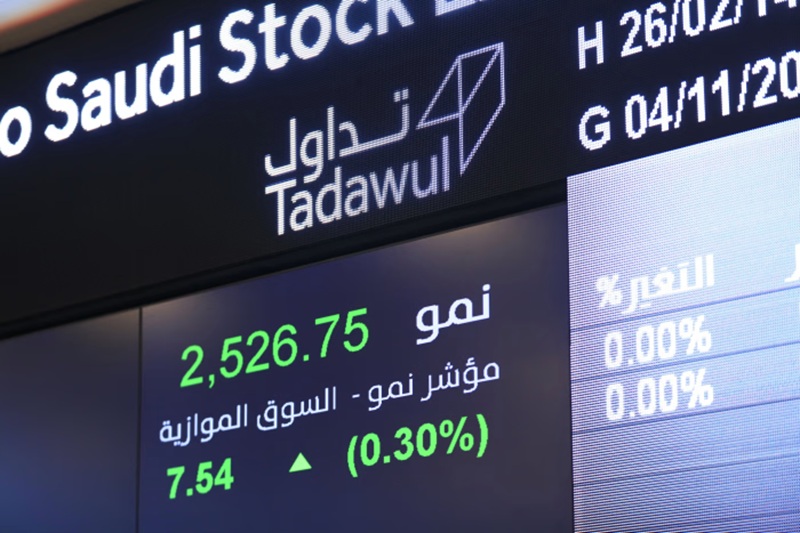
Saudi Arabia’s stock market extended its rally into a fifth consecutive session on Sunday, supported by strong gains in energy stocks as surging oil prices boosted investor confidence in the kingdom’s energy-heavy market.
The benchmark Tadawul All Share Index rose 2.1%, with every constituent stock posting gains during the session. The rally was led by energy and petrochemical companies, which are particularly sensitive to movements in global crude prices.
Shares of Saudi Aramco jumped 4.1%, marking the company’s strongest intraday percentage gain in nearly four years. Petrochemical producer Yanbu National Petrochemical Company surged 10%, reflecting strong investor demand for companies expected to benefit from higher oil and energy prices.
Register for Tekedia Mini-MBA edition 20 (June 8 – Sept 5, 2026).
Register for Tekedia AI in Business Masterclass.
Join Tekedia Capital Syndicate and co-invest in great global startups.
Register for Tekedia AI Lab.
The rally comes as global oil prices climbed sharply amid escalating geopolitical tensions in the Middle East. Benchmark Brent crude surged above $90 per barrel on Friday for the first time since April 2024, as supply disruptions linked to the expanding conflict involving the United States, Israel and Iran rattled energy markets.
Energy rally turns Saudi market into a hedge
Analysts say the sharp rise in oil prices has transformed Saudi Arabia’s stock market into a relatively safe haven within the region.
Ahmad Assiri, research strategist at Pepperstone, said the Saudi market displayed unusual resilience despite the rising geopolitical tensions across the Middle East.

“In a week defined by escalating regional geopolitical risks, the Saudi equity market has provided outstanding financial resilience,” Assiri said.
He noted that the initial selloff triggered by the conflict earlier in the week quickly faded as investors reassessed the implications of rising oil prices.
“The initial selloff last Sunday proved short-lived as institutional and retail sentiment stabilized by midweek,” he said.

According to Assiri, the surge in crude prices helped drive the rebound, as investors shifted funds into energy-related stocks that stand to gain from higher oil revenues.
The dominance of large energy firms such as Saudi Aramco means the Saudi market often moves in tandem with oil prices. As crude prices rise, investors tend to view the Saudi exchange as a natural hedge against geopolitical shocks affecting global energy supply.
Regional markets show mixed reaction
Across the wider Gulf region, stock markets delivered mixed performances as investors balanced the benefits of higher oil prices against the broader risks posed by the expanding conflict.
Oman’s benchmark index on the Muscat Stock Exchange climbed 2%, supported by gains in financial and industrial stocks.
Bahrain’s market on the Bahrain Bourse added 0.2%, reflecting modest investor optimism tied to stronger oil revenues.
However, other markets showed signs of caution.
The benchmark index on the Qatar Stock Exchange slipped 0.1%, dragged down by a 1.4% decline in Qatar Islamic Bank and a 4.8% fall in Qatar Aluminium Manufacturing Company.
Meanwhile, the main index on Boursa Kuwait edged down 0.3%, with most stocks ending the day in negative territory.
The divergence highlights how the conflict is affecting Gulf economies in different ways. Oil-exporting markets such as Saudi Arabia may benefit from the surge in crude prices, while countries facing direct security risks or shipping disruptions could experience greater volatility.
Energy supply disruptions intensify
Concerns about global energy supply intensified after Kuwait Petroleum Corporation announced it had begun cutting oil production and declared force majeure on some operations. The move follows earlier reductions in oil and gas output in Qatar as maritime disruptions in the region prevented shipments from leaving the Gulf for the eighth consecutive day.
Energy traders say the crisis has severely disrupted shipping through the Strait of Hormuz, the narrow waterway that handles roughly one-fifth of the world’s oil trade.
With tanker traffic slowing dramatically and shipowners increasingly reluctant to enter the high-risk zone, some oil-producing countries have been forced to cut output because storage tanks are filling up with crude that cannot be exported.
The disruption has also begun affecting refined fuel markets, where diesel and jet fuel prices have surged amid refinery shutdowns in parts of Asia and the Middle East.
Outside the Gulf, equity markets appeared more vulnerable to the regional tensions. Egypt’s benchmark EGX 30 Index fell 1.6%, with most blue-chip companies posting losses.
Shares of Commercial International Bank dropped 3.2%, while fintech firm Fawry for Banking Technology and Electronic Payment declined 4%.
Analysts say markets like Egypt’s tend to react more negatively to geopolitical instability because they do not directly benefit from rising oil prices and may instead face higher import costs and economic uncertainty.
Outlook tied to oil and geopolitics
Investors across the region are now closely watching the trajectory of the conflict and its impact on global energy supply. If disruptions to Gulf shipping routes persist or expand to major production facilities, oil prices could climb further, strengthening energy-linked stocks across the region.
Several investment banks have warned that crude could reach $100 per barrel or higher if the Strait of Hormuz remains partially closed for an extended period. However, analysts caution that prolonged conflict could also undermine broader economic confidence, disrupt trade flows, and increase financial market volatility.
Saudi Arabia’s stock market currently appears to be benefiting from its deep exposure to the energy sector, with rising oil prices providing a buffer against the geopolitical turmoil reshaping markets across the Middle East.