

Germany’s industrial landscape is undergoing a period of profound transformation, highlighted by two major developments: the Schwedt oil refinery’s successful receipt of South American crude via Poland and Volkswagen’s warning that as many as 50,000 jobs could be at risk amid growing tensions with workers.
These events underscore the economic and geopolitical challenges facing Europe’s largest economy. The Schwedt refinery, located in eastern Germany, has long been a strategic energy asset. For decades, the facility relied heavily on Russian oil supplied through the Druzhba pipeline.
Following Russia’s invasion of Ukraine and the subsequent European sanctions against Moscow, Germany was forced to rapidly diversify its energy sources. The arrival of South American crude through Polish infrastructure marks a significant milestone in this transition.
The refinery’s ability to process oil from alternative suppliers demonstrates Germany’s determination to reduce dependence on Russian energy.
Register for the next Tekedia Mini-MBA.
Register for Tekedia AI in Business Masterclass.
Join Tekedia Capital Syndicate and co-invest in great global startups.
By utilizing Polish ports and transport networks, Berlin has strengthened regional cooperation while enhancing its energy security. This development also highlights the growing importance of global supply chains, as crude oil from distant regions such as South America now plays a critical role in sustaining German industrial operations.
The transition is not without challenges. Importing oil from farther locations can increase transportation costs and complicate logistics. The Schwedt refinery must also continuously adapt its operations to process varying crude grades efficiently. The diversification strategy is viewed as essential for safeguarding Germany’s energy independence and reducing geopolitical vulnerabilities.
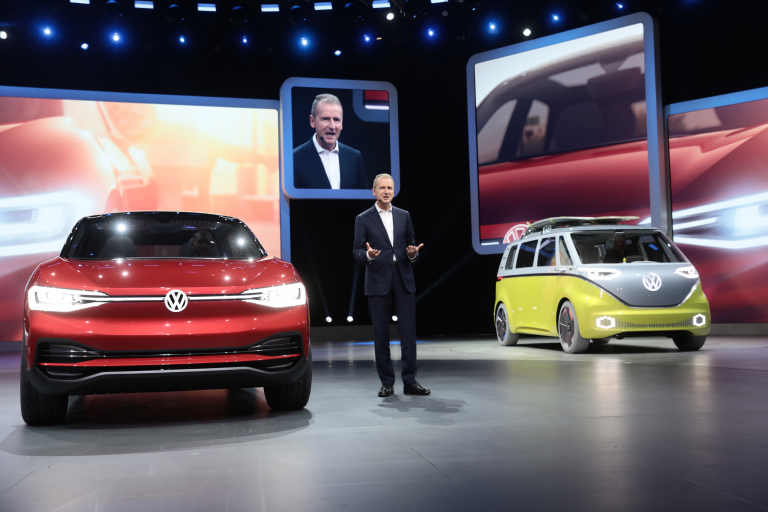
Germany’s industrial sector faces another major challenge in the automotive industry. Volkswagen, one of the country’s most iconic companies and a symbol of German manufacturing excellence, has warned that up to 50,000 jobs could be at risk as it undertakes extensive restructuring measures.

Volkswagen’s difficulties stem from several converging pressures. The global transition toward electric vehicles has intensified competition, particularly from Chinese manufacturers that have rapidly expanded their presence in international markets.
Rising production costs, weaker consumer demand in certain regions, and the substantial investments required for electrification and digital transformation have further strained the company’s finances.
The confirmation of potential job cuts has sparked outrage among workers and labor unions. Employees fear that large-scale layoffs could undermine communities that depend heavily on automotive manufacturing.
Germany’s system of co-determination, which gives workers a significant voice in corporate governance, means that labor representatives are likely to strongly oppose drastic reductions in employment.

The dispute also reflects broader concerns about Germany’s industrial competitiveness. High energy prices, regulatory burdens, and slowing economic growth have led many business leaders to question whether Europe remains an attractive location for large-scale manufacturing.
If major firms continue to reduce their workforce or relocate operations abroad, the consequences for Germany’s economy could be severe. Both the Schwedt refinery’s diversification efforts and Volkswagen’s restructuring plans illustrate the profound changes reshaping Germany’s economic model.
On one hand, the country is attempting to secure its energy future and adapt to new geopolitical realities. On the other, it is struggling to maintain its industrial strength amid rapid technological and economic shifts. Germany now faces the difficult task of balancing energy security, economic competitiveness, and social stability.
The decisions made in the coming years will not only determine the future of key industries such as energy and automotive manufacturing but will also shape the broader trajectory of Europe’s largest economy in an increasingly uncertain global environment.