

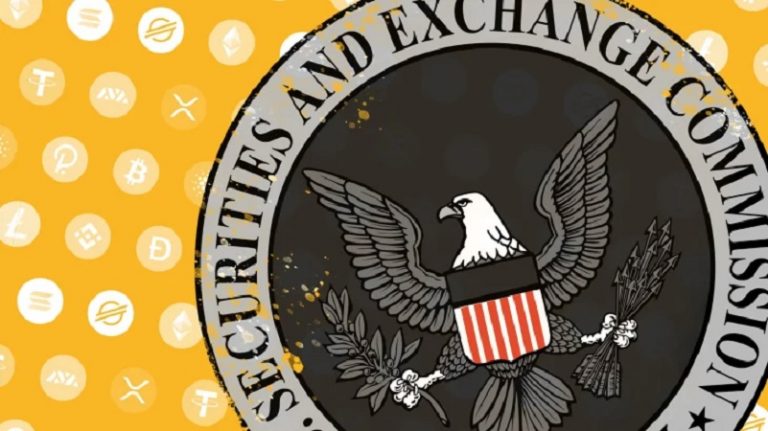
A major shift in U.S. crypto policy may be underway as U.S Securities and Exchange Commission chairman, Paul Atkins signals a departure from the commission’s long-criticized strategy of “regulation through enforcement.”
In a move that could reshape the relationship between regulators and the digital asset industry, Atkins while speaking in interview on CNBC’s Squawk Box with Andrew Ross Sorkin, emphasized the need for clearer rules, greater transparency, and a more collaborative approach to oversight.
His remarks come at a time when the U.S. Securities and Exchange Commission faces mounting pressure from industry players, lawmakers, and investors who argue that enforcement-led actions have created uncertainty and stifled innovation.
Register for the next Tekedia Mini-MBA.
Register for Tekedia AI in Business Masterclass.
Join Tekedia Capital Syndicate and co-invest in great global startups.
The announcement suggests a potential pivot toward structured rulemaking, one that could provide long-awaited clarity for crypto firms navigating compliance in the United States.
Atkins, who was sworn in as SEC Chair on April 21, 2025, reflected on his first year in the role, describing it as delivering on his promise of “a new day at the SEC.”
He explicitly stated that the Commission has moved past the opacity and enforcement-heavy tactics that characterized much of the prior administration’s handling of digital assets.

“We’ve pivoted from the old practice of regulation through enforcement and the opaqueness of the agency, as, for example, with crypto,” Atkins said.
This marks a clear break from the era under former Chair Gary Gensler, when the SEC frequently relied on lawsuits and enforcement actions to address perceived violations in the crypto space rather than issuing comprehensive, upfront regulatory guidance.
During the tenure of Gensler, the U.S. Securities and Exchange Commission often pursued high-profile lawsuits against exchanges, token issuers, and service providers, arguing that many digital assets qualified as unregistered securities.

Critics had long argued that this “regulation by enforcement” created uncertainty, stifled innovation, and pushed projects and capital offshore.
The regulation through enforcement model was seen by many in the industry as unpredictable, leaving startups and established firms alike to operate in a gray area without clear, codified rules.
By contrast, Paul Atkins appears to be signaling a more proactive and structured framework. Rather than relying primarily on courtroom battles to define policy, the emphasis is likely to shift toward formal rulemaking, public guidance, and industry engagement.
Key Elements of the Shift
Atkins’ leadership has emphasized proactive rulemaking and clarity.
Under his tenure, the SEC has advanced initiatives such as:
• Project Crypto: A Commission-wide effort to modernize securities regulation for blockchain and digital assets, including clearer frameworks for issuance, custody, and trading.
• Token Taxonomy and Safe Harbors: Guidance distinguishing between digital assets that qualify as securities versus those treated as commodities, collectibles, tools, or stablecoins, along with proposed safe harbor provisions for token offerings.
• Innovation Exemptions: Plans for temporary regulatory relief to allow novel crypto products and business models to reach the market more quickly without immediate full compliance burdens.
Atkins has repeatedly stressed the need for “fit-for-purpose” rules grounded in existing law (such as the Howey test for investment contracts) while supporting broader congressional efforts for comprehensive crypto market structure legislation.
He framed the changes as essential for keeping the United States competitive in digital finance, arguing that unclear rules previously hindered innovation and drove activity abroad.
The goal, he indicated, is to provide market participants with a “firm foundation” to build upon transparently and compliantly.
Implications for the Crypto Industry
Paul Atkins departure from U.S SEC’s long-criticized strategy of regulation through enforcement has been widely welcomed by crypto advocates, who see it as a turning point that could unlock institutional capital, foster domestic innovation, and reduce the legal risks that have weighed on projects for years.
Industry participants have noted that moving from an adversarial “sue first” model to one based on clear guidelines should encourage responsible development while still targeting bad actors.
However, several others urge caution, pointing out that enforcement will not disappear entirely, only the reliance on it as the primary tool.
Questions however remain about implementation details, the timeline for final rules, and how the SEC will handle emerging areas like prediction markets or tokenized assets.
Market reactions have been positive, with many viewing the statement as another bullish catalyst amid ongoing discussions around Bitcoin, Ethereum, and broader digital asset adoption.
Looking Ahead
As Atkins completes his first year, the SEC appears focused on transforming from a reactive enforcer to a forward-looking regulator.
Upcoming proposals on token fundraising under the Securities Act of 1933, along with continued input on safe harbors and exemptions, are expected to provide further details.
This shift aligns with broader policy goals under the current administration to position the U.S. as the “crypto capital of the world.”