

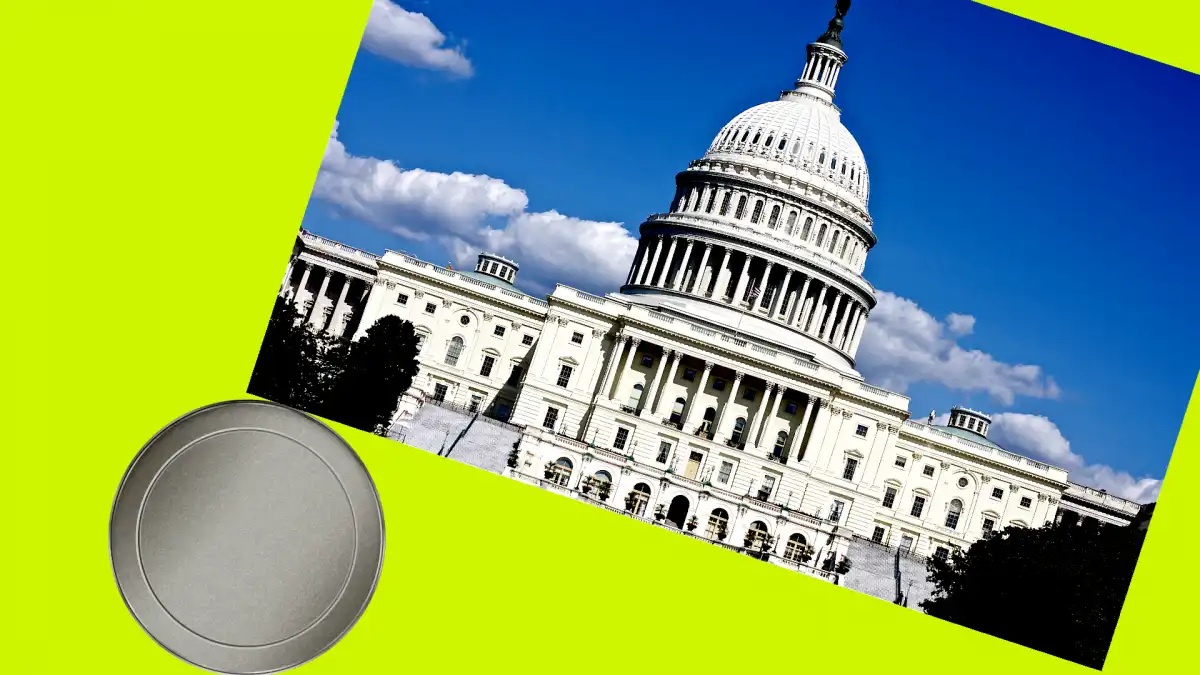
American Republican politician Senator Cynthia Lummis has pointed to the record $6.3 billion Binance hack as evidence that the stalled CLARITY Act could have given crypto firms clearer legal authority to act faster on suspicious transactions.
In a post on X, the Wyoming Republican described the Binance hack as the biggest heist in history, noting that the bill would have given the crypto exchange legal cover to freeze suspicious transactions the instant law enforcement calls.
She wrote,
Register for the next Tekedia Mini-MBA.
Register for Tekedia AI in Business Masterclass.
Join Tekedia Capital Syndicate and co-invest in great global startups.
“Yesterday, hackers stole more than $6 billion from Binance in less than 4 hours, the biggest heist in history. The Clarity Act would have given crypto firms legal cover to freeze suspicious transactions the instant law enforcement calls. Every minute lost is money gone for good.”
The reaction to Senator Cynthia Lummis’ comment on the Binance hack reflected divided opinions among cryptocurrency enthusiasts about the proposed CLARITY Act and how much authority crypto companies should have to freeze suspicious transactions.
While some users supported her argument that clearer legal protections could help crypto firms respond more quickly to security threats, others questioned the legislation’s intentions and warned about its potential implications for investors.

The responses highlighted the growing tension between cryptocurrency security, regulatory oversight and the decentralised principles underpinning digital assets.
While supporters viewed the CLARITY Act as a potential framework for improving cooperation between law enforcement and crypto companies, critics remained concerned about the possibility of increased government influence over financial transactions and the risks associated with giving private companies greater freezing powers.
Recall that on September 15, 2026, the Senate failed to advance the legislation after a procedural vote ended 49–50, falling short of the 60 votes required to move forward.

Several disagreements contributed to the setback. One of the biggest obstacles was the controversy surrounding President Donald Trump’s cryptocurrency interests.
Democratic lawmakers argued that the proposed ethics provisions did not go far enough to prevent senior government officials and their families from benefiting financially from cryptocurrency businesses while influencing policies affecting the industry.
Another major disagreement involved consumer protection, financial crime and regulatory oversight. Some lawmakers argued that the legislation did not provide sufficient safeguards against fraud, money laundering, and other illicit activities.
There were also disagreements over whether the bill would weaken the enforcement powers of state regulators and attorneys general by giving federal agencies greater control over cryptocurrency oversight.
What would the CLARITY Act have done differently in the Binance hack?
The recent Binance security incident provides an interesting example of why Senator Lummis believes the legislation is necessary.
This week, Binance disclosed a security incident involving approximately $6.3 billion in affected digital assets. Its preliminary investigation suggested that an attacker had potentially exploited access through a compromised DevOps engineer’s laptop to gain access to a service container and submit unauthorised withdrawal transactions.
The exchange subsequently worked with law enforcement agencies and blockchain security companies to trace and freeze affected assets.
According to Binance, approximately $3 billion had been frozen on-chain, while the company pledged to cover losses using its Secure Asset Fund for Users (SAFU) and corporate resources.
The incident highlights a major challenge associated with cryptocurrency transactions: once digital assets are transferred to external wallets, recovering them can become extremely difficult.
Unlike traditional banking transactions, which can sometimes be reversed or stopped through established banking procedures, blockchain transactions are generally irreversible once confirmed.
This is where the CLARITY Act’s proposed provisions could have made a difference. The Senate version included provisions designed to give covered cryptocurrency companies legal protection when temporarily restricting suspicious transactions in good faith.
Under the proposed framework, companies could receive protection from certain private legal claims when they placed temporary holds on transactions based on reasonable grounds to suspect a legal violation or following a qualifying written request from law enforcement.
In practical terms, if investigators identified suspicious wallet addresses connected to the Binance incident, they could have requested that relevant cryptocurrency service providers temporarily restrict transactions involving those assets.
The legal protections would have reduced the risk of companies facing lawsuits simply for complying with legitimate requests to prevent potentially stolen funds from moving further.
The attack ranks as the largest cryptocurrency theft on record. Attackers drained funds from Binance hot wallets across multiple blockchains, with estimates of the total impact ranging around $6.3 billion.
Blockchain analytics firms including TRM Labs have attributed the breach with high confidence to TraderTraitor, a North Korean-linked hacking group.
Binance has said it has reserved more than $6.34 billion in company funds to cover customer losses and has worked to restore operations while investigating the incident.
The exchange has emphasized that user funds will be made whole and that it is cooperating with partners and authorities on recovery efforts.
Notably, the episode has renewed debate in Washington and the crypto industry over the balance between innovation, security, and the legal tools available to respond when large-scale thefts occur.